
Quick answers
Does an electric geyser need earthing?
Yes. The BIS blog says appliances of this class need a permanent, reliable connection to an earthing terminal, so that conductive parts do not become a shock hazard if the insulation fails. Ask an electrician to test the earth, not just to fit an earth pin.
Which standard covers an electric geyser in India?
IS 2082 covers stationary storage electric water heaters; IS 8978 instant heaters and IS 368 immersion heaters, with IS 302-1 and IS 302-2-21 for safety, according to the BIS blog. The edition differs between the BIS blog (2018) and the helpline copy we opened (1993, reaffirmed 2014), so check the model you buy.
Should I switch off the geyser before I bathe?
We advise yes, as an extra layer even if the earth and the RCCB are good. It is our general electrical-safety advice, not an official rule we found.
Why does my geyser or tap give me a mild shock?
It can mean leakage current because the earth is missing or faulty, or the insulation has failed. Treat it as a warning: switch off at the mains and have an electrician check it before using it again.
Is an immersion rod safe?
Only if the cord, handle and plug are sound, the socket is truly earthed, you use a plastic bucket, and you switch off before touching anything. Bajaj Electricals lists a steel bucket, a wet handle, a missing earth and wet hands among the causes of shocks.
What does the ISI mark mean on a geyser or rod?
It shows the product was made to the relevant Indian Standard, according to the manufacturer we read. It does not cover damage after purchase, storage problems or the state of your socket.
What should I do if someone is being shocked?
Do not touch them. Switch off at the main switch or pull the plug with a dry hand and a dry non-metal handle, then call 112 and 108. Even if the person seems fine, let the ambulance team decide what they need.
Is a gas geyser safer than an electric one?
They are different dangers. Gas geysers produce carbon monoxide in closed bathrooms; electric ones can pass current into water. An engineer writing in The Tribune says a gas geyser should never be installed inside the bathroom. See our carbon monoxide page for gas geysers.
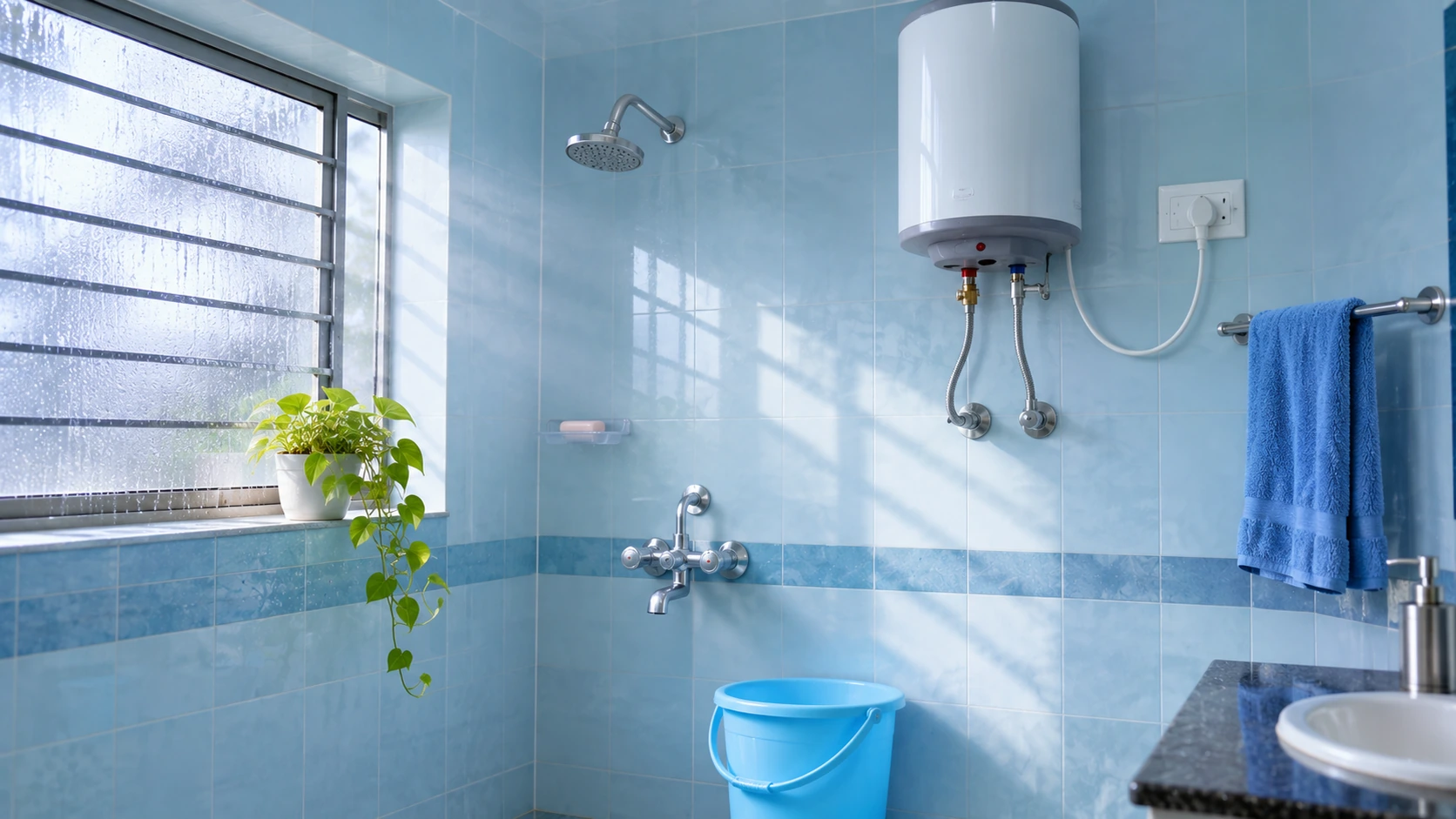
The first cold morning of the year is when the geyser and the immersion rod come out of retirement. Many of them have been standing unused since February, in a damp bathroom, with an old plug and a cord that has been bent in the same place for years. Water and electricity are a bad mix, and a small fault in a heater can pass the current into the water, the pipe or the bucket. This page is about electric geysers, instant geysers and immersion rods: what to look at before the first use this winter, how to use them, and what to do if somebody gets a shock. (Gas geysers have a different danger, carbon monoxide, which we cover separately.) Checked 10 November 2026.
In short
- A tingle is a warning, not a nuisance. If you feel any shock from a geyser, tap, pipe, bucket or rod, switch off at the mains and stop using it until a qualified electrician has checked it.
- It must be earthed. BIS says appliances of this class need a permanent, reliable connection to an earth terminal, so that metal parts do not become live if the insulation fails.
- Buy and use certified products. Look for the ISI mark and the standard for the type: storage geysers, instant geysers and immersion heaters have different Indian Standards.
- Immersion rod: plastic bucket, dry hands, switch off at the socket before you touch anything. Never use a steel bucket.
- If somebody is stuck to the current, do not touch them. Cut the power first, then call 112 and 108.
What the standards say, in plain words
The Bureau of Indian Standards (BIS) has a blog on water-heater safety standards, which we read. It lists these standards: IS 2082 for stationary storage electric water heaters (the blog gives the 2018 edition), IS 302-2-21 for storage heaters, IS 8978 for instant heaters, IS 368 for immersion heaters and IS 302-2-201, with IS 302-1 as the general safety standard for household appliances. It says:
- An appliance of Class I needs a permanent, reliable connection to an earthing terminal so that conductive parts do not become a shock hazard if the insulation fails.
- Live parts must be enclosed, insulation must hold in humid conditions, and leakage current must stay within limits.
- Temperature rise is limited, and the appliance should cut off the supply if a weak part ruptures under abnormal conditions.
- The standard for instant heaters excludes bare-element heaters for safety reasons.
- Compliance with a standard is not in itself a complete guarantee of safety.
The BIS consumer-helpline copy of IS 2082 that we opened is the 1993 edition, reaffirmed in 2014, so check which edition applies to the model you buy. Its routine tests include protection against electric shock, the earthing connection and a pressure test. None of this protects you from damage after purchase: a split cord, a cracked element or a missing earth wire defeats a certified product.
Before the first use this winter: ten minutes with the geyser
- Look for the ISI mark and the rating plate. If the geyser has no mark, is old or has been repaired by someone unqualified, think of replacing it.
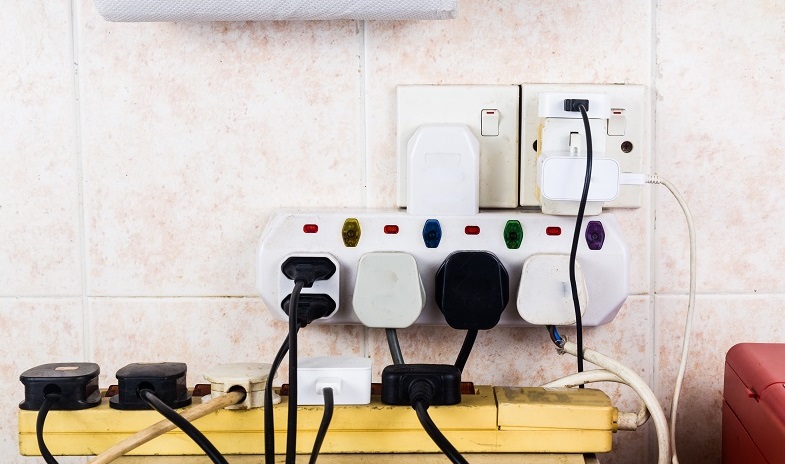
- Check the plug, socket and wire. A geyser draws a heavy current. It needs a socket and plug rated for it, a thick cable and a proper earth pin. A hot, discoloured or loose plug is a warning. Never run it through a multi-plug board or a thin extension cord. This is our advice; read the load on the rating plate and ask an electrician.
- Look at the tank and pipes. Water dripping from the tank, valve or pipe near the wiring means call a technician.
- Ask the electrician to test the earth and to check that the distribution board has an RCCB (also called an ELCB), which switches off the supply when current leaks to earth. Our page on MCB, RCCB and shock first aid at home (listed below) explains the difference. A former Punjab engineer writing in The Tribune in 2020 also urged an ELCB on the board for shock protection.
- Keep it out of the spray. The geyser and its switch should not be where the shower or splashing water reaches them. Put the switch outside the bathroom if you can. This is our advice.
In daily use
- Switch off at the mains when you go to bathe. If the earth and RCCB are good, this is an extra layer. If they are not, it may be the only one. It costs nothing. This is our advice; manufacturers differ.
- Do not touch the switch or the geyser with wet hands or while standing in water.
- Do not tamper with the thermostat or any safety device, and do not leave a geyser on all night.
- Do not use a geyser with a damaged cord or a cracked case, and do not repair it yourself.
The immersion rod: the most dangerous one in the house
An immersion rod works by sitting in the water, so any fault in its insulation puts current into the bucket. Bajaj Electricals, a manufacturer, lists the usual causes on its blog: a damaged or frayed cord, a cracked or scaled element, a metal bucket, a missing or faulty earth, a wet handle and wet hands. Its advice, which we agree with, is:
- Inspect the cord, handle and plug before each use.
- Use a three-pin plug in a really earthed socket.
- Use a plastic bucket, never a steel one. A fault can make the bucket, handle and rim live.
- Fill the bucket so that the element is under water, and not above the water-level mark.
- Switch off at the socket before touching the rod, the water or the bucket. Do not stir, add water or test the temperature by hand while it is on.
- Descale the element in hard-water areas. Store the rod dry and hanging.
- Replace it at the first crack, exposed wire or MCB trip. Never reset the MCB and keep using a rod that has caused a shock.
- Do not leave it running unattended and keep children and pets away.
That is manufacturer guidance, not a regulator’s, and the ISI mark covers the product as made, not its condition today.
If somebody gets a shock
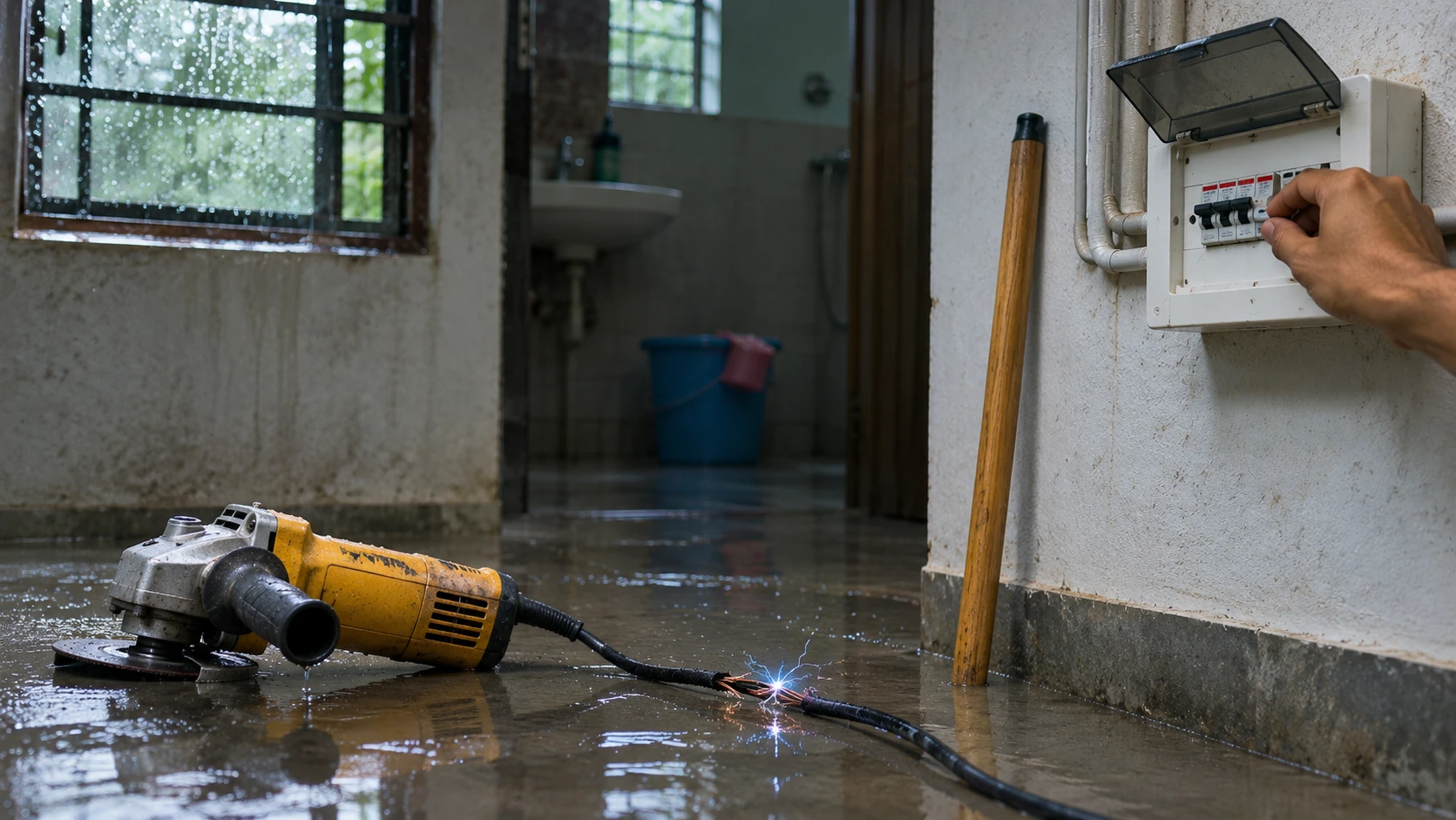
- Do not touch the person or the appliance if the person may still be in contact with it. You can become the next victim. Two rescuers were hurt in the Bengaluru hotel pool electrocution case on this site.
- Cut the power: switch off at the main switch or pull the plug with a dry hand and a dry plastic or wooden handle, standing on something dry.
- Call 112 and 108. 112 is the single emergency number for police, fire and ambulance (PIB). Even if the person seems fine, let the ambulance team decide what they need.
- Our page on how to rescue someone from electric shock safely, listed below, has more detail on the rescue.
A note on gas geysers
An LPG geyser inside a closed bathroom produces carbon monoxide, which you cannot see or smell. The Tribune writer quoted above says a gas geyser should never be installed inside the bathroom. Read our page on carbon monoxide, geysers and angithis before the first cold night.
What not to do
- Do not use a steel bucket with an immersion rod.
- Do not reset the MCB repeatedly and carry on.
- Do not push a geyser plug into a loose, hot socket.
- Do not bathe with an unearthed geyser that tingles.
- Do not fix a heater yourself or let an unqualified person bypass a cut-out.
What we could not confirm
We found no incident data on geyser shocks in India, so there is no chart of deaths here. We did not find a BIS or government page with a step-by-step user guide for bathroom installation, an official rule on switching off before bathing, or the earth-leakage requirement for bathrooms. The BIS blog lists the 2018 edition of IS 2082 while the consumer-helpline copy we opened is the 1993 edition, reaffirmed 2014. The immersion rod advice is a manufacturer’s, and the ISI mark was described by that manufacturer, not by BIS. Our advice on sockets, switch position and switching off before a bath is general electrical-safety practice. We did not find videos we could verify. This page is general information, not electrical or medical advice.
What needs attention
- BIS says Class I appliances need a permanent, reliable earth connection; a geyser without a working earth can make taps and pipes live.
- Heater standards differ by type (storage, instant, immersion); the instant-heater standard excludes bare-element heaters.
- Compliance with a standard is not a complete guarantee; damage after purchase can defeat it.
- A manufacturer lists a steel bucket, a split cord, a wet handle and a missing earth as causes of rod shocks.
- We found no Indian incident data on geyser shocks and no official bathroom installation guide.
Controls that reduce risk
- Have an electrician test the earth and the RCCB before the first cold morning.
- Replace a cracked or old immersion rod and any rod with a damaged cord.
- Move the geyser switch out of the splash zone, or put it outside the bathroom.
- Switch off at the mains when you go to bathe.
- Save 112 and 108 on your phone.
Common unsafe practices
- Using a steel bucket with an immersion rod.
- Ignoring a tingle from a geyser, tap or rod.
- Resetting the MCB repeatedly and carrying on.
- Plugging a geyser into a loose, hot socket or a multi-plug board.
- Touching the geyser switch with wet hands or while standing in water.
- Repairing the heater or bypassing a cut-out without a qualified electrician.




Leave a comment