

Quick answers
How many pedestrians die on Indian roads every year?
In 2023, 35,221 pedestrians died, 20.4 per cent of the 1,72,890 people killed on the roads, according to the MoRTH report as reported by PTI and OpenCity. In 2022 it was 32,825.
Which states have the highest pedestrian share of road deaths?
OpenCity's 2025 analysis of the 2023 MoRTH data says West Bengal 48.5 per cent, Delhi 42.69 per cent and Bihar 39 per cent. These are shares of road deaths in each place, not rates per person walking.
What is the safest way to cross an Indian road?
Use a zebra crossing, a signal or a footbridge. Stop at the kerb, look right, left and right again, wait for the nearest vehicle to slow clearly, and do not cross from behind a parked bus or truck.
Which side should I walk on if there is no footpath?
The right edge of the road, facing the oncoming traffic, as far from the carriageway as you can, in light or reflective clothes. This is general road-safety advice; we found no Indian official text on it.
Do drivers have to stop for pedestrians?
At uncontrolled crossings, the Driving Regulations 2017 say the driver must slow down, stop and give way to pedestrians and wheelchair users. At red lights they must stop before the stop line ahead of the crossing.
Is it legal to park on a footpath?
The Driving Regulations 2017 say parking is not allowed on footpaths or pedestrian crossings. If a parked vehicle blocks the footpath near you, tell the local traffic police.
How can I keep children safe near the road?
Hold their hand at the kerb and crossing, keep them on the side away from the traffic, teach them to stop, look and wait, and do not let them cross alone or wait for the bus at the road edge.
What should I do if a pedestrian is hit?
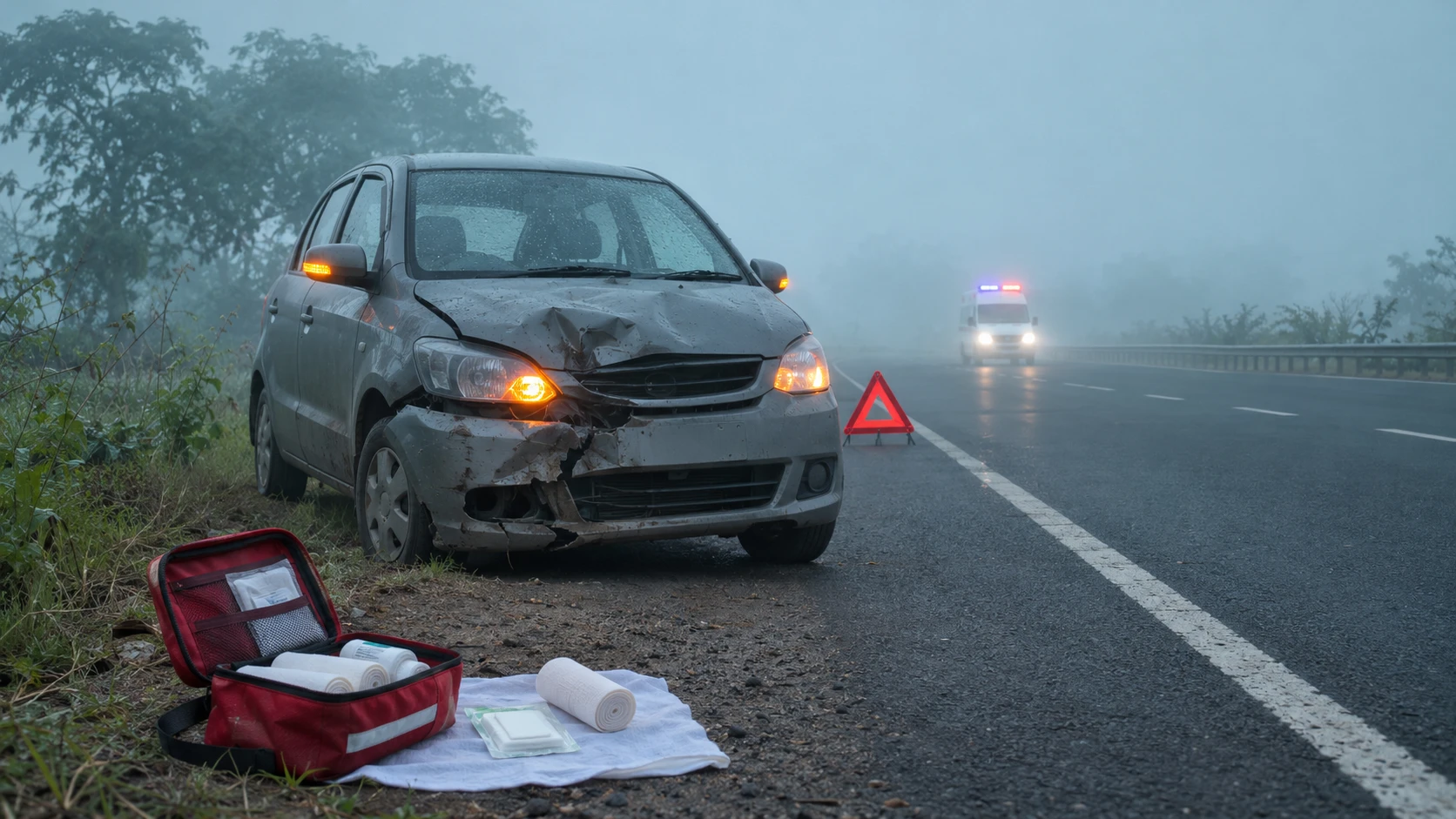
Call 112 and 108, switch on hazard lights and stand where drivers can see you, and do not move the injured person unless there is fire or the vehicle may roll. Wait for trained help.
When people think of road safety they think of helmets, seat belts and speeding. The person who is simply walking gets forgotten. In India, that person is one in every five of the people killed on the road. The winter months make it worse, because the evening comes early, fog lowers the view and the footpath is often missing, broken or full of parked two-wheelers. This page gives the figures, the rules that drivers are supposed to follow near pedestrians, and a plain set of habits for anyone who walks, with children and older people in mind. Checked 10 November 2026.
In short
- Pedestrians were 20.4 per cent of road deaths in 2023. That is 35,221 of 1,72,890 people killed, according to the Ministry of Road Transport and Highways report for 2023 (PTI and OpenCity). In 2022 it was 32,825.
- Cross where drivers expect you to. Use a zebra crossing, a signal or a footbridge, and do not step out from behind a parked bus or truck.
- Look right first. In India traffic keeps to the left, so the nearest vehicle comes from your right. Look right, left, right again, and wait for a real gap, not a hopeful one.
- Be seen after dark and in fog. Wear light or reflective clothes, carry a torch or use your phone light, and walk on the footpath. If there is none, walk on the right edge facing the traffic, as far from the carriageway as you can. This is our own advice.
- Put the phone and the earphones away at the kerb.
What the numbers say
The figures below are from the Ministry of Road Transport and Highways (MoRTH) reports as quoted by the news agencies and a public-data group. We did not open the MoRTH PDF itself, and the 2023 report came out more than a year late, in August 2025.
- 2023. 4,80,583 accidents, 1,72,890 deaths and 4,62,825 injuries. Pedestrians were 20.4 per cent of the people killed, which works out at 35,221. Two-wheeler riders were the largest group, at 44.8 per cent (PTI, 28 August 2025; OpenCity, 17 September 2025).
- 2022. 32,825 pedestrians died, up from 29,124 in 2021, a rise of 12.7 per cent (OpenCity, November 2023). The rise from 2022 to 2023, about 2,400, was more than half of the rise in all road deaths.
- States. OpenCity’s 2025 analysis says pedestrians were 48.5 per cent of road deaths in West Bengal, 42.69 per cent in Delhi and 39 per cent in Bihar. Tamil Nadu had 4,577 pedestrian deaths, about one in seven of the national total. In the eight big metros in 2022, close to 40 per cent of road deaths were pedestrians.
- Why. OpenCity says footpaths are shrinking or disappearing as space goes to private vehicles, and that city budgets favour flyovers over pedestrians. That is the analyst’s view, not a finding of the Ministry.
These shares are of road deaths in each place, not of people walking, and cannot be compared like a risk rate. A city with fewer cars can have a high pedestrian share without being more dangerous.
What the rules ask of drivers
We read the Motor Vehicles (Driving) Regulations, 2017 on Indian Kanoon, which says it could not verify the original gazette page. Several rules protect pedestrians:
- Uncontrolled crossings (reg 39). The driver must slow down, stop and give way to pedestrians and wheelchair users, and must not enter a crossing if they cannot clear it. Driving on a footpath is not allowed except where police direct or signs permit.
- Signals (reg 12). At a red light, stop before the stop line ahead of the pedestrian crossing; on green, give way to pedestrians already in the junction.
- Vulnerable users (reg 5(4)). Drivers must take special care of pedestrians, cyclists, children, older people and people with disabilities.
- Speed near schools and hospitals (reg 16(5)). No faster than 25 km/h near marked construction sites, schools and hospitals, and on roads with no footpath where people walk on the carriageway.
- Parking (reg 22). Parking is not allowed on footpaths or pedestrian crossings, and stopping is not allowed on or within five metres before a crossing.
If a parked vehicle blocks the footpath or the crossing near you, you can tell the local traffic police. We could not find a single national complaint number for this.
Crossing a road: a simple routine
- Stop at the kerb. Do not step off the footpath while you are still looking at your phone.
- Use the crossing, the signal or the footbridge. If the footbridge is far, still use it on a fast road.
- Look right, left, right. Look for two-wheelers, which come fast and from gaps. Wait until the vehicle nearest you is clearly slowing.
- Do not cross from behind a parked bus, truck or auto. Drivers cannot see you and you cannot see them. Step out to where you can see.
- Do not cross at a bend or the top of a rise.
- Cross one carriageway at a time where there is a median. Wait in the gap, not on the white line.
- Do not run. If the signal is changing, wait for the next one.
Walking in the dark, in fog and in the cold months
- Wear something light, or a reflective strip on your bag or jacket. Dark clothes disappear in the beam of a headlamp.
- Walk on the footpath if there is one. If you must walk on the road, use the right edge facing the traffic, so you can see what is coming. Keep children on the side furthest from the traffic.
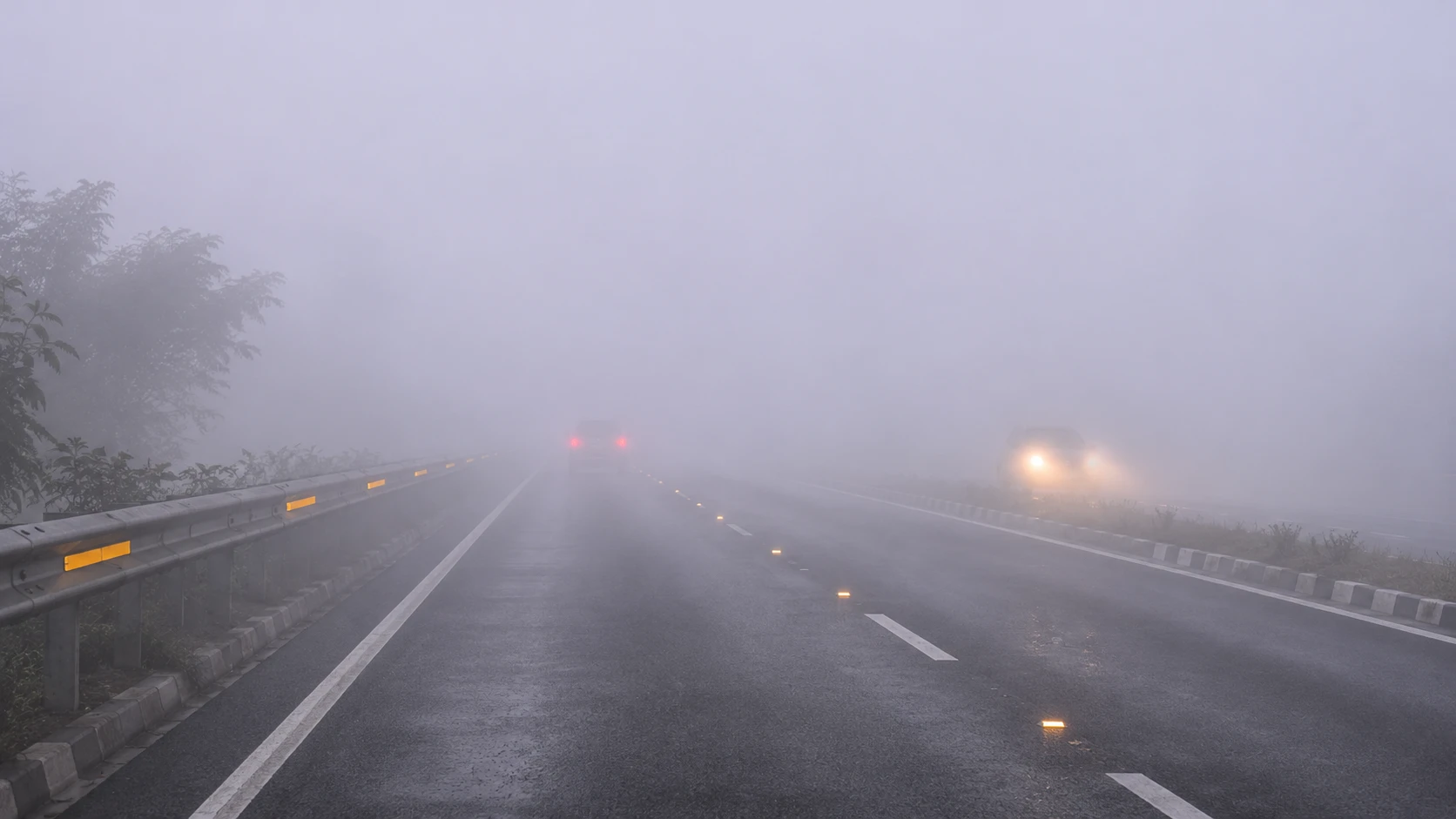
- In fog, assume the driver cannot see you until the last moment. Slow down and stay well back from the carriageway. Our page on driving in fog on Indian highways explains what drivers should do.
- Go in a group, not in a long line, and agree a meeting point if someone gets separated.
Children, older people and people who need more time
- Hold a child’s hand firmly at the kerb and crossing. Do not let them run ahead, and do not let them play near the road or wait for the bus at the edge of the carriageway.
- Older people and anyone with a walking aid need a longer time to cross. Pick a crossing with a signal or a median if you can, and never expect a driver to wait.
- Teach children the routine in this page, and practise it with them on a quiet road.
If you see a pedestrian hit
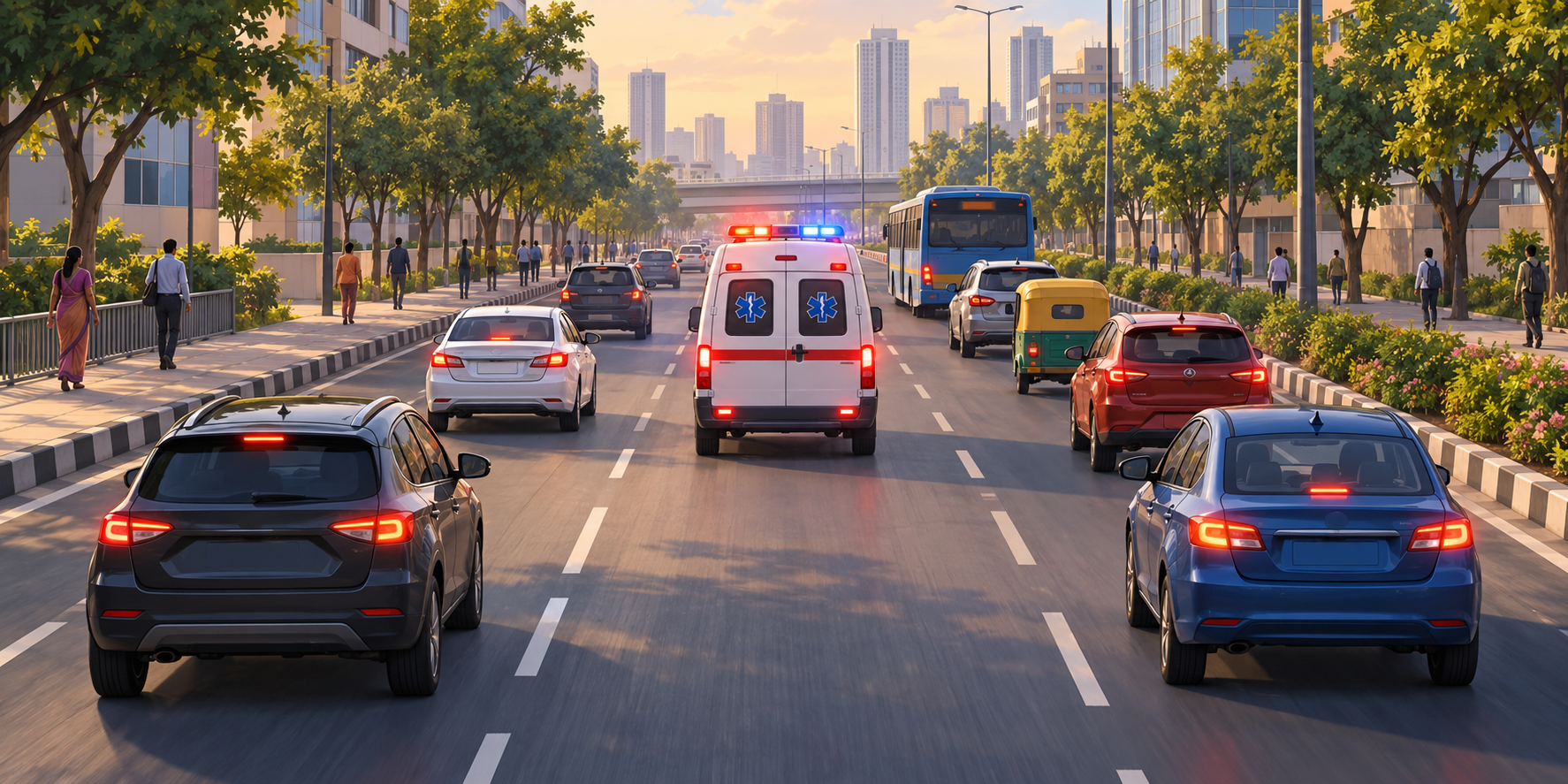
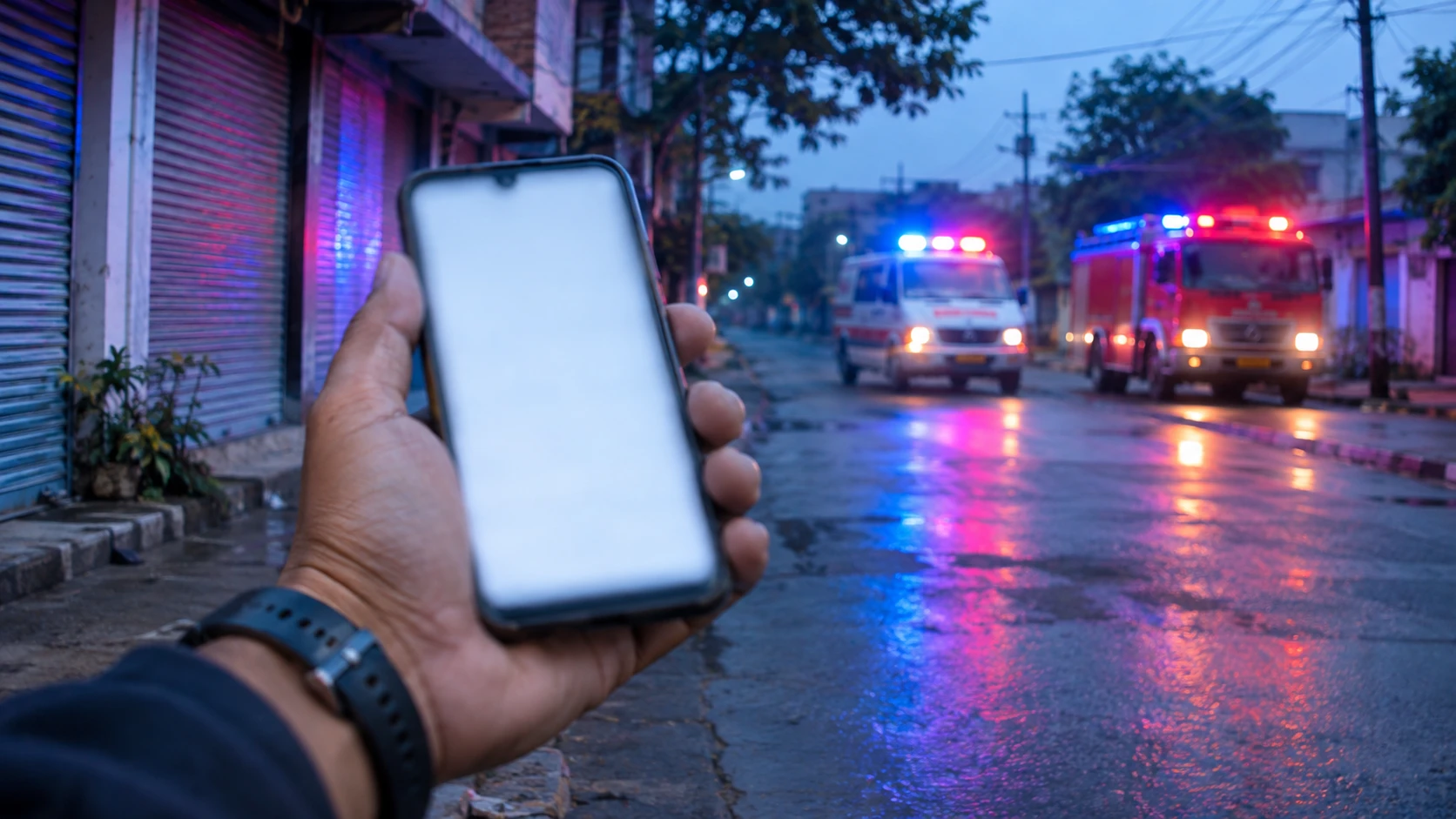
- Call 112 and 108. 112 is the single emergency number for police, fire and ambulance (PIB). Say the road, the landmark and how many are hurt.
- Switch on your hazard lights and stand where passing drivers can see you, not in the carriageway. Ask someone to wave a light well back.
- Do not move an injured person unless there is fire or the vehicle is likely to roll. Our road accident first aid page covers the wait for the ambulance.
A case from this month
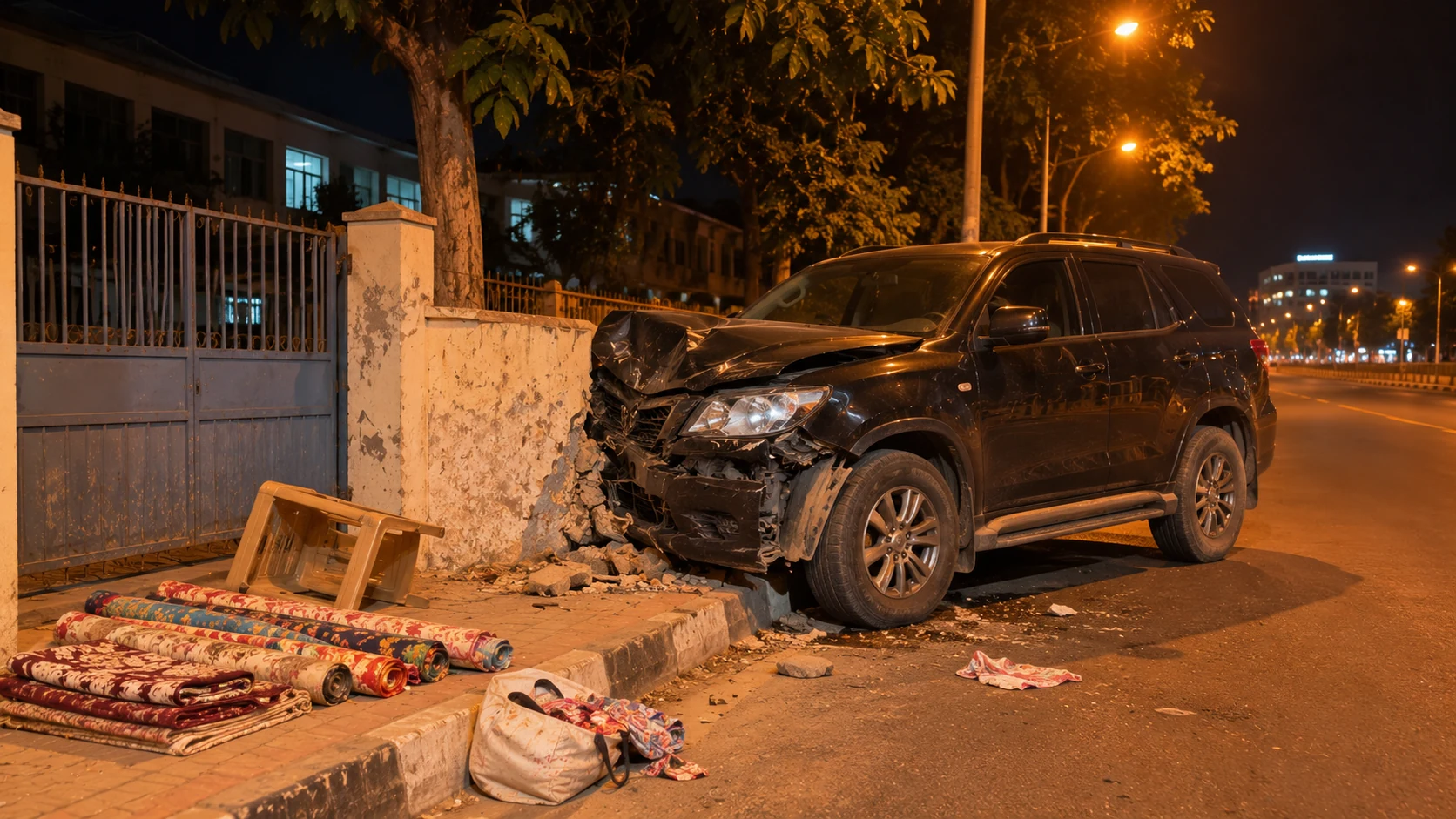
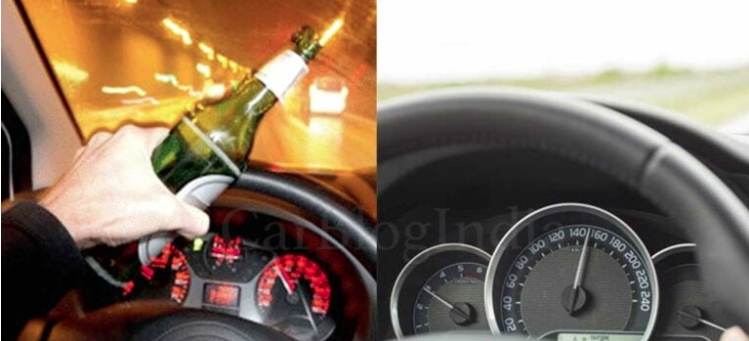
On the night of 2 November 2026 in Nikol, Ahmedabad, a speeding SUV climbed a footpath at about 9.30 pm and hit four people, including a woman and her 15-year-old son who sold cloth there. Both died, and two others were seriously hurt. The driver was taken into custody; police said beer cans were found in the car and a blood sample was sent for tests. Whether he was drunk is not established. See the Nikol case study. It is a reminder that even on a footpath you are not always safe, which is why the rules on speed, drinking and parking matter as much as your own care.
What not to do
- Do not text, call or listen with earphones at the kerb.
- Do not cross between vehicles that are stopped in a jam; one may move.
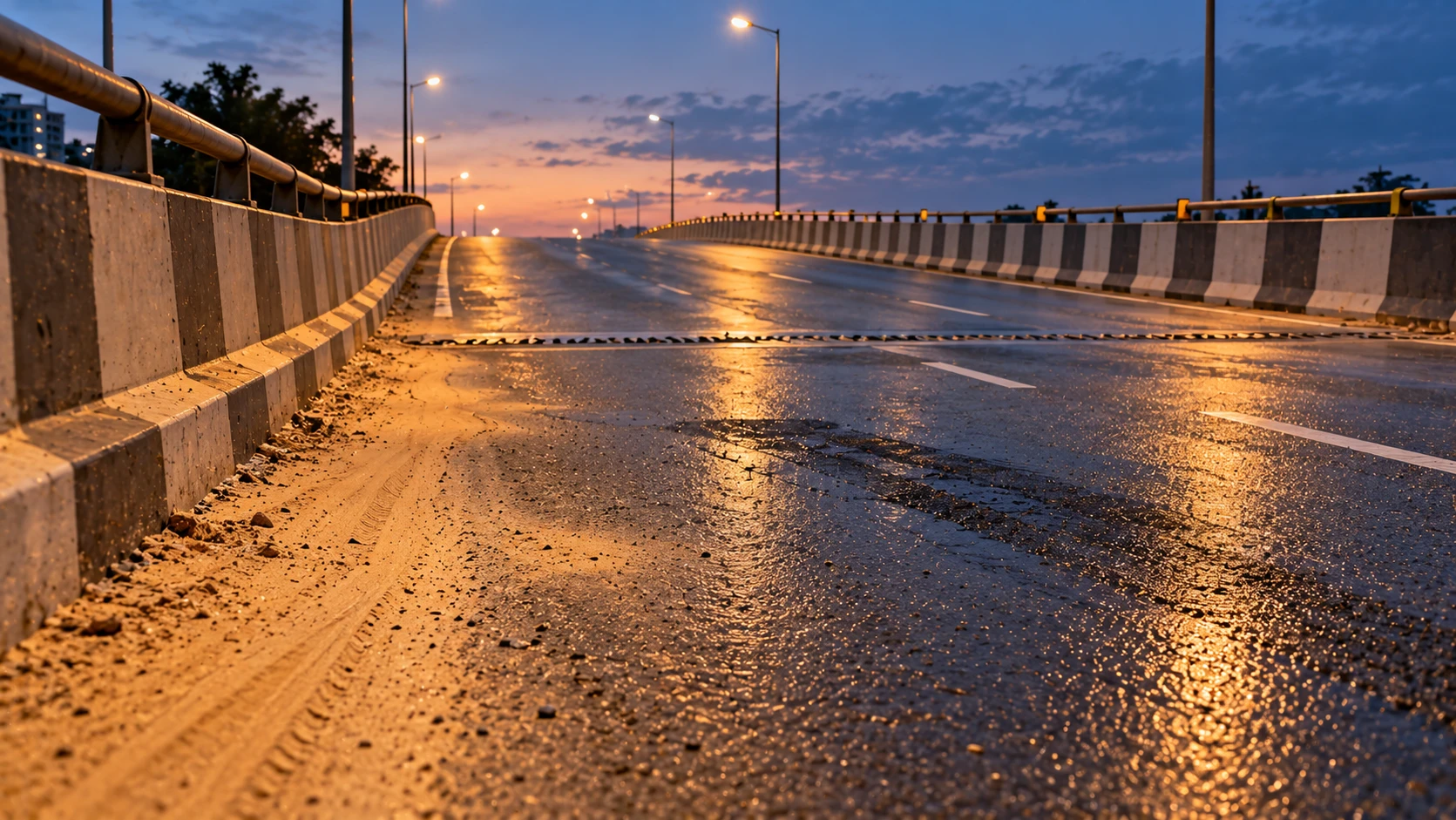
- Do not walk on a fast road or in the lane to avoid a broken footpath if there is a safer route.
- Do not let children cross alone because the road “looks empty”.
- Do not assume a driver has seen you because you saw them.
What we could not confirm
We did not open the MoRTH reports themselves. The 2023 and 2022 figures come from PTI (via DT Next) and OpenCity, which analyses the reports; OpenCity’s 2023 article says 30,000 in one place and 32,825 in another for 2022, and we use 32,825. State shares are shares of road deaths, not risk rates. The Driving Regulations were read on a third-party legal site. The advice on where to walk and how to cross is our general road-safety advice, not from an Indian official text. We found no national complaint number for blocked footpaths. This page is general information.
What needs attention
- Pedestrians were 20.4 per cent of road deaths in 2023, and the rise in pedestrian deaths from 2022 was more than half of the rise in all road deaths.
- The share is very high in West Bengal, Delhi and Bihar, where more than a third of road deaths were pedestrians.
- The Driving Regulations 2017 tell drivers to give way at uncontrolled crossings and not to park on footpaths.
- In Nikol, Ahmedabad, an SUV climbed a footpath and two people died; the driver's condition is not established.
- OpenCity says footpaths are shrinking; that is an analyst's view, not an official finding.
Controls that reduce risk
- Teach children the stop, look right, look left, look right routine.
- Put a reflective strip on school bags and winter jackets.
- Use footbridges and crossings even on short trips.
- Tell the traffic police about a footpath blocked by parked vehicles.
- Save 112 and 108 on your phone.
Common unsafe practices
- Looking at the phone or wearing earphones at the kerb.
- Crossing from behind a parked bus, truck or auto.
- Crossing at a bend, a rise or between stopped vehicles in a jam.
- Wearing dark clothes on an unlit road.
- Letting a child cross alone because the road looks empty.
- Assuming a driver has seen you.


Leave a comment