

Quick answers
What are the warning signs of a lithium-ion battery fire?
Abnormal heat, swelling, leaking, hissing, an unusual odour or smoke. A pack in thermal runaway can propagate and release hazardous gases.
What should I do if a lithium-ion battery starts hissing or smoking?
Move away and warn others, do not handle the venting pack to save property, raise the alarm and evacuate. Call 112 from a safe place and tell responders a battery is involved.
Can a portable extinguisher stop a lithium-ion battery fire?
Do not assume it can. A battery pack that heats or vents is not a routine small electrical fire, and staff should raise the alarm and evacuate rather than improvise firefighting.
How should a site storing lithium-ion batteries plan for fire safety?
Record battery types, quantities, locations and charging equipment, use compatible chargers, separate damaged packs, keep exits clear, and have a competent team review detection and protection.
Lithium-ion batteries are everywhere now: in phones, laptops, power banks, e-scooters and e-rickshaws, inverters, solar storage and warehouses full of stock waiting to be shipped. Most of the time they are perfectly safe. But a damaged, badly charged or faulty battery can go into “thermal runaway”. It heats itself up, gives off flammable and toxic gases, and can catch fire or explode, spreading from one cell to the next. Such a fire is hard to put out and can flare up again hours later.
This page is for shop owners, warehouse and facility managers, and anyone who stores or charges many batteries. The same warning signs apply at home.
Start with what you actually have
The risk from a few loose cells on a repair bench is very different from a rack of e-scooter packs being charged overnight, a godown full of boxed power banks or a large battery energy-storage system. Before choosing any detection or firefighting equipment, write down what you have: the type of battery, how many, where they are kept, how full their charge is, how they are packed and where they are charged.
Prevent damage and charging faults
- Use only the charger and replacement packs approved for that product. Cheap or mismatched chargers are a common cause of trouble.
- In India, EV traction batteries must meet AIS-156 (for two- and three-wheelers) and AIS-038 Rev. 2 (for cars, buses and goods vehicles), applicable since December 2022. These test for overcharge, short circuit, over-temperature and the battery management system. BIS standards such as IS 16893 cover EV cells, IS 16046 (Part 2) portable lithium batteries, IS 16805 industrial lithium batteries and IS 18237:2023 lithium batteries in transport. Buy products that meet them.
- Train staff to spot the warning signs: swelling, leaking, unusual heat, hissing, a strange smell, smoke, a dent or crack from a fall, or a battery that suddenly charges differently.
- Never put a damaged or recalled pack back into normal stock. Set it aside following the maker’s instructions and a written site procedure, and dispose of it through an authorised channel.
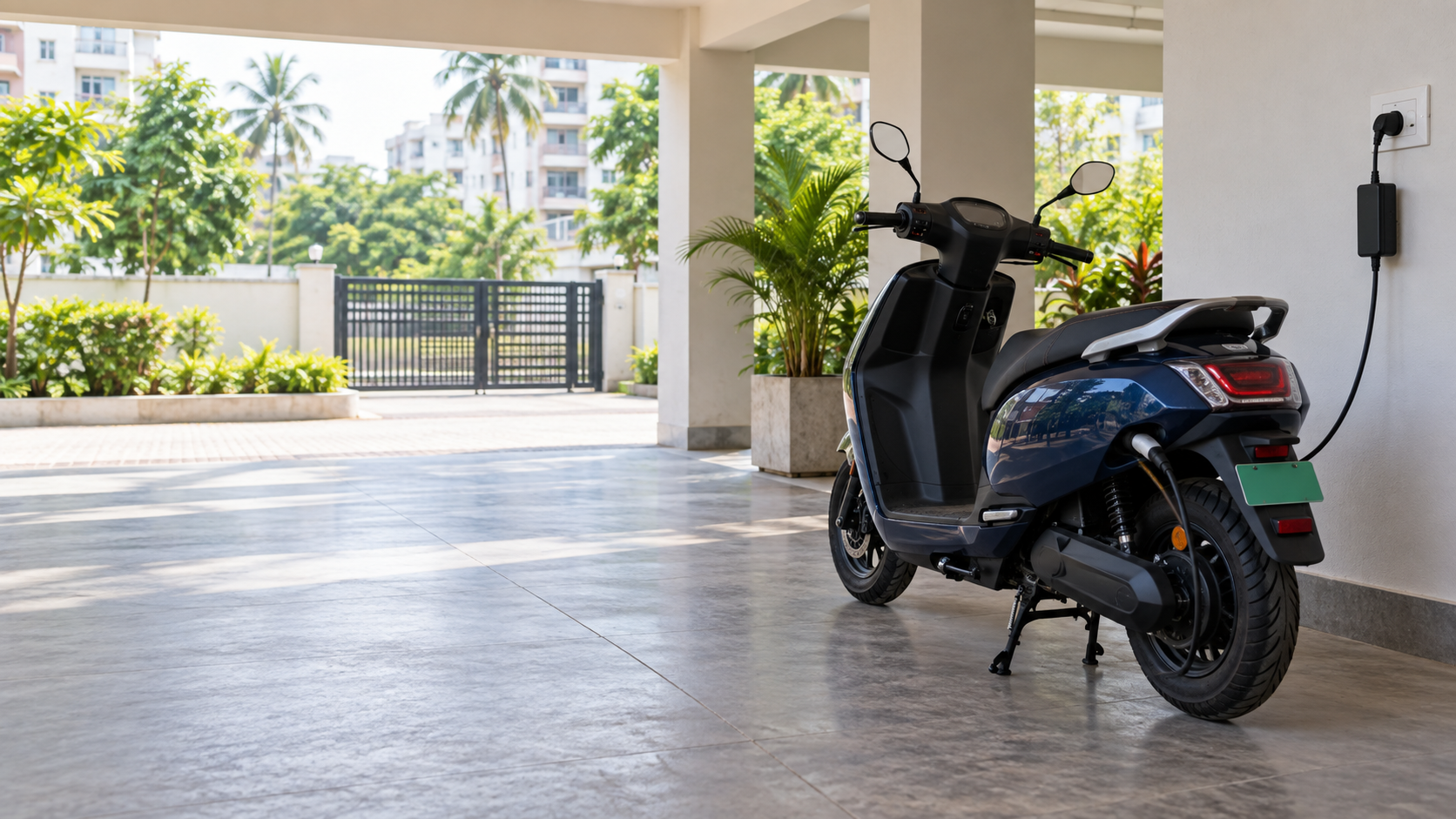
- Do not charge e-scooters or large packs in corridors, staircases or near the only exit, and do not leave them charging unattended overnight in a place where a fire would block the way out.
Detection, separation and fixed protection
Early warning and fire-resisting separation can give people time to get out. But the right design depends on the products and the site. A competent fire-protection engineer should look at storage spacing, fire-resisting walls, ventilation, detection, where the alarm goes, sprinklers or other fixed systems, water supply and fire brigade access.
For large battery energy-storage systems, international standards are often referred to. UL Solutions explains that UL 9540A is a test method for how thermal runaway spreads between cells and modules; it is not a blanket guarantee that every installation is safe. Do not assume a portable extinguisher can stop a battery pack that is in thermal runaway.
Plan for the first sign of trouble
Decide in advance who raises the alarm, who cuts the power (only if it is safe and they are authorised), who clears the nearby areas, who counts heads and who briefs the fire brigade. Keep a current list of battery types and locations ready to hand to firefighters. Battery gases can catch fire late, and a scene that looks quiet from outside may not be safe.
If a battery pack starts to swell, hiss, smoke or get hot, do not pick it up to carry it outside. Move away, warn others, sound the alarm, get everyone out and call 101 or 112 from a safe place. Tell them that lithium-ion batteries are involved.
Review after every change
Look at your plan again whenever battery types, quantities, packaging, charging rates, room layout or protection systems change. Record defects and the date each is fixed. This page gives general questions for managers. It does not set a safe spacing, ventilation rate, extinguishing agent or firefighting method for every site; those need a competent design based on Indian requirements and product test evidence.
Today, walk to the place where batteries are charged at your premises. Is it near an exit? Is anything that burns stacked around it? If so, move it.
What needs attention
- Battery risk depends on the chemistry, the amount, the packaging and whether batteries are being charged
- Physical damage, wrong charging and thermal runaway each need different controls
- Early detection helps only if the alarm reaches people who can get out
- Fixed protection must be designed on tested evidence and a competent site assessment
- Vented gases, late ignition and spread from cell to cell can make a quiet-looking scene dangerous
- Charging packs near exits or in corridors can turn a battery failure into a blocked escape route
Controls that reduce risk
- List battery types, quantities, locations and charging equipment
- Use chargers and replacement packs approved for each product, and buy batteries that meet AIS and BIS standards
- Set damaged or recalled packs aside under a competent written procedure and dispose of them through authorised channels
- Keep charging areas away from exits, escape routes and stacks of combustible stock
- Keep exits, alarms and fire brigade access clear
- Have a competent team check detection, fire separation and fixed protection against the actual hazard
- Train staff to raise the alarm and get out rather than try to fight a battery fire
- Keep battery inventory and location information ready for the fire brigade
- Review the plan after any change in layout, chemistry or quantity
Common unsafe practices
- Using cheap or mismatched chargers and replacement packs
- Putting a swollen, dropped or recalled pack back into normal stock
- Charging e-scooters or large packs in corridors, staircases or beside the only exit
- Leaving many packs charging overnight with nobody around and no detection
- Picking up a hot or hissing pack to carry it outside
- Assuming a portable extinguisher can stop a battery pack in thermal runaway
- Not telling the fire brigade that lithium-ion batteries are inside
- Changing battery types or quantities without reviewing the fire plan
Leave a comment