
What happened here


 1 / 10
 On 24 May 2002, a fire at the Shreeji International export shoe factory in Agra killed 44 workers. Flammable adhesive drums were kept by the main staircase, the other stair gate was locked, the back-room windows were meshed and the few extinguishers did not work. When the adhesive vapours caught fire, workers at the back had no way out.
Quick answers
What happened in the 2002 Shreeji International shoe factory fire in Agra?
On 24 May 2002, a fire broke out at the Shreeji International export shoe factory in Jeoni Mandi, Agra, while about 300 to 350 people were at work. 44 workers died.
How did the Agra shoe factory fire start?
According to the fire-service case presentation, someone was smoking while containers of flammable adhesive were being moved, and the vapours caught fire, followed by explosions. 30 to 40 drums of adhesive were stored near the main staircase. No independent inquiry report confirming the cause was found.
Why were workers trapped in the Agra shoe factory fire?
The second staircase had an iron gate that was normally kept locked, and the back-room windows were covered with wire mesh. Around 60 to 70 workers were trapped there, and the few extinguishers in the factory did not work.
How can factories that use adhesives or solvents prevent such fires?
Store drums in a separate, ventilated store away from stairs and exits, ban smoking and flames, keep every staircase gate unlocked during working hours, keep firefighting equipment serviced and train every shift to use it and to get out.
On the morning of 24 May 2002, a fire broke out at M/s Shreeji International, an export shoe factory in Jeoni Mandi, Agra. About 300 to 350 people were at work that day. 44 of them did not come home. Most of the dead were workers trapped in a back room whose windows were covered in wire mesh, while the one other staircase was shut behind a locked gate.
The factory and the building
Agra is known the world over for the Taj Mahal, but it is also home to a large number of shoe factories that make shoes for export. Units like Shreeji International handle flammable adhesives every day, along with bulk stocks of raw leather sheets, unfinished and finished shoes, and packing material.
The factory occupied part of the first floor of the LIC building in Agra. The same building also housed several other businesses:
- RCF godown
- M/s Usha International factory
- Khoda Shoes
- Dainik Jagran newspaper press
- M/s S M Export
- M/s Jaipur Golden Transport
- U P Rajya Bhandran Nigam godown
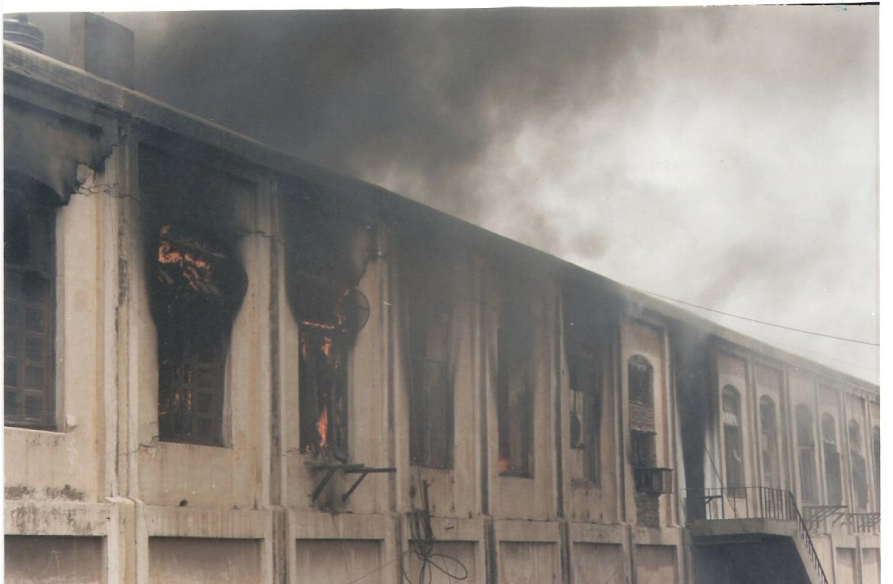
A View of L. I. C. Building, AGRA
What was wrong before the fire
The fire-service case presentation lists these problems at the factory:
- One staircase was fitted with an iron channel gate that was normally kept locked.
- That left the other, main staircase as the only way in and out.
- 30 to 40 drums of highly flammable adhesive, about 20 litres each, were stored near the entrance to the main staircase.
- About 300 to 350 employees were at work on the day.
- The nearest fire station was about 7 km away.
- Apart from a few extinguishers that did not work, there was no firefighting equipment in the factory.
Side View of Shoe Factory, AGRA
How the fire started
According to the fire-service case presentation reproduced on this page, someone was smoking while containers of flammable adhesive were being moved. The vapours caught fire and explosions followed. We could not find an independent inquiry report that confirms this cause. Amar Ujala’s 2019 retrospective says the fire started on the way to the main door, where the chemical drums were kept.
With nothing to contain the spilled adhesive and no working firefighting equipment, the fire spread quickly. Around 60 to 70 employees were trapped in a back room. Its windows were covered with wire mesh, and the second staircase was locked, so they had no way out.
The rescue
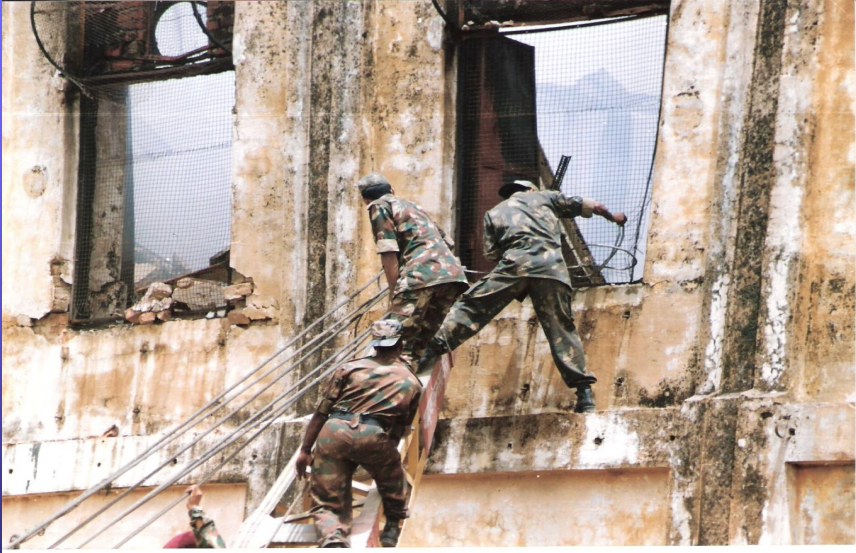
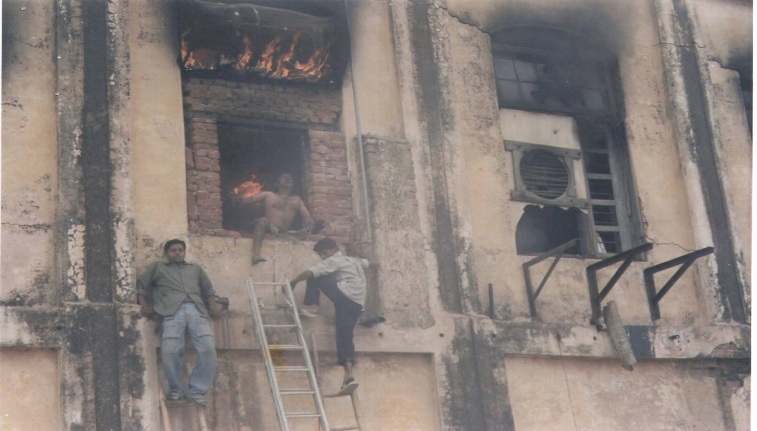
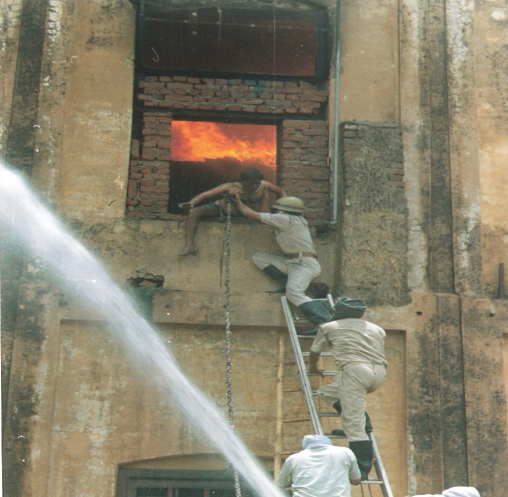
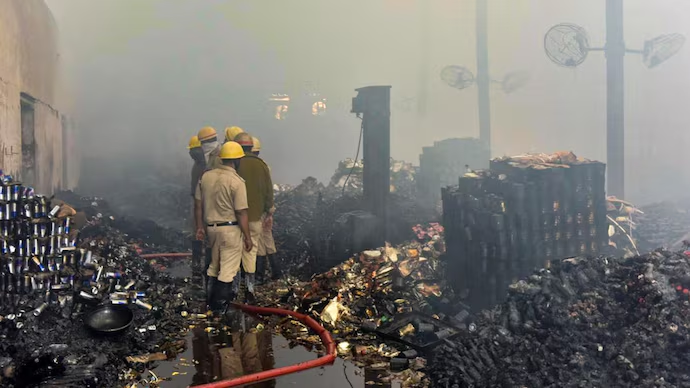
The fire was reported to the Idgah fire station at 10:32 am, and fire engines reached the site at 10:45 am. A large rescue followed, with fire service units from several districts, the Air Force, the COD, the Army and the local administration. Despite the fierce flames and repeated explosions, rescuers brought out around 250 to 300 employees.
View of window fitted with wire mesh
The flames and the explosions were too intense to reach the workers trapped at the back of the factory, and they could not be rescued in time.
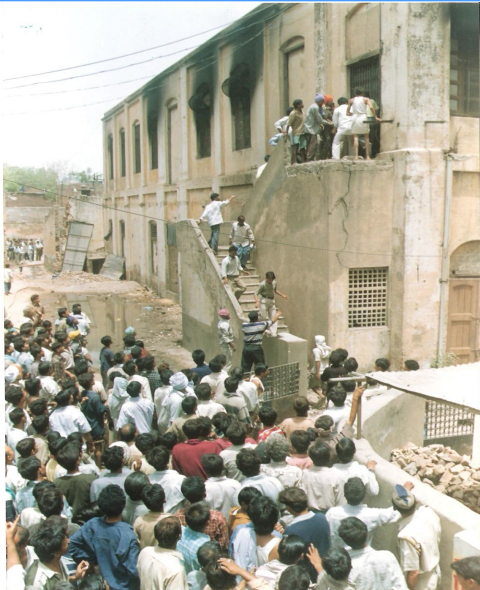
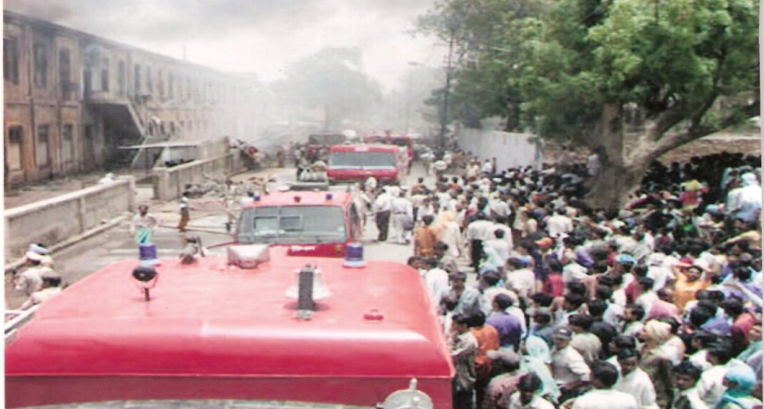
Huge crowd gathered.
Created law & order problem.
Hampered rescue & fire fighting operation.
District Police force managed the crowd with great difficulty.
The toll
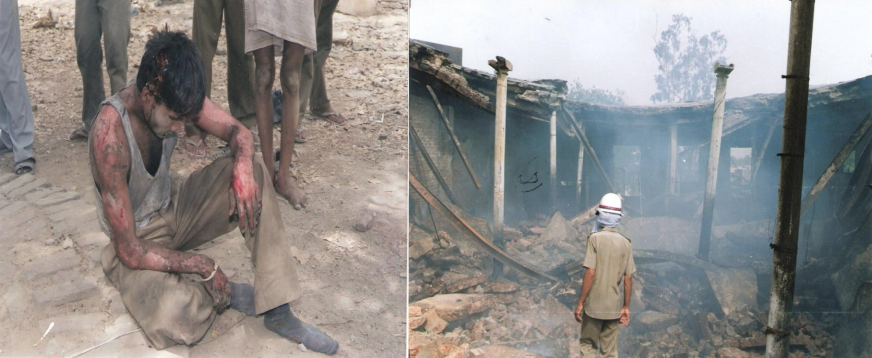
Around 39 bodies, completely burnt, were brought down and taken to hospital on the first day. The Army and the fire vehicles of the Air Force, the COD and nearby districts went back to their units at 7 pm. Agra Fire Service stayed on site to search for more victims and put out the smouldering fire. Two more bodies were found and taken to hospital on 25 May 2002. On 26 May, the Chief Minister visited the site and praised the local administration for how it handled the disaster. The search and firefighting went on till 28 May. Three injured workers later died in hospital, taking the toll to 44.
The damage to property was estimated at about ₹1.05 crore, out of a total of about ₹8.83 crore in property at risk.
What changed after the fire
After the incident, these recommendations were made for industrial units:
- Every factory licence must be registered and renewed under the relevant safety laws.
- Workers must be trained to handle hazardous materials, use firefighting equipment and evacuate.
- Fire safety officers must have the powers to enforce and keep up safety arrangements.
- Factories need enough stored water for firefighting, and flammable materials must be stored safely.
- Every unit needs more than one exit gate, regular equipment testing and compliance with safety standards.
- Building codes and fire safety rules must be followed as per national standards.
- Units that do not comply must face strict penalties, and safety rules must be followed on the shop floor.
If you run or work in a factory like this
Take ten minutes tomorrow morning. Walk to every staircase and check that its gate opens without a key. Look at where the adhesive, solvent and thinner drums are kept; if they sit near a stair or a door, move them to a separate store. Find the back rooms where workers sit and ask how they would get out if the main door were on fire. If the answer is “they couldn’t”, that is the first thing to fix.
- Fire call reaches Idgah fire station, Agra
- First fire appliances reach the factory on the first floor of the LIC building
- Army, Air Force, COD and other-district fire vehicles return; Agra Fire Service stays on site
- Two more bodies are found and shifted to hospital
- The Chief Minister visits the site
- Search and fire operations end; three injured workers later die in hospital, taking the toll to 44
Why consequences escalated
- Drums of flammable adhesive were stored right by the main staircase, the route most people would use to get out
- The second staircase was kept locked with an iron channel gate, so there was only one usable way out
- Wire mesh on the back-room windows trapped 60 to 70 workers when the main route caught fire
- The few extinguishers in the factory did not work, and there was no other firefighting equipment
- Hundreds of workers, combustible stock and solvent in one floor meant a small fire could kill many
- Moving solvent adhesives needs no smoking, good ventilation, spill containment and earthing of containers
Failures and risk multipliers
- Keeping 30 to 40 drums of flammable adhesive right next to the main staircase
- Moving adhesive containers while someone nearby was smoking, as per the fire-service presentation
- Keeping the second staircase shut with a locked iron channel gate
- Fitting wire mesh on the back-room windows, so 60 to 70 workers had no way out
- Running a 300-plus worker unit with only a few extinguishers, and those unserviceable
Actions that reduce risk
- Store adhesive and solvent drums in a separate, ventilated store, away from stairs and exits
- Make the whole floor no-smoking and keep matches and lighters out of the store
- Keep every staircase gate unlocked during working hours, with a guard who knows that
- Give each workroom a second way out; mesh or grills must open from inside
- Count your workers per floor and match it against what the building is approved for
- Get extinguishers refilled and serviced on schedule, and train each shift to use them
Leave a comment