
Quick answers
Which type of smoke detector should I buy?
Ionisation detectors are quicker to sense fast, flaming fires, and photoelectric detectors are quicker with slow, smouldering ones. Both work; pick the one that suits the room, or ask a competent fire-safety supplier.
Where should I put a smoke detector at home?
On the ceiling or high on the wall, in every bedroom, in the passage outside the bedrooms and on every floor. Keep it away from doors, windows and AC vents, and not right above the gas stove.
How often should I test a smoke detector?
Once a month. Press and hold the test button until it sounds. If it stays silent, change the battery, and if it is still silent, replace the detector.
How do I look after a smoke detector?
Change the battery at least once a year or when it chirps, keep a spare, clean it with a soft brush or vacuum, and never paint over it or cover it.
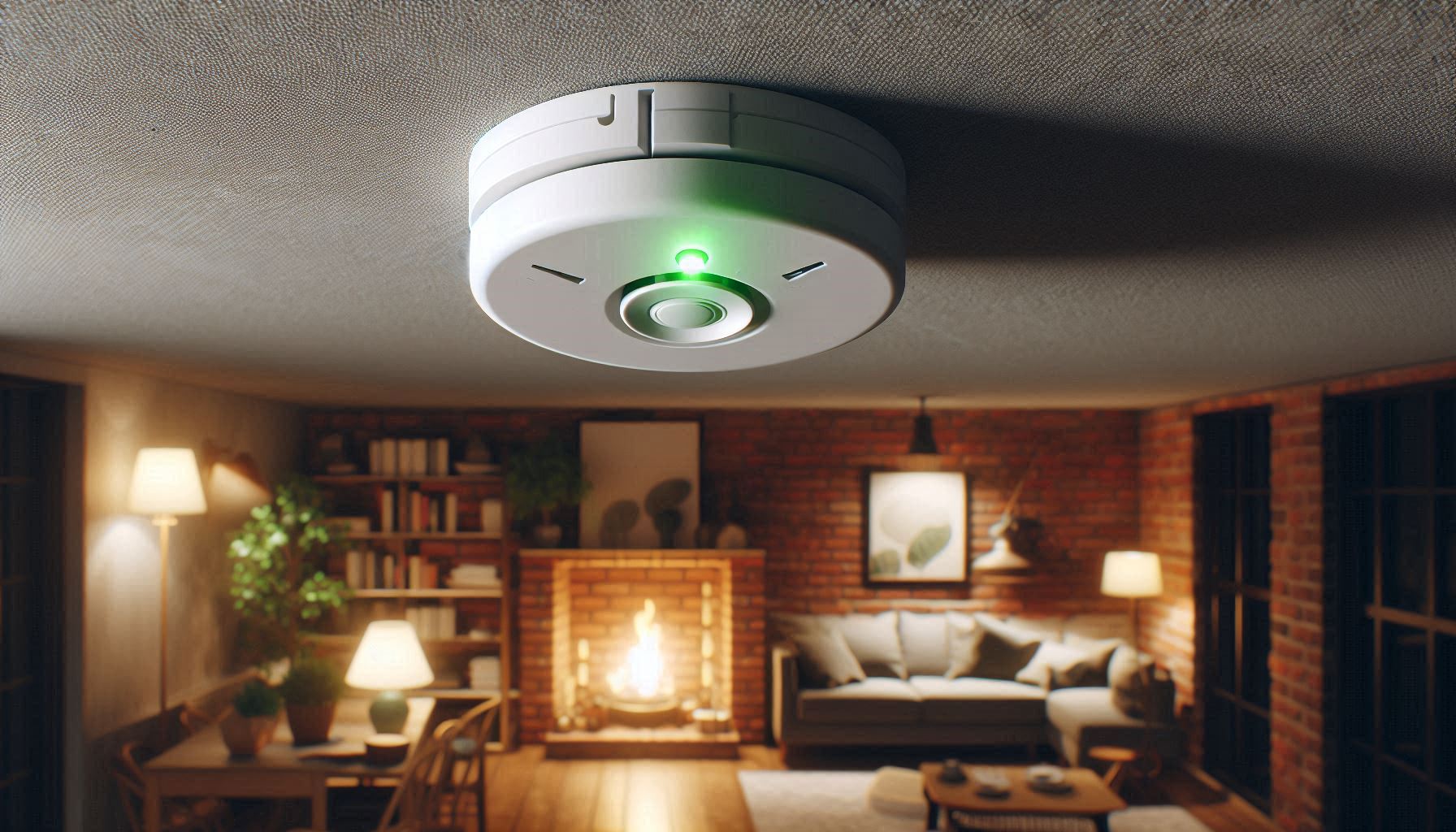
A smoke detector, also called a smoke alarm, is a small device that gives a loud alarm when it senses smoke. Its whole job is to warn you while the fire is still small, often before you can see any flames, so that you have time to get out. But a detector only works if it is the right type, fitted in the right place and kept in working order. Here is how to do that at home or at work.
Why a smoke detector matters
A fire that starts while the family is asleep is the one to fear most. Smoke spreads quietly, and you may not wake up until it is too late. A detector picks up the smoke early and gives you the minutes you need to wake everyone, get out and call for help.
The numbers show why homes need this protection. According to the National Crime Records Bureau (NCRB), India recorded 11,037 fire accidents in 2019. They killed 10,915 people and injured 441, and 58% of those deaths (6,329) happened in homes and other residential buildings.
Step 1: Choose the right type
There are two main types of smoke detector:
- Ionisation detectors are quicker to sense fast, flaming fires.
- Photoelectric (optical) detectors are quicker to sense slow, smouldering fires, such as a sofa or mattress that smoulders for a long time before it bursts into flame.
Both types work. Choose the one that suits the room and the kind of fire most likely there, and ask a competent fire-safety supplier if you are unsure.
Step 2: Fit them in the right places
- On the ceiling, or high up on the wall, because smoke rises.
- Away from doors, windows and AC vents, where moving air can carry smoke away from the sensor.
- In every bedroom, in the passage outside the bedrooms, and on every floor of the home or workplace.
- Not directly above the gas stove. Cooking fumes will keep setting it off, and sooner or later someone will pull the battery out.
- Follow the maker’s instructions for fixing and maintenance.
Step 3: Test it every month
Press and hold the test button until the alarm sounds. If it stays silent, change the battery. If it is still silent after that, replace the detector.
Step 4: Change the battery
Replace the battery at least once a year, or as soon as the detector starts chirping to warn you the battery is low. Keep a spare at home so you can change it the same day. Never borrow the detector’s battery for the TV remote or a child’s toy.
Step 5: Keep it clean
Dust and cobwebs can stop a detector from working properly. Clean it now and then with a soft brush or the brush attachment of a vacuum cleaner. Never paint it or stick decorations on it. If the house is being painted or whitewashed, cover the detector during the work and remember to uncover it afterwards.
Step 6: Have an escape plan
An alarm only helps if everyone knows what to do when it goes off. Agree on two ways out of the house and one meeting point outside, such as the society gate. Make sure every member of the family, and anyone who works in your home or office, knows the plan. Practise it now and then so nobody has to think about it in a real emergency.
When the alarm goes off
- Shout to wake everyone and get out at once. Do not stop to collect valuables.
- Feel a door with the back of your hand before opening it. If it is hot, use the other way out.
- Stay low under smoke and close doors behind you.
- In a building, use the stairs, never the lift.
- Call 112 or 101 from outside, and do not go back in.
Do this today
Press the test button on every detector in your home or office. If you have none, decide where the first one will go; the passage outside the bedrooms is a good place to start. For a society or office building, the fire detection it needs is set by the National Building Code of India 2016 as adopted in your state and the local fire authority’s rules, so check with your society committee or building manager.

What needs attention
- A smoke detector warns you while the fire is still small, often before you can see flames, which buys time to get out
- Ionisation detectors respond faster to flaming fires; photoelectric ones respond faster to slow, smouldering fires
- Detectors belong on the ceiling or high on the wall, in every bedroom, hallway and floor, away from doors, windows and AC vents
- A detector with a dead battery or a coat of dust or paint gives no warning at all
- An alarm helps only if everyone at home knows the escape plan and the meeting point outside
Controls that reduce risk
- Fit a detector in each bedroom and in the passage outside the bedrooms
- Press the test button once a month and replace the battery at least once a year
- Clean the detector with a soft brush or vacuum every few months
- Replace any detector that does not sound when tested
- Make a home escape plan with two ways out and an outside meeting point, and practise it
Common unsafe practices
- Fitting a detector in the kitchen right above the gas stove, where cooking fumes set it off, and then pulling the battery
- Taking the battery out to use in a remote or toy
- Never pressing the test button after installation
- Painting over the detector or covering it during whitewashing and forgetting to uncover it
- Fitting one detector for the whole flat instead of one near each sleeping area

Leave a comment