
What happened here
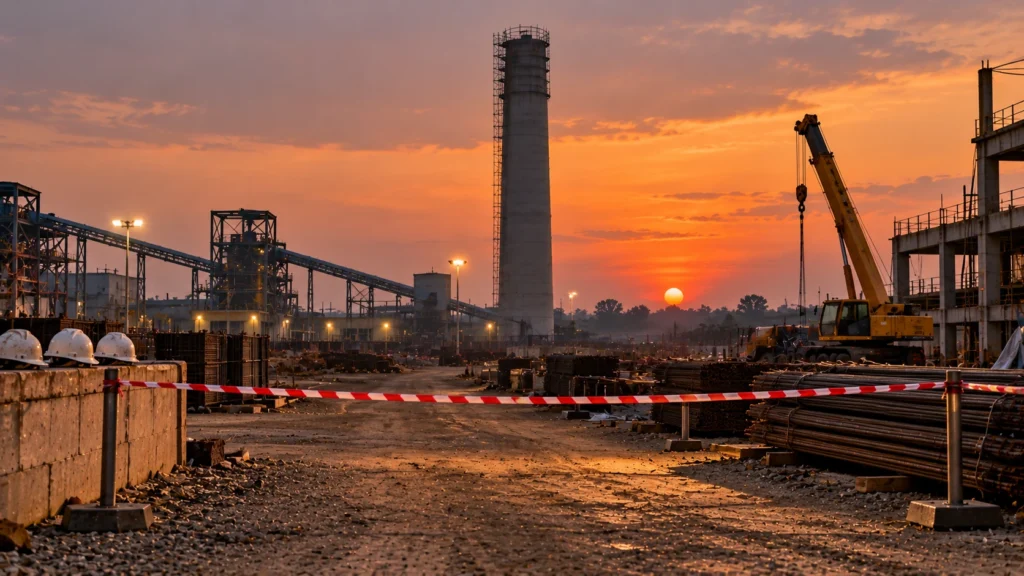
On the night of 17 October 2026 (Maha Saptami), a chimney under construction at a private sponge iron plant in Jamuria, Asansol, West Bengal, collapsed while workers were on night duty. Five were pulled from the rubble; four were declared dead and one was seriously injured. The cause is not established, police are investigating responsibility for the construction, and workers and residents protested.
Quick answers
What happened in Jamuria on 17 October 2026?
A chimney under construction collapsed at a private sponge iron plant (Unit 3 of Shyam SEL) in the Ikra industrial area, Jamuria, Asansol, while several workers were on duty. Five were pulled out; four were declared dead and one was seriously injured.
How many people died in the Jamuria chimney collapse?
Four workers, according to ETV Bharat, Daijiworld and Sangbad Pratidin. One more was seriously injured; The Telegraph says that worker is on a ventilator in a private hospital in Durgapur. An early late-night report said two, which later reports replaced.
What caused the collapse?
The cause has not been established. Jamuria police are examining who was in charge of construction, whether precautions were taken and what safety measures were in place.
Has anyone been arrested or booked?
We found no report of an FIR, an arrest or a named contractor in the sources opened. The latest report we found is The Telegraph's of 19 October 2026, which says the plant management has started its own probe.
Will the families get compensation?
Sangbad Pratidin and KTV Bangla report Rs 20 lakh per family, a job for one member and Rs 1 lakh for last rites. The Telegraph says the plant announced money for the last rites without a figure, other English reports say only that talks would be held, and we found no official confirmation of the Rs 20 lakh.
Updated 22 October 2026, about 10.30 a.m. IST. New since 18 October: The Telegraph (19 October) reports that the critically injured worker is on a ventilator in Durgapur and that the plant management has started its own inquiry. The cause, any FIR and the contractor are still not reported.
What happened
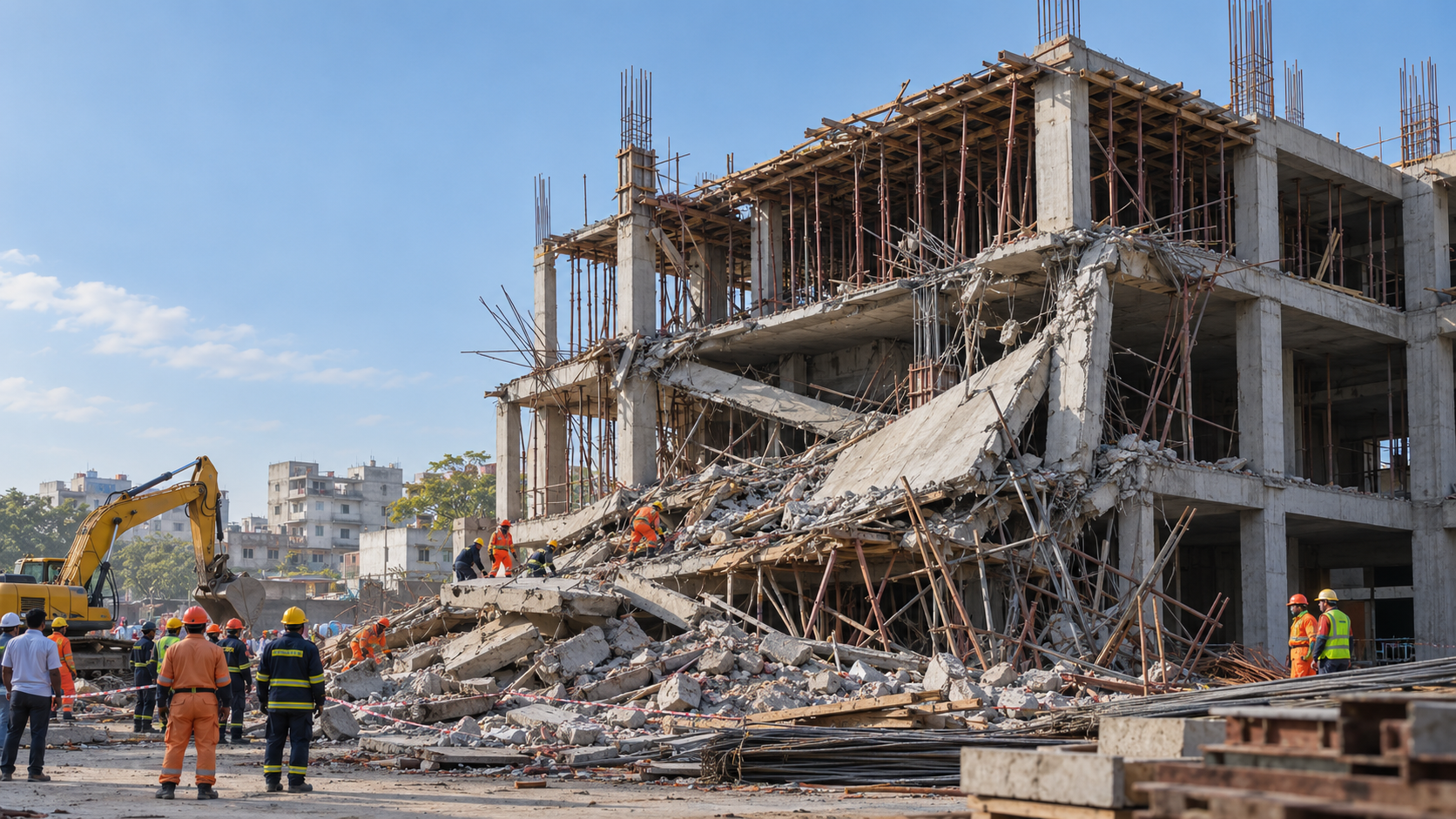
On Saturday night, 17 October 2026, which was Maha Saptami of Durga Puja, a chimney that was still being built collapsed at a private sponge iron plant in Jamuria, near Asansol in Paschim Bardhaman district, West Bengal. Several workers were on night duty at the time. Five were pulled out of the rubble. Doctors declared four of them dead, and the fifth, who was seriously injured, was admitted to a private hospital in Durgapur. This is according to ETV Bharat (English, Bengali and Hindi editions), Daijiworld and Sangbad Pratidin.
ETV Bharat names the site as Unit 3 of the Shyam SEL sponge iron factory. Sangbad Pratidin and KTV Bangla place it in the Ikra industrial area, near Gate No. 3 of the Shyam SEL factory and close to the Sarthakpur crematorium. A report by UNI describes the structure as part of an under-construction captive power plant, and KNews Odisha calls it a power plant run by Shyam SEL and Power Limited. The Telegraph (19 October) goes further and calls it a concrete blast furnace under construction in the power plant area of Shyam SEL & Power Limited, again at unit number 3. We have not seen any document that settles what the structure was, so we describe it only as an under-construction chimney at the plant, as most reports do.
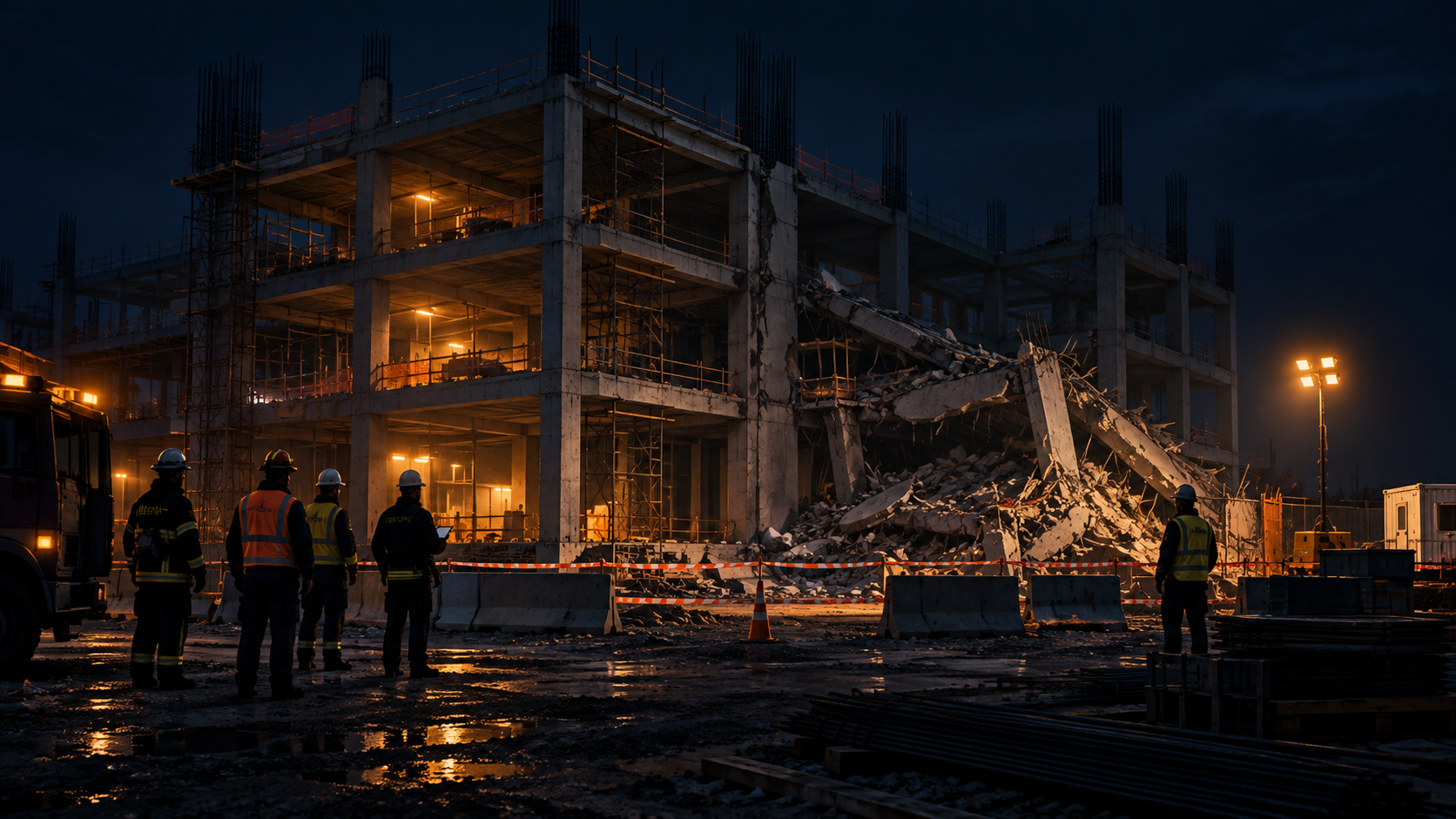
Most reports give no exact time and say “night”; The Telegraph, citing a plant source, says around 7 p.m. Aajkaal and the Hindi channel Purvi Khabar say the evening of Maha Saptami, and Aajkaal’s first report, put up at 11.27 p.m. on 17 October, said two workers had died and others were trapped. Later reports raised the figure to four. According to ETV Bharat, workers heard a loud crash and began rescue before the police, the fire brigade and disaster response teams arrived.
The people
The Telegraph (19 October), citing sources, says one of the dead was a woman, that the critically injured worker was on a ventilator at a private hospital in Durgapur, and that several other injured workers were released after primary treatment. The other reports count five pulled out, so the number hurt may be higher than five; no other outlet says so. Four workers died and one was seriously injured. ETV Bharat, Daijiworld and News4Nation name two of the dead as residents of Jamuria and say a third, according to colleagues, was from Assam; the fourth had not been identified when those reports were written. We are not printing names. Please see the official list when the police or the district administration release it.
One small difference exists on where the four died. KNews Odisha says three died at the site and one in hospital, while the other reports say five were brought out and doctors declared four dead. No report gives the chimney height, the number of people working on it or the nature of the work in progress.
Response and investigation
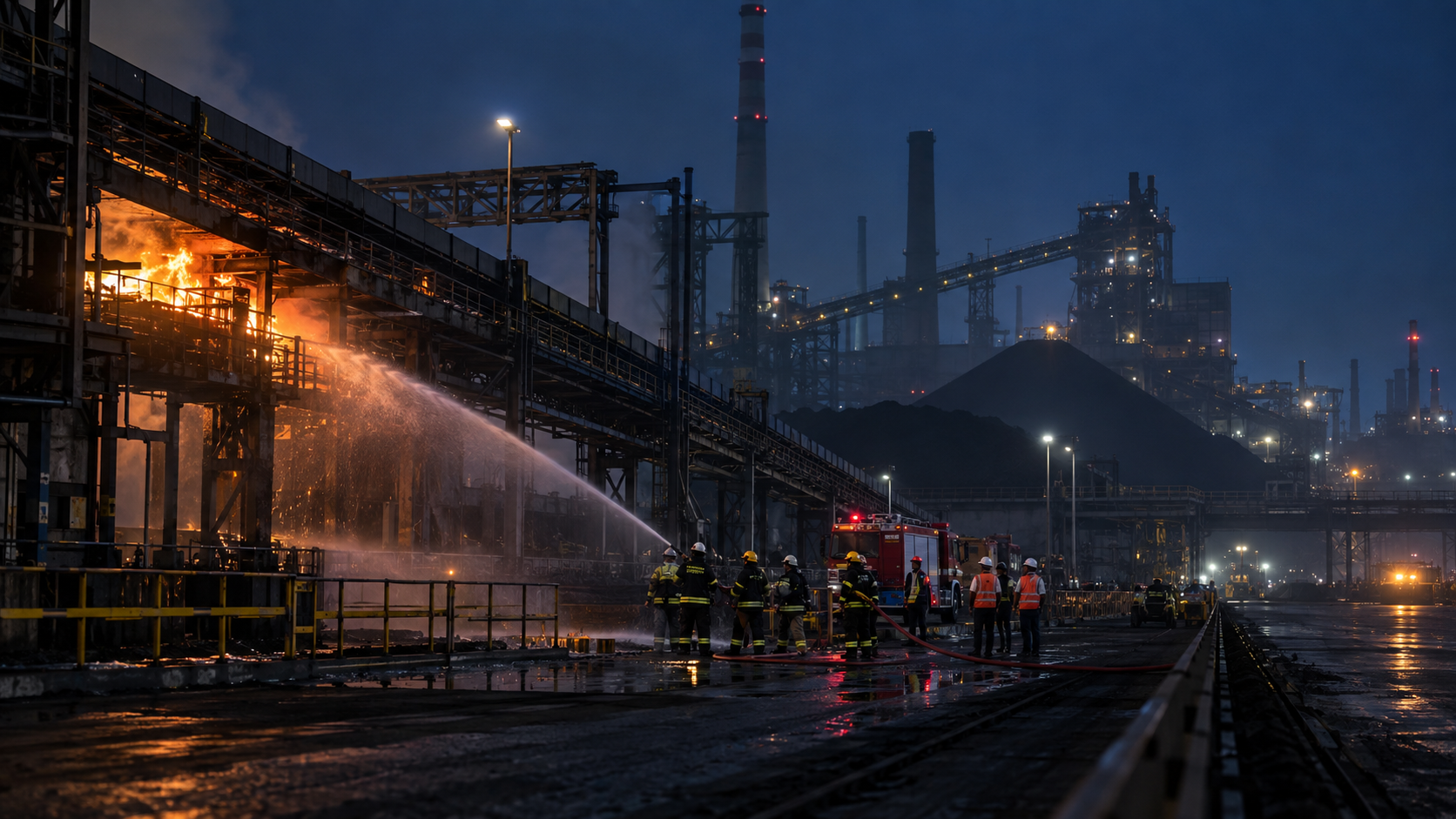
Factory workers started the rescue. Police, the fire brigade and the state disaster management force took over and the operation ran late into the night; according to Sangbad Pratidin, the search resumed in the morning to make sure no one else was trapped. Jamuria MLA Dr Bijan Mukherjee and Asansol-Durgapur Police Commissioner Pranab Kumar reached the site that night.
Jamuria police have started an investigation, and The Telegraph says the plant’s management has started its own probe as well. As ETV Bharat and Daijiworld report it, they are looking at who was in charge of the construction, whether precautions were taken while the chimney was being built, and what safety arrangements existed for the workers. The reports we opened do not name a contractor and do not say whether an FIR has been registered. The factory had not given a detailed statement when those reports were filed.
The MLA’s statements are reported differently. A summary on Indian Opinion, which cites NDTV and Sambad English, says he ruled out negligence and called the company reputed; ETV Bharat and Daijiworld say he said the cause and any negligence in safety would be examined. News4Nation quotes him as saying the company is well known and its workers are trained, and notes that locals criticised a remark he made about the deaths coming on the day of Saptami. He also said the cause was being examined and that he would talk to the management about compensation and treatment.
Protest. Residents, family members and some workers gathered outside the factory and protested about safety standards. ETV Bharat and Daijiworld report a scuffle between protesters and the police, and ETV Bharat Bangla adds that journalists were stopped from filming inside.
Compensation (unconfirmed). English reports say only that compensation would be discussed, and The Telegraph says the plant authority announced money for the last rites without giving a figure. Sangbad Pratidin and KTV Bangla report that after a meeting between administration officials and the factory management it was decided to give Rs 20 lakh to each family of the dead, a job to one member of each family and Rs 1 lakh straight away for the last rites. KTV Bangla does not say who announced it, and we found no official release or English report confirming these figures, so please treat them as reported, not confirmed.
The same night, a separate crowd crush at a Durga Puja pandal in north Kolkata killed 19 people; the two events are unrelated, and our report on that is here.
Why this matters
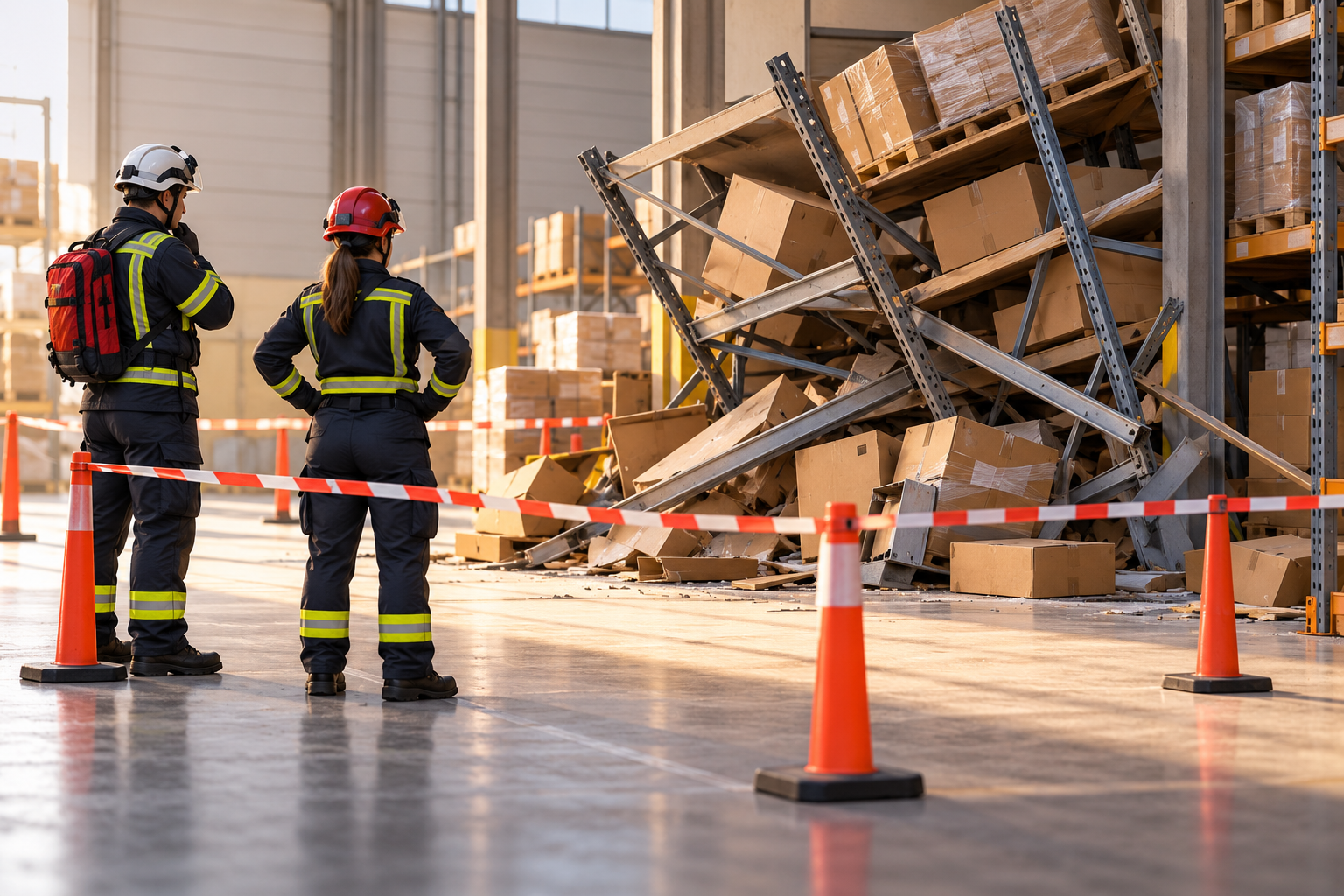
The cause has not been established, so we are not saying what failed. What we can say is why an unfinished tall structure needs special care. While a chimney or a tower is going up, it is held up by temporary works: formwork, scaffolding, props and supports that are meant to carry the load until the permanent structure is strong enough. The order in which the work is done, and the time given for concrete to gain strength before supports are removed or the next lift is loaded, is as important as the design itself. Many workers are often below and around a shaft that is still rising, including at night, when it is harder to see a warning sign.
Other incidents that we have covered show the same pattern in other kinds of structure: an unfinished building at Ambala, a construction collapse at Kudasan and a temporary lighting truss at Hyderabad. The cause in each case was different, but each time people were underneath something that was not yet finished or not yet proven.
Lessons
- Keep an exclusion zone under and around tall work. Nobody who is not part of the lift or pour should be inside the fall zone of a structure under construction. Rest areas, tea stalls and tool stores do not belong there.
- Treat temporary works as safety-critical. Formwork, props and scaffolds should be designed, checked and signed off by a competent person before loading, and checked again after rain, wind or any change in loading.
- Do not rush the sequence. Concrete needs time to gain strength; removing supports or loading the next lift early is a known way to bring down a structure. A festival deadline is not a reason to shorten this.
- Plan work at height properly. Safety harnesses with secure anchor points, helmets, edge protection and a rescue plan should be in place before anyone climbs. See our guide to PPE in the Indian workplace.
- Contractors need clear supervision. There should be a named site engineer and safety officer on every shift, including night shifts and holidays, and the principal employer should know exactly who is working under which contractor.
- Workers and families: ask and write down. Ask who your employer and your supervisor are, whether you have been given a safety induction, and what the rule is if you see a crack, a sway or a loose support. Keep a photo of your identity card, your gate pass or attendance record and the contractor’s name. If something looks wrong, tell the supervisor and a colleague, and step back from the area.
- If a structure falls, do not rush in. Call 112, the single emergency number. Dial 101 for the fire service and 108 for an ambulance; 108 is the national ambulance number, but the service and the response differ from state to state, so if it does not connect, use 112. Keep the road clear for fire engines and ambulances. Untrained people entering the debris can be hurt by further falls. Our guide on which emergency number to call explains the numbers.
- Families after an accident. Ask for the FIR number, the post-mortem report and the company’s written compensation decision, and keep copies. If the hospital or the employer will not give them, approach the police station and, if needed, a local trade union or a legal aid centre.
More on Asansol: see our Asansol fire and emergency safety guide for emergency numbers and the local risks to know.
What is still not known
It is not known why the chimney collapsed, how tall it was, what stage of construction it had reached, who the contractor was, how many people were working on or near it, or whether an FIR has been registered. The compensation figures above are reported by two Bengali outlets only. Apart from The Telegraph of 19 October, we found no report dated after 18 October with any new figure or finding, and nothing from 20 to 22 October, so this page reflects reporting up to 19 October. We will update it when the police, the administration or the company publish an official statement.
- A chimney under construction at the Shyam SEL sponge iron plant, Jamuria, collapses while several workers are on duty; factory workers start the rescue
- Aajkaal publishes its first report: two workers dead, others trapped
- Police, fire brigade and disaster response teams continue the rescue; five workers are pulled out and four are declared dead; MLA Bijan Mukherjee and Police Commissioner Pranab Kumar reach the site
- Search resumes to check that no one else is trapped; residents, families and workers protest outside the factory and there is a scuffle with police
- Sangbad Pratidin and KTV Bangla report a meeting of administration and management that decided on Rs 20 lakh per family; English reports say compensation is still to be discussed; Jamuria police continue their investigation
- The Telegraph reports the critically injured worker on a ventilator in Durgapur, other injured released after primary treatment, and the plant management starting its own probe; no later report found
Why consequences escalated
- A chimney that was still under construction collapsed during night duty, trapping several workers.
- Four workers died and one was seriously injured and, per The Telegraph, is on a ventilator; no further deaths or revisions were found after 19 October.
- The cause is not established; police are examining who was in charge of construction, what precautions were taken and what worker-safety measures were in place.
- The MLA's statements are reported differently: Indian Opinion (citing NDTV and Sambad English) says he ruled out negligence, while ETV Bharat and Daijiworld say negligence would be examined.
- No FIR, arrest, contractor name or official compensation notice appears in the reports opened.
Failures and risk multipliers
- Not established: no cause or fault has been found, so no specific mistake is attributed here.
- Open question: whether workers were inside the fall zone of a structure still under construction.
- Open question: whether temporary supports, sequence of work and supervision were adequate on the night shift.
- Open question: whether the work was continued through the festival evening without adequate checks.
Actions that reduce risk
- Keep non-essential people out of the fall zone around tall structures under construction.
- Have temporary works designed, checked and signed off by a competent person before loading and after rain or wind.
- Give concrete the time it needs to gain strength before removing supports or loading the next lift.
- Name a site engineer and safety officer on every shift, including nights and holidays.
- Workers and families: keep a record of the employer, contractor and attendance, and ask for the FIR number and written compensation decision after an accident.

Leave a comment