
Quick answers
What is a Bambi Bucket?
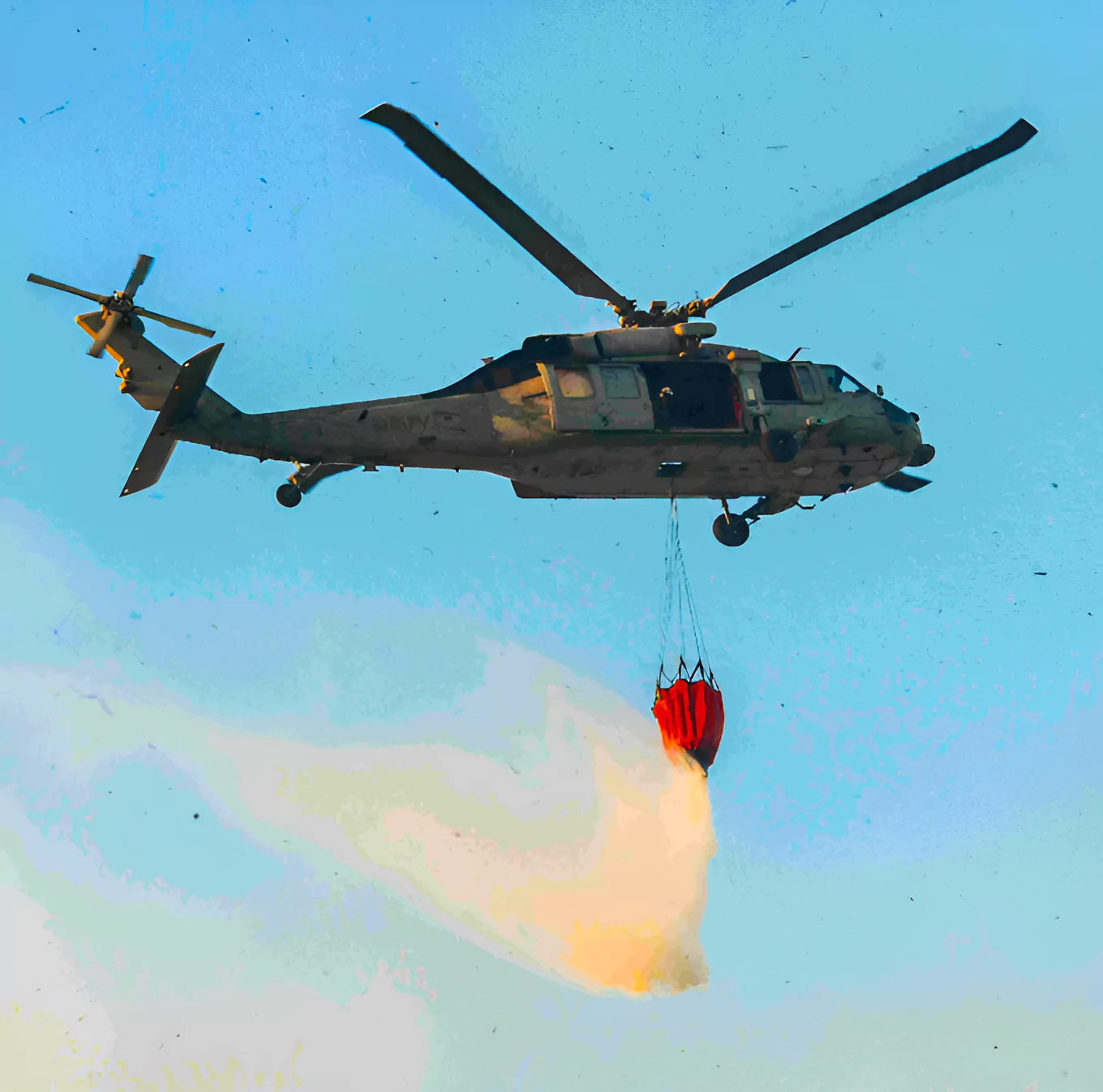
A light, collapsible bucket hung under a helicopter. It is filled with water and releases it on a fire through a valve the pilot controls. It is also called a helicopter or heli bucket.
Who invented the Bambi Bucket and when?
Canadian inventor Don Arney, in 1982, to replace rigid buckets that were inefficient and often failed.
Why is a Bambi Bucket better than a rigid water bucket?
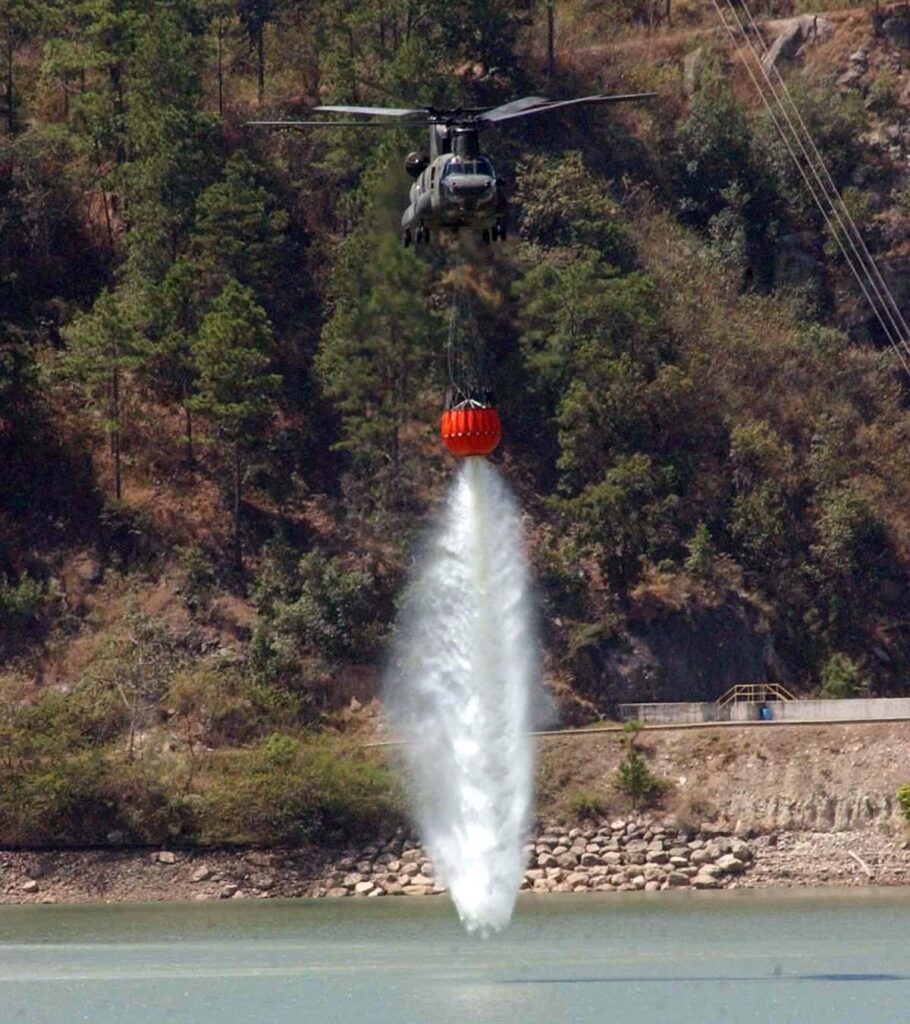
It folds up and travels inside the helicopter, and it lets water out as a solid column, so drops are more accurate, less water evaporates on the way down and it lands with more force.
Has India used Bambi Buckets on forest fires?
Yes. In April 2024 the Indian Air Force used a Mi-17 V5 helicopter with a Bambi Bucket against forest fires near Nainital, filling it from Naini and Bhimtal lakes.
Where is a Bambi Bucket refilled?
From lakes or even swimming pools near the fire, so the helicopter can get back to the fire quickly.
Is aerial firefighting dangerous for the crew?
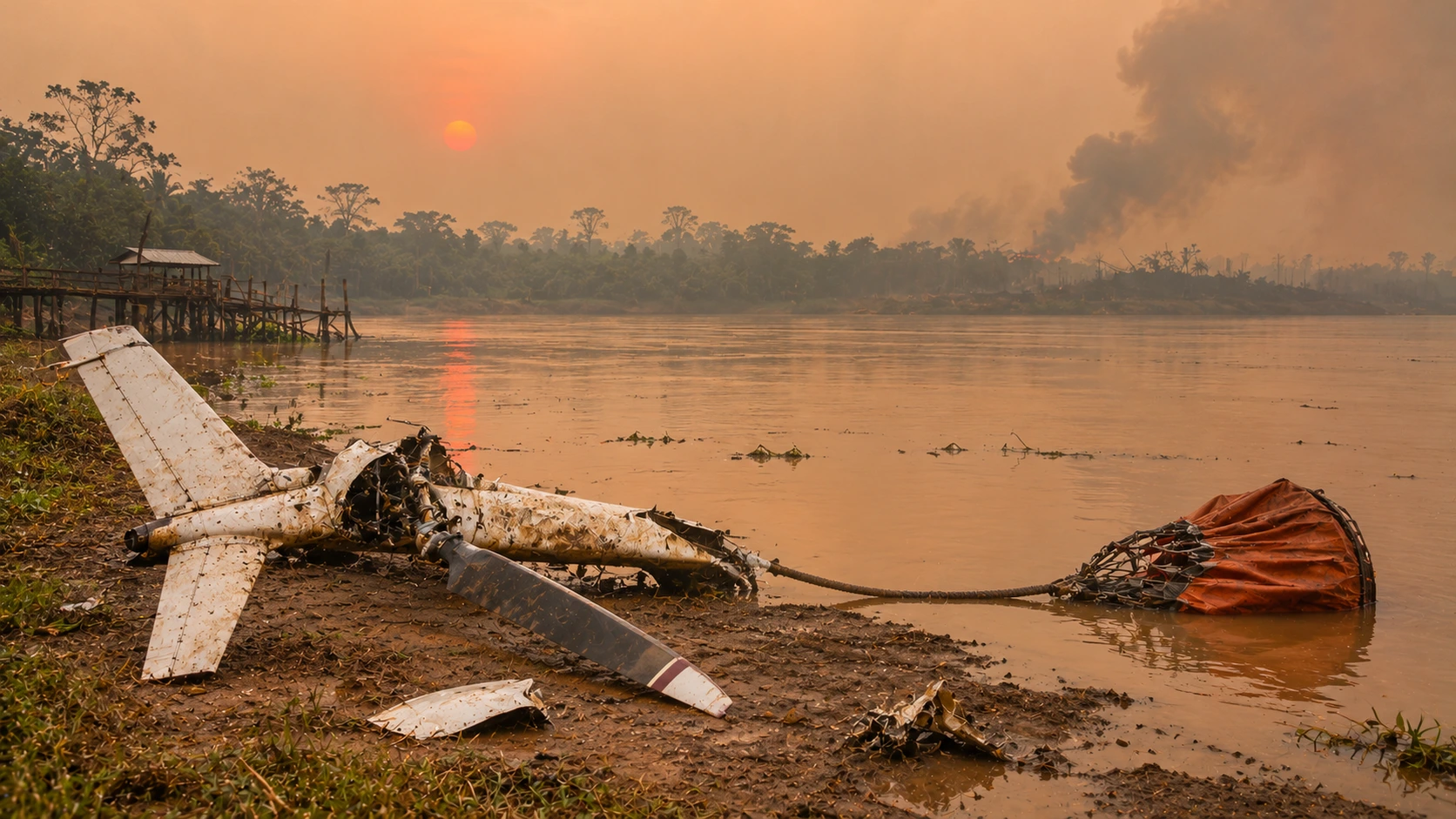
Yes. In November 2026 two firefighting helicopters crashed while taking on water in Kalimantan, Indonesia, and four people died in all. No cause had been published when we checked on 11 November 2026, and Indonesia's disaster agency said it would evaluate how water is drawn from rivers.
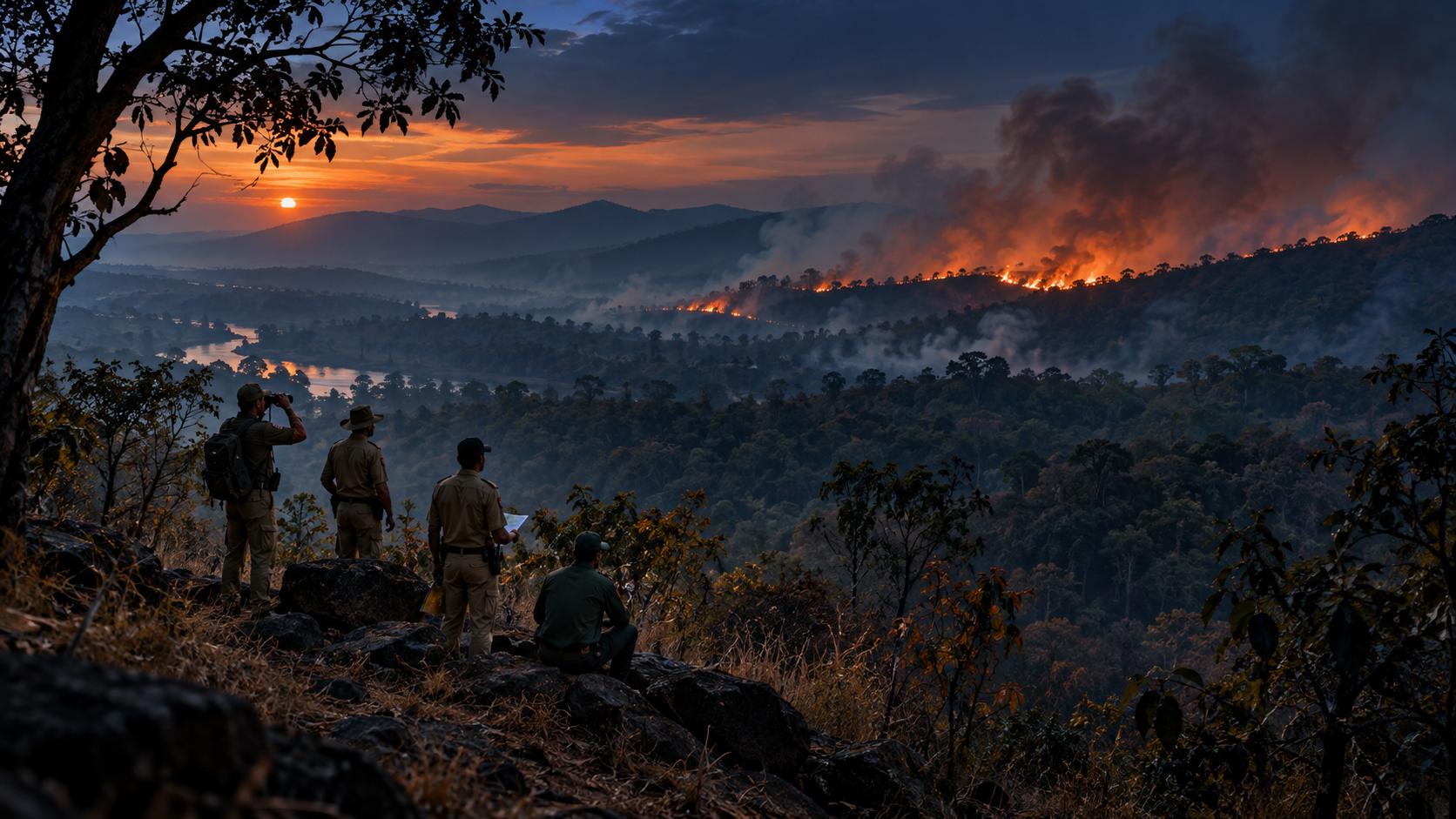
When a forest fire is burning on a steep hillside that no fire tender can reach, a helicopter with a Bambi Bucket hanging below it is often the quickest way to get water onto the flames. You may have seen the pictures from the hills: a big bucket swinging under a helicopter, filled from a lake and emptied over a burning ridge.
What is a Bambi Bucket?
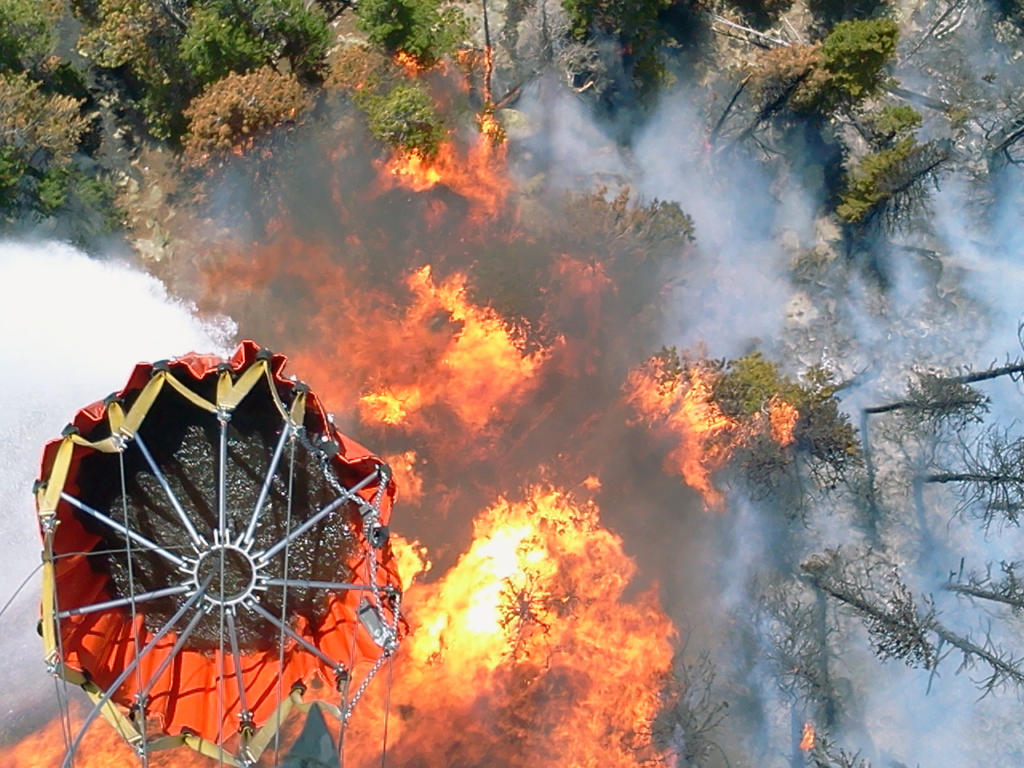
A Bambi Bucket, also called a helicopter bucket or heli bucket, is a light, collapsible container slung under a helicopter. It has been used in aerial firefighting since the 1980s. Three things make it useful.
- Controlled drops. The pilot works a valve that lets the water out exactly where it is needed.
- Quick refills. It can be filled quickly from a lake or even a swimming pool, so the helicopter gets back to the fire fast.
- Many sizes. According to the material this article is based on, models range from 270 litres to more than 9,840 litres.
Where it came from
Canadian inventor Don Arney came up with the Bambi Bucket in 1982. The water buckets helicopters carried before were rigid, wasteful and often failed. Arney’s design changed two things.
- Easy to carry. Old rigid buckets had to be trucked or flown in separately. The Bambi Bucket folds up and travels inside the helicopter until it is needed.
- Better drops. It lets the water out as a solid column rather than a spray. That means more accurate drops, less water lost to evaporation on the way down and more force where it lands.
The same material says it is now used in more than 115 countries by over 1,000 helicopter operators. We have not been able to check these figures against an independent source.
Bambi Bucket use in India
In April 2024, when forest fires in Nainital district reached the edge of the town, the Indian Air Force sent in a Mi-17 V5 helicopter for what it called “Bambi Bucket Ops”. The helicopter filled the bucket from Naini and Bhimtal lakes and dropped the water on the burning forest, The Tribune reported on 27 April 2024. Boating on the lakes was halted while it worked.
What a helicopter can and cannot do
Aerial drops slow a forest fire down and cool the hottest spots, but ground crews still have to put it out. A helicopter also has to stop its drops if drones are flying nearby. So never wait for one if a fire is moving towards your village. Leave early.
Flying a water-bombing helicopter is itself dangerous work. In November 2026 two firefighting helicopters crashed in Indonesian Borneo within five days, both while taking on water: an Indonesian Army Mi-17V5 on 4 November, in which three of the eight aboard died, and a chartered Super Puma that went into the Barito River on 8 November, in which one of the three crew died. No cause had been published when we checked again on 14 November 2026, and Indonesia’s disaster agency said it would evaluate seven safety areas, including how water is drawn from rivers. For people on the ground the advice is the same as above: stay well clear of any lake, river or shore where a helicopter is dipping a bucket, and keep boats, swimmers and drones away, as boating on the Nainital lakes was halted in 2024 while the IAF helicopter worked.
How are forest fires spotted in India, and why can help still arrive late?
The short answer: most fires are first seen by satellite or by local people, and a satellite alert can be an hour or more behind the fire. That is why a phone call from the ground still matters. The points below come from the Forest Survey of India (FSI) technical note on its forest fire alert system, published in 2019, and a Government of India release on the India State of Forest Report 2023. The system has been upgraded since 2019, so treat the technical limits as a guide, not as today’s exact figures.
How the alerts work. FSI uses data from two satellite sensors, MODIS with 1 km pixels and SNPP-VIIRS with finer 375 m pixels, to send fire alerts to State Forest Departments. Since 2010, registered users on the FSI website have also been able to receive alerts by SMS for the districts or states they choose.
What the alerts cannot do. FSI itself lists limits in its note:
- The system cannot detect fires through thick cloud, smoke and haze. A large fire may stay unseen for days, and a small one may burn out without ever being detected.
- Alerts correspond to only six satellite passes a day. Fires burning between passes are missed.
- The time between detection and the alert reaching the user is 1 to 1.5 hours, which FSI says limits use for tactical firefighting.
- A 375 m pixel cannot say exactly where in that square the fire is, and a 1 km pixel may show a fire as small as 100 square metres.
- Some fires in industries or farmland near forest boundaries can be wrongly sent as forest fires.
FSI therefore recommends using the alerts for strategic purposes and not relying on them fully for tactical firefighting. It says watchtowers, ground sensors and local information should be combined with them.
The scale of the problem. The Government of India’s release on the India State of Forest Report 2023 says 203,544 fire hotspots were recorded in 2023-24, down from 223,333 in 2021-22. The same release lists the National Action Plan on Forest Fire 2018, which sets out measures to prevent fires, build resilience and strengthen community capacity. For a state-level view, see our five-year forest fire data for Uttarakhand and Himachal.
What this means for a helicopter. A water drop can only be flown after someone has decided where the fire is and a crew has been sent. If you see smoke in a forest, do not assume a satellite has already reported it. Call 112 or 101, or the forest department, and give the village, the trail or the nearest landmark and which way the smoke is moving. That one call can save the hour that a satellite alert may take.
If you live or trek near a forest
- Report smoke early to the forest department, 112 or 101, and give the nearest village or landmark.
- Clear dry leaves and grass from around homes, sheds and fodder stacks.
- Keep the village water tank or pond accessible for firefighters.
- Never fly a drone near a forest fire, and never stand under a helicopter’s path to film it. Falling water is heavy enough to hurt people.
- Never leave a campfire or a bidi burning in the forest.
What needs attention
- A Bambi Bucket is a collapsible bucket slung under a helicopter that scoops water and drops it on a fire
- Its pilot-controlled valve lets the crew drop water in a column on a chosen spot
- It can be refilled from lakes, rivers or tanks near the fire, which saves flying time
- Aerial drops slow a forest fire, but ground crews still have to put it out
- People on the ground near a drop zone can be hurt by the weight of falling water
- Scooping water is a risky stage of the job: two firefighting helicopters crashed while taking on water in Indonesian Borneo in November 2026, and no cause had been published by 11 November 2026
Controls that reduce risk
- Report a forest fire early to the forest department, 112 or 101 with the nearest village or landmark
- Clear dry leaves and grass from around homes, sheds and fodder stacks near forests
- Keep a water tank or pond near the village accessible for firefighters
- Agree a meeting point and escape route for the village before the fire season
- Follow forest department advisories during the dry months
Common unsafe practices
- Flying drones near a forest fire; helicopters may have to stop drops
- Standing under or near a helicopter's flight path to watch or film
- Lighting fires to clear dry leaves or stubble near forests in the dry season
- Waiting for a helicopter instead of leaving early when a forest fire is close
- Crowding roads that fire tenders and forest staff need
Leave a comment