
Quick answers
What happened in Firozabad on 25 October 2026?
A speeding car hit villagers walking to a Teshu-Jhanjhi immersion on the Shikohabad-Bateshwar road at about 8.30 pm. Four were reported dead at first and later reports say five. Alcohol is suspected, not confirmed. We found no FIR or charge on 26 October.
Do village processions need police permission?
Under Section 30 of the Police Act, 1861 the police can direct how processions on public roads are conducted and can require organisers to take a licence. We could not check the Uttar Pradesh text, and we found no report on whether the Firozabad group had permission. Ask your local police station.
Do the police close roads for immersion processions?
In cities, yes. Bhopal traffic police published closures and diversions for the Durga Visarjan procession on 21 October 2026, and Bhubaneswar police did so in October 2025. We found no such notice for a village ritual.
How can I make a children's procession safer at night?
Our suggestions: tell the police first, use a lane or a short daylight stretch, wrap reflective tape on poles and sticks, put an adult with a torch at each end, one adult for every four or five children, walk facing traffic.
What is the drink-driving limit in India?
More than 30 mg of alcohol per 100 ml of blood under Section 185 of the Motor Vehicles Act, shown by a breath analyser or another test, including a laboratory test.
What should a driver do after hitting someone?
Stop, switch on the hazard lights, call 112 and 108, and wait for the police. Driving off puts more people at risk. We suggest not confronting a crowd; let the police take over.
What should I do if a car hits a group of people?
Call 112 and 108, make the scene safe, do not move a badly hurt person unless there is danger, press firmly on bleeding, and keep the crowd calm. Do not beat the occupants.
How many pedestrians die on Indian roads?
35,221 of 1,72,890 road deaths in 2023, about 20.4%, according to an OpenCity analysis of the MoRTH report. We found no count of procession crashes.
On Sunday night, 25 October 2026, villagers in Firozabad district, Uttar Pradesh, were on their way to immerse their Teshu-Jhanjhi figures when a speeding car came down the Shikohabad-Bateshwar road and hit the group. Four people were reported dead at first, and later reports from the District Magistrate and the police put it at five. Many of those hit were women and children. It was a village ritual, done on foot, after dark, on a road that was open to traffic, with no barrier between the walkers and the cars. That last part is not unusual. This page is not a second retelling of the crash (our case study on the Firozabad crash has the details and the disputed figures). It asks a plainer question: when children walk to an immersion, a baraat or a night procession along a village road, what keeps them safe, and who is responsible for it? It covers the four procession-related incidents of the past week, what the law and traffic police say and do, and what organisers, drivers and parents can do. Updated 26 October 2026.
In short
- Firozabad, 25 October 2026: a car hit a group walking to a Teshu-Jhanjhi immersion at about 8.30 pm. The toll is contested: four first reported (PTI, ANI), five in later reports. The District Magistrate said alcohol was suspected; no test result has been reported.
- The same week: three other immersion processions ended in deaths in Kota, Gorakhpur and Jabalpur. Those were water and electricity cases, not traffic, but they share the night-time, the crowd and the lack of anyone in charge of the route.
- Pedestrians are about one in five road deaths in India: 35,221 of 1,72,890 in 2023 (an OpenCity analysis of the Ministry of Road Transport and Highways report; the percentage is our arithmetic).
- The law gives the police a lever: Section 30 of the Police Act, 1861 lets the police direct how processions on public roads are conducted, fix routes and timings, and ask organisers to take a licence. Traffic police in Bhopal and Bhubaneswar published road closures for their immersion processions. We found no such notice for a village ritual.
- Drink-driving is an offence at 30 mg of alcohol per 100 ml of blood (Section 185, Motor Vehicles Act), and it has to be proved by a test.
- Reflective tape, an escort at each end, a fixed time and route, and one adult for every few children cost very little. They are our suggestions, not rules, and we label them as such below.
Firozabad, in brief
ANI quotes District Magistrate Santosh Kumar Sharma as saying four people had died and eight were injured, that the villagers were walking along the roadside in a group with many women and children, that the car had been seized and the driver and the other occupants taken into custody, and that preliminary reports suggested the driver may have been drunk, to be settled by the investigation. PTI, as carried by India Today and Punjab Kesari, places the crash at about 8.30 pm near Chhatanpura village, Nasirpur police station area, and says three of the four dead were teenage girls and the fourth a young man. The India Daily report, in Hindi, counts five dead and 14 injured, says the villagers had completed the Tesu-Jhanjhi wedding ritual before setting out, and says that, according to eyewitnesses, the car did not stop after the first collision and hit more people near the labour colony; villagers chased it, stopped it and beat the four men inside. We treat the five-death toll, the second collision and the chase as reported by that outlet and in later Hindi reports, not as police findings. We are not naming the dead; several were minors. As of the morning of 26 October we found no FIR, charge or compensation amount in the reports we opened.
Four processions, one week
Between 20 and 25 October four procession-related incidents were reported on our pages, with 14 people dead on our count (4 + 3 + 2 + 5, the last contested). In Kota, a boat carrying an idol capsized in a canal and four young men died. In Gorakhpur, a metal part on a trolley touched an 11 kV line and three young men died, with the power supply disputed. In Jabalpur, current from a high-tension line killed two young men on a tractor-trolley, and a third death is unconfirmed. And in Firozabad the hazard was the road itself. Our roundup of the Navratri and Dussehra week also lists a bag of crackers exploding in an immersion procession in Bhadohi and a car and a tempo full of fair-goers colliding in Sonbhadra. The hazards differ. What they share is that each procession moved at night or at dusk, in a crowd with children and young people, along a route that someone chose and nobody checked.
Why a night walk on a village road is dangerous
Government data says pedestrians were 35,221 of the 1,72,890 people killed on Indian roads in 2023, up from 32,825 in 2022 (OpenCity, reading the Ministry of Road Transport and Highways report; Uttar Pradesh alone had 23,652 road deaths that year, the same analysis says). We could not open the ministry report itself, and we found no figure for pedestrians killed in processions, so we make no claim about how common this kind of crash is. The reasons below are our own reading, based on the reports of the past week, and not official findings.
- A walking group is wide and slow. Fifteen people carrying a figure and a lamp can take up half the road. A driver doing 70 or 80 km/h has only a couple of seconds.
- Children are small and dark-clothed. In a village lane with no street lights, a child in a dark kurta or school sweater is very hard to see from a car.
- Attention is on the ritual. Walkers look at the figure, the lamp, each other and the singing, not at the road behind them.
- A road that was a lane an hour ago. Where a village lane meets a state road or a highway link, the traffic does not know there is a procession. Firozabad reports mention the Agra-Lucknow Expressway direction as where the car came from (India Daily); that is one outlet’s detail.
- Alcohol and speed in festival week. Festival nights are when drinking before driving is more likely. In Firozabad it is suspected, not confirmed.
What the law and the police say
Processions on public roads. Section 30 of the Police Act, 1861, as printed on the legal text site Lawgist, lets the District Superintendent or Assistant District Superintendent of Police direct the conduct of all assemblies and processions on public roads, fix their routes and the times they may pass, and, where the police think a gathering could lead to a breach of the peace, require its organisers by general or special notice to apply for a licence. The licence can name the licensees and set conditions, no fee may be charged for it, and the police may also regulate the use of music in the streets during festivals. This is the central Act. We could not open an official India Code copy, several states have amended it or have their own police acts, and we have not checked the Uttar Pradesh wording. Please treat this as a summary, not legal advice.
What traffic police actually do for big processions. The Bhopal traffic police published a plan for the Durga Visarjan procession on 21 October 2026: the main procession from 8 pm that Wednesday until the next morning; buses, magic vans and cars kept out of named crossings from 5 pm; traffic towards the bus stand stopped at four points from 6 pm; heavy vehicles barred from entering the city until 8 am on Friday; alternative routes listed; barricades, divers and life jackets arranged (Free Press Journal). The Bhubaneswar-Cuttack police commissionerate did the same in October 2025: Janpath closed to all vehicles from 2 pm until the procession ended, with set diversions for other procession routes (OdishaBytes, 3 October 2025). These are city processions with a published route. We found no equivalent notice for a village ritual, and no report that the Firozabad group had any permission, escort or barricade. That does not prove there was none.
Uttar Pradesh orders. A 2021 order from the state Home department, issued in the Covid period and reported by National Herald, told districts that permission for pandals should not disrupt public traffic, that small vehicles should be used for idol immersion and the number of people kept to a minimum, and that traffic should not be obstructed. It is dated and was written for that year. A 2024 report says the Uttar Pradesh government renewed its enforcement of the ban on carrying passengers in tractor-trolleys after a series of accidents (Drishti IAS; the report does not give the legal basis or penalties). Several of the processions above used tractor-trolleys.
Drink-driving. Section 185 of the Motor Vehicles Act applies to a driver with more than 30 mg of alcohol per 100 ml of blood, found by a breath analyser or any other test including a laboratory test. The Kerala High Court has held that a doctor’s opinion that the accused smelt of alcohol, without a test, cannot sustain a prosecution (LiveLaw, 15 January 2021). That is why the District Magistrate’s words in Firozabad were careful. It also means that if you are ever hurt by a driver you suspect is drunk, a blood or breath test soon after the crash matters.
If you organise a procession or ritual walk
None of this is a rule. These are our suggestions, built from the cases above and from how the police plan city processions. They can be done in a village for almost no money.
- Tell the police first. Call or visit the local police station or chowki a day ahead with the date, start time, route and approximate numbers. Ask whether they need a licence under Section 30 for your area and whether a constable can be at the road crossing. A village sarpanch or a puja committee can do this in ten minutes.
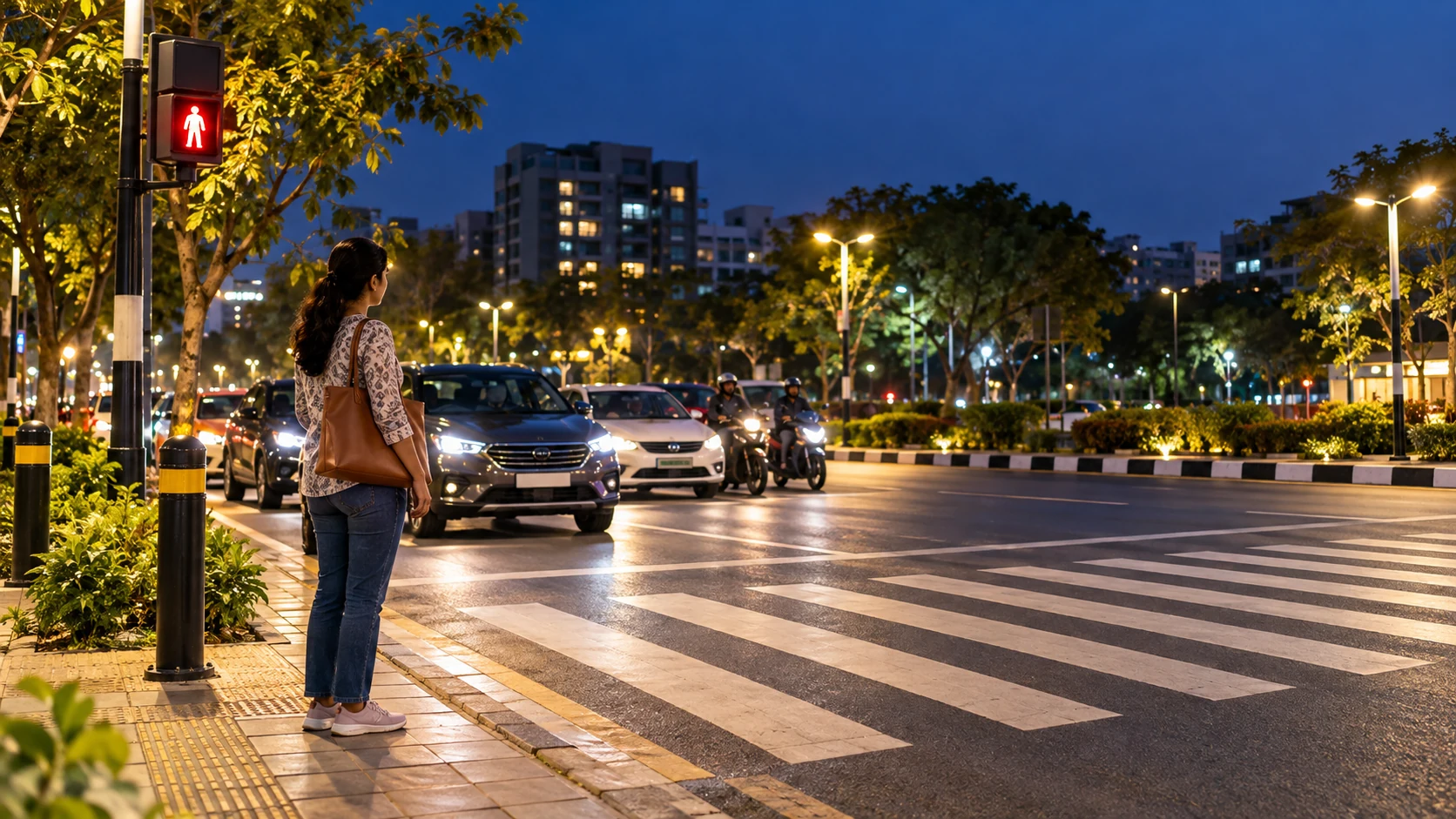
- Pick the route, not the road. Use the lane, not the state road. If you must cross or walk along a main road, choose a short stretch in daylight or the early evening, not 9 pm.
- Be seen. Wrap reflective tape on the figure’s pole, on the lamp stand and on the sticks and drums. Give the front and rear walkers a torch or a bright cloth, and put a lit lamp or torch at the back of the group. Reflective stickers and tape are cheap and easy to find.
- Put two adults at the road ends. One walks behind with a torch, one in front, and both face the traffic and are allowed to stop it with a raised hand. A tractor or a parked vehicle across the road behind the group is a better shield than nothing, but only with its lights on and a person in it.
- Keep children in the middle, and in a line. One adult for every four or five children, children on the side away from traffic, hands held or a rope loop, and a head count at the start and at the end. No running ahead.
- Walk on the right facing traffic on a road without a footpath, in single or double file, so that you see what is coming.
- No alcohol, no crackers, no DJ on the road. Loud music hides the sound of a horn. A bag of crackers in a procession is a separate danger (Bhadohi, 20 October).
- Know the electric line. Look up before you start. Keep poles, flags and figures low, and keep away from lines, as the Gorakhpur and Jabalpur cases show.
- Water: if the ritual ends at a pond or canal, use a shore-first plan; see our idol immersion guide.
If you are driving near a village in festival week
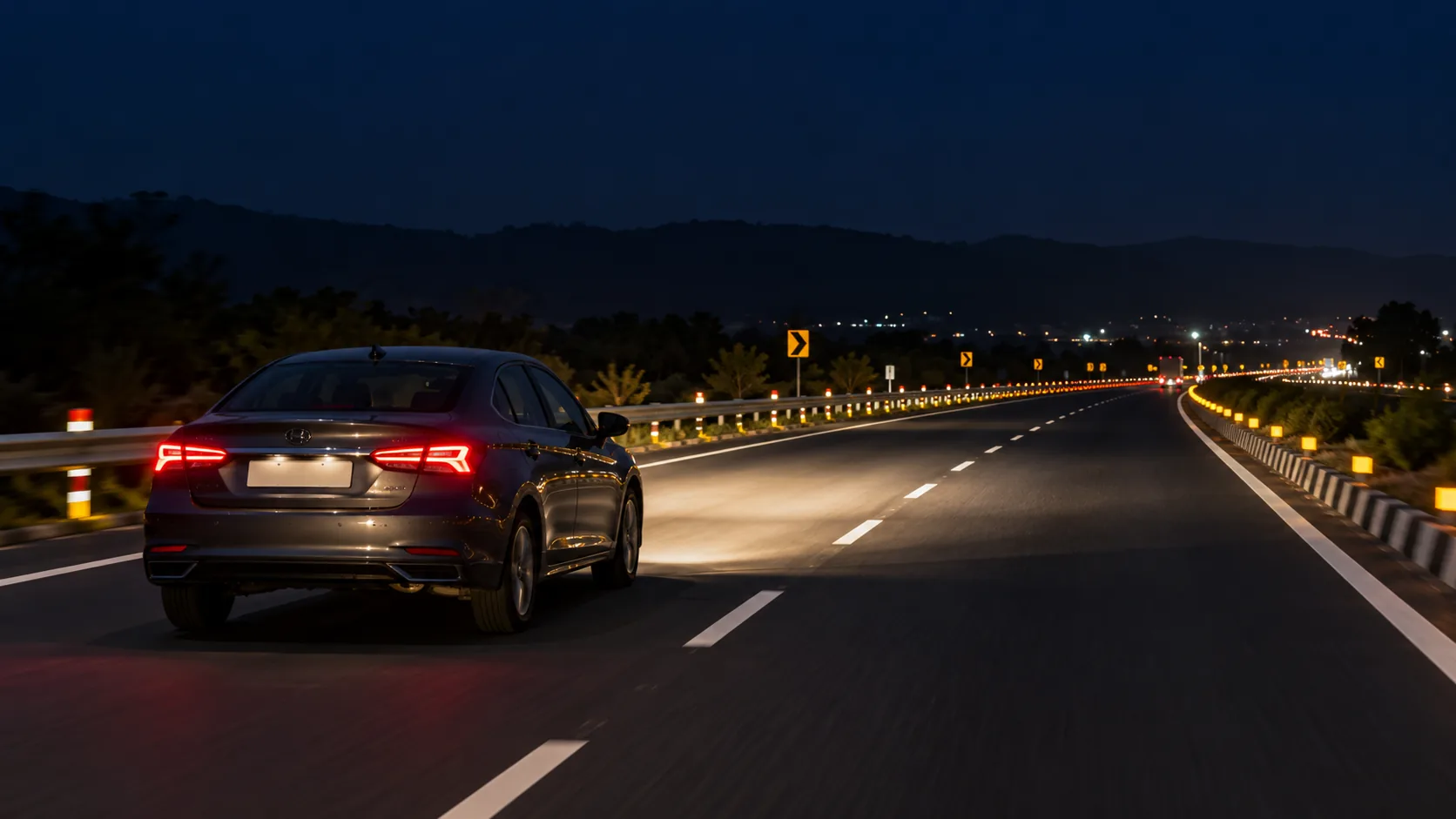
- Slow down to walking pace when you see lamps, drums, a crowd or a tractor-trolley ahead on a village road, and expect people on the road after a bend or a crossing. The speed limit is not the speed you need.
- Do not drink and drive. If you have been drinking, hand over the keys. Someone sober in the car makes a difference.
- Dip your headlights and keep them on, and use your horn gently, not with a long blast. A loud horn can make a group scatter.
- If you have hit someone, stop. Call 112 and 108. Do not drive away. In Firozabad, the report says the car carried on after the first collision, and the villagers chased it. A driver who flees puts more people at risk and a crowd that is angry puts the occupants at risk too. Our advice is to stay, switch on the hazard lights and call for help, and let the police take over.
- See our night driving plan for fatigue, glare and visibility.
If you are a parent or family member
- Children under about 12 should walk with an adult holding their hand on the side away from the road. Older children should be told the rule once: when you hear a vehicle, step off the road.
- Dress them in light or bright clothes, or tie a reflective band or a bright dupatta on their arm. This is our suggestion, based on the Ministry of Road Transport and Highways animation below on wearing bright clothes at night.
- Ask who is walking behind the group with a torch. If no one is, offer to do it.
- Have a family meeting point and a phone number written on the child’s wrist or in a pocket, in case you are separated in the dark. See our night walking plan.
- It is all right to say no to a night procession on a highway link for small children, and to walk them home early.
If a vehicle has hit a group
- Call 112 and 108 first. Say how many people are hurt, and the landmark. In a village, name the nearest large shop, school or temple.
- Make the scene safe. Switch on any torch or phone light, wave down traffic from both sides, and keep children who are not hurt away from the road.
- Do not move a badly hurt person unless there is a danger (traffic, fire). If someone is bleeding, press firmly on the wound with a clean cloth. If someone is not breathing, tell the call-taker; they can guide you on chest compressions. See our basic first aid guide.
- Keep the crowd calm. Beating the occupants of a car (reported in Firozabad) can destroy evidence, may be an offence, and can badly hurt someone who has not been tried. Let the police take them away, and write down the registration number if you can.
What is still not known
- Firozabad: the final death toll, the exact count of injured, whether alcohol is confirmed, and whether any FIR, charge or compensation has followed. We found nothing on 26 October.
- Whether the Firozabad group had police permission, an escort or any lights or reflectors.
- Whether Uttar Pradesh or any state has a rule specific to village rituals and processions on roads. We found none.
- How many people are killed or hurt each year in processions on Indian roads. We found no official count.
We will update this page when the picture changes. Updated 26 October 2026. Related: pandals, melas and festival crowds, children near water and the Chorbagan pandal stampede.
What needs attention
- In the Firozabad reports the victims were on foot, along the roadside, in a group with many women and children, at night; we found no report of any escort, barricade or road closure.
- City processions in Bhopal and Bhubaneswar get published closures and diversions; we found no equivalent for a village ritual.
- Section 30 of the Police Act gives the police the power to fix routes and timings and require a licence, but the text we read is the central Act and state versions may differ.
- The District Magistrate suspected alcohol; Section 185 of the Motor Vehicles Act needs a test to prove it.
- Four procession-related incidents in a week involved three different hazards (traffic, water, electricity); the common factors are night, a crowd and an unchecked route.
- Pedestrians were about one in five road deaths in India in 2023, but we found no official count of procession crashes.
Controls that reduce risk
- Organisers: tell the police station a day ahead with date, time, route and numbers; ask about a licence and a constable at the crossing (our suggestion).
- Use a lane or a short daylight stretch, not a highway link at night.
- Put reflective tape on poles and sticks, a torch at each end and an adult for every four or five children.
- Walk facing traffic, single or double file, children on the side away from the road.
- Drivers: walking pace near lamps, drums or a crowd; never drink and drive; if you hit someone, stop and call 112 and 108.
- Parents: bright clothes or a reflective band, a phone number in a pocket and a head count at the start and end.
- After a crash: call 112 and 108, make the scene safe, press on bleeding, keep the crowd calm.
Common unsafe practices
- Walking a procession along a through road at 8 or 9 pm with no lights, reflectors or escort.
- Letting children walk at the edge of the road, or ahead of the group.
- Drinking before driving in festival week.
- Driving through a village at highway speed.
- Playing a loud DJ or bursting crackers in the group, so no one hears a horn.
- Driving off after hitting someone, or beating the occupants of the car.
- Taking tall poles, flags or figures under overhead lines.


Leave a comment