
Quick answers
Can one emergency plan cover heatwaves, floods and smoke?
No. Heat, floodwater, smoke and power cuts each need different action. Work out which hazards affect your area and plan for each one separately.
How do I prepare my household for climate-related emergencies?
Note who depends on medicines, cooling, electricity, mobility equipment or help to get out. Keep phone numbers, water, medicines and a route everyone can manage in a plan you can actually follow.
What should I do during extreme heat at home?
Cut down time in the sun and keep the house as cool as you can. Heat can make existing illness worse, and heatstroke is an emergency.
Where can I get current climate and disaster alerts in India?
Use messages from your local authority and India's SACHET national alert portal. Do not trust old screenshots or videos as current alerts, and call 112 for immediate danger.
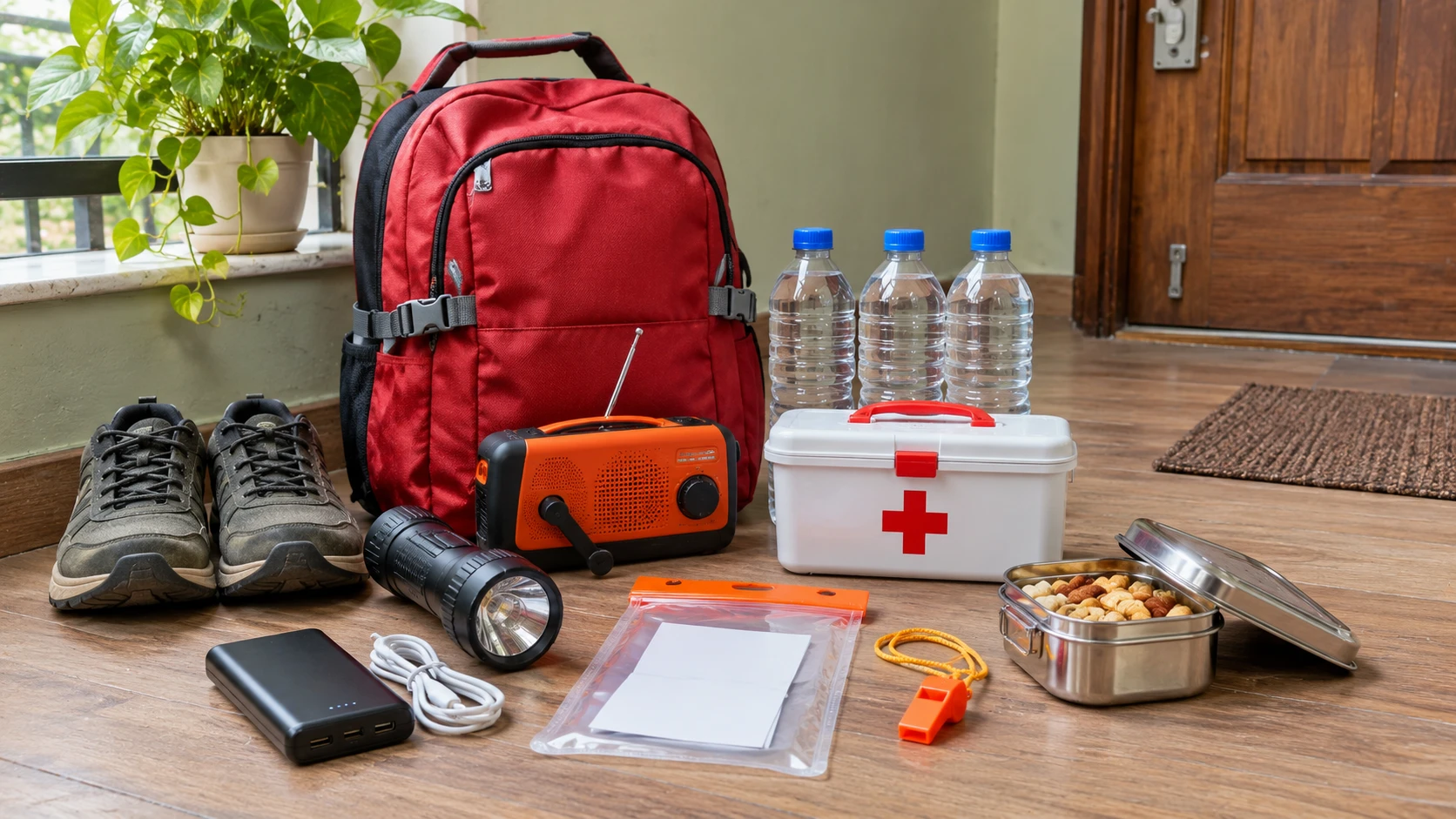
Cover image: AI-generated editorial illustration, not a photograph of a real disaster.
Plan for each hazard separately
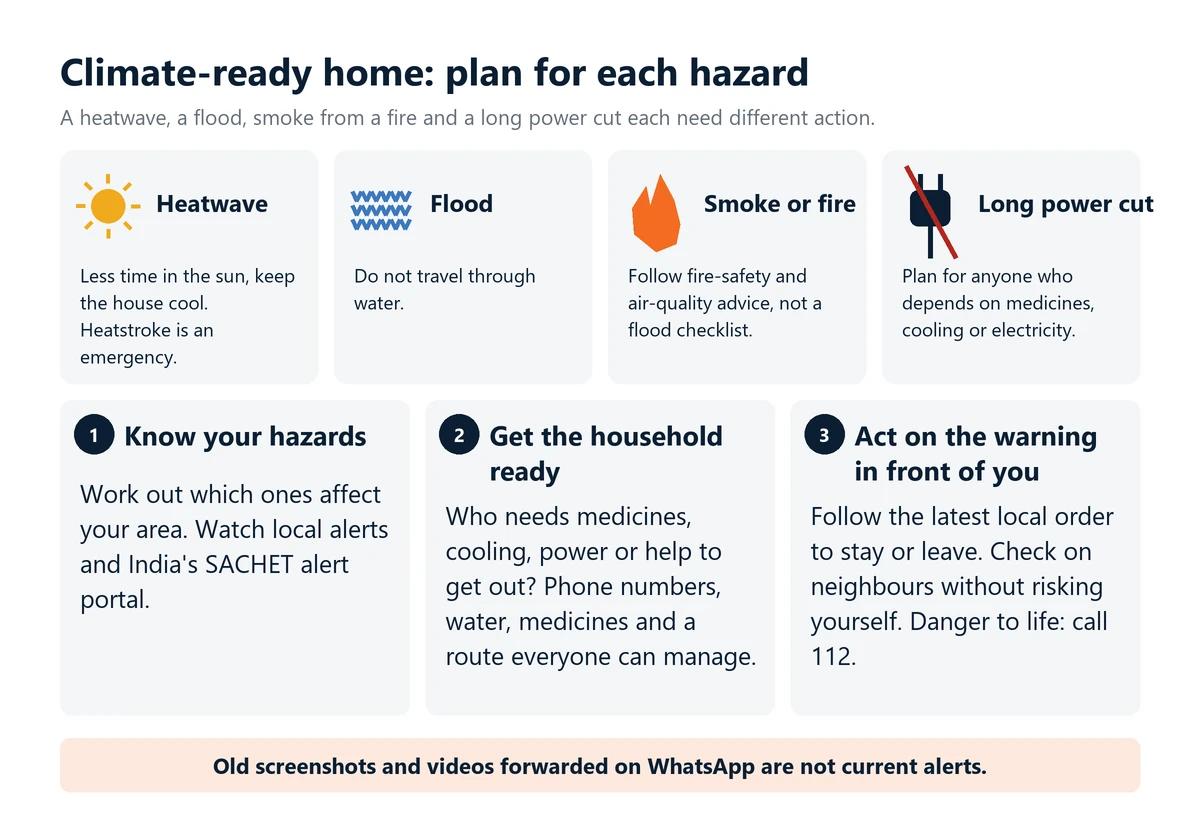
A heatwave, a flood, smoke from a fire and a long power cut each need different action, and one climate checklist will not cover them all. First work out which of these actually affect your area. Then watch current official alerts: messages from your local authority and India’s SACHET national alert portal. No general article can predict your next local emergency or stand in for an evacuation order.
Get the household ready
Think about who at home depends on medicines, cooling, electricity, mobility equipment or someone’s help to get out. Make a plan you can actually follow, with phone numbers, drinking water, medicines and a route everyone can manage. In extreme heat, cut down time in the sun and keep the house as cool as you can. The World Health Organization points out that heat can make existing illness worse and that heatstroke is an emergency. In a flood, do not travel through water. The US National Weather Service explains the same rule, though its figures come from the US, not India. For smoke or fire, follow fire-safety and air-quality advice, not a flood checklist.
How do you keep a home safe through a heatwave?
Start with who in the house is most at risk, then cool the home in the right order and know when it becomes an emergency. The World Health Organization says studies estimate about 489,000 heat-related deaths a year from 2000 to 2019, with Asia accounting for 45 percent of them. It calls heatstroke a medical emergency with a high case fatality rate. The groups it lists as most at risk include people over 65, people with heart, lung or kidney conditions, people with disabilities, people who live alone, outdoor and manual workers, and the urban and rural poor. Infants and children need extra protection.
WHO’s home advice, in plain steps:
- Avoid strenuous activity in the hottest part of the day, and spend two to three hours somewhere cool.
- Drink water regularly, at least two to three litres a day. If a doctor has told someone to limit fluids, follow the doctor.
- Cool the body with a cool shower, damp cloths or wet light clothing.
- Close windows and block sunlight with blinds or shutters in the day, and open windows after dark when it is cooler outside than inside.
- Use an electric fan only when the temperature is below 40 degrees Celsius. Above that, WHO says a fan adds heat to the body.
- If you use an air conditioner, WHO suggests a setting of 27 degrees with a fan, which it says makes the room feel about 4 degrees cooler and can save up to 70 percent of cooling electricity.
- Never leave children or animals in a parked vehicle. Our note on checking the car before you lock it explains the habit.
If someone becomes confused, faints or has a very high body temperature, treat it as an emergency, call for medical help and start cooling them. Our guide to heatstroke and heat exhaustion first aid lists the steps, and our heat stroke deaths trend page shows the Indian numbers.
What should a household and a housing society have ready for a long power cut?
A long cut in summer is a heat problem and a fire problem at the same time. Fans and coolers stop, people reach for candles, and generators get run in the wrong place. Plan for light, cooling, charging and fuel before the outage, not during it.
For a building, NBC 2026 gives a useful benchmark. The standard asks for emergency lighting that comes on within 5 seconds of a mains failure and holds the required level for at least 90 minutes, and for exit signs lit from an independent circuit with an alternative supply. It lists nine systems for emergency power, including the fire alarm, the public address system and emergency lighting, and asks that the changeover from mains to a standby generator can carry their combined starting current. Diesel generator sets should not be on any floor other than the ground or first basement, and an indoor generator room asks for walls and doors with 120 minutes of fire resistance. See our chapter on emergency lights, exit signs and backup power for the full wording, and the chapter on electrical rooms, batteries and wiring if your society keeps a battery or UPS room. NBC 2026 is voluntary until a state adopts it, so your fire officer and local rules decide what applies to your building.
For a flat or a house, a short checklist helps:
- Keep a torch or rechargeable lantern where you can find it in the dark, and test it every month. Prefer it to a candle.
- Charge phones and a power bank when an outage is announced.
- Store drinking water for each person, and plan for any medicine that needs cold storage.
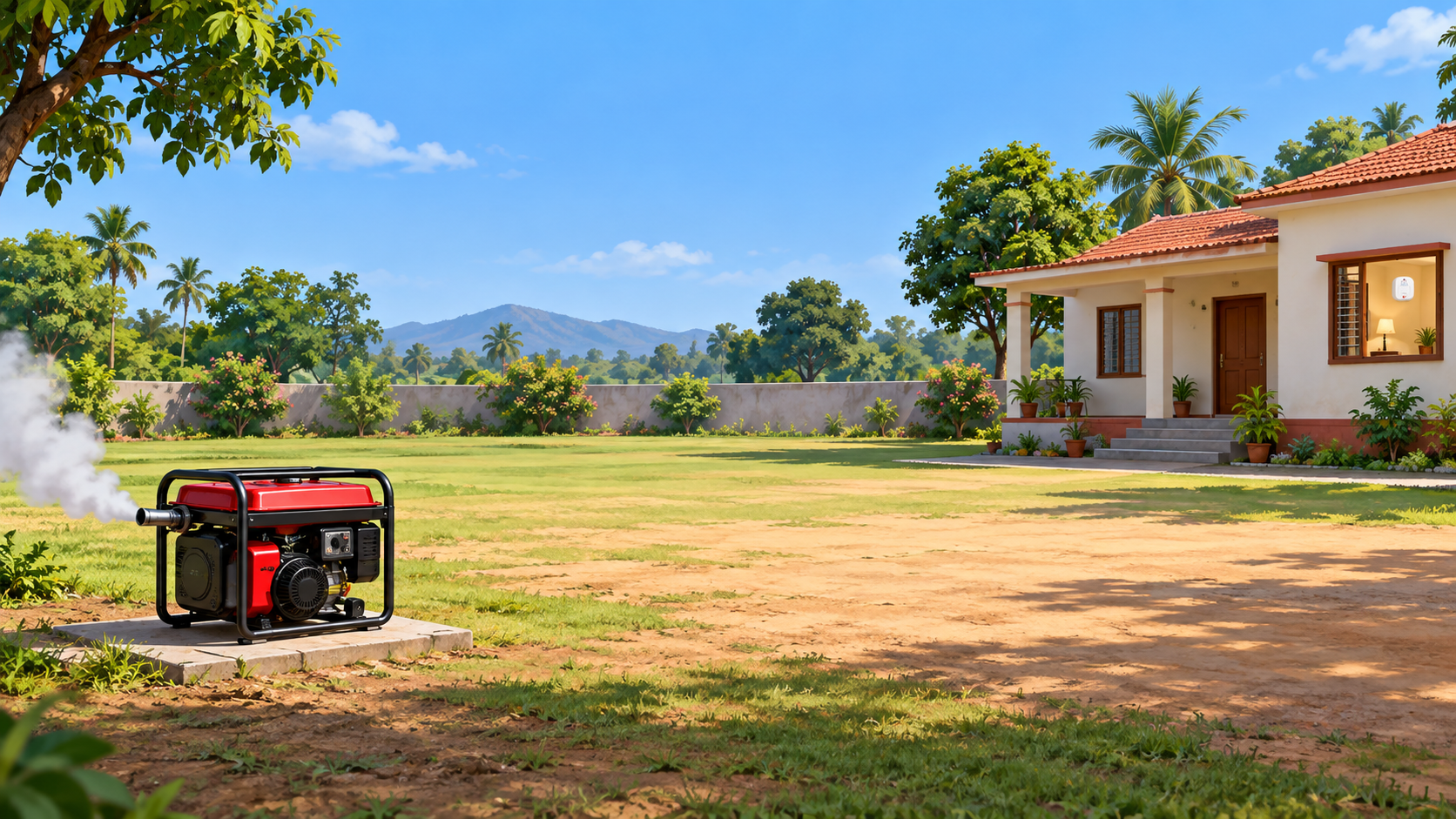
- Never run a petrol or diesel generator indoors or in a closed balcony. Read our guide to generator carbon monoxide safety during a power cut.
- After a flood, treat mains electricity as dangerous. The US CDC flood safety page says to turn off electrical power if there is standing water, downed power lines or a need to evacuate, and to unplug appliances to prevent shock when power returns.
Act on the warning in front of you
Follow the latest local instructions on whether to stay put or leave. Look in on neighbours who may need help, but do not put yourself in danger to do it. Call 112 in India if anyone is in immediate danger. Old screenshots and videos forwarded on WhatsApp are not current alerts, and a general climate statistic does not tell you what will happen in your street.
What needs attention
- The right action changes with the hazard and the place. Official warnings and local evacuation orders come before any blog post.
Controls that reduce risk
- Sign up for the official alerts that cover your area. Plan for cooling, drinking water, medicines, power cuts and a route everyone at home can manage. Check on neighbours who may need help.
Common unsafe practices
- Using one plan for heat, flood and smoke.
- Acting on an old alert or forward.


Leave a comment