
Quick answers
How do I make a family emergency communication plan?
Write down the important numbers, including 112, and give everyone a paper copy. Pick one contact in another city to pass messages, and fix two meeting points, one near home and one outside the neighbourhood.
What should a family emergency plan include?
Ways out of your home and area that you have walked together, the safest room to shelter in, and a job for each person, such as grabbing the kit or helping an elderly member.
How long should a family emergency kit last?
At least 72 hours. Pack water, food that keeps, first aid and regular medicines, a torch and batteries, copies of documents, cash, and things for babies, elders and pets.
What emergency drills should a family practise?
Getting out of the house during a fire, what to do in an earthquake and taking shelter in a storm. Twice a year is a good habit.
When something goes wrong at home, a fire at night, a flood, a sudden illness, families lose precious minutes working out who calls whom and where everyone should go. A family emergency plan settles those questions on a calm day, so nobody has to think them through in a panic. It takes one evening to make.
1. Know what you are planning for
Start with the emergencies most likely where you live. For most Indian families the list looks something like this:
- Natural disasters: earthquakes, floods, cyclones, heatwaves, landslides and forest fires
- Fire at home
- A medical emergency
- Long power cuts
- Severe storms and heavy rain
A family in Mumbai needs a flood plan more than an earthquake plan. A family in Guwahati may need both. Shape your plan around your own risks.
2. Decide how you will reach each other
- A written contact list. Write down the numbers that matter: family members, neighbours, your doctor and 112, India’s single emergency number for police, fire and ambulance. Give everyone a paper copy. Phones die and get lost.
- One contact outside your city. Pick a relative or friend in another city. When local lines are jammed, everyone calls or messages this one person, and they pass the news along.
- Two meeting points. One just outside your home, such as the society gate, and one outside your neighbourhood, such as a relative’s house or a temple you all know. If you are split up or cannot go home, everyone heads there.
3. Keep a ready kit
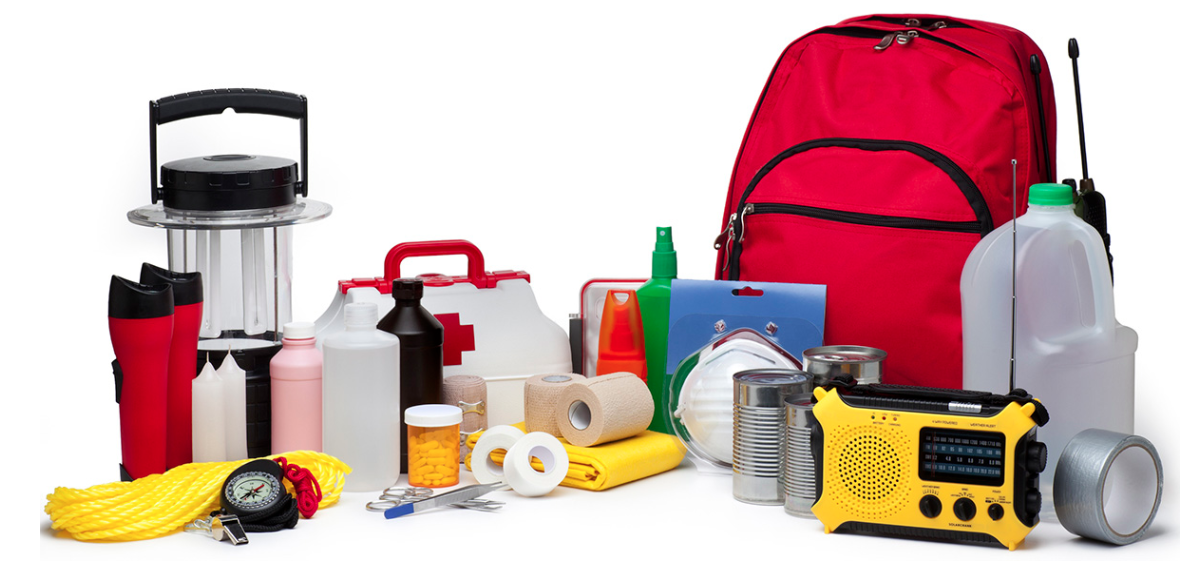
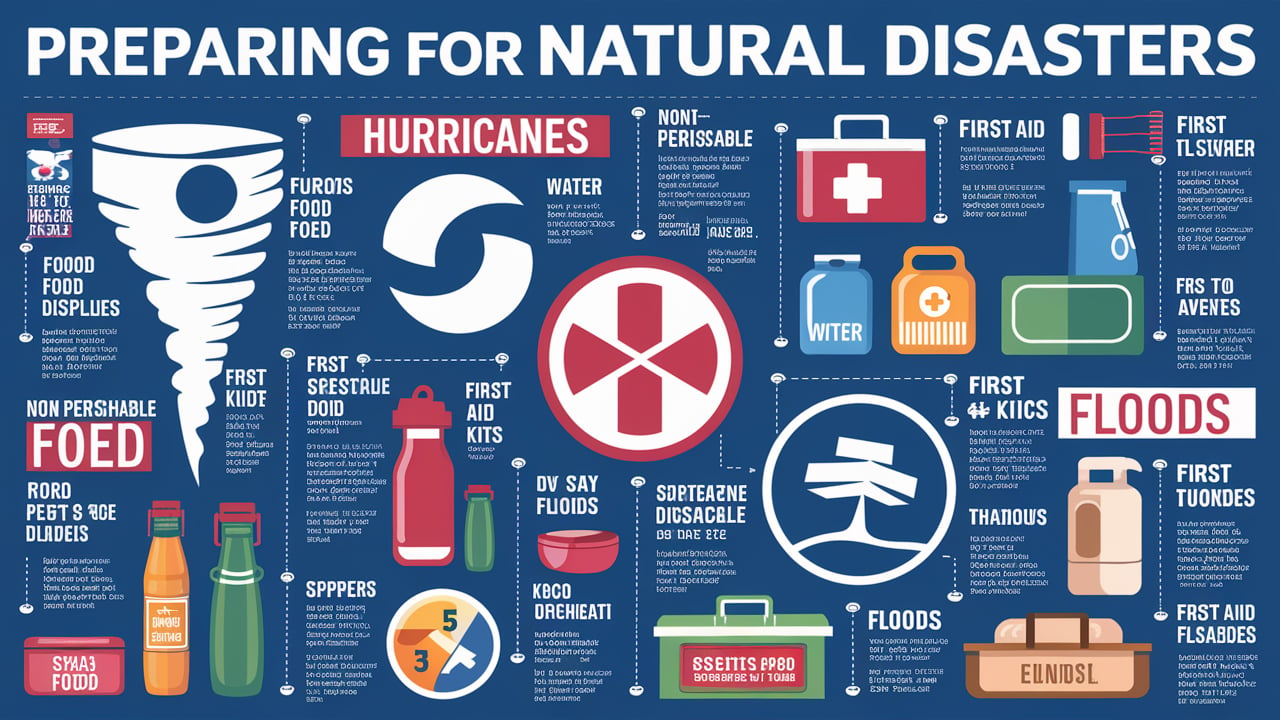
Pack enough to see your family through at least 72 hours:
- Water. About 4 litres per person per day for drinking and basic washing, packed and sealed.
- Food that keeps. Enough for several days.
- First aid. Bandages, antiseptic and any regular medicines the family needs.
- Tools. A torch, spare batteries, a multipurpose tool, a local map and a whistle.
- Personal things. Copies of important documents, some cash, a change of clothes and toiletries.
- Special needs. Things for babies, elderly members, anyone with a health condition, and pets.
4. Write down who does what
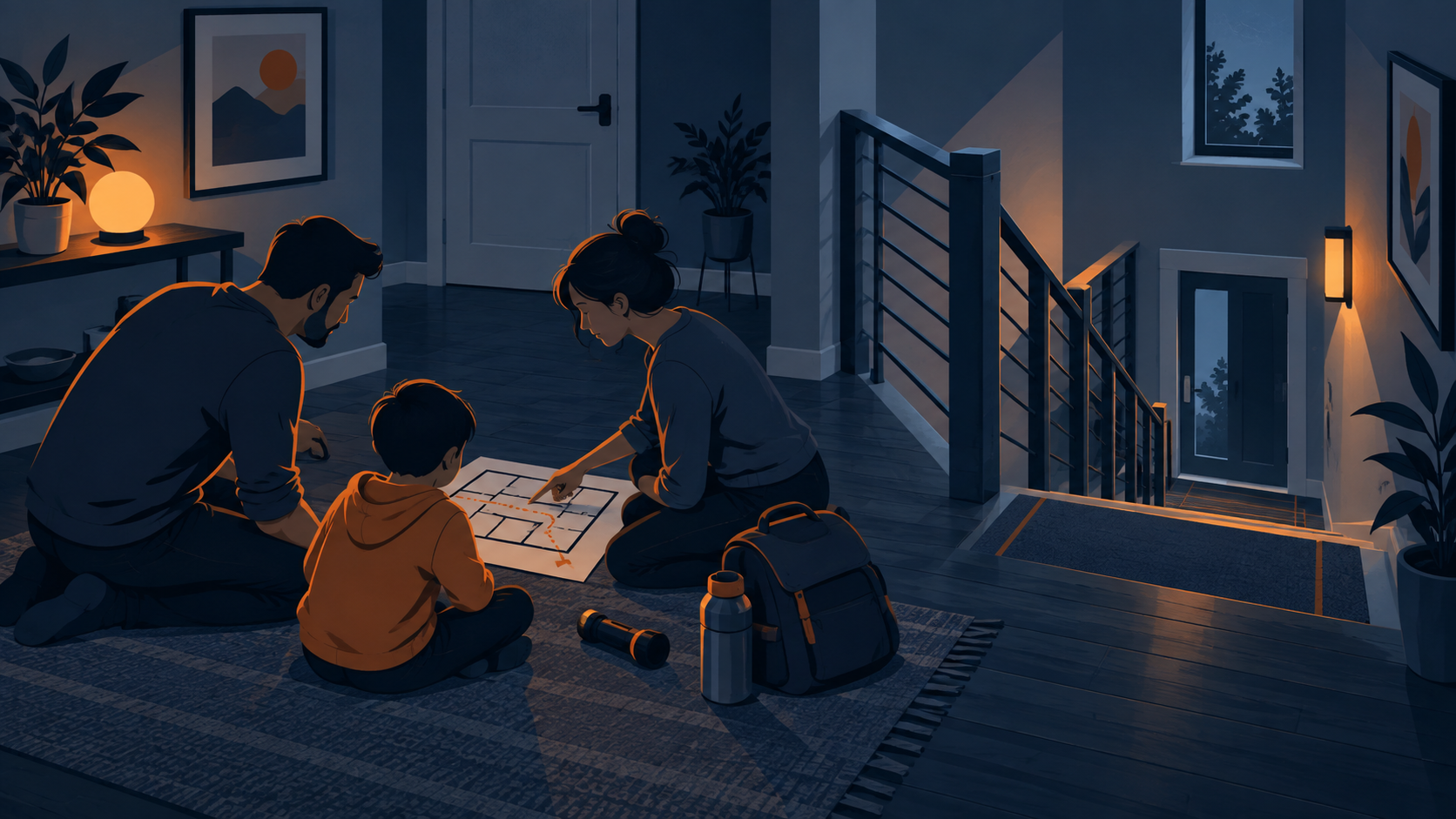
- Ways out. Know at least two ways out of your home and two routes out of your area, and walk them with the family.
- Staying in. Know which room is safest to shelter in during a storm, and how to lock up the house.
- Jobs. Give each person one task, such as grabbing the kit, helping Dadi down the stairs or picking up the dog. Stick the list on the fridge.
5. Practise it
A plan nobody has practised is easy to forget. Run short drills, twice a year if you can:
- Getting out of the house during a fire
- What to do in an earthquake
- Taking shelter during a storm
After a couple of rounds, children stop treating it as a game and start moving on their own.
6. Get the warnings
Keep an eye on local emergency plans and turn on official alerts, such as NDMA’s SACHET alerts or the emergency alerts on your phone, on every adult’s mobile. Know which sources you will trust during a crisis, and ignore forwards you cannot check.
Start tonight
At dinner, ask your children to show you the two ways out of your home. Teach each of them to dial 112 and say your full address clearly. Then put a paper list of family numbers in every school bag and purse, and call the relative you have chosen as your outside contact to tell them they are part of the plan.
What needs attention
- A family plan works only if every member, including children and grandparents, knows it
- When local phone lines are jammed, a relative in another city can pass messages between family members
- Two meeting points, one near home and one outside the neighbourhood, stop people from searching for each other
- Giving each person one job, such as grabbing the kit or helping a grandparent, saves time
- Practising a fire escape, an earthquake drill and shelter for a storm makes the real thing calmer
Controls that reduce risk
- Write down key numbers, including 112, family, neighbours and the doctor, and give everyone a paper copy
- Choose one relative outside your city as the contact everyone calls
- Fix two meeting points and walk to both with the whole family
- Give each person a task in the plan and write it on the fridge
- Run a home fire drill and an earthquake drill twice a year
- Turn on NDMA SACHET or phone emergency alerts for every adult in the family
Common unsafe practices
- Keeping all phone numbers only in one person's mobile
- Choosing a meeting point that would also be flooded or unsafe
- Making a plan once and never practising it
- Forgetting the needs of infants, elderly members or pets in the plan
- Assuming the children will remember 112 without being taught
Leave a comment