
What happened here
 1 / 3
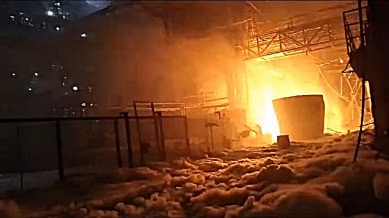
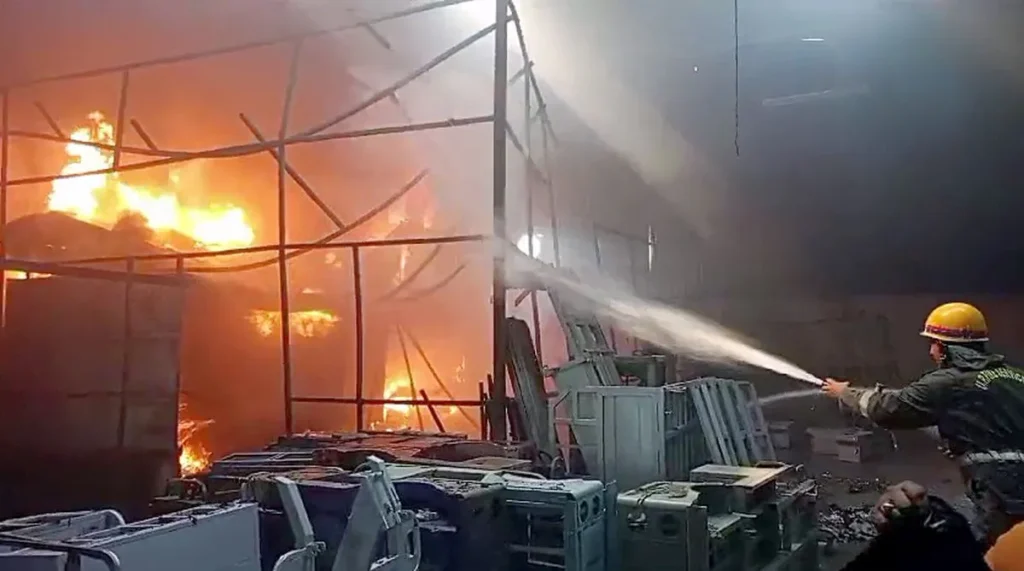
Four contract workers died and another was injured after burning coal spilled at the Corex unit during a restart at Hazira on 31 December 2024.
Quick answers
What happened at the Hazira steel plant on 31 December 2024?
A fire at the Corex unit of the AM/NS India plant in Hazira, Surat, killed four contract workers and injured one, at about 6 pm. News reports carried the details on 1 January 2025.
What caused the Hazira coal fire?
Surat police said burning coal suddenly spilled over and started a fire in one section of the plant. AM/NS India blamed an equipment failure at the Corex unit during a restart after a shutdown. No final technical report has been made public.
Can stored coal catch fire on its own?
Yes. Coal piles that are badly stacked and poorly ventilated can heat up and catch fire by themselves. Temperature checks, ventilation and regular inspection help catch heating early.
How can workers stay safe around hot coal in a plant?
Keep crews out of an exclusion zone that covers likely spill paths, especially during start-up and shutdown. Contract workers need the same hazard briefing and protection as permanent staff, and escape routes must be clear, marked and practised.
On the evening of 31 December 2024, a fire at the Corex unit of the ArcelorMittal Nippon Steel India (AM/NS India) plant in Hazira, Surat, killed four contract workers. A fifth worker had minor injuries. Surat Police Commissioner Anupam Singh Gehlot said burning coal suddenly spilled over and set off a fire in one section of the plant, while the four men were on a lift nearby. The company said the accident happened at around 6 pm, while the Corex unit was being restarted after a shutdown, and blamed an equipment failure.
This case study sets out what was reported and what other plants can learn about working near hot material.
The plant and the hazard
The Hazira plant is a steel works that handles large quantities of coal, and contractors work there alongside the company’s own staff, including on maintenance. Burning coal and other hot bulk material can burn people directly and set fire to equipment nearby. Restarting a unit after a shutdown is also a time when conditions are less steady than in normal running.
What happened
- 31 December 2024, about 6 pm: the Corex unit was being restarted after a shutdown (company statement).
- Spill and fire: burning coal suddenly spilled over and started a fire in one section of the plant (Surat Police Commissioner).
- The victims: four contract workers of a private firm, who were doing maintenance work on a lift nearby, were killed. One worker had a minor injury and was treated at the plant’s hospital.
- Response: the company said its emergency protocols were activated and the area was cordoned off.
- Investigation: the police and the factory inspector began a probe, and the company started its own internal investigation.
Why it happened
- Equipment failure during the restart. The company blamed an equipment failure at the Corex unit during the restart. We have not found any public technical report explaining what failed.
- Work close to a hot process. The four men were maintaining a lift near the unit while it was being restarted. Whether that work should have been stopped, or the area kept clear, during the restart is a question for the investigation.
- What is not known. The police, the factory inspectorate and the company have not reported any failure of detection, firefighting or evacuation, so we do not state any as a finding.
The cost
Four men lost their lives on the last evening of the year, a terrible loss for their families. The police and the factory inspector took up the probe, but we have not found any public outcome.
How the emergency was handled
The company said all its emergency protocols were activated at once and the area was cordoned off. No independent review of the response has been published. There is also no official finding on how quickly the fire was detected or tackled, and no official report has said that escape routes or signage were at fault.
What plants should do
- Control work during start-up. Keep maintenance crews out of the danger zone while a unit is restarted. Use permits-to-work, isolation and a clearly marked exclusion area around hot material.
- Detection and suppression. Fit fire detection suited to coal and combustible dust areas, with automatic sprinklers or foam suppression where a competent fire engineer advises it.
- Training and drills. Run fire safety training and evacuation drills built around the real hazards of the plant, and make sure every worker, contractors included, knows the escape routes and what to do.
- Escape routes. Keep evacuation paths clear and well marked, with emergency lighting and signs that meet industrial safety standards.
- Compliance and audits. Follow the fire safety codes that apply, and bring in third-party audits to check that the plant is compliant and ready.
What this means for you
If you supervise maintenance in a plant, look at this week’s job list and check which jobs fall near a unit that is starting up or shutting down. Move them, or stop the start-up until the crew is clear. And if you are a contract worker, ask before you start: is anything near this job being restarted today?

More on Surat: see our Surat fire and emergency safety guide for fire brigade numbers, every fire station and the local risks to know.
- The Corex unit is restarted after a shutdown; the company later blames an equipment failure
- Burning coal spills over and starts a fire in one section; four contract workers on a nearby lift are killed and one is injured
- The company says its emergency protocols were activated and the area cordoned off
- News reports carry the Surat Police Commissioner's account; police and the factory inspector begin a probe
Why consequences escalated
- Burning coal and other hot bulk material can burn people directly and set fire to equipment nearby
- A unit restarting after a shutdown is less steady than in normal running, so the danger zone can be larger than usual
- The exclusion zone around hot material must cover every likely path of a spill or ejection
- Contract workers need the same hazard information and protection as the company's own staff
- Remote isolation and physical guarding keep people away from the hazard better than PPE can
- Rescue around hot coal needs its own plan, worked out before the job starts
Failures and risk multipliers
- Letting maintenance crews work near a unit while it is being restarted
- Assuming start-up conditions are as steady as normal running
- No exclusion zone around the likely path of a hot-material spill
- Giving contract workers less hazard information than permanent staff
- Treating a permit-to-work as paperwork rather than a live control
Actions that reduce risk
- Stop or move maintenance work away from any unit during start-up and shutdown
- Mark and enforce an exclusion zone around hot coal and other hot bulk material
- Use permits-to-work and isolation for every job near a hot process
- Give contract crews the same hazard briefing, PPE and drills as direct employees
- Keep evacuation paths and lifts near hot units clear and well lit
- Publish what was learnt from each investigation to all shifts
Leave a comment