
What happened here
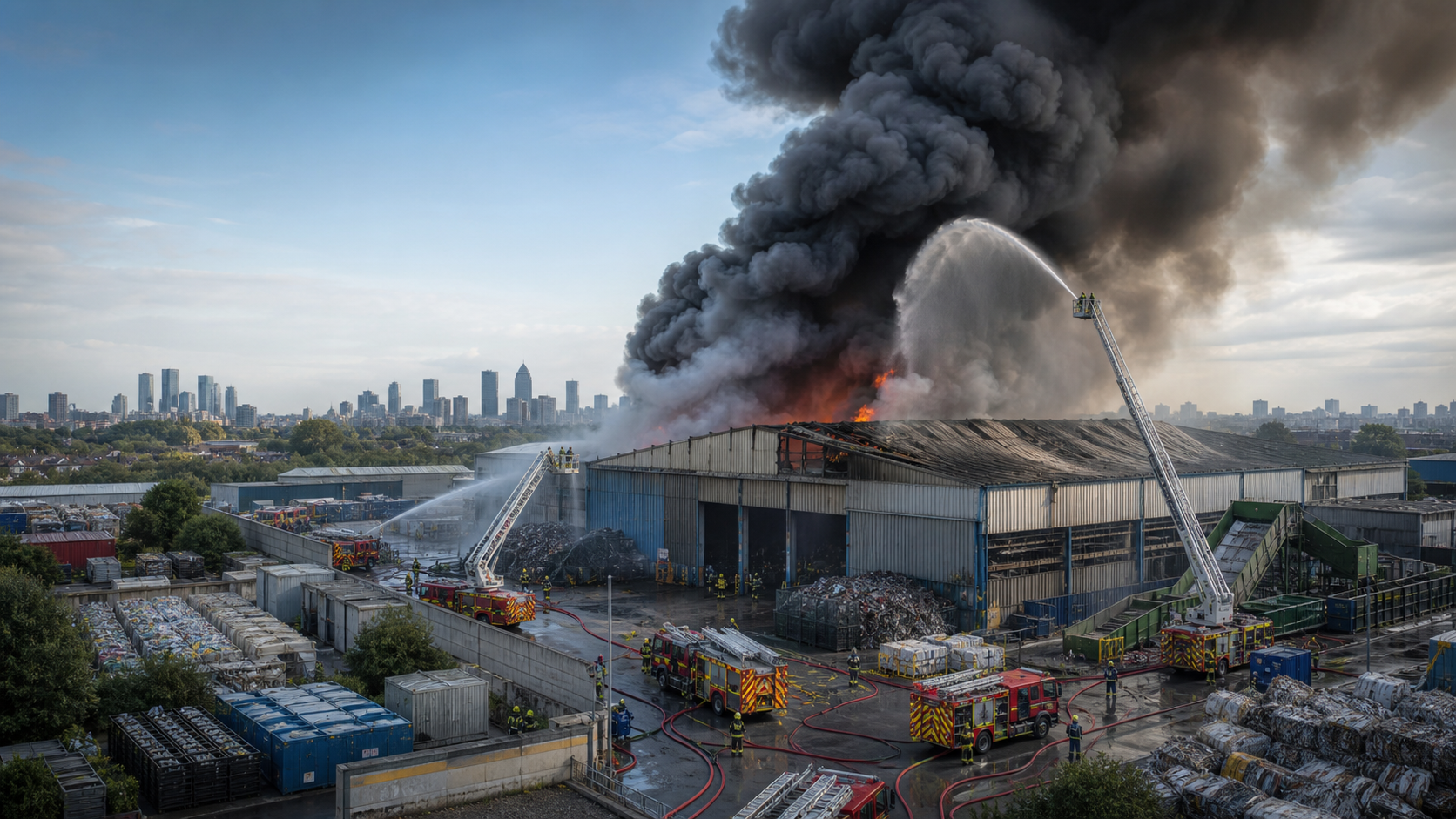
A fire at a waste and recycling unit in Neasden, London, needed about 125 firefighters and sent a large smoke plume over homes and railway lines. Nobody was reported hurt, but it shows why a site has to plan for the people beyond its fence.
Quick answers
What happened in the Neasden industrial fire in London?
On 28 August 2026, a big fire broke out at a mixed-waste or recycling unit on an industrial estate in Neasden, north-west London. London Fire Brigade sent 20 fire engines and about 125 firefighters, and a large smoke plume spread across the area. No injuries were reported.
What caused the Neasden recycling fire?
The cause had not been established and was under investigation. Waste sites have known risks such as discarded batteries, but that should not be called the cause of this fire unless investigators confirm it.
What should I do if smoke from a big fire reaches my area?
If officials ask you to stay indoors, go inside, shut doors and windows, bring children and pets in and follow updates. If you are outside, move away from the smoke and stay behind cordons. Do not go towards the fire or stop to film it.
How do I throw away lithium batteries safely?
Never put lithium batteries, power banks or battery gadgets in the household dustbin. Hand them in at an authorised e-waste or battery collection point. Waste does not stop being dangerous once it goes into a bin.
On 28 August 2026, a fire at a waste and recycling unit on an industrial estate in Neasden, north-west London, sent a thick plume of smoke across the area. Nobody was reported hurt. Even so, London Fire Brigade had to send 20 fire engines and about 125 firefighters, nearby residents were told to keep their windows shut, and Tube trains were disrupted. The flames stayed on one site. The smoke did not.
This is a London case, but the lesson travels well. Most Indian cities have scrap godowns, e-waste yards and recycling units right next to homes, schools and railway lines.
What happened
The fire was at an industrial estate on Hannah Close in Neasden, close to Wembley. London Fire Brigade’s control room took the first call at about 11:34 am and more than 70 calls in all. The fire spread through a large unit at a mixed-waste or recycling site. Aerial ladders, a drone team and extra water supply were among the resources reported at the scene.
Heavy smoke drifted over the neighbourhood. The fire brigade asked people nearby to stay indoors where they could and keep doors and windows closed. Metropolitan and Jubilee line services were hit, along with other rail movements. A neighbouring workplace was reportedly evacuated as a precaution; it was not where the fire started.
Later reports said the fire was under control by about 5 pm, though crews were expected to stay on for a long time to damp down and keep watch. The main sources we reviewed reported no injuries. The cause had not been established.
The incident at a glance
| Item | What was reported |
|---|---|
| First calls | About 11:34 am |
| Fire engines | 20 |
| Firefighters | About 125 |
| Calls received | More than 70 |
| Site | Industrial mixed-waste or recycling unit |
| Aerial ladders | Three 32-metre ladders, as first reported by London Fire Brigade |
| Injuries | None reported in the sources reviewed |
| Advice to the public | Stay indoors where possible and close doors and windows |
| Cause | Not known; under investigation |
What is confirmed and what is not
London Fire Brigade, or several reports together, confirm the location on Hannah Close, the 20 engines and about 125 firefighters, the 70-plus calls, the official advice to stay indoors, and the disruption to Tube and rail services. The official update did not give a cause.
Some things are still not settled. There were reports of an explosion before or during the fire, but these were not confirmed. Nobody has said what material caught fire first, or whether a battery, an electrical fault, hot work, a deliberate act or something else started it. We also do not know how well the site’s detection, firefighting and waste-sorting arrangements worked.
Waste sites do carry known fire risks, including batteries thrown away carelessly. That general risk should not be passed off as the cause of this fire unless investigators confirm it.
Why a waste fire turns into a public emergency
There is a lot to burn
Mixed waste usually holds paper, plastic, cloth, packaging and other things that burn easily. Fire can travel through stored piles and keep smouldering deep inside long after the visible flames die down.
Nobody knows exactly what is in the pile
Waste can hide damaged batteries, aerosol cans, gas cylinders and chemicals that were never declared or sorted out. These make the fire harder to fight and raise the chance of it flaring up again or exploding.
The smoke reaches people who never see the flames
Smoke can sting the eyes, irritate the chest and throat, and cut visibility on roads and railway lines. Homes, shops and offices far from the fence can be affected.
It ties up a big share of the fire service
About 125 firefighters, aerial ladders, extra water supply and a drone team for one site shows how large and long such a job can get.
Transport gets dragged in
Smoke and firefighting near railway lines disrupted public transport. That is why a risk assessment for an industrial site has to look beyond its own boundary wall.
How a waste site can cut the risk
Stop the fire starting
- Sort out risky waste, especially batteries, and keep damaged batteries in a separate, safe holding area.
- Keep sparks, flames and hot surfaces away from stock that can burn.
- Maintain wiring, conveyors and processing machines.
- Use a hot-work permit for welding and cutting, and keep someone on fire watch afterwards.
- Limit how big and how tall each pile gets, and keep space between them.
Spot it early
- Fit automatic fire detection suited to the site.
- Use thermal cameras or heat monitoring where the risk justifies it.
- Keep an eye on storage areas after working hours.
- Make sure alarms reach a responsible person straight away.
Stop it spreading
- Divide the building with fire-resisting walls where the operation needs it.
- Keep gaps between stockpiles and clear fire breaks.
- Keep access roads open, and do not let outdoor storage creep into them.
Put it out
- Provide the right fixed and portable firefighting equipment.
- Keep a reliable water supply on site.
- Make sure the fire brigade can reach hydrants, shut-off controls and site plans.
- Plan for dirty firefighting water so it does not run into drains and rivers.
Plan ahead
- Keep an up-to-date stock list and an emergency information pack for the fire brigade.
- Plan with the local fire service before anything happens.
- Practise evacuation and staying-indoors drills.
- Decide in advance how you will warn neighbours and transport operators.
How to protect yourself from a big smoke plume
If you are told to stay indoors
- Go inside and close all outside doors and windows.
- Follow updates from the fire brigade, police and local authorities.
- Switch off fans or systems that pull outside air in, if official advice or your building’s procedure says so and it is safe to do.
- Bring children and pets inside.
- Do not head towards the fire or gather to watch, and keep roads clear for fire engines.
If you are already outside
- Move away from the smoke and stay behind police cordons.
- Do not judge the danger by smell alone. Poor visibility and official warnings tell you more.
- If the smoke is affecting your breathing, get to clean air and see a doctor promptly.
- People with asthma, heart or lung problems should follow their care plan and official health advice.
If you are driving
- Do not stop on the road to film the fire.
- Roll up the windows and follow diversions.
- Expect visibility to change suddenly and fire engines to come through.
- Never drive into a closed road or a cordon.
No injuries does not mean no emergency
This fire needed a very large response, stopped trains, spread smoke over a wide area and kept residents indoors. Saving lives always comes first, but disruption to a neighbourhood, firefighters’ exposure to smoke, pollution and lost business are serious harms too.
What this means for India
Waste does not stop being dangerous once it goes into a bin. How we throw away batteries at home, how a site sorts and stacks its waste, and whether anyone has planned for the smoke beyond the fence all decide whether a waste fire stays small or shuts down a whole area. The site has to manage the hazard, manufacturers and regulators have to make safe disposal easy, and the rest of us have to use it.
In India, use 101 for the fire brigade or 112 for any emergency. If your home, shop or school is near a scrap godown or recycling yard, find out who you would hear a warning from and where you would shelter.
What you can do today
- Do not throw lithium batteries, power banks, vapes or battery gadgets in the household dustbin. Give them to an authorised e-waste or battery collection point.
- If officials tell you to stay indoors during a smoke incident, do it.
- Do not go to a fire scene to take photos.
- If your business is near an industrial area, add sheltering from smoke to your emergency plan.
- If you run a waste or recycling site, check your waste sorting, detection, water supply and fire brigade access this week.
The flames may stay inside one compound, but the smoke and the disruption do not respect its wall. Prevention starts before a dangerous item ever reaches the pile.
- London Fire Brigade receives the first of more than 70 calls about a fire at Hannah Close, Neasden
- 20 fire engines and about 125 firefighters sent; residents told to stay indoors and close windows
- Tube and rail services disrupted; a neighbouring workplace evacuated as a precaution
- Fire reported under control; crews stay on for long firefighting and monitoring
Why consequences escalated
- A fire in a mixed-waste or recycling unit needed 20 engines and about 125 firefighters
- The smoke plume, not the flames, was the hazard for most people nearby
- Residents were told to stay indoors and close doors and windows
- Tube and rail lines were disrupted, so the fire's effects went well beyond the site
- No injuries were reported, and the cause was still under investigation
Failures and risk multipliers
- Throwing lithium batteries and battery-powered gadgets into ordinary waste
- Letting mixed-waste piles grow large, tall and close together
- Planning only for the site and not for the smoke, roads and railways beyond its boundary
- Driving or walking towards the fire to watch or film it
- Naming a cause before investigators have confirmed one
Actions that reduce risk
- Separate batteries and other risky items from mixed waste, and quarantine damaged batteries
- Limit pile size and height and keep fire breaks between stockpiles
- Fit automatic detection that alerts staff out of hours
- Keep a reliable water supply and clear fire-engine access on site
- Share site plans with the fire service and plan warnings for neighbours
Leave a comment