
What happened here
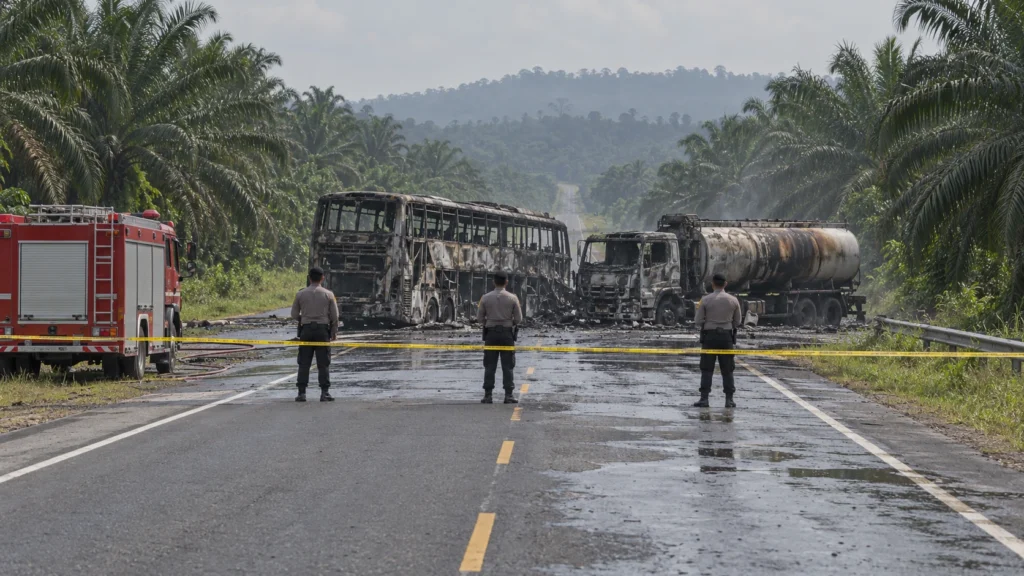
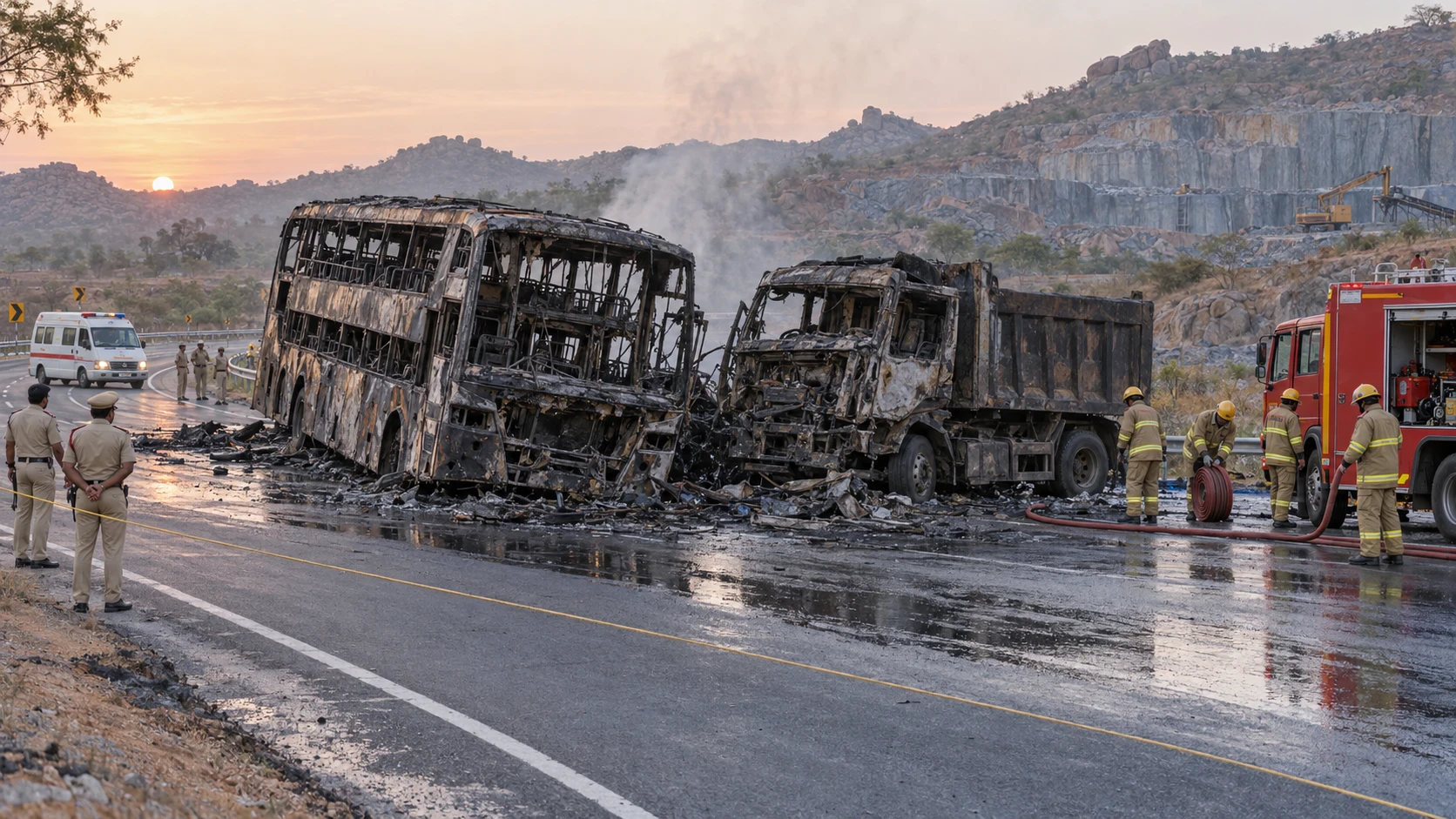
An ALS intercity bus and a fuel tanker crashed head-on and burnt out on the Trans-Sumatra Highway at Karang Jaya, North Musi Rawas, South Sumatra, on 6 May 2026. Police put the final toll at 19. The bus had no operating permit since 2020, officials said, and carried gas cylinders and motorcycles. Two company directors were named suspects in August.
Quick answers
How many people died in the North Musi Rawas bus-tanker crash?
Nineteen, according to South Sumatra police as reported by Detik on 15 May 2026, Kompas and CNN Indonesia. Seventeen died at the scene and two later in hospital. The first count on 6 May was 16.
What was the tanker carrying?
Fuel. Indonesian reports describe it as a BBM (fuel) tanker but do not give the type or quantity.
Was there a fire?
Yes. Both the bus and the tanker burnt out. Police said gas cylinders, wooden furniture and motorcycles carried on the bus made the fire worse.
What caused the crash?
Not officially established. Police say the bus swerved to avoid a pothole, crossed into the oncoming lane and hit the tanker, and that it was going fast. The disaster agency had earlier reported sparks from the bus.
Has anyone been charged?
In early August 2026, police named the directors of the bus operator PT ALS and of the tanker owner PT Sinar Bumi Pertiwi as suspects for negligence and corporate liability. The bus driver died in the crash. No trial had been reported by 17 October 2026.
What happened
Just after noon on Wednesday, 6 May 2026, an intercity bus of the Antar Lintas Sumatera (ALS) company and a fuel tanker crashed head-on on the Trans-Sumatra Highway at Simpang Danau, in Karang Jaya district of Musi Rawas Utara (North Musi Rawas, locally Muratara) regency, South Sumatra, Indonesia. Antara and JPNN put the time at about 12.39 p.m. local time; some later reports say about noon. Both vehicles caught fire and burnt out.
The bus had left Lubuklinggau and was heading north towards Jambi. Antara reported that its manifest showed 18 people when it left the Lubuklinggau terminal at about 10 a.m.: 14 passengers and four crew. The tanker was coming the other way, from the Rupit side, and was carrying fuel. No report we read gives the type or quantity of fuel.
Accounts of the last seconds differ. On the day, the regency disaster management agency (BPBD) told Antara that sparks were seen from the bus, the driver steered to the right, and the tanker, coming fast, could not avoid it. Police later said the bus swerved to avoid a pothole, crossed into the opposite lane and hit the tanker. The Jakarta Post, quoting police, reported that gas cylinders, wooden furniture and motorcycles carried on the bus made the fire worse after the impact. Antara reported that police found gas cylinders, seats, wooden bunks, motorcycle parts and a motorcycle inside the bus.
The people
Nineteen people died. On the day, the BPBD and South Sumatra police gave a provisional count of 16: 14 people on the bus, including the driver, and the tanker’s driver and his assistant. Three people were badly hurt and one had minor injuries. By 15 May, South Sumatra’s deputy police chief, Brigadier General Rony Samtana, told Detik that the toll was 19: 17 died at the scene and two died later in hospital. Kompas reported the same total.
Most of the dead were burnt beyond recognition. Police disaster victim identification teams took the remains to Bhayangkara Mohammad Hasan hospital in Palembang and had to rely on DNA from bone. Antara reported that one of the dead was a child. By 15 May, 14 had been identified and three were still awaiting DNA results, according to Detik. The bus conductor survived with minor injuries and became a key witness. We are not publishing the names of the dead.
Response and investigation
BPBD rescuers and traffic police recovered the dead and took the injured to hospital. Indonesia’s Director General of Land Transportation, Aan Suhanan, visited the site. On 9 May he told Antara that the bus had been running without an operating permit since 4 November 2020, although its electronic roadworthiness certificate was valid until 11 May 2026. Officials also found that the bus’s chassis number did not match its records, which they said pointed to a forged number plate. The ministry said it would audit the company and was waiting for the National Transportation Safety Committee (KNKT) and the police.
On 15 May, the South Sumatra police traffic director, Senior Commissioner Maesa Soegriwo, told Kompas that the case had moved to the formal investigation stage. He said the potholes his team found were only about 2 cm deep, and that the bus was reportedly in fifth gear, which suggests it was going fast on a long, straight road. He said the bus driver had been the likely suspect, but the driver died in the crash.
In early August, after questioning 47 witnesses, North Musi Rawas police named two company directors as suspects: the director of PT ALS, the bus operator, and the director of PT Sinar Bumi Pertiwi, which police said owned the tanker. CNN Indonesia, Detik and Kumparan reported the charges as negligence and corporate liability under Indonesia’s road traffic law and the new Criminal Code. The tanker owner, who is also a village head, rejected the decision; AFU.ID quoted him as saying two of his own employees died and his truck was in its own lane. Early reports had named a different tanker company, PT Seleraya. Being named a suspect is not a finding of guilt.
Why this matters
A head-on crash with a fuel tanker gives people on a bus very little time. Once fuel spills and catches, the fire spreads along the floor and through the cabin within seconds. Gas cylinders and motorcycles with petrol in the luggage hold add more fuel. An unlicensed bus running for more than five years also shows how paperwork checks can miss a vehicle that keeps passing roadworthiness tests.
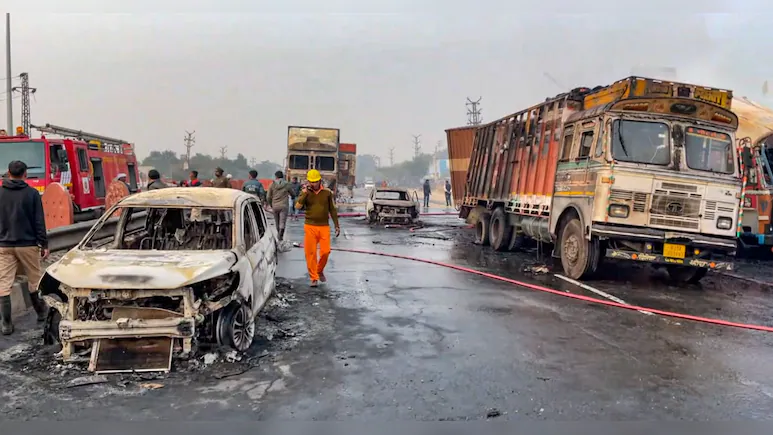
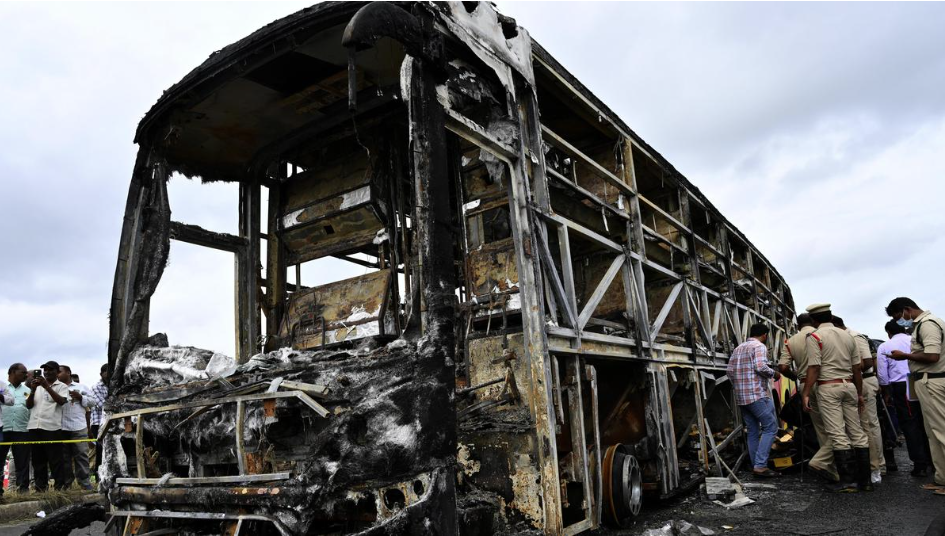
India sees the same pattern on its highways. NCRB’s Accidental Deaths and Suicides in India 2024 counted 1,01,649 road deaths that police put down to over-speeding and 46,132 to dangerous or careless driving and overtaking. The Jaipur LPG tanker fire and the Kurnool bus fire both showed how quickly a crash turns into a fire.
Lessons for bus passengers, operators and drivers in India
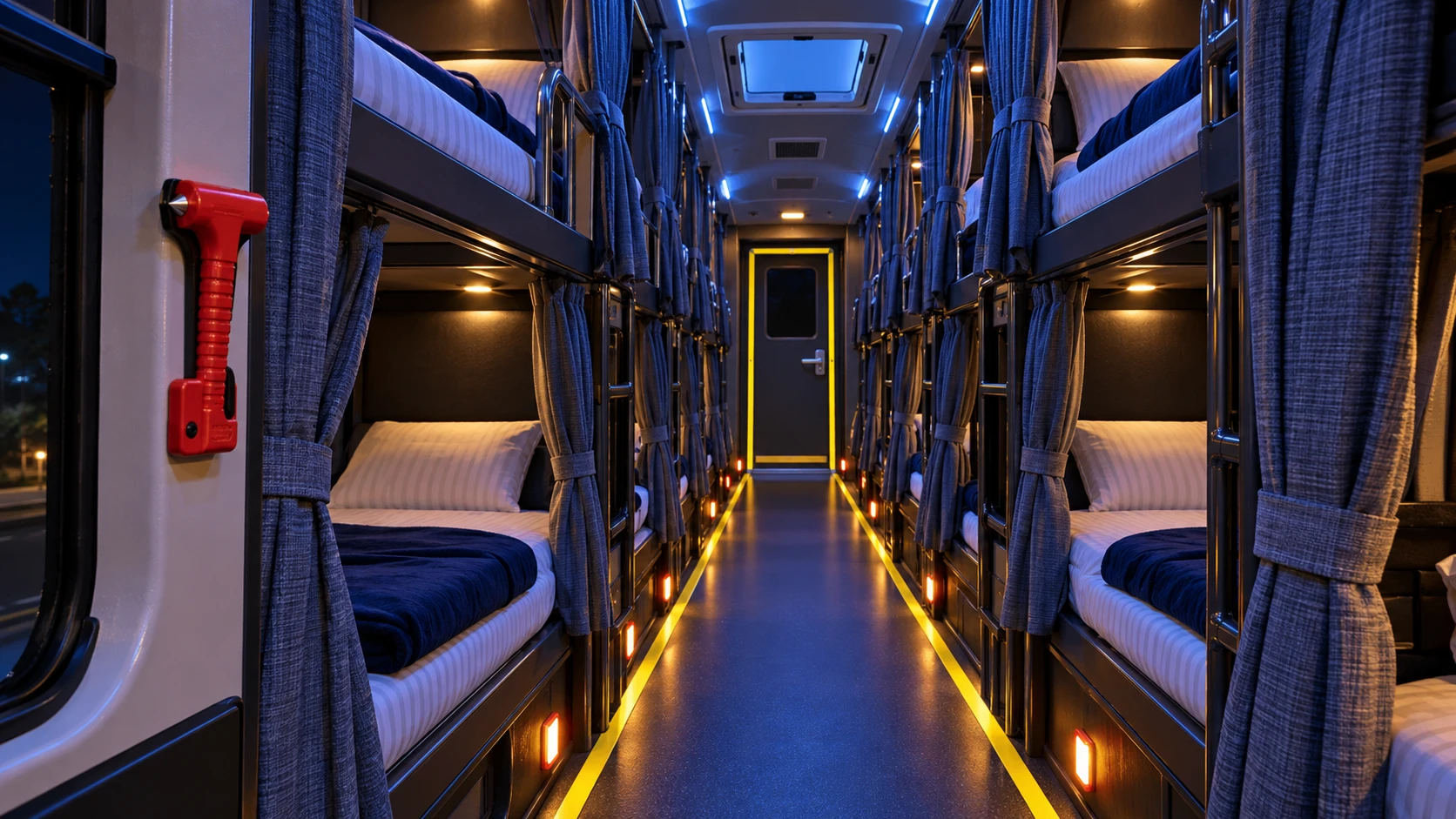
- Know your way out before the bus moves. Find the emergency exit, the hammer and the window you would use. In a fire you will have seconds, not minutes.
- Say no to cylinders and petrol in the luggage hold. If you see LPG cylinders, petrol cans or motorcycles being loaded into a passenger bus, refuse to travel and tell the police or the transport office.
- Check the bus before you book. Use the mParivahan app to look up the registration number and see the vehicle details, fitness and insurance dates. A mismatch or an expired date is a reason to walk away.
- Drivers, slow down for potholes, do not swerve. Braking in a straight line is safer than pulling into the oncoming lane, especially on a fast highway with heavy trucks.
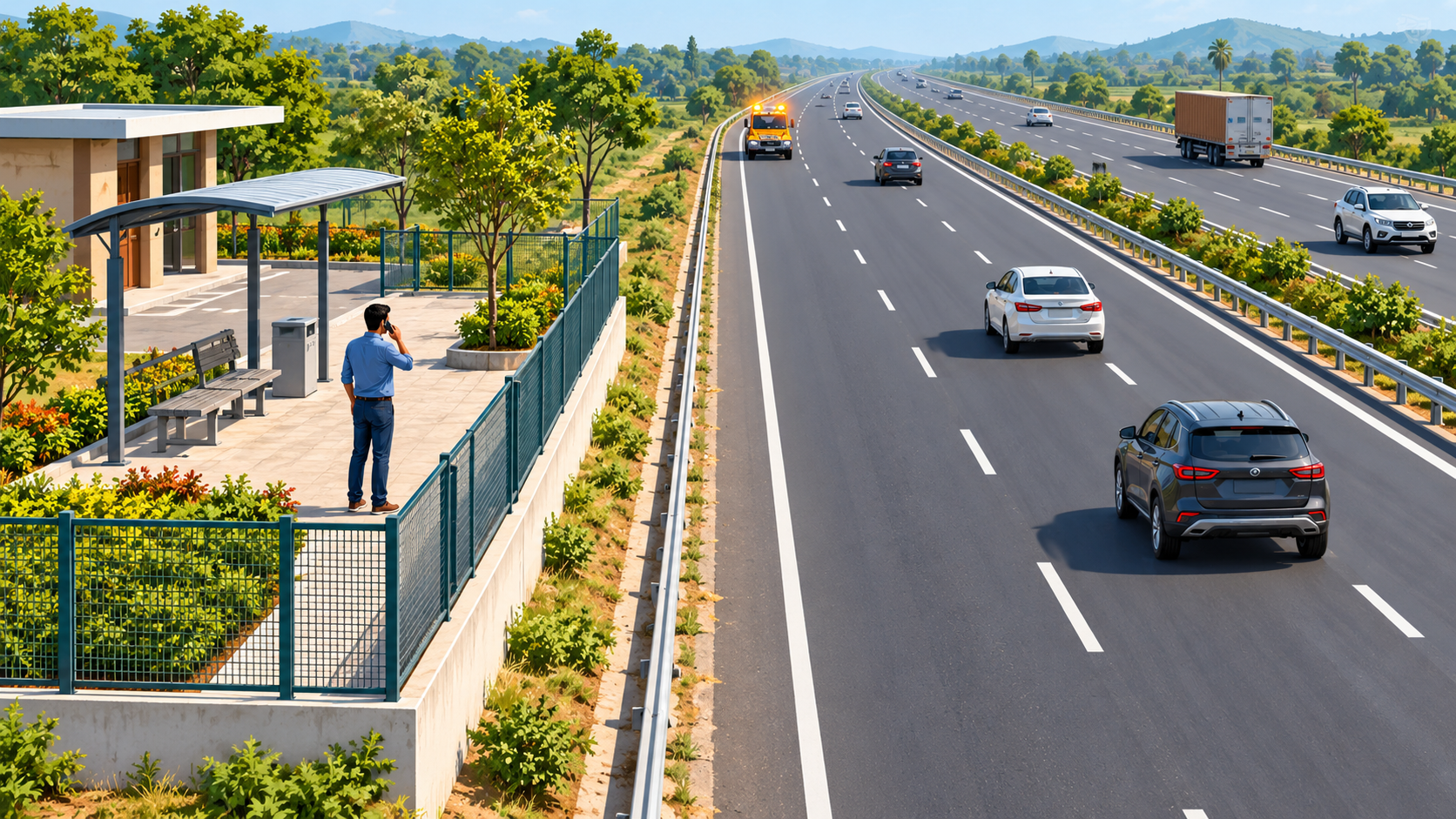
- Stay well away from a crashed tanker. Move upwind and uphill, keep others back and call 112 or the fire brigade on 101. Do not go close to film it.
If a bus catches fire after a crash
- Get out at once through the nearest door, window or emergency exit. Do not stop for bags.
- Stay low if there is smoke and cover your nose and mouth with cloth.
- Move well away from the bus and any fuel on the road, at least 100 metres if a tanker is involved.
- In India, call 112, or 108 for an ambulance and 101 for the fire brigade. In Indonesia, call 112.
- Cool the burn under cool, clean running water for 20 minutes. Even 10 minutes helps if that’s all you can manage. No ice, toothpaste, oil or butter.
What is still not known
The official cause, including the role of speed, the potholes and the sparks reported on the day, has not been published. We found no KNKT report, no detention of either suspect, no charge sheet or trial date, no final administrative sanction against the bus company and no published compensation amounts as of 17 October 2026. The type and quantity of fuel in the tanker have also not been reported. We will update this page when official details appear.
- Bus leaves Lubuklinggau terminal with 14 passengers and 4 crew on the manifest, per Antara
- Bus and fuel tanker collide head-on at Simpang Danau, Karang Jaya; both burn out
- BPBD and police give a provisional toll of 16, with 3 seriously and 1 slightly injured
- 16 body bags reach Bhayangkara hospital, Palembang, for DNA identification, per Indonesian National Police
- Transport agency says the bus's roadworthiness test was valid but its transport permit had expired (CNN Indonesia)
- Director General Aan Suhanan says no permit since November 2020 and a chassis number mismatch; ministry awaits KNKT (Antara)
- Toll stands at 19 after two hospital deaths; 14 identified, 3 awaiting DNA (Detik); case moves to formal investigation (Kompas)
- After 47 witnesses, police name the directors of PT ALS and PT Sinar Bumi Pertiwi as suspects
- Tanker owner rejects his suspect status and says he will challenge it (AFU.ID)
- No detention, charge sheet, trial date or KNKT report found
Why consequences escalated
- Nineteen people died; most were burnt beyond recognition and identified through DNA.
- Police say the bus swerved to avoid a pothole and crossed into the oncoming lane; this is not a final finding.
- Police measured the potholes at about 2 cm deep and said the bus was reportedly in fifth gear.
- The bus had no operating permit since November 2020, and its chassis number did not match records, per the ministry.
- Gas cylinders, furniture and motorcycles on the bus made the fire worse, police said.
- Directors of both the bus operator and the tanker owner have been named suspects; neither has been convicted.
Failures and risk multipliers
- A passenger bus running for years without an operating permit, as stated by the transport ministry.
- Gas cylinders and motorcycles carried on a passenger bus, adding fuel to the fire.
- Reported high speed and a swerve into the oncoming lane on a long, straight highway.
Actions that reduce risk
- Operators: never carry gas cylinders, petrol or motorcycles with fuel on a passenger bus.
- Transport offices: link permit checks to roadworthiness tests so an unlicensed bus cannot keep running.
- Drivers: brake in a straight line for potholes rather than swerve into the oncoming lane.
- Road agencies: repair potholes on fast highways with heavy tanker traffic.
- Passengers: refuse to board a bus loading cylinders or fuel cans, and report it.
Leave a comment