
What happened here
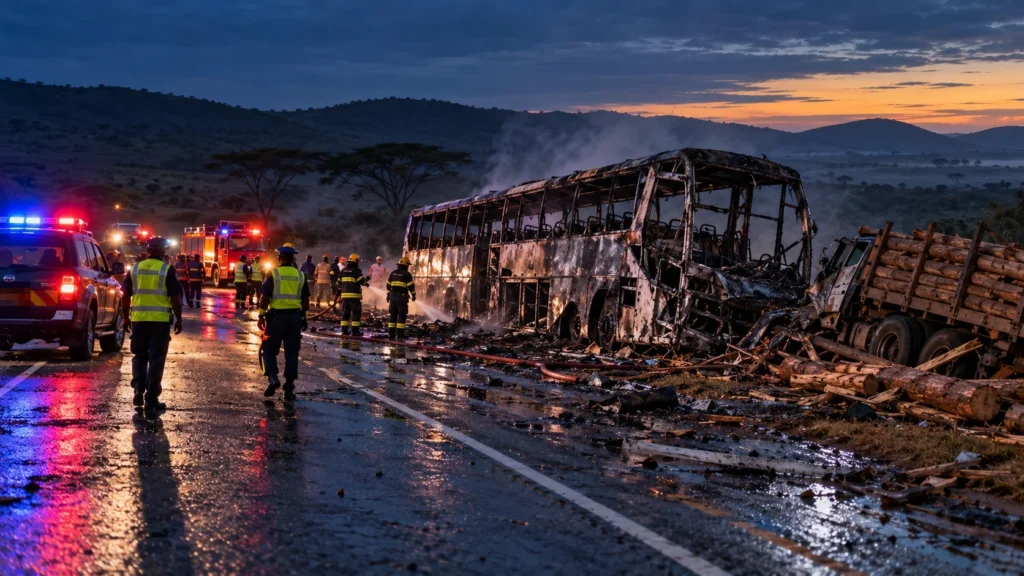
A Dar es Salaam to Mbeya passenger bus collided head-on with a timber lorry at Mkambarani, Morogoro, on the night of 8 to 9 October 2026, and the bus was burnt out. Officials reported 28 deaths and 30 injured. Fire and police officials gave a preliminary account blaming the lorry driver for overtaking without care, but a survivor blamed the bus driver's speed, and no investigation finding has been published.
Quick answers
How many people died in the Morogoro bus fire?
Officials reported 28 deaths: 27 people in the bus and one in the lorry. Some headlines say 32, but that total includes a separate crash involving a police vehicle the same night.
What caused the Mkambarani crash?
No investigation finding had been published by 15 October 2026. Fire and police officials gave a preliminary account that the lorry driver was overtaking without taking care, while a surviving passenger alleged that the bus driver was speeding.
Which company operated the bus?
Mwananchi and TBC reported Green Line and quoted a company manager. An early police statement, as summarised by Millard Ayo, named Dream Line. An official registration record was not found.
Are Indian buses required to have fire detection and suppression?
According to MoRTH, AIS-135 covers fire detection, alarm and suppression for engine-compartment fires, and a 2022 amendment added passenger-compartment systems for Type III long-distance buses and school buses. In February 2026, MoRTH asked States and UTs to check compliance with AIS-052 and AIS-119 at registration and fitness inspections.
What should I check when I board a bus in India?
Find the emergency door, the roof hatches and the break-glass hammers, and make sure no exit is locked or blocked. Report problems to the operator and the state transport department.
What is reported
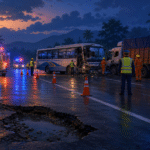
A long-distance passenger bus travelling from Dar es Salaam to Mbeya collided head-on with a timber-carrying lorry at Mkambarani, on the Morogoro–Dar es Salaam highway in Tanzania’s Morogoro Region, and the bus caught fire. Mwananchi put the crash at about 10 p.m. on 8 October 2026, and the Morogoro Regional Secretariat described it as about 11 p.m. on the night before 9 October. The Associated Press and The Citizen reported it as early on Friday, 9 October.
Joseph Mwasabeja, acting commander of the Morogoro Regional Fire and Rescue Force, gave a preliminary toll of 28 dead: 27 people in the bus and one in the lorry. He said the bus was completely burnt out. Mwananchi repeated the same 28-death breakdown on 12 October. Morogoro Regional Referral Hospital said it received 28 bodies and 30 injured people from this crash.
The same night, a separate crash involving a police vehicle in Morogoro Region killed four people, including three police officers. Some headlines combine the two crashes into a total of 32 deaths. This case study covers only the Mkambarani bus fire.
Response, treatment and identification
Fire and Rescue Force crews fought the fire and rescued survivors at the scene; AP footage shows firefighters hosing the burning bus at night. One surviving passenger told The Citizen he heard a loud bang before the bus caught fire and escaped by breaking a window. Public broadcaster TBC also aired a passenger describing an escape through a window.
Many bodies were too badly burned to be recognised. A team from the Office of the Government Chemist, led by Dr Fidelice Mafumiko, began DNA identification and relatives were asked to come to the hospital to give samples. On 12 October, Regional Medical Officer Dr Best Magoma said 17 bodies had been identified by DNA and 16 had been handed to families. He said all 30 injured patients had been discharged and that identification of the remaining bodies was continuing. He also said this was not the final report.
President Samia Suluhu Hassan sent condolences on 9 October. She directed the police to keep enforcing road-safety laws and urged drivers to obey traffic rules.
Who operated the bus
Mwananchi and TBC reported that the bus belonged to Green Line and quoted a company manager. Mwananchi reported that the company provisionally recognised its conductor’s body from his company T-shirt, pending DNA confirmation. TBC reported that four Green Line employees were among the dead. However, an early statement by Morogoro Regional Police Commander ACP Andrew Kantimbo, as summarised by Millard Ayo, named the operator as Dream Line. This article therefore treats Green Line as the operator named by most reports, not as an officially confirmed registration record.
What caused the crash is not yet established
Fire and police officials gave a preliminary account. Mr Mwasabeja said the lorry driver, travelling from Iringa towards Dar es Salaam, tried to overtake other vehicles without taking adequate precautions. ACP Kantimbo gave a similar account, and Mwananchi reported that Police Commissioner Awadh Juma blamed driver negligence in overtaking. A surviving passenger, however, alleged that the bus driver had been speeding and overtaking without care. Mwananchi reported on 12 October that the cause of the crash and the fire still had to be established by investigation.
No arrest, charge, final police report or statement from the Land Transport Regulatory Authority (LATRA) about this crash was found in the sources reviewed through 15 October 2026. No official explanation has been published of where the fire started or why so many passengers could not get out.
What remains unknown
- The final, official identification of all 28 victims.
- Whether the lorry driver survived, and his identity.
- The official finding on which vehicle caused the collision, and why.
- Where the fire started, and how quickly passengers could reach the exits.
- The bus’s registered operator, as confirmed by an official record.
India context: what the rules say about bus fires
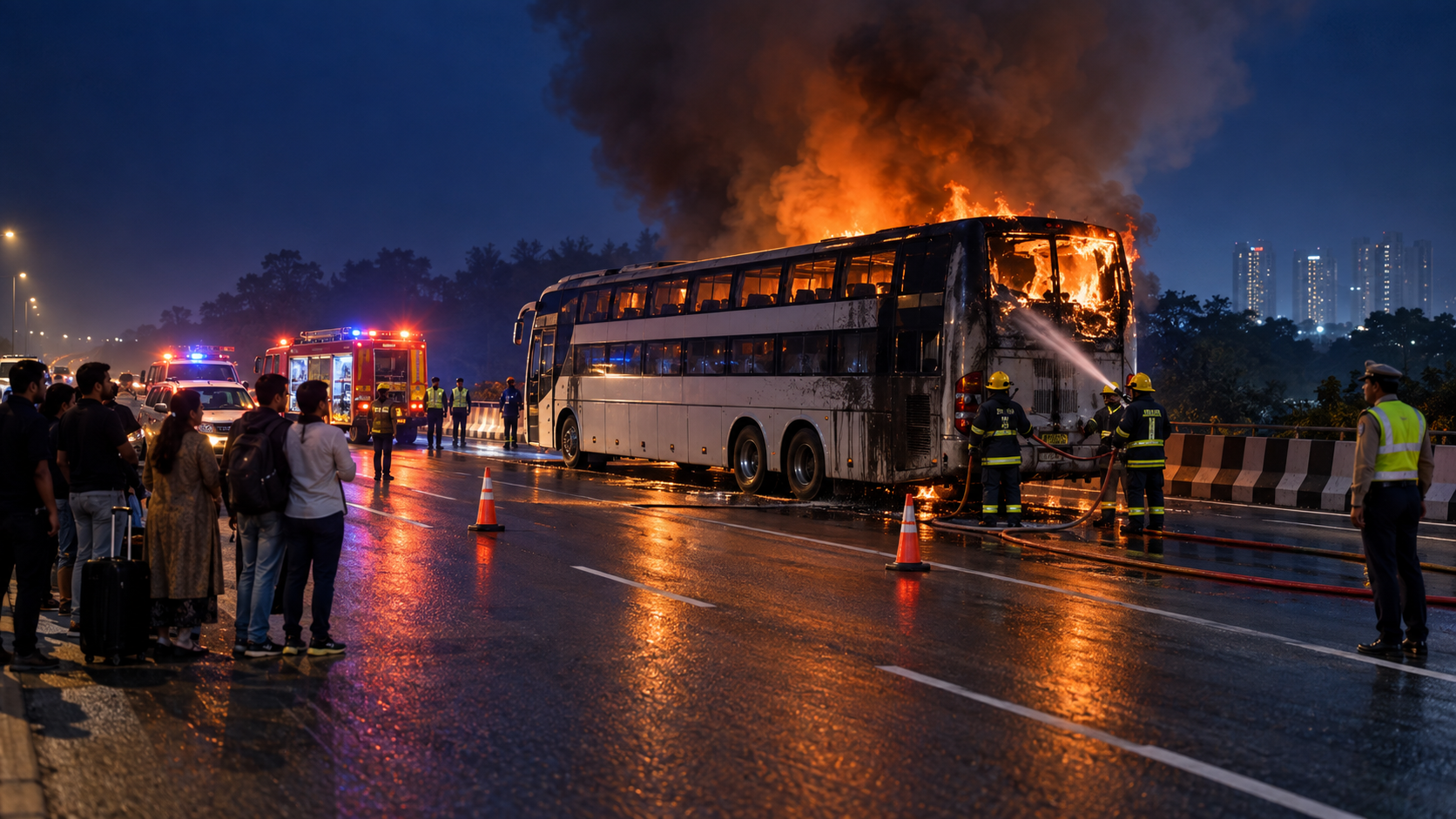
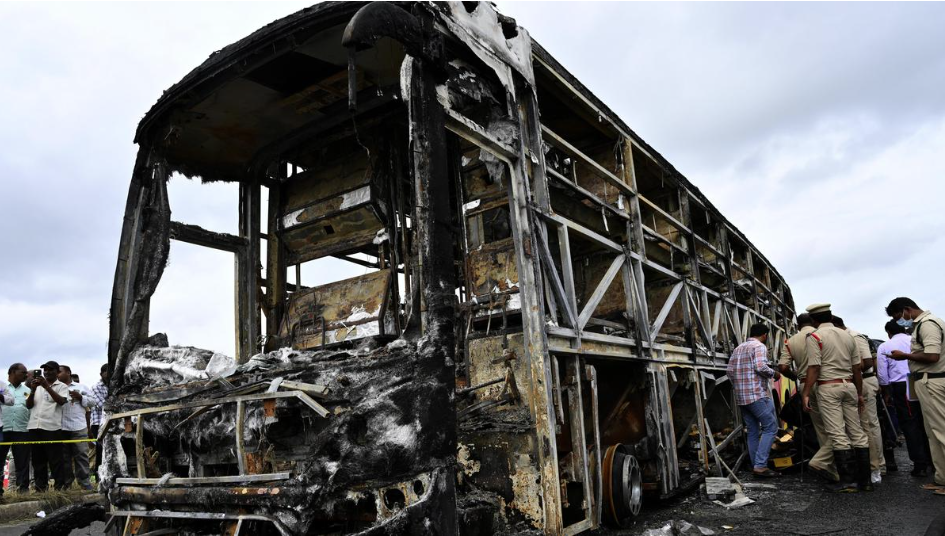
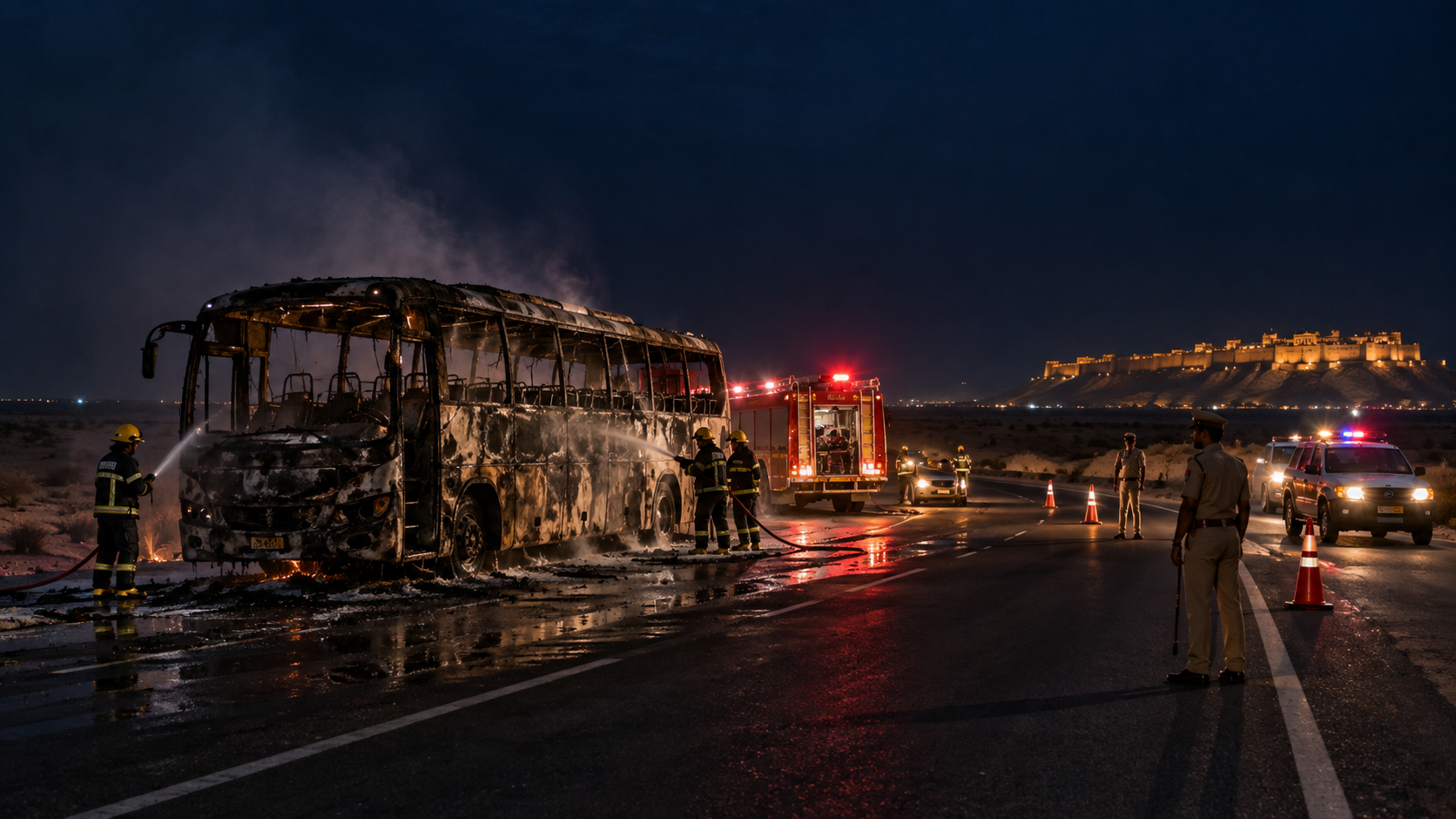
The following is Indian official context, not information about the Tanzanian crash. India has had several deadly bus fires. On 11 February 2026, the Ministry of Road Transport and Highways (MoRTH) told the Rajya Sabha that it had issued an advisory to all States and Union Territories. The advisory asks them to check compliance with the bus body code AIS-052 and the sleeper-coach standard AIS-119 at registration and during fitness inspections. In the Jaisalmer–Jodhpur sleeper-bus fire, the ministry found the following problems:
- the emergency doors were too small;
- passenger seats blocked the way to the emergency door;
- there was one roof hatch where two were required;
- the fire detection and suppression system was not fitted as required (PIB, 11 February 2026).
In January 2022, MoRTH amended AIS-135 to add a fire alarm and fire protection system in the passenger compartment of Type III buses (long-distance buses for seated passengers) and school buses. Before this, the standard covered only fires starting in the engine compartment. According to the ministry, a water-mist system is designed to keep the passenger-compartment temperature within 50 °C. This gives passengers more time to get out (PIB, 29 January 2022). In a 2020 demonstration, the DRDO-developed system detected a passenger-compartment fire in under 30 seconds and suppressed it within 60 seconds (PIB, 9 November 2020).
Lessons for bus passengers in India
- When you board, find the emergency door, the roof hatches and the nearest window you could break, and check that none is blocked by seats, berths or luggage.
- Look for the break-glass hammers. If they are missing or an exit is locked or blocked, tell the conductor or operator before departure and report it to the state transport department.
- If you smell smoke or see fire, get out at once. Do not stop for luggage. Keep low under smoke and use the nearest working exit.
- If the door cannot be used, break a side window with the hammer at a corner of the glass, clear the edges and help children and older people out first.
- Once outside, move well away from the vehicle and the traffic, then call 112.
Lessons for operators and regulators
- Plan night long-distance trips so that drivers do not overtake under pressure, and enforce speed limits and driver rest.
- Keep fire detection and suppression systems, extinguishers, hammers and emergency lighting working, and check them before every trip.
- Before departure, brief passengers on where the exits are, as airlines do.
- At registration and fitness checks, inspect exits, hatches and fire systems physically rather than accepting paperwork.
The Tanzanian facts in this article are attributed to the cited reports and official statements as they stood on 15 October 2026. They will be revised if the police, the hospital, the Government Chemist or LATRA publish new findings.
- The bus and a timber lorry collide head-on at Mkambarani and the bus catches fire (Mwananchi; Morogoro Regional Secretariat). AP and The Citizen describe the crash as early on 9 October
- Fire and Rescue Force crews fight the fire and rescue survivors; the acting regional fire commander says the bus was completely burnt out
- The Fire and Rescue Force gives a preliminary toll of 28 dead: 27 in the bus and 1 in the lorry
- Morogoro Regional Referral Hospital reports 28 bodies and 30 injured received; the sex of 17 bodies has been determined
- President Samia Suluhu Hassan sends condolences and directs the police to keep enforcing road-safety laws
- A Government Chemist team led by Dr Fidelice Mafumiko begins DNA identification; relatives are asked to give samples
- The Regional Medical Officer says all 30 injured have been discharged and 17 bodies have been identified by DNA, 16 of them handed to families
- No arrest, charge, final police finding or LATRA statement was found; completion of identification was not reported
Why consequences escalated
- The death toll of 28 (27 in the bus, 1 in the lorry) is consistent across fire-service, hospital and later Mwananchi reporting.
- The bus was burnt out and many victims could be identified only by DNA.
- At least one survivor escaped by breaking a window, so windows served as an exit route.
- The cause remains disputed: officials gave a preliminary account blaming the lorry driver, while a survivor blamed the bus driver.
- The operator's name differs between sources (Green Line in most reports; Dream Line in an early police statement as summarised by Millard Ayo).
Failures and risk multipliers
- Do not treat an early official account of who overtook as a final investigation finding.
- Do not add the separate police-vehicle crash to this toll; headline totals of 32 combine two crashes.
- Do not stop for luggage or phones when a bus is on fire; smoke and heat can make exits impassable within moments.
- Do not travel on a bus whose emergency exit is locked, bolted or blocked by berths or luggage without reporting it.
People closest to the evidence
“saving lives must come first, followed by protecting property”
Joseph Mwasabeja, Acting Commander, Morogoro Regional Fire and Rescue Force · Soundbite at the scene, in the English translation published by AP Archive, 9 October 2026 · Source ↗
Actions that reduce risk
- On boarding, locate the emergency door, roof hatches and break-glass hammers, and check that the exits are clear.
- Report missing hammers, locked exits or blocked aisles to the operator before departure and to the state transport department.
- In a fire, leave immediately by the nearest exit, keep low under smoke, and break a side window at the corner if the door is unusable.
- Once clear, move well away from the vehicle and the traffic, and call 112 in India.
Leave a comment