
Quick answers
What should I check before entering a pandal?
Find the exit, and a second one if there is one. Look at how crowded the lane is, whether entry and exit are separate, whether the gates and lanes are lit, and whether there are loose wires or cables across the path. If there is only one narrow gate and the lane is packed, come back later.
What should I do if it starts raining while I am in a pandal queue?
Step aside to a shopfront or awning and wait. Do not push into the pandal for shelter. Rain makes people outside rush in while people inside want to leave, and wet floors make falls more likely.
How many exits must a pandal have?
IS 8758:2013 asks for at least two exits at opposite ends, each not less than 2.5 m wide, and 3 m for larger pandals. Doors should open outwards and must not be bolted while people are inside, and exits need an EXIT sign and emergency lighting.
Is there a limit on how many people a pandal can hold?
Yes. IS 8758:2013 counts fixed seats plus one person for every 0.5 sq m of standing space, leaving out aisles and passageways, and says admission must not exceed that number. Organisers should stop entry when the pandal is full.
What are the rules for wiring and generators at a pandal?
IS 8758:2013 asks for a licensed contractor, proper insulated cable with no twisted or taped joints, no halogen lamps, and nothing within 15 cm of combustible decoration. The NDMA guide asks for generators and distribution boards to be kept isolated, fenced and weather-protected, away from the crowd.
Who gives permission for a pandal?
It differs by city. The NDMA guide says organisers must get approvals from the local administration, police, fire, PWD and electricity departments. In Kolkata, PTI reported that permissions are sought through the state government’s Sahaj portal. Ask your local police station and municipal body.
What did Kolkata Police change after the Chorbagan crush?
IANS reported on 18 October 2026 that all VIP passes for pandals were cancelled, food stalls were barred from entry and exit points, police would control the public address system, each pandal would have at least one police constable with volunteers, and entry and exit points had to be kept empty.
How can I keep children and elderly relatives safe at a festival?
Avoid busy hours, agree a meeting point, put a phone number in each child’s pocket and hold hands in lanes. Go with a helper for elderly relatives. If you get separated, stay out of the flow, go to the meeting point or a volunteer, and phone each other.
Who should I call if there is an emergency at a pandal?
Call 112 for police and emergency help, 101 for the fire service and 108 for an ambulance. Give the name of the pandal, the lane and the gate.
Every festival season, lakhs of people walk into lanes that were ordinary roads a week earlier. A bamboo gate goes up, a tarpaulin roof is tied on, a few hundred metres of wiring are strung overhead, and a stretch of the city becomes a pandal trail or a mela ground. Most of the time it is a joy. Sometimes one narrow gate and one wet evening are enough to turn it into a disaster.
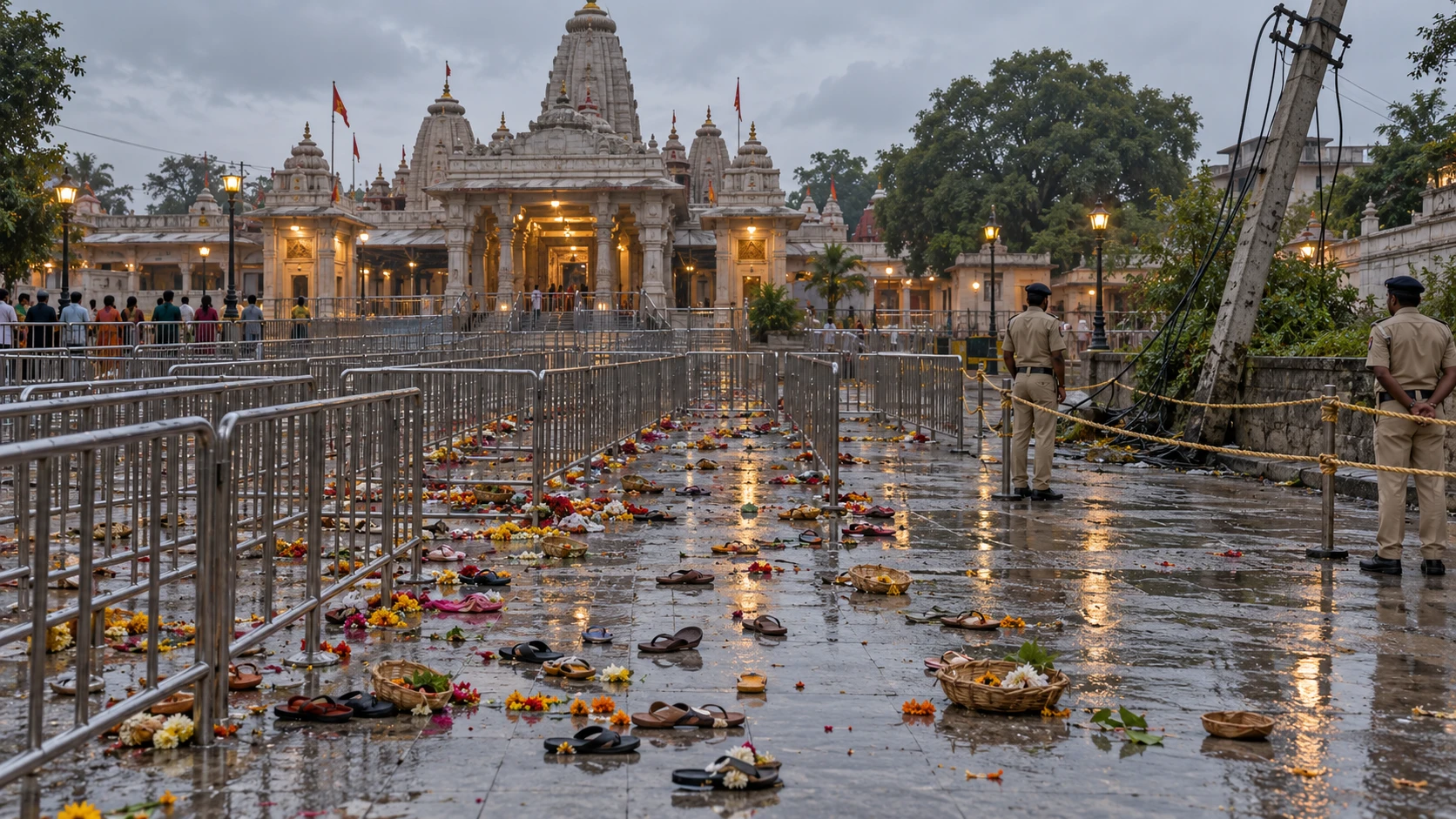
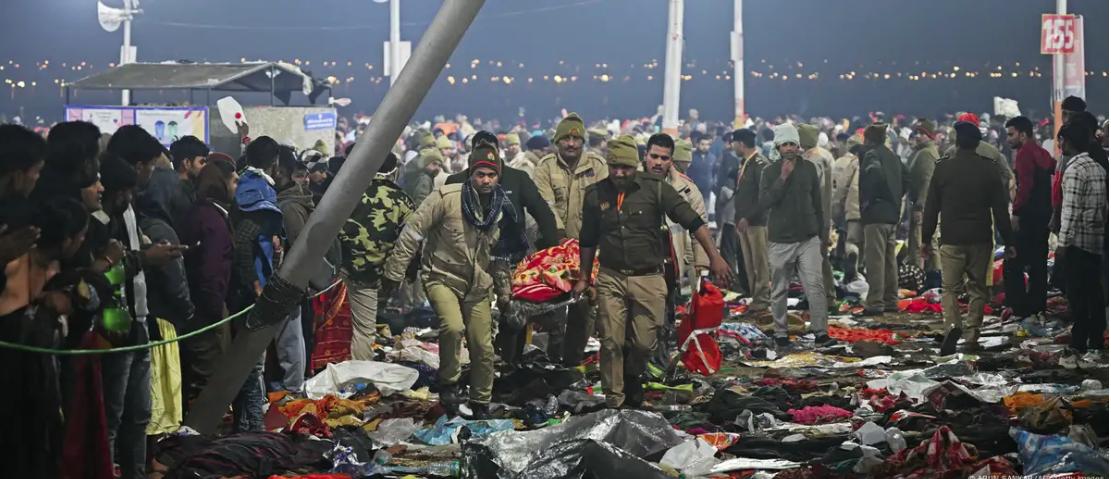
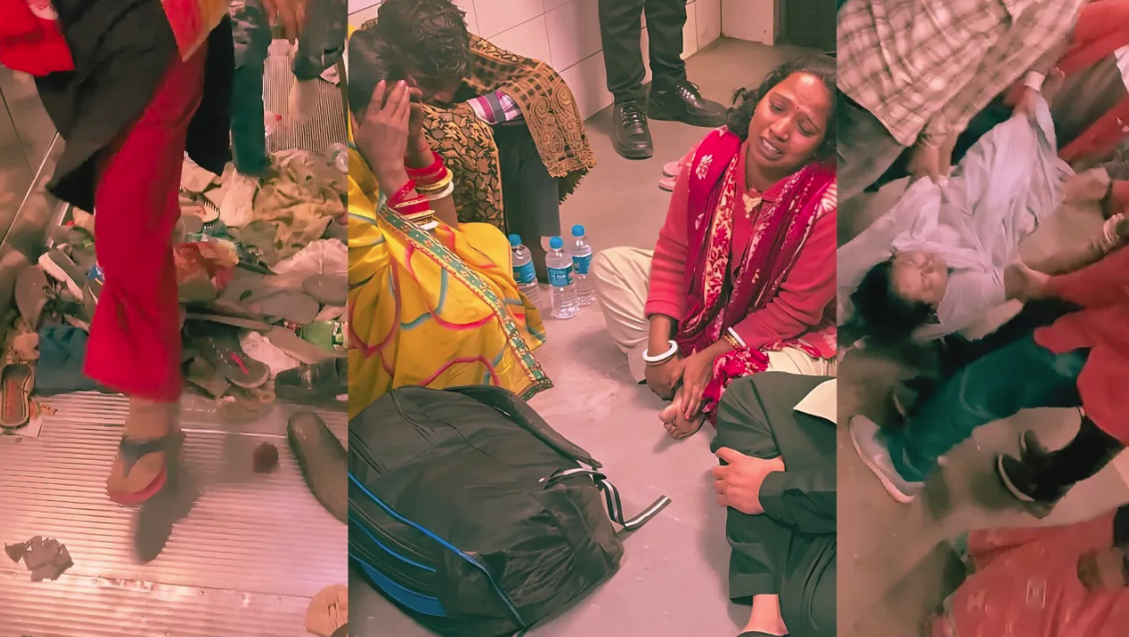
On the evening of 17 October 2026, Maha Saptami, a crowd crush at the exit gate of the Chorbagan Sarbojanin Durga Puja pandal in north Kolkata killed 19 people and injured 25. Kolkata Police said heavy rain and a swelling crowd were involved, and police sources told PTI the gates were narrow. The cause is still under investigation, and we have written it up separately as the Chorbagan pandal crush in Kolkata. This guide is different. It is for the next pandal, mela or festival lane you walk into: what to look at before you enter, what a safe pandal should have, and what puja committees and police are expected to do.
We have kept it to what is new. If you want the survival moves once you are caught in a crush, read how to survive a crowd crush. For the early signs of pressure, see our guide to the warning signs of a crowd crush.
Why a pandal or mela is a different kind of crowd
A stadium or a railway station is built for crowds. A pandal is not. The National Disaster Management Authority (NDMA) guide on managing crowds at events and venues of mass gathering lists what goes wrong in places like this: temporary structures and bamboo railings, slippery or muddy ground, narrow streets with vendors on both sides, very few entries and exits, reliance on one major exit, locked or blocked exits, and large inward and outward flows colliding. It also lists poor lighting, illegal electric connections, generator short circuits and a power failure that makes people rush out.
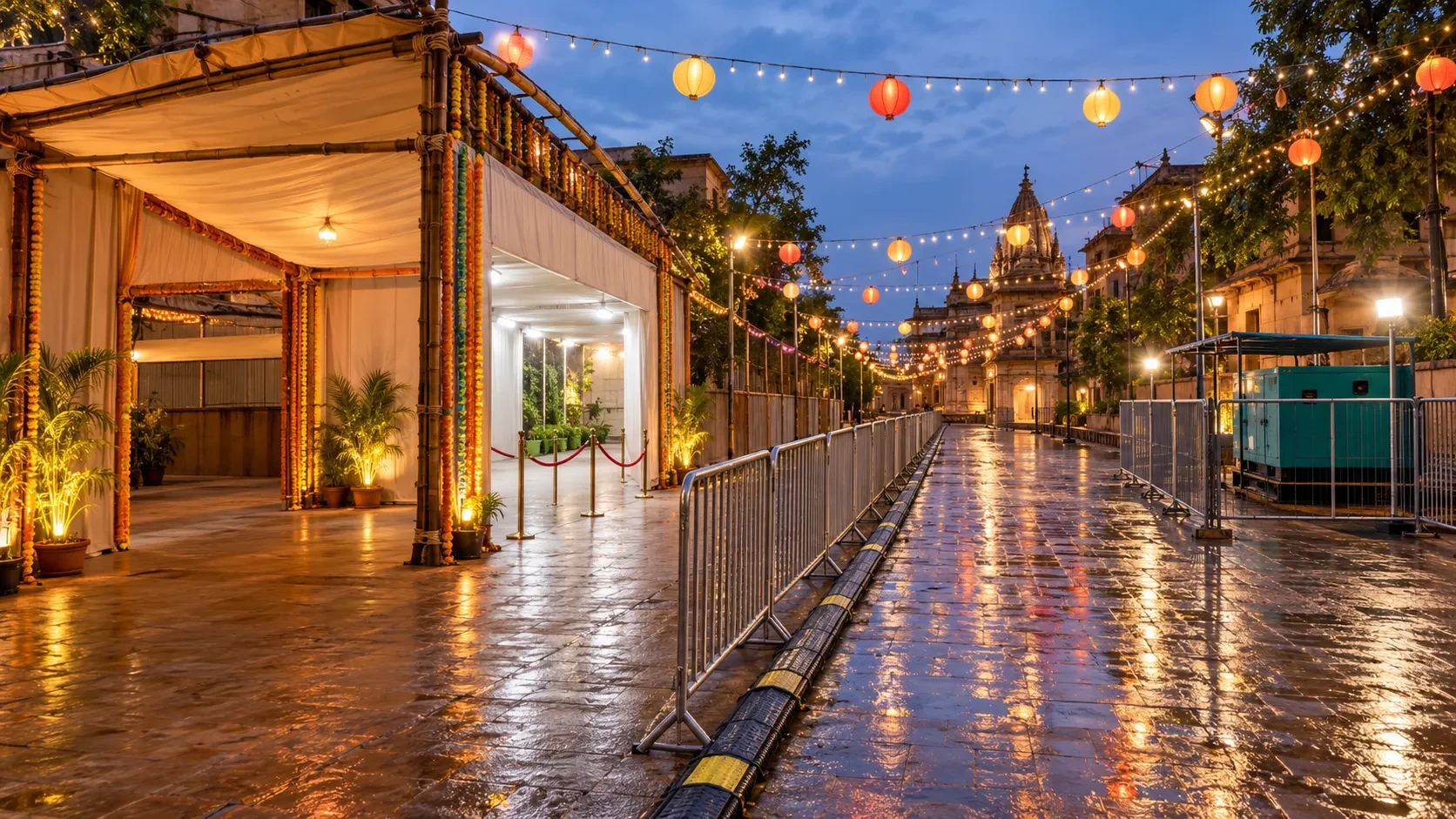
A festival night puts several of these together. The lane is narrow, the pandal has one gate, everyone arrives at the same hours, and the lighting is mostly decorative. Add rain and the crowd outside pushes in for shelter while the people inside want to leave.
Before you enter: what a visitor should check
You cannot inspect a pandal like an engineer, but two minutes at the entrance tells you a lot.
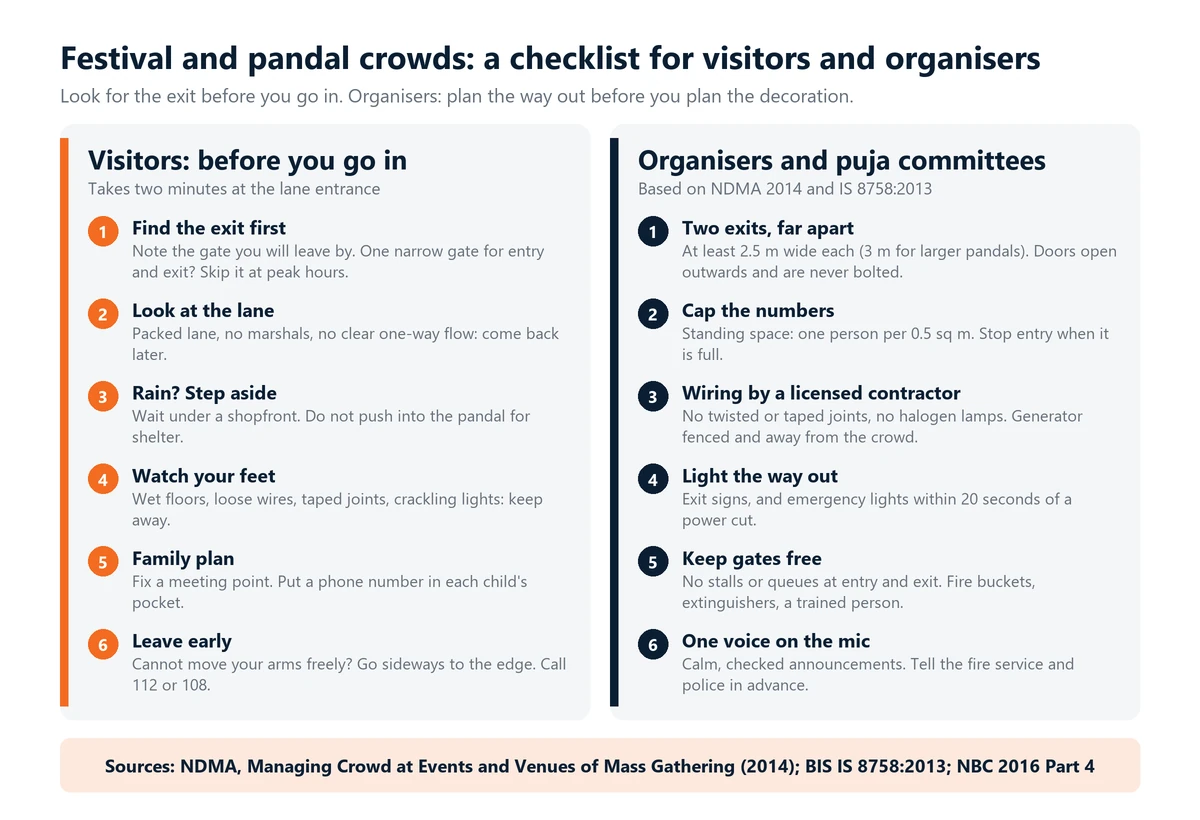
- Find the exit first. Look for the gate people leave by, and a second way out if there is one. If the same narrow gate serves both entry and exit, or a single rope divides one path into two, come back at a quieter hour.
- Look at the lane, not only the pandal. A lane packed shoulder to shoulder, with nobody directing the flow and no one at the gate, is a reason to wait.
- Look up and down. Loose or twisted wire joints, cables lying across the walkway, sparking or crackling lights and a hot, humming generator close to the queue are warning signs. Tell a volunteer, and stay out of that stretch.
- Check the lighting. The entry, the exit and the approach lane should be properly lit, not only the idols and the decoration.
- Do not go in a rush. Festival evenings and weekends are when lanes fill up. If the line is already building up outside, come back later.
- Keep your hands free. Wear closed footwear that will not come off, carry one small bag, and keep your phone charged.
Rain and wet floors
Rain changes a crowd faster than almost anything else. People outside run for cover and press towards the gate, people inside stop moving, and a wet floor makes one fall more likely. The NDMA guide lists slippery and muddy ground and bad weather among the conditions that lead to crushing.
- If it starts raining while you are in the queue, step out to a shopfront or an awning and wait. Do not push in for shelter.
- Inside, walk slowly and keep your eyes on the floor near the gate, on ramps and on steps. Wet bamboo matting and plastic sheets are slippery.
- Keep away from wet wires, lamp posts and metal frames, and do not touch any wire hanging low. Report it to a volunteer or to the electricity board.
- If the crowd around you starts to push, move sideways towards the edge instead of forward.
One-way entry and exit
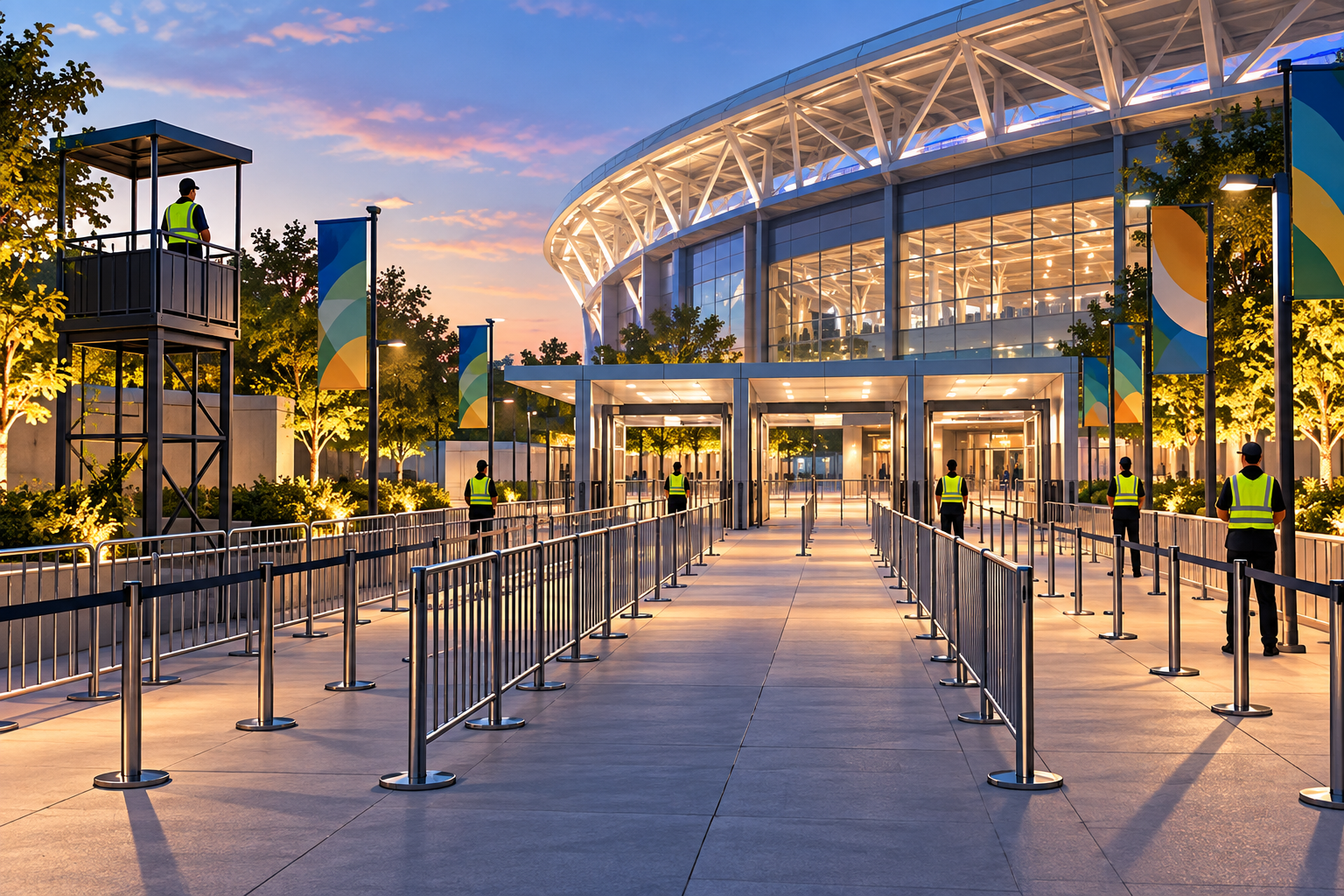
The basic rule is simple: people going in and people coming out should never meet head on. The NDMA guide says organisers should keep ample entrances and exits, including an emergency route, and keep them unobstructed. It suggests one-way movement where approach roads are narrow, and a snake-line queue with barriers that are well lit, so that people do not trip over them at night.
As a visitor, follow the marked route even when the lane looks slower. Cutting across a queue or going back against the flow is how a bottleneck forms. If you cannot see separate entry and exit points, treat that as a warning in itself.
Bamboo, tarpaulin and decoration: what the standard says
Pandals are covered by a Bureau of Indian Standards code, IS 8758:2013, Fire precautionary measures in construction of temporary structures and pandals. The National Building Code of India 2016, Part 4 (Fire and Life Safety), says temporary structures may be permitted only by a special permit from the authority for a limited period, and must be completely removed when the permit ends. It points to good practice for pandals, which is IS 8758.
Some points from IS 8758 that every committee and every sensible visitor can understand:
- The ceiling and passageways should be at least 3 m high.
- Where possible, use non-combustible or fire-resistant material. Combustible material should be treated with a fire retardant, and fabrics and drapes should meet the flame-spread standards named in the code.
- No decorative paper or synthetic material, and no nylon or synthetic ropes, in the structure.
- A clear space of 4.5 m on all sides between the pandal and the buildings next to it, and the pandal reachable by a fire engine, with no part more than 45 m from a motorable road.
- No fireworks or open flame inside or near the pandal, apart from small controlled fires for religious purposes. Cooking should be in a separate area, preferably made of GI sheets.
- No structure under or next to a live electrical line. The gap from live wires must be at least 2 m.
For decoration at home, our festival fire safety guide covers lights, diyas and cooking.
Electrical wiring and generators
Lights are the soul of a pandal, and they are also its most common fire risk. The NDMA guide lists illegal electric connections, wrong fittings, aluminium wire instead of copper, and a short circuit from a generator or a synthetic tent catching fire among the causes behind crowd disasters. It also asks that all structures and electrical wiring be certified for safety by technically qualified people.
IS 8758 is specific:
- Temporary lighting should be installed by a licensed contractor, to the electrical installation code (IS 1646).
- Wiring should be PVC-sheathed conductors or rubber cable. Twisted and taped joints are not allowed; joints should be made with proper connectors.
- No bulb, tube light or other part of the circuit within 15 cm of decoration or other combustible material, and no halogen lamps inside the pandal.
- A carbon dioxide or ABC dry-powder extinguisher at each switchgear, main meter and stage area.
NDMA adds that the generator, distribution boxes and circuit breakers should sit in an isolated place away from the crowd, with fencing and a guard if needed, and protection from the weather. Fuel such as diesel should be stored safely and clearly labelled, and cables across walkways should be covered so that nobody trips.
The NDMA guide also describes what can happen when this goes wrong. In December 1995 a pandal set up for a school function at Mandi Dabwali in Haryana caught fire after a short circuit in an electric generator. About 1,500 people were in a pandal with a seating capacity of 500 to 600, and they tried to escape through the only exit; 446 people died, mostly children and women. We have told the full story in our Mandi Dabwali fire tragedy case study.
Fire exits and fire kit
According to IS 8758, every temporary structure should have at least two exits, at opposite ends, each not less than 2.5 m wide; for larger pandals each exit should be 3 m wide. The clear width should be worked out at not less than one unit of 50 cm for each 50 persons. Doors should open outwards and must not be closed or bolted while people are inside. The exits should carry an EXIT sign, including in the local language, lit by a reliable light, and emergency lighting should come on within 20 seconds of a power failure.
Capacity is set out too. The code counts fixed seats, plus one person for every 0.5 sq m of standing space, and it says aisles and passageways do not count. The number of people admitted must not exceed that figure.
For fire fighting, the standard asks for two fire buckets for every 50 sq m of floor space, one 9-litre water extinguisher for every 100 sq m, and stored water. Organisers should give the fire service advance notice of the structure, its location, size, expected numbers and exits, and keep a responsible person on site who can organise an evacuation and call the fire service. The emergency number should be displayed.
Children and the elderly
- Children: agree a meeting point before you enter, such as a particular shop or the police booth. Put your phone number in the child’s pocket. Hold hands in lanes and carry a very small child. Skip busy hours with babies.
- Elderly relatives: avoid busy hours, go with a helper, and ask the volunteers for the easiest route. The NDMA guide asks organisers to plan for children, the elderly and people with disabilities, and to place missing-children booths and first-aid posts at various points.
- Everyone: if you get separated, stay out of the flow, go to the meeting point or to a police booth or volunteer, and phone each other. Do not push back through the crowd to look for someone.
What organisers and puja committees must do
The NDMA guide says organisers and venue managers should draw up and review a crowd management plan, comply with central, state and local laws, and get all the necessary approvals from the local administration, police, fire, PWD and electricity departments. Its sample plan says the organisers have a common law duty of care to everyone at the event. In practice, that means:
- Separate and adequate entry and exit. Not one gate and a rope. The exit should be at least as wide as the entry, kept clear, and lit.
- A cap on numbers. Count people in, and stop entry at the far end of the lane once the pandal is full. NDMA suggests keeping alternative routes to release crowd pressure.
- A plan for rain. Decide in advance where the queue outside will shelter and who will hold the line at the lane entrance.
- Marshals at the busiest points, in high-visibility clothes, able to talk to each other and to the crowd. The public address system and radios should work, and one trained person should control the microphone.
- Stalls and parking away from entry and exit, and a clear route for an ambulance and a fire engine.
- Fire and electrical checks as above, before the pandal opens, with the generator fenced off, extinguishers in place and a responsible person on site.
- A first-aid post and a missing-children booth near the pandal, and the numbers of police, fire and ambulance displayed.
What local police require
Rules differ from city to city, and police issue fresh orders during the festival, so check with your local police station and municipal body. In Kolkata, PTI reported on 26 September 2026 that the police asked committees to keep separate entry and exit routes at pandals, to make arrangements for rain, and to apply for permissions through the state’s digital Sahaj portal.
After the Chorbagan crush, IANS reported on 18 October 2026 that Kolkata Police told police stations and puja organisers that all VIP passes for pandals were cancelled, that no food stalls could be kept at entry and exit points, that police would control the public address system, that each pandal should have at least one police constable along with volunteers, that entry and exit points must be kept empty, and that lighting inside the pandal and at the gates should be checked. These are one city’s orders, given here as an example of what to expect. They are not national rules.
If something goes wrong
If the crowd begins to push, or someone shouts that the structure is falling or a wire is live, do not run with the crowd. Check what is happening, move sideways to the edge and towards the nearest exit, and keep your arms up in front of your chest. Call 112 for police and emergency help, 101 for the fire service and 108 for an ambulance, and tell the operator the name of the pandal, the lane and the gate.
Keep this ready before the next festival
- Look for the exit before you go in, and skip any pandal with one narrow gate at a busy hour.
- If it rains, step aside and wait. Do not push in for shelter.
- Keep away from loose wires, wet cables and a generator close to the queue.
- Fix a meeting point with the family and put a phone number in each child’s pocket.
- Committees: two wide exits, a cap on numbers, licensed wiring, lit exits and one trained voice on the microphone.
What needs attention
- Pandals and melas are temporary structures in narrow lanes, with few exits, wet ground and improvised wiring; the NDMA guide lists each of these among the causes of crowd disasters.
- Rain changes crowd behaviour: people outside push in for shelter while people inside want to leave.
- Entry and exit must be separate and wide enough; one gate with a rope is not two gates.
- IS 8758:2013 sets minimum exits, capacity, wiring, lighting and fire-fighting rules for pandals.
- The NDMA guide asks organisers to get approvals from the local administration, police, fire, PWD and electricity departments.
- Police orders differ by city and change during the festival; Kolkata issued new instructions after the Chorbagan crush.
Controls that reduce risk
- Find the exit before you enter, and skip pandals with one narrow gate at a busy hour.
- Step aside and wait if it rains; do not push in.
- Keep away from loose or wet wires and tell a volunteer.
- Fix a family meeting point and put a phone number in every child’s pocket.
- Committees: apply for all permissions, build two wide exits, cap numbers and use a licensed electrician.
- Call 112, 101 or 108 and give the pandal name, lane and gate.
Common unsafe practices
- Using one gate for both entry and exit.
- Letting people in beyond the capacity of the pandal.
- Pushing into a pandal for shelter when it starts raining.
- Twisted and taped wire joints, halogen lamps and decoration touching bulbs.
- A generator and distribution boards left near the queue without a fence.
- Stalls and queues at the entry and exit points.
- An unchecked announcement on the microphone that frightens the crowd.

Leave a comment