
Quick answers
How far should a diya be from curtains?
Indian fire services do not give a distance. They say to keep lamps, candles and agarbattis away from curtains, furniture and other flammable items, on a base that will not burn and out of children’s reach. Keep the whole area around and above the flame clear, and move the diya if in doubt.
Can I plug all my festival lights into one extension board?
Not without limits. The Delhi Fire Service advises one electrical appliance in one socket, and the Uttar Pradesh Fire Service says decorations must not overload the supply board. Follow the maker’s limit on joined strings, never chain extension boards, and unplug the board if it feels warm or smells of burning.
How do I know decorative LED lights are safe to buy?
BIS lists LED lighting chains and rope lights in its compulsory registration scheme. Buy from a shop that sells strings with the maker’s name and BIS marking on the pack, and do not use any string with cracked insulation or bare wire. Goa’s fire service says to replace damaged wires immediately.
What should I do if the oil in my kadhai catches fire?
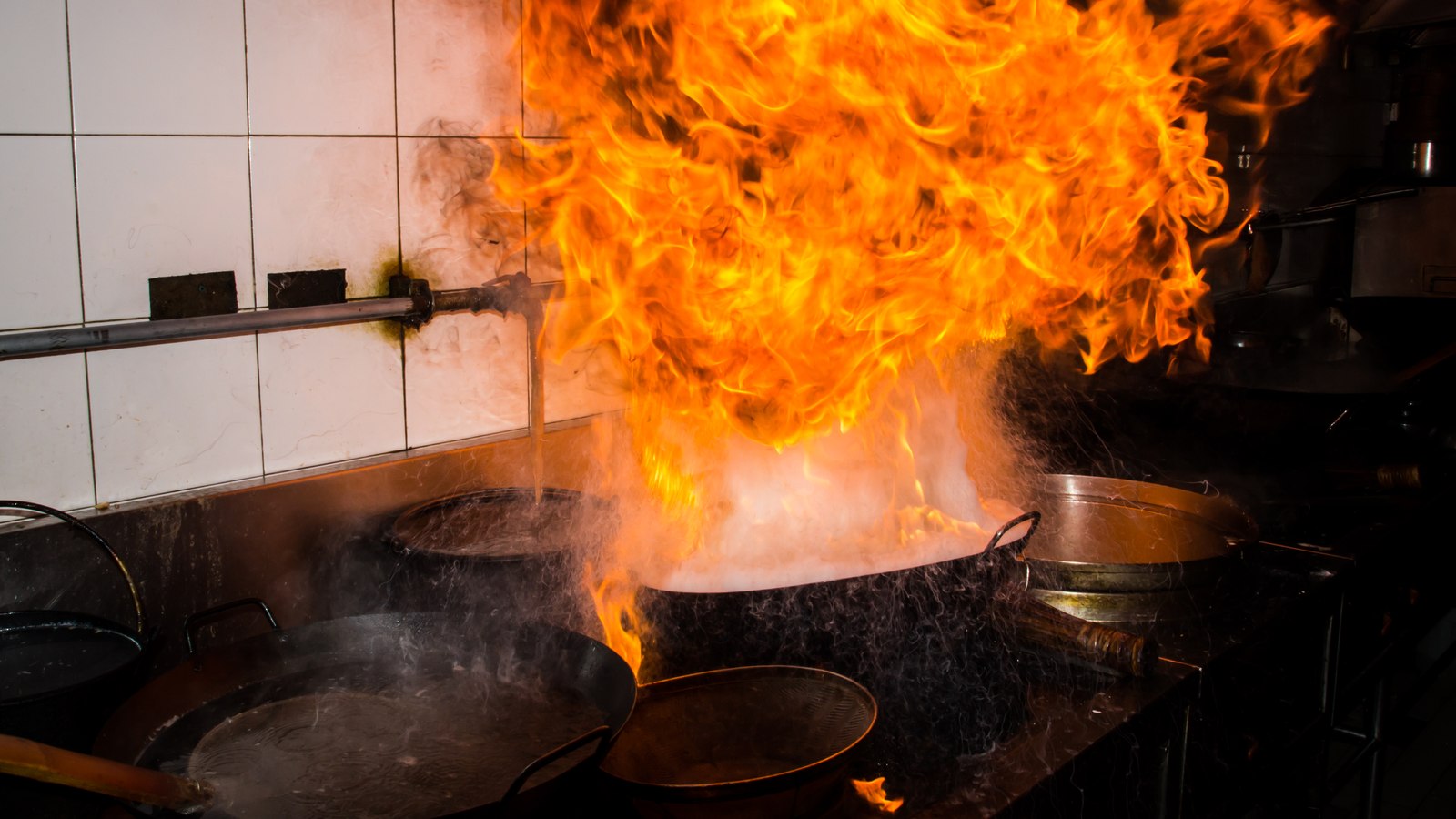
Never put water on it. Turn off the heat only if you can do so safely, do not move the pan, and do not try to tackle it yourself. London Fire Brigade and other UK fire services say to leave the kitchen, close the door, warn others and call for help. In India call 101 or 112.
Is a fire blanket enough for an oil fire?
We found no official guidance that tests what a fire blanket can put out on a burning kadhai, so we do not make that claim. If you own one, read the maker’s instructions beforehand. If you are not sure, get out and call 101 or 112.
I smell gas and the puja lamp is lit. What do I do?
Do not panic. Turn the regulator OFF, put out the lamp, agarbatti and every other flame, do not light a match or lighter, and do not switch any electrical switch on or off, including the main. Open all doors and windows, keep away from the leak, and call 1906 or your distributor.
How often should I change the LPG hose?
HPCL and Indian Oil say to replace the rubber tube every two years and the Suraksha LPG hose every five years, and immediately if you see cracks or damage. Check it before the festival cooking begins.
Whom do I call in a fire?
Call 101 for the fire brigade or 112 for any emergency, 108 for an ambulance and 100 for the police. Call from outside the building and give the full address and route.
What happened in the Bengaluru cylinder fire on 3 November 2026?
News reports quoting preliminary information say a cylinder with a small leak caught fire at the doorway of a house in Malleshwaram as it was being delivered, after the gas reached a diya lit at the threshold. The delivery worker and others were not hurt, and police and the fire brigade went to the spot. The cause is not established.
Is it safe to keep a diya burning at the door when a gas cylinder is delivered?
Official LPG guidance asks you to put out every flame, including the pooja lamp and agarbatti, when gas leaks and before a cylinder is connected or disconnected. Our suggestion is to keep the diya away from the door until the new cylinder is in place and checked.
Should I throw water on a burning LPG cylinder?
The official LPG consumer guidance we read (HPCL, PMUY, Goa fire service) does not say. We therefore give no method. Keep away from the flame, get everyone out, call 101 or 112 and tell your distributor. The rule against water on burning oil is a different matter and applies only to cooking oil.
Festival weeks put more flame, more wiring and more frying into the same small home than any other time of the year. A diya burns on every windowsill, three strings of lights hang off one extension board, the kadhai stays on the stove for hours, and a house full of relatives sleeps on the drawing-room floor. Most of it is harmless. It takes only a few careless minutes for that to change.
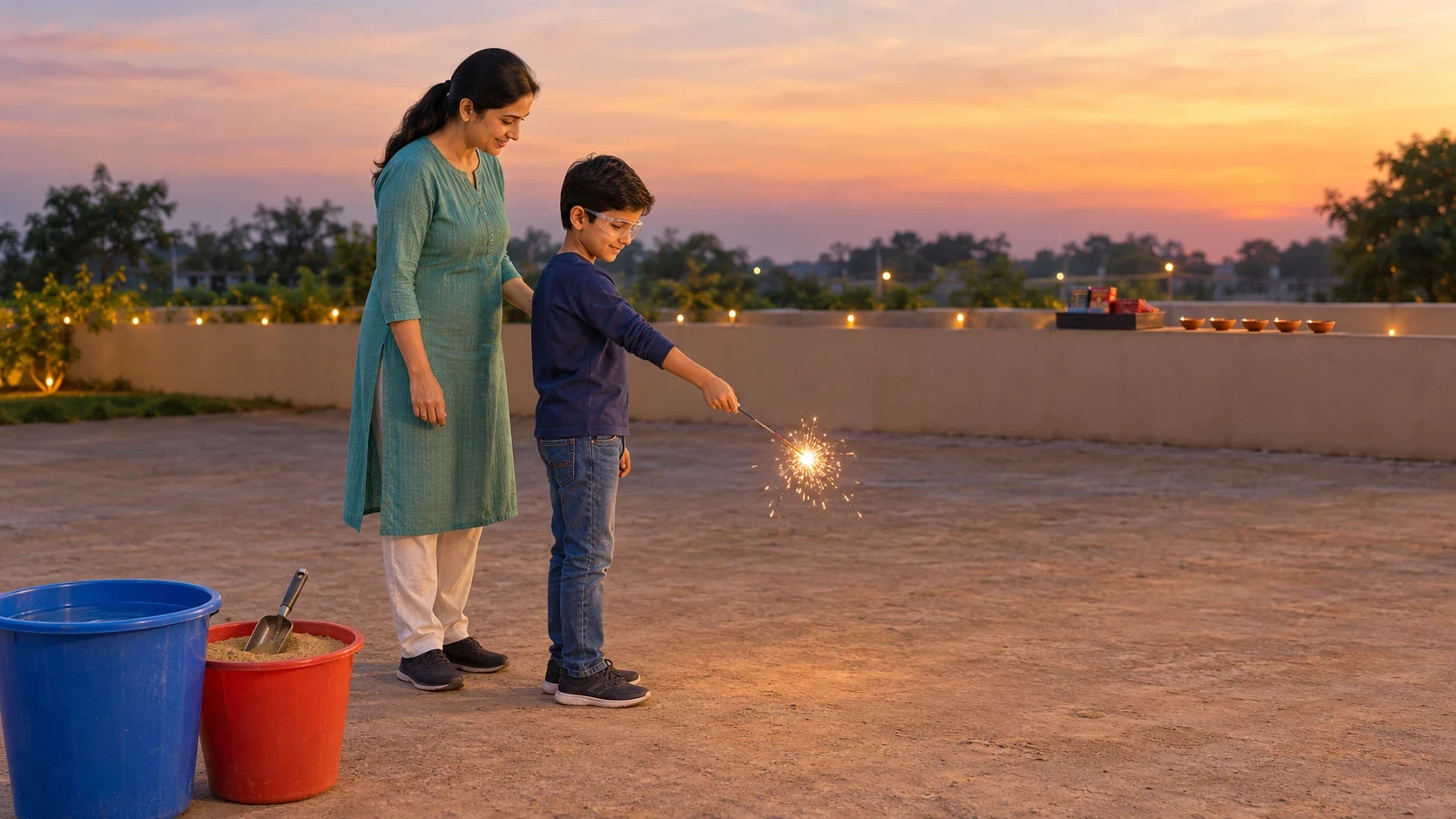
This guide covers the home side of festival fire safety: diyas, decorative lights, electrical load, sweets-making, LPG, crowded homes and what to do if a fire starts. It leaves out crackers, which have their own page: see our Diwali firecracker safety guide. The advice follows state fire services, the Delhi Fire Service, the Central Electricity Authority (CEA) safety regulations, Bureau of Indian Standards (BIS) listings and the LPG safety guidance of Hindustan Petroleum (HPCL) and Indian Oil.
Why festival weeks need extra care
We did not find a festival-season count of home fires from any official source, so we do not claim one. The yearly numbers are still a good reminder. In 2024 the National Crime Records Bureau (NCRB) recorded 5,888 deaths in accidental fires in India. Of these, 1,389 were from a cooking-gas cylinder or stove burst and 1,012 from electrical short circuits. Festival weeks add more of exactly those two things: heavy cooking and extra electrical load. For the fire-call and burn figures that Delhi, Tamil Nadu and Gujarat did publish for Diwali, see our Diwali fire accidents data page.
Diyas and candles
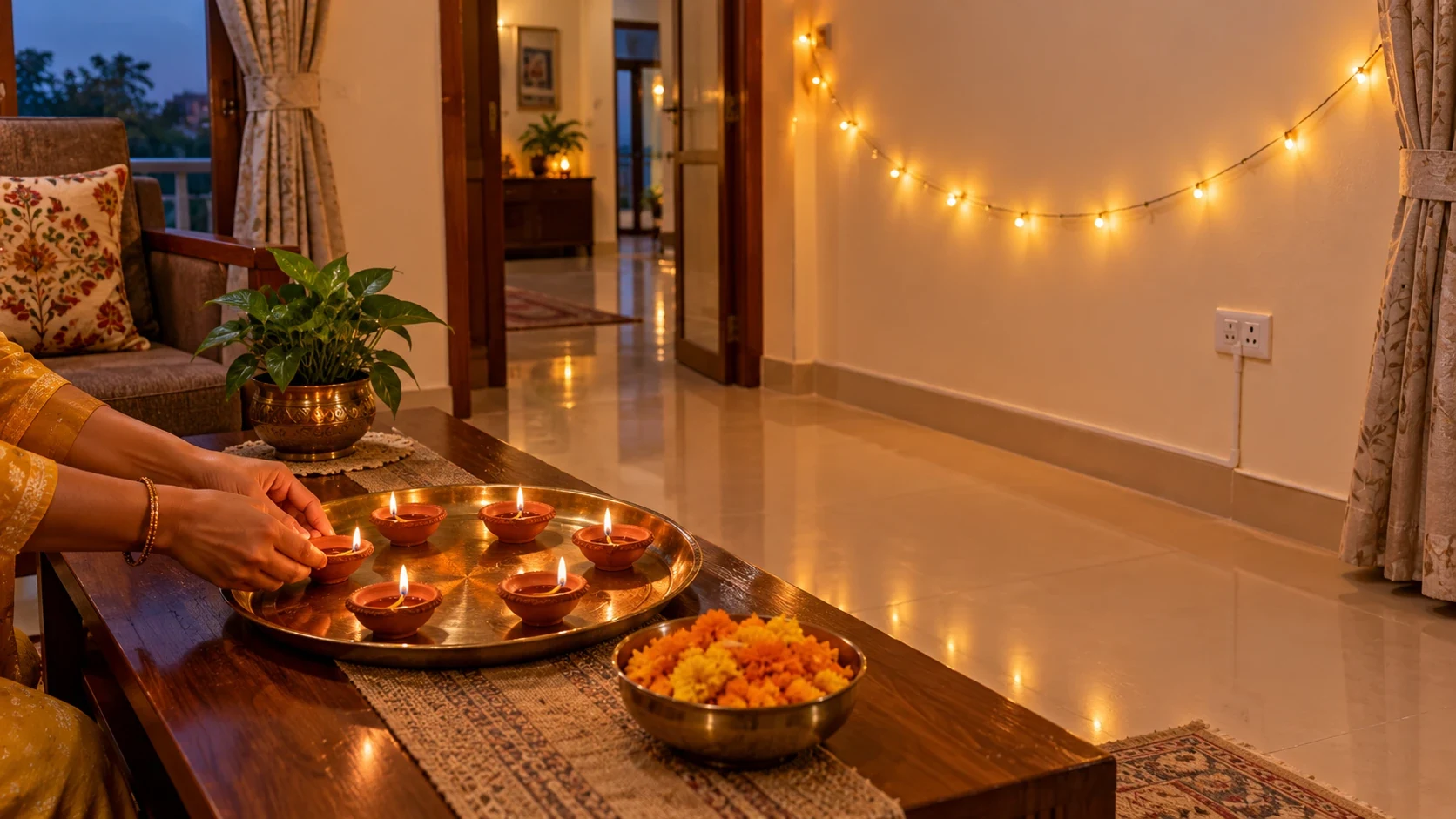
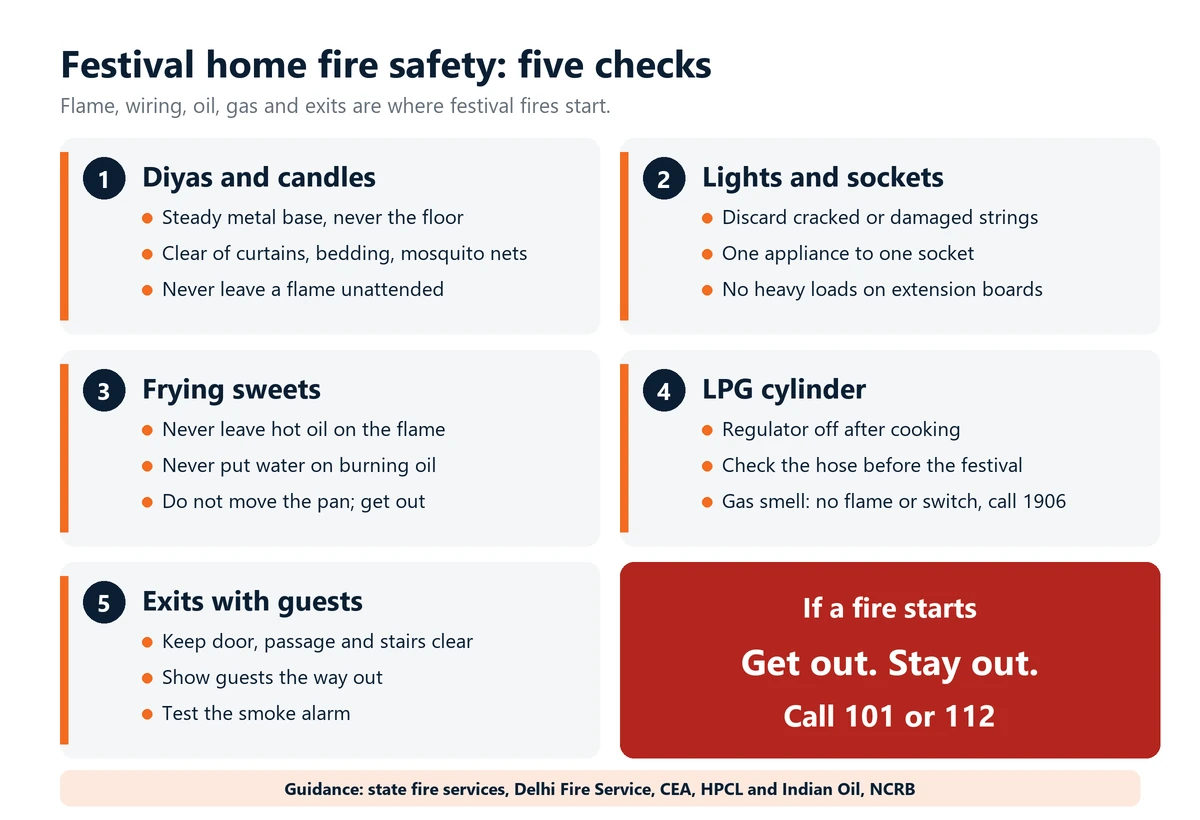
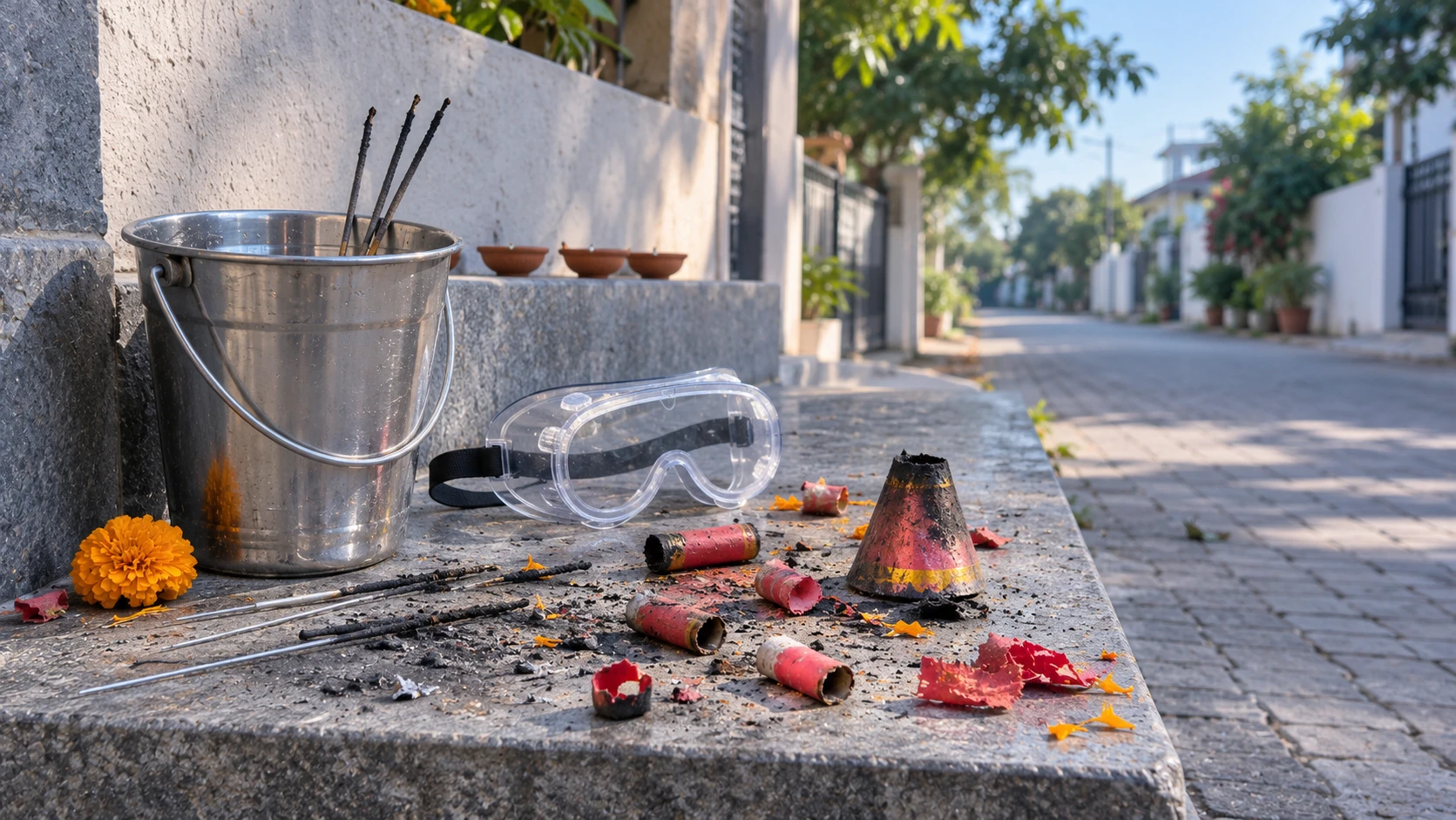
- Use a steady base that will not burn, such as a metal plate or tray, and never place a diya, candle or agarbatti on the floor or close to anything that can catch fire. The Delhi Fire Service lists this among its home fire precautions.
- Keep flames away from curtains, bedding, mosquito nets, paper and cloth decorations. The Goa Directorate of Fire and Emergency Services advises keeping candles and oil lamps away from furniture, curtains and other flammable items, and the Uttar Pradesh Fire Service says to remove combustible items near burning diyas and candles. Mosquito nets, dupattas and garlands are the same kind of material.
- Do not leave a flame unattended. The Delhi Fire Service says never to leave an open fire unattended, and Goa asks you to blow out candles and lamps before you sleep.
- Take care near the puja corner. Maharashtra Fire and Emergency Services warns against keeping an agarbatti or diya carelessly near the photos of the gods, where frames, cloth and flowers burn easily.
- Keep matchboxes and lighters out of children’s reach, and keep children away from lit lamps (Delhi Fire Service; Goa).
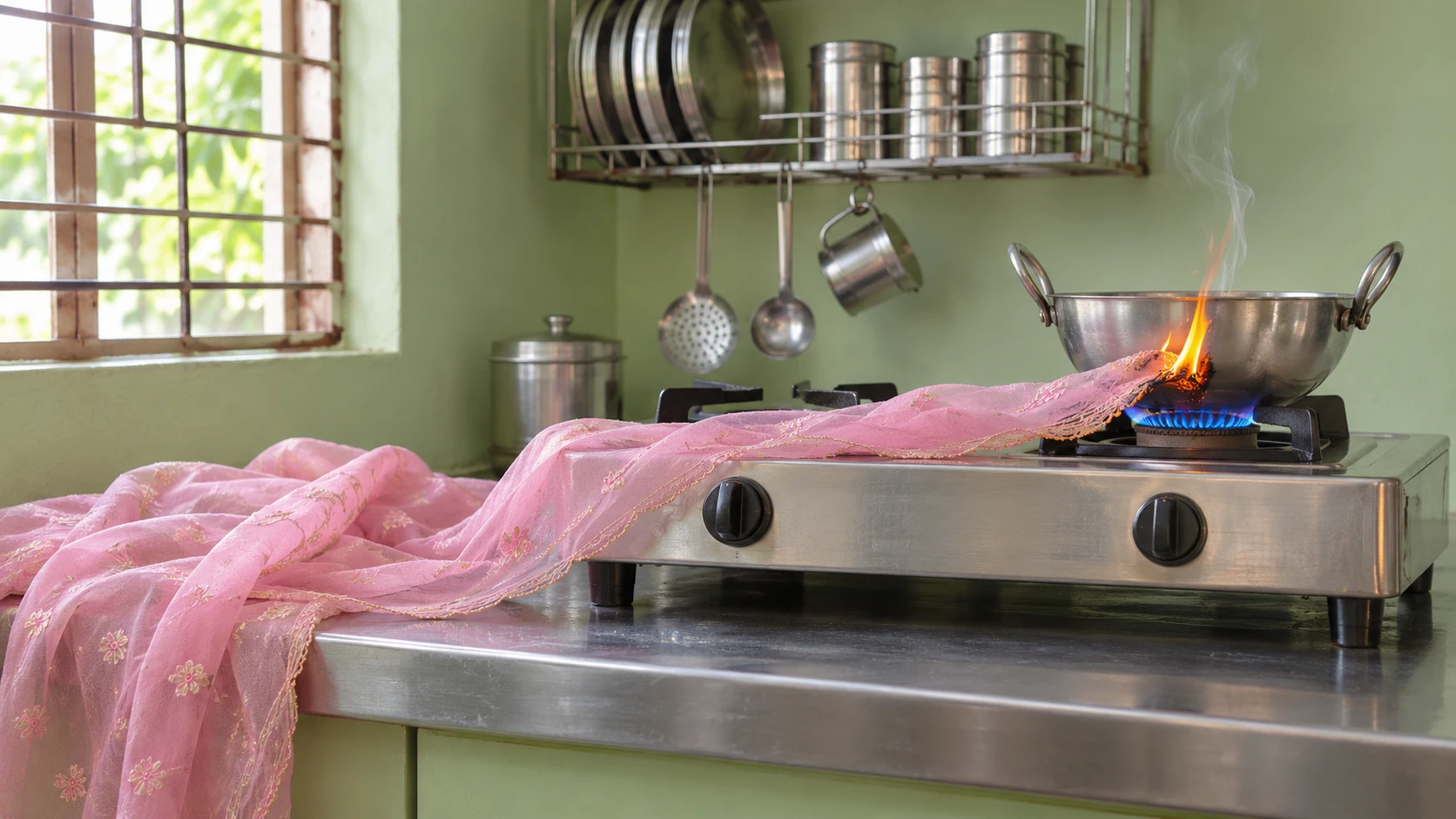
- Mind your clothes. The Delhi Fire Service advises against loose, flowing synthetic clothing near a flame. A nylon dupatta or a loose saree pallu is easy to forget when you bend over a row of diyas.
- If the room is crowded or small children are about, a battery-powered LED diya removes the flame altogether. This is our suggestion, not an official one.
Decorative lights and electrical load
- Check every string before you hang it. Goa’s fire service asks you to replace worn-out or damaged wires at once, and not to run wires on the ground or under carpets. Throw away strings with cracked insulation, bare wire or loose bulb holders.
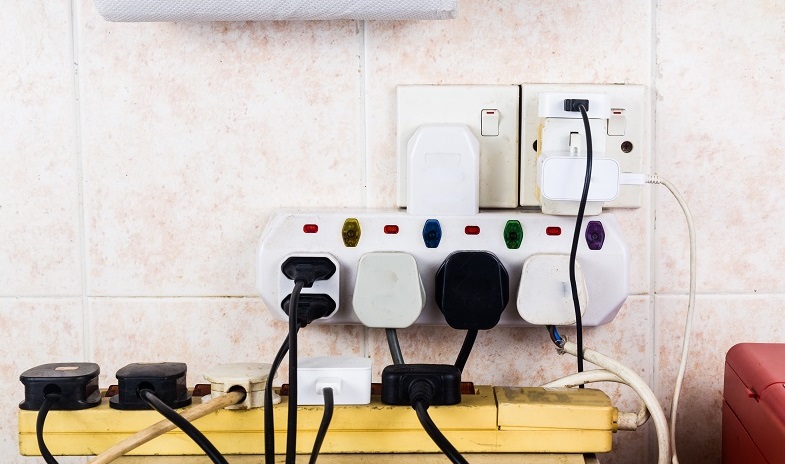
- One appliance to one socket. The Delhi Fire Service advises using only one electrical appliance in one socket, and the Uttar Pradesh Fire Service says lights and decorations must not overload the supply board. Chaining one string of lights into the next, or one extension board into another, loads a single plug far beyond what it was meant to carry.
- Keep heavy appliances off the festival extension board. Geysers, heaters, irons, microwaves and air-conditioners need their own sockets. The CEA safety regulations 2023 require electrical apparatus to have a sufficient rating for the duty it performs (regulation 14), and wires and sockets do have a limit.
- Feel the board after an hour. If an extension board, plug or adaptor is warm, smells of burning or sparks, unplug it and call an electrician. That is the early warning, as our guide to electrical safety at home, MCBs and RCCBs explains.
- Buy lights with proper marking. BIS lists LED lighting chains and rope lights in its compulsory registration scheme. Choose strings with the maker’s name and BIS marking on the pack, and be wary of unmarked pavement stock, however cheap.
- Follow the maker’s limit on how many strings can be joined end to end, and switch lights off at night and when you leave the house.
- Do not tamper with plugs, switches or fittings yourself. The Delhi Fire Service lists this as a don’t. Get old or loose wiring checked before the festival, not after.
Your home should also have a residual current device (RCD or RCCB) on its supply. The CEA regulations say the use of electricity in an installation shall be controlled by an RCD, and that in a domestic installation it must have a residual operating current not exceeding 30 milliamperes (regulation 44).
Outdoor lights in damp or wet weather
- Use only lights the maker marks for outdoor use, and follow the instructions on the pack. Do not take an indoor string out to the balcony or gate.
- Keep plugs, joints and adaptors off wet ground and out of puddles or dripping water. Do not join wires with tape and leave them outside.
- Do not handle plugs or electrical appliances with wet hands, wet clothes or wet shoes (Goa Directorate of Fire and Emergency Services).
- Run the supply from a socket protected by the RCD described above, switch off before touching anything, and bring the lights in or switch them off in heavy rain.
Sweets-making and frying
- Never leave hot oil. Bucks Fire and Rescue Service (UK) says not to leave cooking unattended, to make sure food is dry before it goes into hot oil, and to fill a pan, wok or karahi no more than a third with oil.
- If the oil smokes, it is too hot. Turn off the heat and leave it to cool.
- Keep towels, packets, paper and flammable liquids away from the stove. The Delhi Fire Service and Maharashtra Fire and Emergency Services both say so.
- Dress for the kitchen. The Delhi Fire Service advises against loose, flowing synthetic clothes and against reaching over a flame. Goa adds that you should tuck in loose ends of clothing.
- Do not refill a burning stove, and make sure the kitchen fire is out before you go to bed (Delhi; Maharashtra).
If the oil catches fire
- Never put water on it. London Fire Brigade warns that water thrown on a pan fire can create a fireball, and Essex County Fire and Rescue Service says water and oil do not mix, and a damp tea towel is no answer either.
- Turn off the heat only if you can do it safely. Do not pick up or move the pan.
- UK fire services advise against tackling an oil fire yourself. Leave the kitchen, close the door behind you, warn everyone and call 101 or 112.
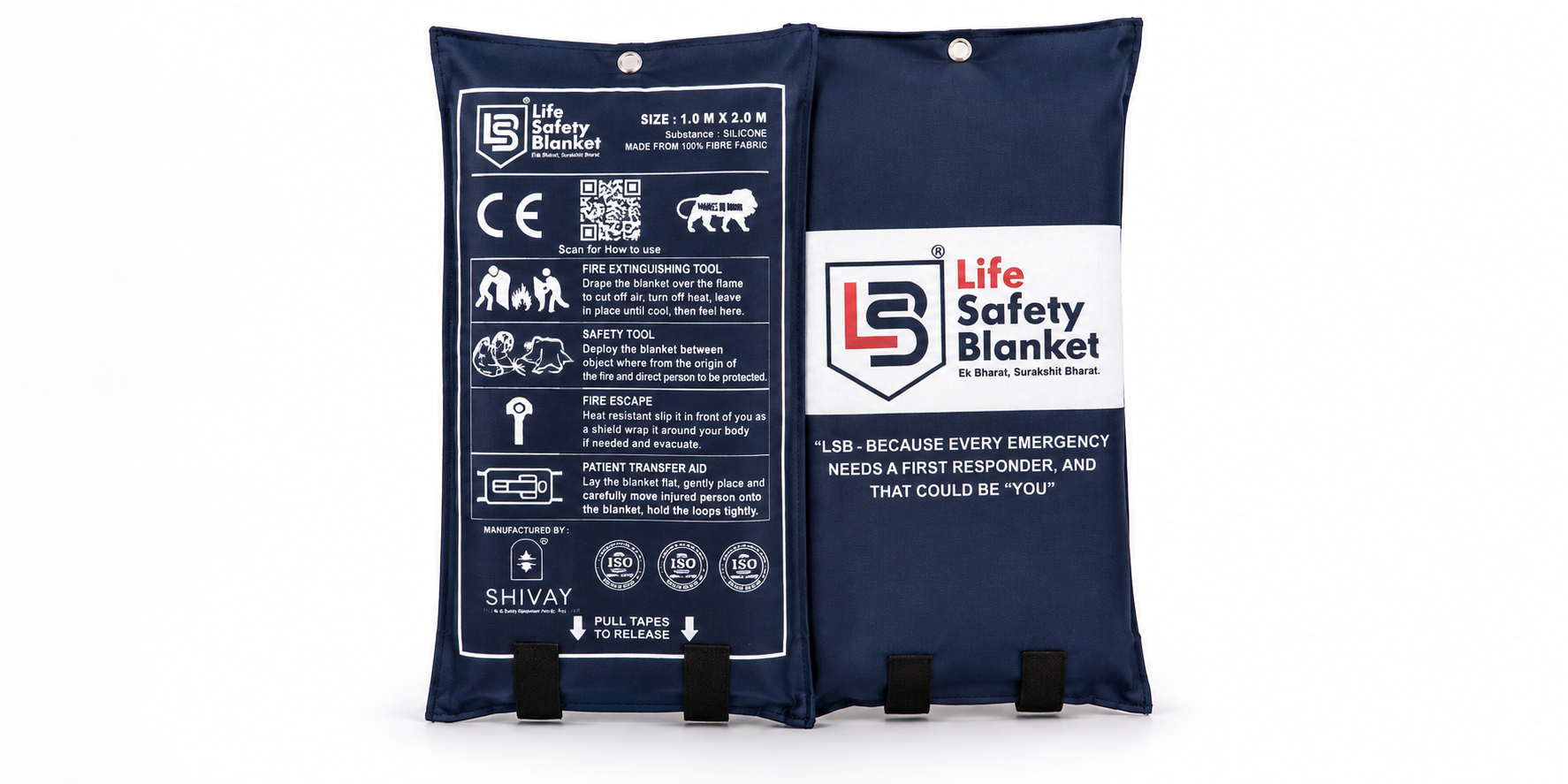
- We have not found Indian or UK official guidance that tests what a lid or fire blanket can put out on a burning kadhai, so we make no claim about it. If you keep a fire blanket, read the maker’s instructions in advance; our Life Safety Blanket guide explains the steps the maker gives.
LPG cylinders during heavy festival cooking
Several burners and long hours mean more chances for a small mistake to become a gas problem. These are the points the LPG companies and fire services stress.
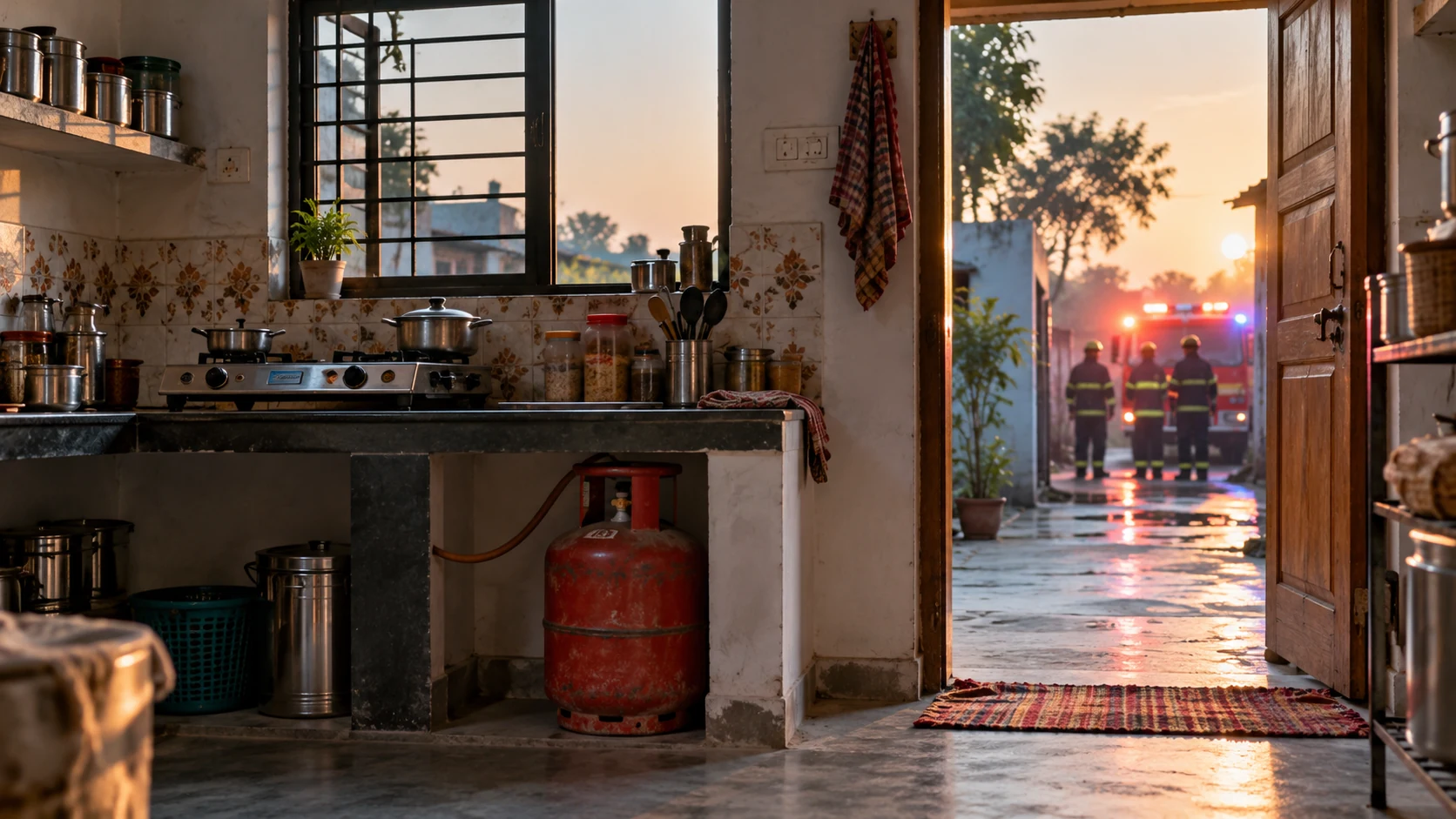
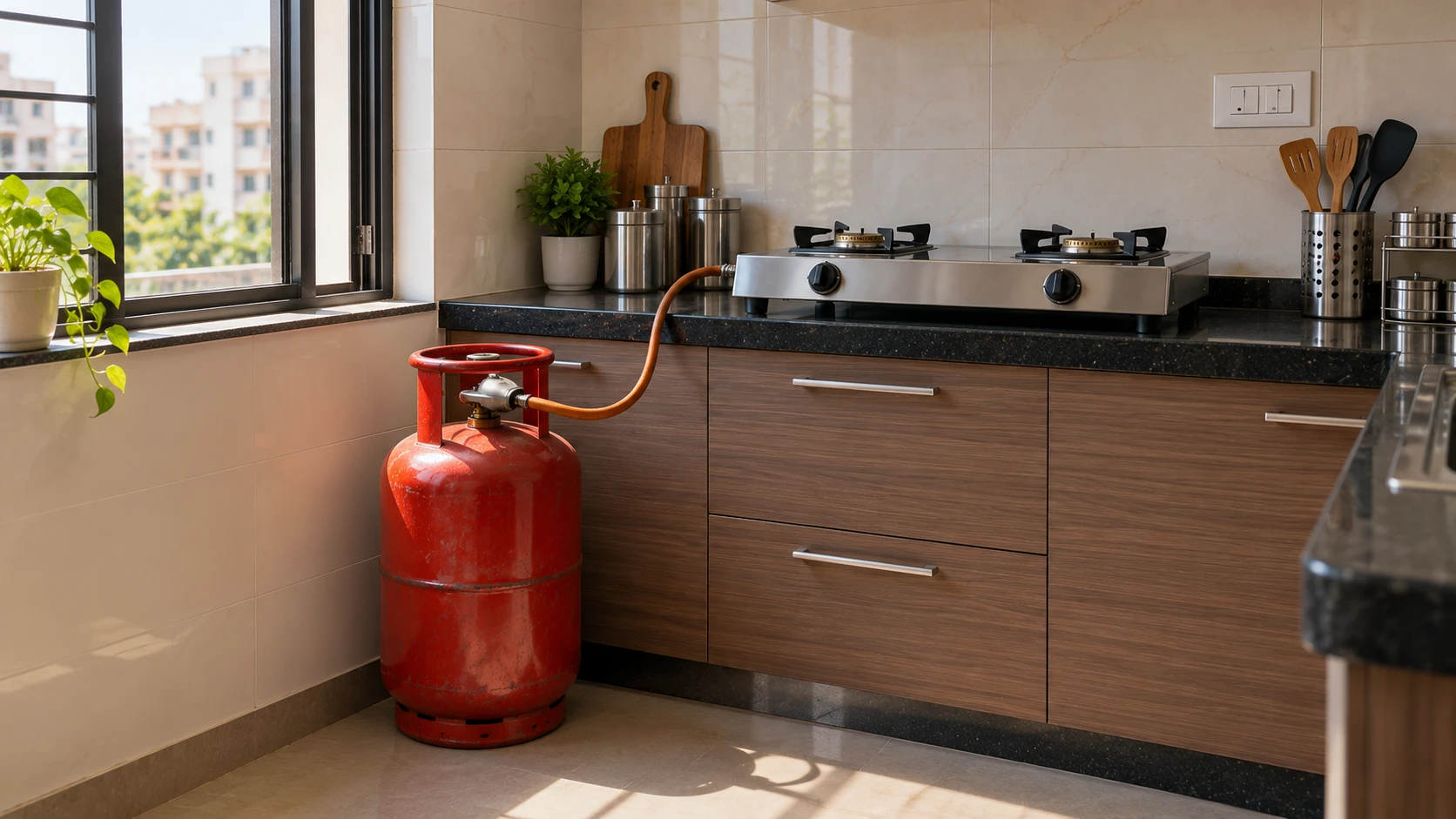
- Stove on a raised platform, cylinder upright and ventilated. HPCL says the cylinder must be kept upright, away from any heat source and in a ventilated place, with the stove on a non-flammable platform above the cylinder level. The Delhi Fire Service says never to keep the stove on the floor.
- Switch off after cooking. HPCL advises switching off the regulator whenever the stove is not in use, especially at night. The Delhi Fire Service adds the burner knob.
- Do not walk away from a lit burner. HPCL warns that an overflow of milk or oil, or a gust of wind, can put out the flame. Gas then leaks and can be ignited by another burner or any spark.
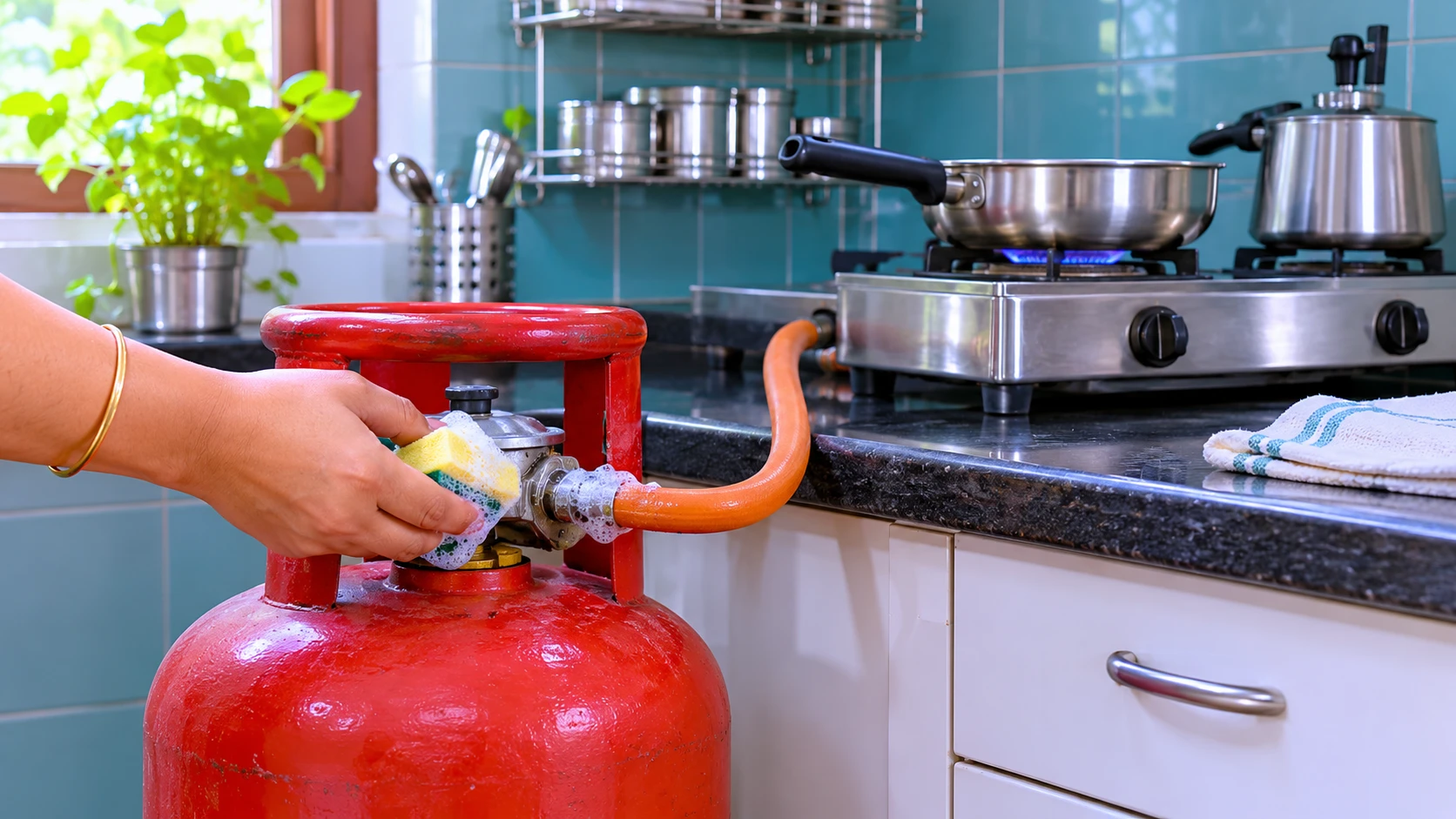
- Check the hose before the festival. HPCL and Indian Oil call the rubber tube the weakest link: replace it every two years, or the “Suraksha” LPG hose every five years, and at once if you see cracks.
- Keep the safety cap on spare cylinders, full or empty, and never repair the cylinder or regulator yourself. Call the distributor’s trained mechanic. Indian Oil says leakage complaints are attended free of charge.
- Cotton, not nylon, in the kitchen. HPCL warns that a dupatta, saree or cloth used to hold hot utensils is a fire hazard.
If you smell gas, HPCL gives these steps. Do not panic. Turn the regulator knob to OFF. Put out every flame in the kitchen and nearby, including the agarbatti and the puja lamp. Do not light a matchstick or lighter. Do not switch any electrical switch on or off, including the main switch. Open all doors and windows. Do not use a mobile phone in the leakage area. Then call the LPG emergency number 1906 or your distributor. For more on leak accidents, read our kitchen gas leak accidents guide.
Why this matters: in a Gorakhpur house fire in October 2026, news reports said gas had collected in the room while a gas-agency worker checked a stove for a leak, and it caught fire. No official finding on the cause had been reported when we last checked. Do not look for a leak with a flame, a lighter or a switch.
A doorstep fire in Bengaluru: a diya, a delivery and a leaking cylinder
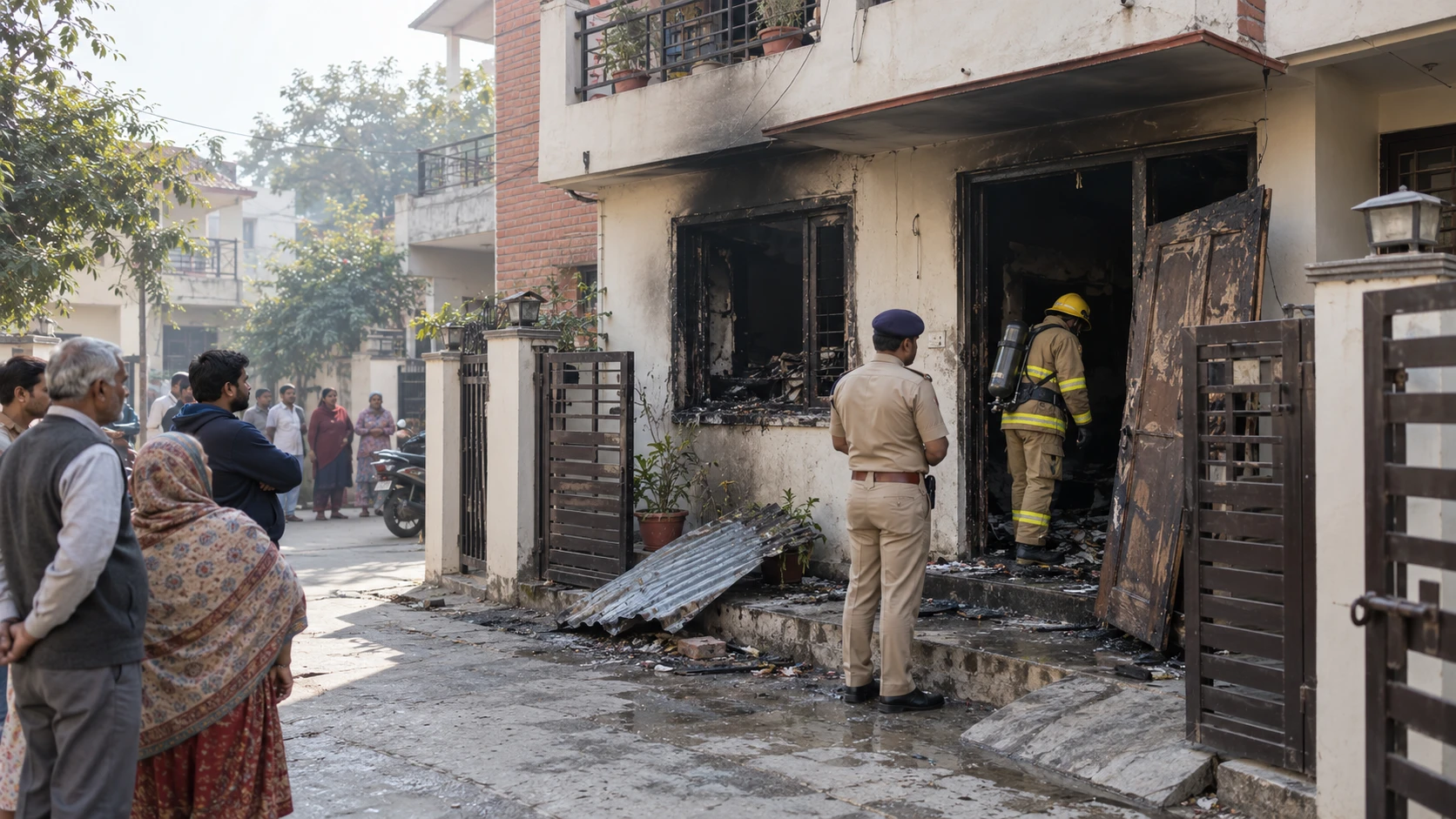
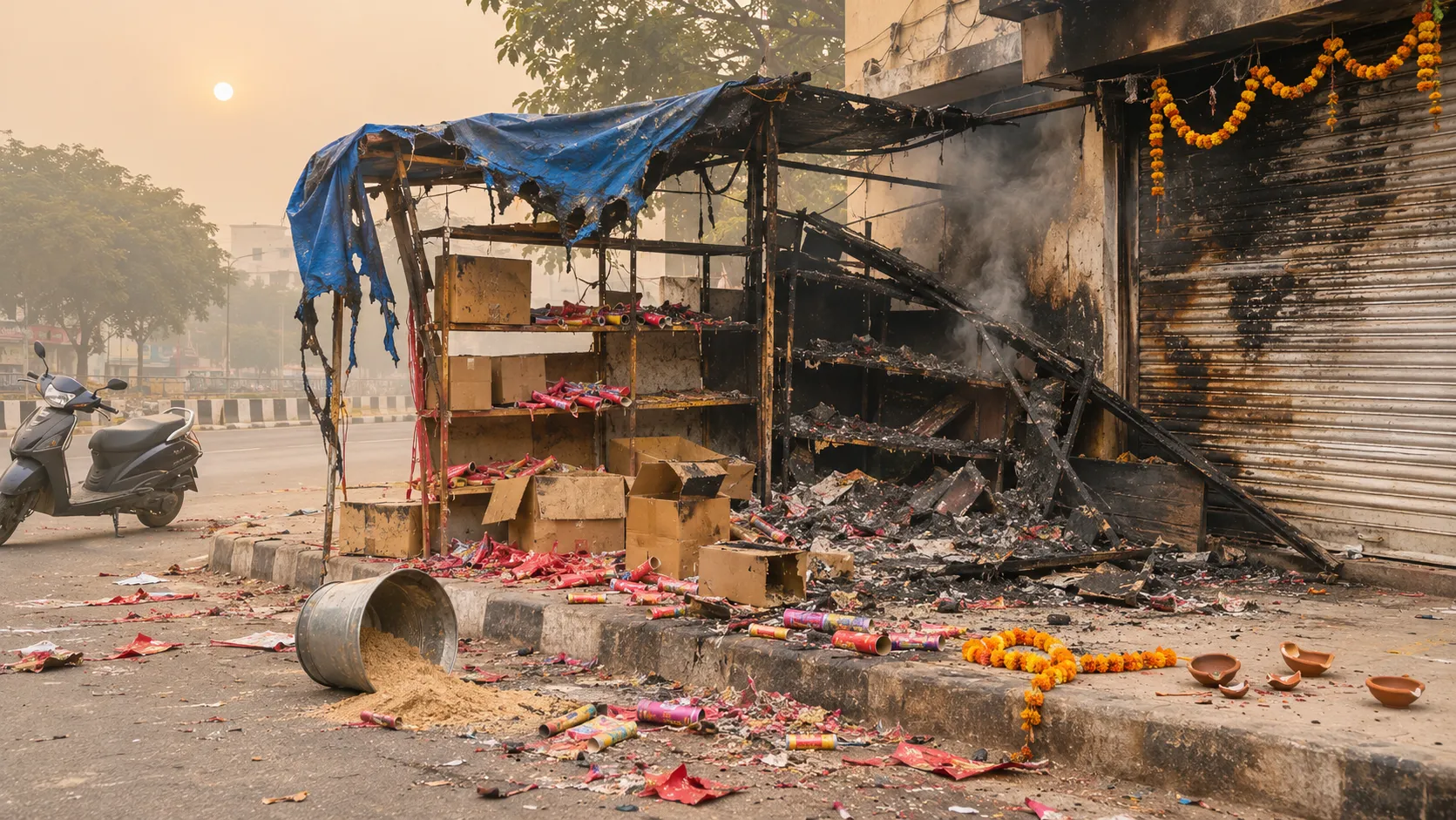
On Tuesday, 3 November 2026, a cylinder caught fire at the entrance of a house in Malleshwaram, Bengaluru, as a gas-agency worker was delivering it. The moment was caught on CCTV and the clip spread on social media. Kannada and English news reports, quoting preliminary information, say the family had washed the threshold, done puja and lit a diya at the door. The cylinder had a small leak, they say, and the escaping gas caught the flame. The worker got away unhurt, and two Kannada reports say he pushed the cylinder away from the door. No one else was hurt. Malleshwaram police and the fire brigade went to the spot, and police asked residents and delivery staff to take extra care when a cylinder is brought in during puja or lamp-lighting.
Reports differ on how the fire was put out. One Kannada report says a woman from the house came out with water, another says two people poured water on it, and the rest do not say. Who exactly did what is not clear from them. The cause is still described as preliminary, and we saw no police or fire-service statement. We have not used the video itself for any detail beyond what these reports say.
What it means for your home
- Keep diyas, candles and agarbatti away from the cylinder, and from any place where gas may have gathered, such as the doorway where a cylinder is being brought in. HPCL lists the pooja lamp and agarbatti among the flames to put out when you smell gas, and the PMUY consumer leaflet says to put them out before a cylinder is connected or disconnected. Our suggestion: do the same while the cylinder is being delivered, and if you can, avoid booking the delivery for puja time.
- Check the cylinder at the door. HPCL says to check the seal and weight when the refill arrives, to have the seal broken in front of you, and to insist that the cylinder is connected to the regulator and the installation checked. Our suggestion: if you smell gas, do not let the cylinder be carried in. Keep flames away from it and call your distributor or 1906.
- Check the hose and regulator before the festival. HPCL calls the rubber tube the weakest link. It says to change it every two years, or the Suraksha hose every five, and at once if it cracks. The PMUY leaflet adds that the whole installation should be checked every two years.
- If you are the delivery person, look at the doorway before you set a cylinder down. If a lamp or incense is burning, ask the family to put it out or move it first (our suggestion). If a cylinder is leaking at the valve, the Goa fire service says to fit the safety cap, take the cylinder to an open area and call the distributor or the emergency service cell.
- If a fire starts at a cylinder, move away from the flame, keep everyone back, call 101 or 112 and tell your distributor. Do not go back for belongings.
What about water? The LPG guidance we read from HPCL, PMUY and the Goa fire service explains what to do when gas leaks. None of it says how a householder should put out a burning cylinder, or whether to use water, so we give no method and we do not call the water in this incident right or wrong. The rule against water earlier on this page is only for burning cooking oil. Until an official source says otherwise, our advice is the cautious one: do not take risks to fight a fire at a cylinder, keep away from the flame, call 101 or 112 and leave it to the fire brigade. If you keep an extinguisher at home, our guide to choosing a home fire extinguisher explains the types and where to keep one, and our fire extinguisher chooser helps you pick by the kind of fire. The full leak steps are in our LPG gas leak guide.
Two quick checks before the festival: type your cylinder code into our LPG cylinder test date checker, and answer twelve questions in our home fire safety score.
Visiting relatives and crowded homes
- Keep the way out clear. The Delhi Fire Service says to keep escape routes and staircases free of obstruction, and Goa says not to store anything in common corridors and stairs. Move shoe racks, gift boxes, extra chairs and cartons from the door, passage and stairs.
- Keep festival items out of the balcony. During Diwali Goa advises not to keep combustibles in balconies or dry clothes outside the building line, because flying crackers have caused serious fires.
- Show guests the exits. Maharashtra Fire and Emergency Services advises two ways out of every room and a meeting place outside. Tell visitors where the door and the second way out are, especially anyone sleeping in the drawing room.
- Test your smoke alarm before the guests arrive. Maharashtra advises testing smoke detectors every month.
- Write 101, 112 and your full address where everyone can see them.
- Never use the lift in a fire. Use the stairs (Goa).
If a fire starts
- Shout and get everyone out. Do not stop for valuables.
- Stay low under smoke. Use the back of your hand to feel a door before opening it. If it is hot, use another way out (Maharashtra Fire and Emergency Services).
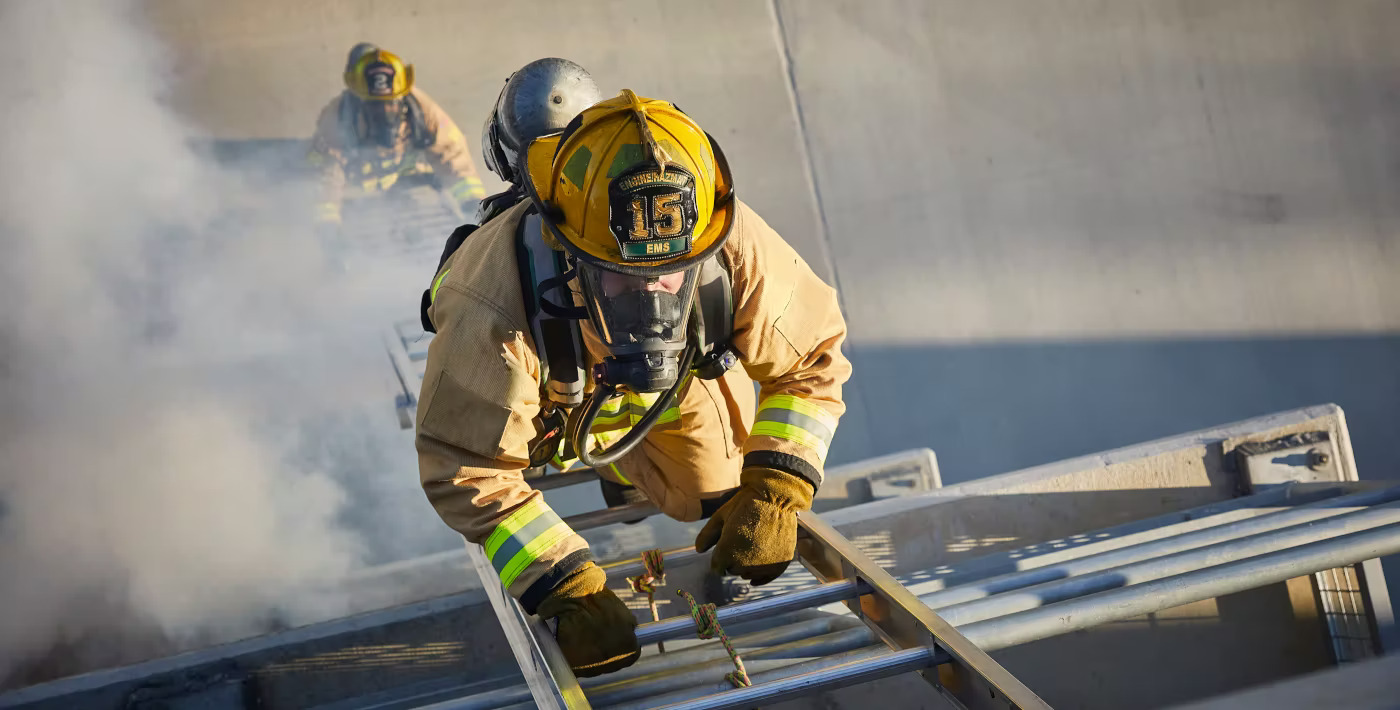
- Call 101 for the fire brigade or 112 for any emergency, from outside. Give the full address and the route. Use 108 for an ambulance and 100 for the police.
- If clothes catch fire, stop, drop and roll. Do not run. Our guide to what to do when clothes catch fire has the steps in order.
- Never go back in, and tell the firefighters if anyone is missing.
- Keep the road clear and do not crowd around, so the fire engine can reach the building.
If someone is burnt. Cool the burn under cool, clean running water for 10 to 20 minutes, or until the pain eases. No ice, toothpaste, oil or butter. Cover it loosely with a clean cloth and get medical help; call 108 if the burn is large or deep, or on the face or hands.
Our guide to firecracker eye injury and burns sets out the first-aid steps for a burn in more detail.
Five-minute checklist before the festival
- Replace any lights with cracked wires, bare ends or loose holders.
- Plan where each diya will stand: metal tray, clear of curtains, bedding and mosquito nets.
- One appliance to one socket; no heavy appliances on the festival extension board.
- Check the LPG hose, the platform under the stove and the regulator switch.
- Keep the stove area clear of cloth, paper and packets.
- Clear the door, passage, stairs and balcony.
- Test the smoke alarm and write 101, 112 and your address on the wall.
- Switch off lights, regulator and flames before sleeping or leaving the house.
What needs attention
- Cooking-gas and stove bursts and electrical short circuits are two of the largest named causes of fire deaths in NCRB data, and festival weeks add more of both.
- Fire services repeat the same few rules: flames away from fabric, one appliance per socket, no flame left unattended, clear exits.
- Water on burning oil makes the fire bigger; UK fire services say not to tackle an oil fire yourself.
- HPCL and Indian Oil call the rubber LPG tube the weakest link and give fixed replacement intervals.
- We found no official Indian or UK source that tests what a lid or fire blanket can put out on a burning kadhai, so this guide makes no capability claim.
Controls that reduce risk
- Check light strings, plugs and the extension board before hanging anything.
- Plan a metal tray and a clear space for each diya.
- Check the LPG hose, the stove platform and the regulator.
- Clear the door, passage, stairs and balcony before guests arrive.
- Test the smoke alarm and write 101, 112 and your address on the wall.
- Switch off lights, regulator and flames before sleeping or going out.
Common unsafe practices
- Placing diyas on the floor, on a curtain sill or beside bedding and mosquito nets.
- Chaining light strings and extension boards, and plugging heavy appliances into the festival board.
- Using damaged, taped or unmarked light strings, or taking indoor strings outside in wet weather.
- Leaving frying oil on the flame while answering the door.
- Throwing water on burning oil, or carrying the burning pan.
- Leaving the LPG regulator on overnight, or using a cracked rubber tube.
- Lighting a match or flicking a switch when there is a smell of gas.
- Blocking the door, passage, stairs or balcony with gifts, cartons and extra furniture.


Leave a comment