
What happened here
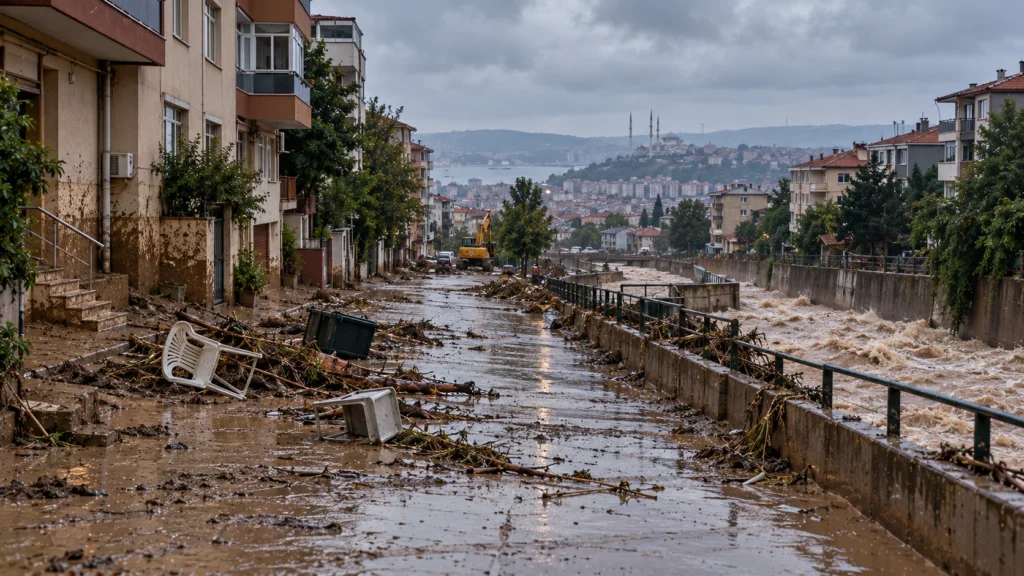
Record rain on 14 and 15 October 2026 caused flash floods across Istanbul and in neighbouring Kocaeli, Turkey. The latest official count is nine dead, seven in Istanbul and two in Kocaeli, with the search for the missing ended on 20 October. Governor Davut Gül reported about 3,050 people rescued and about 3,000 homes and businesses seriously damaged citywide. Officials and city planners point to built-over stream beds.
Quick answers
How many people died in the Istanbul and Kocaeli floods?
Nine, according to the latest official count on 20 October 2026: seven in Istanbul and two in Kocaeli whose bodies were found in Pendik. Earlier reports gave 3, 4, 5, 6 and 8 as the toll rose.
Is anyone still missing?
No. The Istanbul Governorship ended the search on 20 October because no reported missing person remained.
How heavy was the rain?
AKOM logged 277.1 mm in Beykoz and Anadolu Agency reported 273.1 mm. The governor called it the heaviest in Istanbul since records began in 1942. The period over which it fell is not stated.
How many were rescued and how many homes damaged?
About 3,050 people were rescued by 16 October. About 2,000 homes and 900 workplaces, roughly 3,000, were seriously damaged across the city, not only in Sarıyer.
Was building on stream beds a cause?
Officials and the Chamber of City Planners say covered stream beds and sealed ground made the flooding worse, and the governor says the Ayazağa structures lacked permits. The rain itself was extreme, and no investigation finding has been published.
What happened
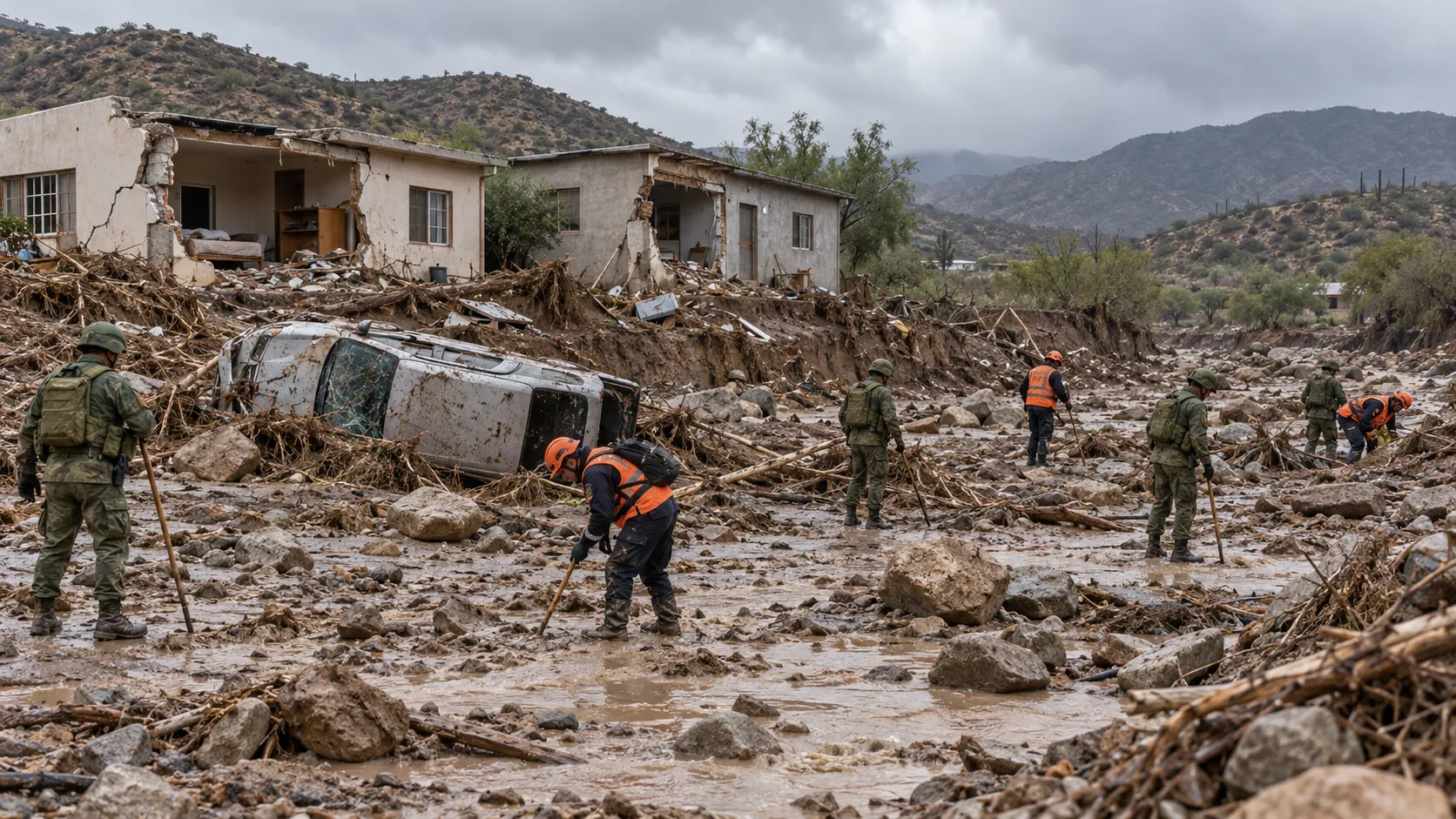
Rain had been falling over Istanbul since the evening of Tuesday, 13 October 2026, and it grew much heavier through Wednesday, 14 October. By that night, streets in the city of about 16 million people had turned into fast channels. In Ayazağa, a neighbourhood of the northern Sarıyer district, floodwater pushed a line of parked cars down the road, and vehicles ended up piled on one another at the bottom of slopes (Euronews, AP). Water also reached two hospitals, and it came through the ceiling of the Hacıosman metro station, according to Al Jazeera. Neighbouring Kocaeli province, east of the city, was hit by the same system.
Istanbul Governor Davut Gül called it “the highest level of precipitation in Istanbul since records began in 1942.” Istanbul Metropolitan Municipality used a different yardstick for some districts, the highest since 1985 (Euronews). Anadolu Agency said the city received more rain in 48 hours, up to Thursday morning, than its combined average for September and October (AP). Interior Minister Mustafa Çiftçi called it the worst flood disaster since 1942.
The rainfall numbers need care. The station network of AKOM, the municipality’s disaster coordination centre, logged 277.1 mm in Beykoz, on the Asian side, as reported by ANKA on 15 October. Anadolu Agency, Habertürk and the Interior Minister quoted 272 to 273.1 mm for the worst-hit areas. Early reports gave lower figures, such as 238 mm and 242 mm. Millimetres and kilograms per square metre are the same measure here. None of the sources we opened says over exactly how many hours the 277.1 mm fell, so we do not call it a one-day total. For comparison, Beykoz’s long-term average for the whole of October is 66.3 mm, so the storm brought about four times that.
How many died
The figure kept moving all week, and it is worth seeing why. On Thursday, 15 October, the governor’s office spoke of three dead and five missing (AP). It was four on Friday, five by Sunday (Daily Sabah), six on Monday and seven on Tuesday, 20 October. At about 11 a.m. that day, the body of a 63-year-old man who had gone missing in Ayazağa was found off the Altın Boynuz social facilities on the Golden Horn, in Eyüpsultan. The Istanbul Governorship said the toll in the province had risen to 7 and that the search was ended because no missing person remained (Anadolu Agency, Milliyet).
Two more people died in Kocaeli. Late on Saturday, 17 October, a jeep carrying three friends back to Istanbul from a summer house fell into a stream in Gebze. The driver got out and held on to a tree branch. The other two were swept away and found in Pendik, in Istanbul, on 18 and 19 October. Governor Gül counts them with the disaster. The combined figure from Anadolu, as reported by Turkish Minute, is therefore 9: 7 in Istanbul and 2 in Kocaeli. Hürriyet Daily News and Euronews carried “eight” on 19 October, which was right that day, before the last body was found. Those 19 October reports counted six in Istanbul, two from Kocaeli and one person missing.
We use the latest official count, which is 9. Two other deaths were reported in the same days and we could not tie them to that figure. A construction worker fell into a well in Beykoz while pumping floodwater from a school site, and Turkish Minute says it was unclear whether he was in the official count. A former neighbourhood headman in Başiskele, Kocaeli, was swept away with his vehicle on 15 October and his body was found in İzmit Bay on 16 October (Habertürk). Governor Gül describes the two Kocaeli deaths as the Gebze pair, so the Başiskele death does not seem to be inside the 9. If both are added, the number would be 11. We have not seen an official statement that settles this. We are not naming the dead.
Among the Istanbul deaths, a 14-year-old boy was electrocuted after stepping into a puddle in the Balat area of Fatih on Wednesday evening. Al Jazeera, which checked surveillance footage, says he walked through puddles at a car-park entrance before collapsing, and that an investigation was opened. A 34-year-old man slipped on a flooded pavement in Sarıyer, hit his head on the kerb and died in hospital (Turkish Minute).
Response
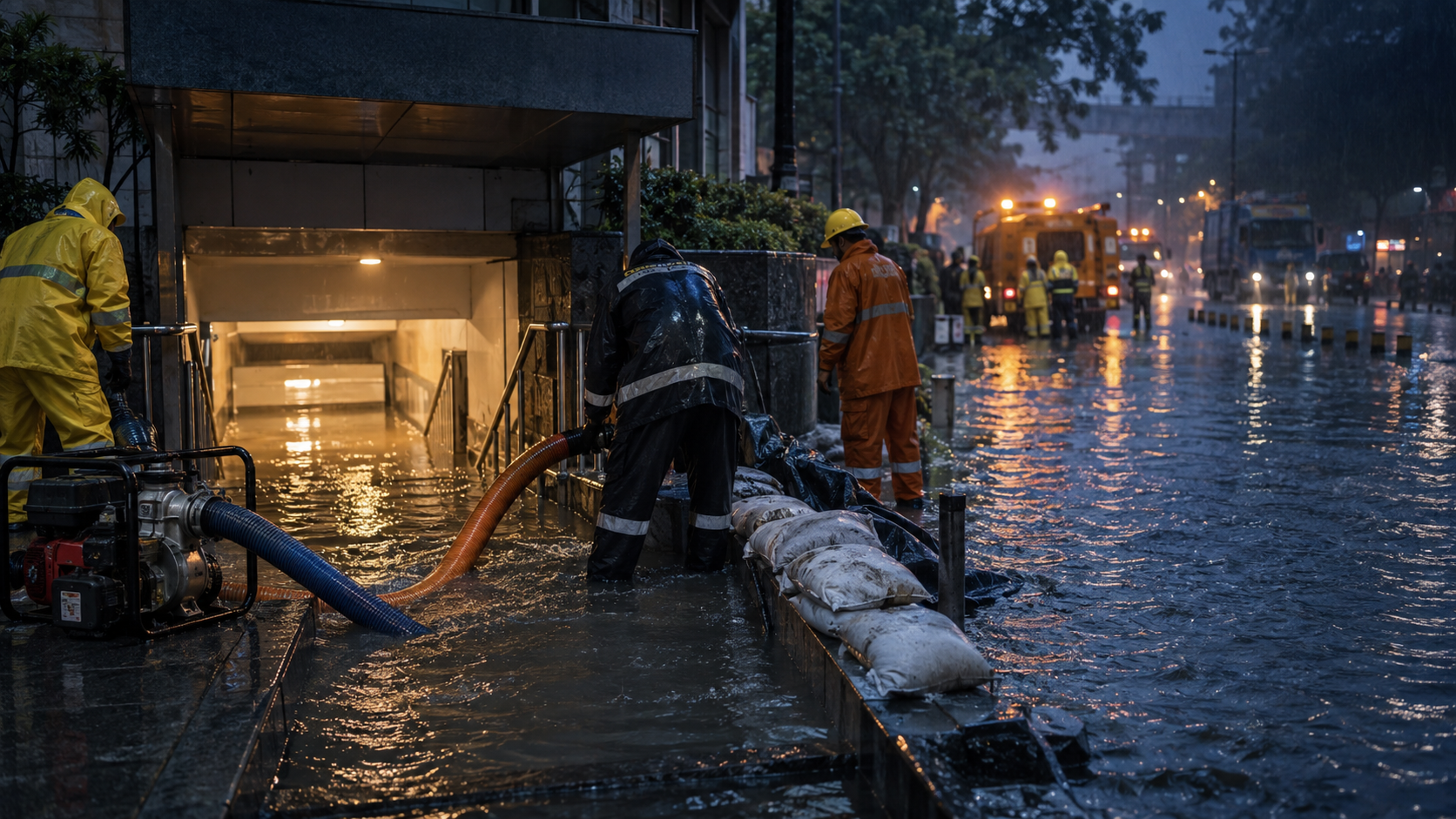
On Wednesday evening the governor asked people to stay home unless travel was essential, to avoid stream beds, underpasses and other flood-prone spots, and told residents of basement flats to spend the night on higher floors (Euronews, Al Jazeera). Motorcycles were barred from the roads from 9 p.m. Schools were shut on 15 and 16 October. AFAD, the national disaster agency, recorded 1,277 flooding incidents, 15 landslides and 47 stranded people by nightfall on Wednesday (Euronews). Rescuers lifted people out through first-floor windows and used a mechanical digger’s bucket to carry stranded people to safety in Ayazağa. Governor Gül said on 16 October that 3,050 people had been rescued and nobody was still waiting to be reached. Nearly 46,000 personnel were working on the clean-up (AP).
On Monday, 19 October, Governor Gül said about 19,300 reports of damage and other problems had come in, and that about 2,000 homes and 900 workplaces, roughly 3,000 in all, had serious damage (Cumhuriyet, Daily Sabah, AFP). That figure covers the whole city, not only Sarıyer. Payments of 10,000 Turkish lira each went to 5,200 residents on Friday and to about 2,500 more on Monday, and compensation for seriously damaged properties began. Farm losses were put at about 60 million lira. Justice Minister Akın Gürlek said criminal investigations had been opened into the flood deaths to find out whether negligence played a part (Turkish Minute).
Was it only the rain?
The rain was extraordinary. But the officials, too, point to the ground it fell on. The Istanbul branch of the Chamber of City Planners said on 15 October that covering soil with concrete and asphalt speeds up surface runoff, that narrowing and covering stream beds raises flood risk, and that closed streams should be reopened (Karar, from Anka). Environment Minister Murat Kurum said the flooding came from a covered stream section and weak infrastructure and from unplanned settlement, and that the unfinished stream rehabilitation in Ayazağa and Cendere must be completed (Gazete Oksijen). After the water went down, the governor said the structures in the Ayazağa stream bed sat inside the rehabilitation project area, had no deeds or permits and were not earthquake-resistant. Demolition removed shops, two homes, a Quran school and a stadium with its stands. Sources differ on the shops, 16 (Cumhuriyet) or 19 (Hürriyet Daily News), and one building was still to come down as of 19 October.
The chamber’s statement is an advocacy view, and we do not assign blame for who allowed what. What the sources do agree on is that people and vehicles sat in the path of a stream that had been narrowed or built over.
Why this matters in India
We found no Istanbul-style cloudburst case on this site for Mumbai, Chennai, Bengaluru or Hyderabad, so we do not link any. The nearest Indian examples we have are the Old Rajinder Nagar coaching-centre basement flood in Delhi, where three students died when water poured into a basement, and the Nilambur flash flood in Kerala, where a river rose without local rain. The pattern is the same: water arrives faster than anyone expects, and it arrives where the ground is lowest, in basements, underpasses, parked cars and built-over nalas. Our Typhoon Dujuan case shows how record rain can set off several hazards at once.
Lessons
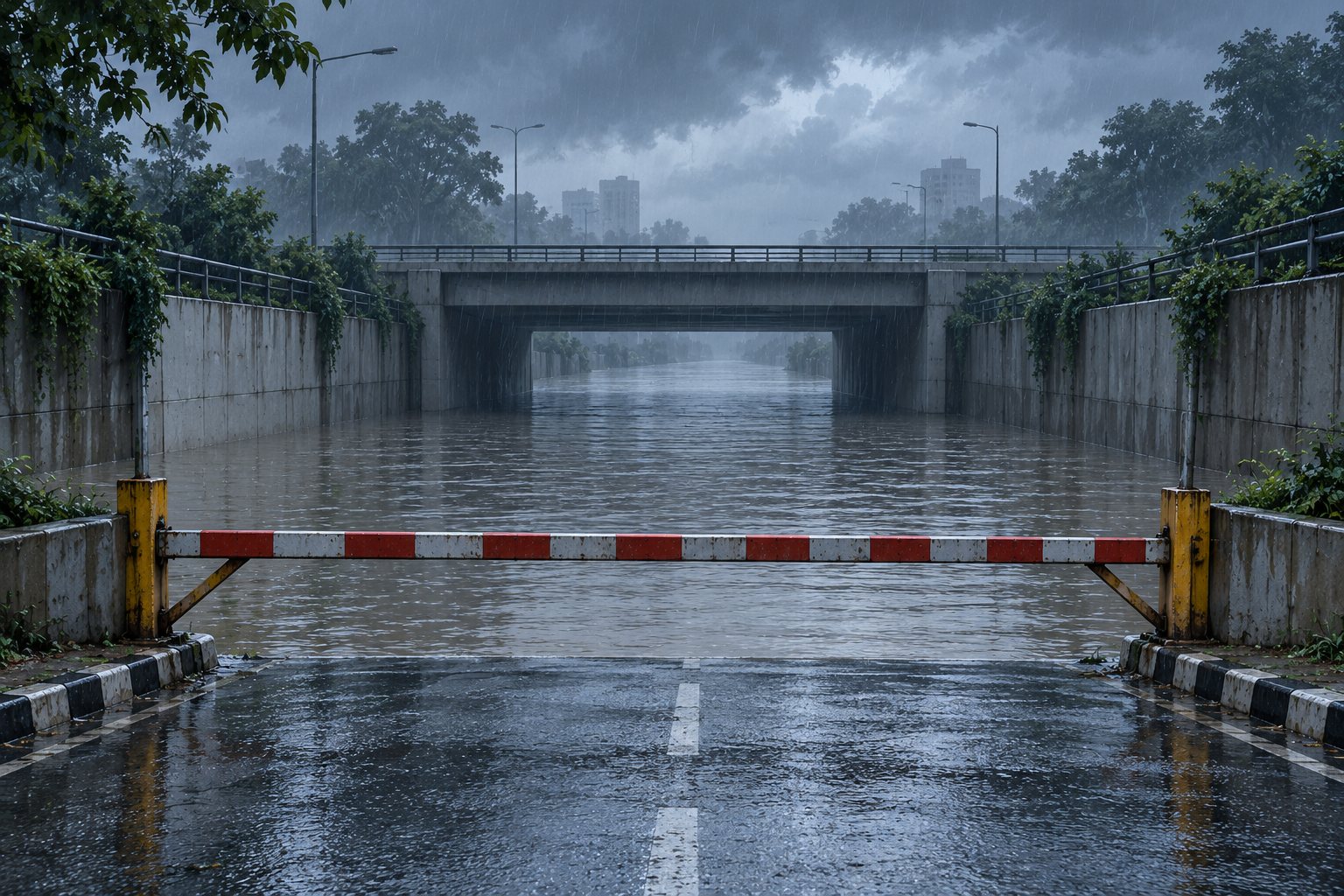
- Keep out of basements and underpasses when a heavy-rain warning is on. Move to an upper floor early, as the governor asked. Water can fill a low space in minutes, and doors may not open against the pressure. Do not go down to rescue a car or belongings.
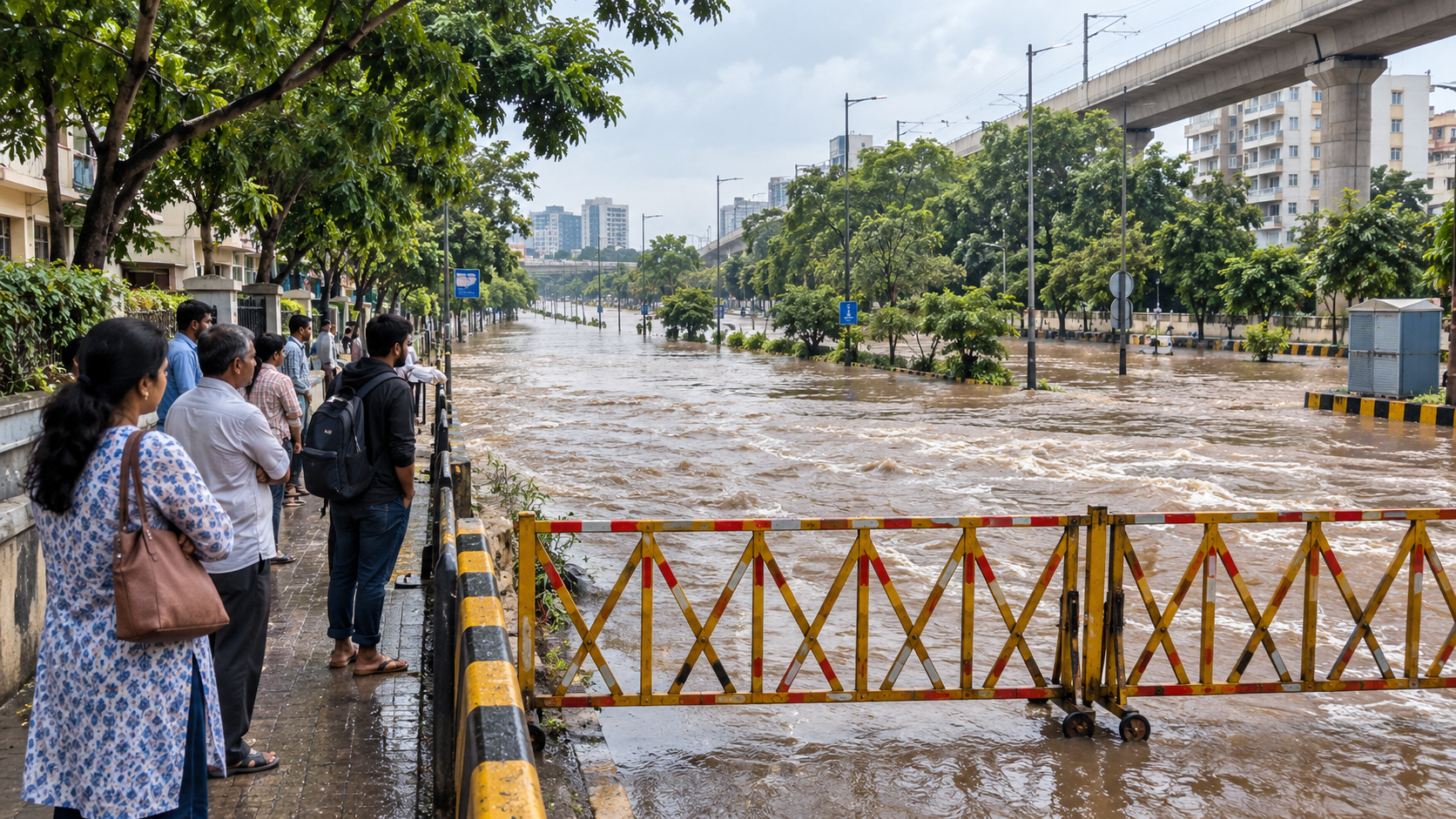
- Do not drive into moving water, and do not leave a car parked in the path of a stream or on a slope. Cars in Ayazağa were pushed by the current and piled up. Our guide on floodwater, when to turn around has the detail.
- Treat every puddle near wires, poles, metal shutters and parked-car areas as live. The 14-year-old in Balat was electrocuted in a puddle. If you feel a tingle in the water, step back the way you came and warn others. Report the fault to the electricity company and call 112. If you are at home, switch off the mains only if the switch is dry and you are standing on a dry floor.
- Know where the nearest stream, nala or drain is, and whether it has been built over. If you rent or buy near a stream bed, ask what the local authority says about flood risk, and keep your documents and medicines in a waterproof bag on a high shelf.
- Act on the first alert, not the last. A yellow warning covered Istanbul for 15 October and orange covered Kocaeli, Sakarya and Yalova (Anadolu Agency), and the Interior Ministry warned of sudden flooding. We could not find what alert, if any, reached residents of Ayazağa minutes before the water came. In India, leave early when the IMD or your state disaster authority issues an orange or red alert, and let your employer or school know you will not travel.
- Do not walk or ride through knee-deep flowing water. Two-wheelers were banned from the roads here for a reason. A stumble in a current, or a hidden open drain, is how many people are lost.
- Housing societies and shop owners: look at your own site. Check where roof and road water goes, keep drain covers and gratings clear, put power panels and DG sets above the likely flood level, and have a plan to move vehicles.
- City governments: open the streams and map the floodplain. Planners ask for flood hazard maps to be binding in planning decisions and for covered streams to be reopened. That applies to every Indian city with a nala running under a road.
What is still not known
It is not known how the two deaths outside the official count, the Beykoz worker and the Başiskele former headman, will be counted, or whether further deaths will be added. The hours over which the record rainfall fell have not been stated. No investigation finding has been published on any of the deaths, and we have not seen compensation figures for the families of the dead. We will update this page when the governor’s office or the courts say more. Last checked: 21 October 2026.
- Rain begins over Istanbul after weather warnings from the national weather service
- Rain intensifies; Ayazağa floods, parked cars are swept into the flow, the governor asks basement residents to move to higher floors; a 14-year-old is electrocuted in Balat
- Governor calls it the heaviest rainfall since records began in 1942; three dead and five missing reported; a former headman is swept away in Başiskele, Kocaeli
- A 66-year-old man's body is found under a bridge in Ayazağa; Governor Gül says 3,050 people were rescued; Justice Minister announces criminal investigations
- A jeep with three friends falls into a stream in Gebze, Kocaeli; the driver survives and two are swept away
- The first Gebze victim is found in Pendik and a missing man is found in the Golden Horn; Daily Sabah puts the Istanbul toll at 5
- The second Gebze victim and another missing man are found; Governor Gül gives 6 in Istanbul and 8 combined, with 1 missing
- The last missing person is found off Eyüpsultan on the Golden Horn; the governorship counts 7 dead in Istanbul and ends the search; combined toll 9
Why consequences escalated
- Official counts rose from 3 to 9 over five days as bodies were found along streams and in the Golden Horn.
- Rainfall of 272 to 277 mm was recorded in the worst-hit area, against a Beykoz October average of 66.3 mm.
- Cars were swept by the current in Ayazağa and a stream bed there held shops, homes and a stadium without permits, according to the governor.
- Two of the nine died in a vehicle that fell into a stream in Gebze on the night of 17 October, three days after the main rain.
- A boy died of electric shock in a street puddle, which is a hazard separate from the flooding itself.
Failures and risk multipliers
- Buildings and shops sat inside a stream bed without deeds or permits, according to the governor.
- Streams were narrowed or covered and soil was sealed with concrete and asphalt, according to the city planners.
- Cars were parked in the path of a stream, and people stayed in low basement spaces.
- A stream rehabilitation project in Ayazağa and Cendere was left unfinished, according to the Environment Minister.
- People walked through puddles near electrical equipment and drove through flooded roads at night.
Actions that reduce risk
- Move to an upper floor and keep out of basements, underpasses and stream banks when a heavy-rain alert is on.
- Never drive or walk through moving floodwater; do not park cars on or near a stream.
- Stay away from puddles near wires, poles and metal; report faults and call 112.
- Residents and societies should know where the nearest stream or nala runs and keep documents in a waterproof bag.
- Local bodies should map flood zones, keep stream beds free of building and finish stream works.

Leave a comment