
What happened here

A fire broke out while diesel was being poured into a vehicle at a road-construction site near Pinakota in Andhra Pradesh's ASR district on the morning of 24 October 2026. A violent explosion followed. Seven people died, including a passing schoolteacher. Police call it an accidental fire and say no gelatin sticks or traces were found; early reports said gelatin sticks exploded. Updated 26 October 2026, about 10.30 am IST.
Quick answers
What happened near Pinakota on 24 October 2026?
A fire broke out while diesel was being poured into a vehicle at a road-construction site, spread to other vehicles and was followed by an explosion at about 8:30 am.
How many people died?
Seven, according to the SP's final count; four and then five were reported earlier in the day.
Was it a gelatin-stick blast?
Police say no. The SP told The New Indian Express and the Times of India that police and forensic teams found no gelatin sticks or traces. He calls it an accidental fire, and police point to diesel drums and an LPG cylinder in the pickup; early reports had said gelatin sticks exploded, and no written forensic report is published yet.
What compensation was announced?
The Collector said the contractor would pay Rs 5 lakh to each of the seven families and help with insurance.
Has anyone been arrested?
We found no report of an arrest through 26 October 2026; one outlet says police registered a case.
What happened
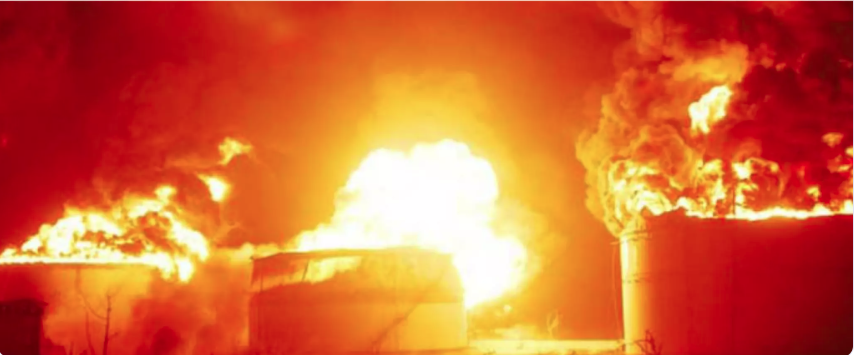
On Saturday, 24 October 2026, at about 8:30 in the morning, a fire and then a violent explosion tore through a hill-road construction site near Pinakota, in the Peechu Mamidi (also spelt Peechumamidi) area of Ananthagiri mandal, Alluri Sitarama Raju (ASR) district, Andhra Pradesh. Workers were reportedly pouring diesel from cans into a vehicle when fire broke out. It spread to a second vehicle and a two-wheeler, and a powerful blast followed (Daily Pioneer, DT Next/PTI, ETV Bharat, Eenadu). Police said the site is about 100 km from the nearest fuel station, so workers carry diesel in drums (DT Next/PTI). Updated 26 October 2026, about 10.30 am IST.
How many died
The toll rose through the day. A Telugu bulletin carried 4 dead and another said 5; the Superintendent of Police (SP) first confirmed five, with three people reported injured (DT Next/PTI, Business Upturn). By the evening the SP said, “The final number of deaths is seven” (Daily Pioneer). Every later report we opened says seven: the vehicle driver, five workers, and a government schoolteacher who was on the road at the time. Several reports give names, and they do not match one another in spelling or detail, so we withhold names. Eenadu says all seven died at the scene; one Telugu search summary says two died later in hospital, which we could not confirm. We found no report of an eighth death. The injured count is unclear: three taken to hospital in early reports, none mentioned later.
The blast: fire or explosives?
This is the contested part. Both accounts below are attributed.
- Accidental diesel fire (police). SP Amit Bardar said workers may not have taken adequate precautions while refuelling and that a spark could have started the fire. He added, “It was not a blast. I would call it an accidental fire” (DT Next/PTI, Business Upturn, ETV Bharat). He said the pickup belonged to the road contractor. PTI video, quoted by DT Next, still shows an intense explosion after the fire.
- Gelatin sticks. The Hans India, V6 Velugu and ETV Bharat’s first version say gelatin sticks used for blasting the hill were being carried in the vehicle and exploded when the fire reached them. Eenadu says police suspect gelatin sticks, non-electric detonators and a gas cylinder in the pickup went off, yet adds that no visible explosive traces were seen at the scene. On 25 October the SP settled the point for the police. Speaking to The New Indian Express, SP Amit Bardar said the incident was an accidental fire, that police and forensic teams examined the site, and that no gelatin sticks or traces of gelatin explosives were found; the Times of India (25 October) quotes him the same way and adds that further investigation is under way. That is the SP’s own statement, and it replaces the unnamed-official version carried earlier by TeluguPeople. It is stronger than Eenadu’s “no visible explosive traces”, and it was made after the Hans India, V6 Velugu and ETV Bharat reports above were written. No written forensic report has been published.
What the police version says burned: the New Indian Express, the Times of India and The Hindu describe a Bolero Camper pickup carrying diesel in drums, a tipper truck beside it and a two-wheeler. The New Indian Express says diesel was being moved from the pickup into the tipper’s tank, the tank exploded, and the fire reached two drums holding about 250 litres in the pickup; the Times of India and The Hindu add that the flames reached an LPG cylinder in the pickup, which caused the powerful explosion. The Hindu’s first report of 24 October had the transfer the other way round, from a tipper into a pickup, so the outlets do not agree on which vehicle was being filled. The Times of India says the teacher had reportedly hitched a ride to school in the pickup, while the New Indian Express and The Hindu say she was on her way to school. Three vehicles are named by Pioneer, DT Next, Hindustan Times and Eenadu; two in other reports. Eenadu adds that a nearby church shed collapsed. Deccan Chronicle (25 October) says houses about 20 metres away lost roof sheets and developed deep cracks, and the shock was felt in other hamlets. Whether explosives were present has not been officially settled, and forensic experts are said to have collected evidence (Eenadu).
Response and action
Police and revenue officials reached the site and the bodies were sent for postmortem. Deputy Chief Minister Pawan Kalyan ordered a thorough investigation (ETV Bharat), and Home Minister Vangalapudi Anitha spoke to the Collector and the SP (Hans India, ETV Bharat). District Collector T. Nishanthi said Rs 5 lakh would be given to each of the seven families, to be paid by the contractor, with help to claim insurance (HMTV, Andhra Jyothy, Eenadu). Eenadu says Ananthagiri police registered a case; we did not find this in other reports, and no arrest or action against the contractor has been reported. CPM leaders asked for an inquiry and stricter rules for explosives at road works (Hans India). Villagers whose homes were damaged have asked the Collector to visit, and for repair help and roofing sheets before the rain, as Deccan Chronicle reports. The Hindu counts about 10 families in Peechumamidi, the neighbouring tribal village, with broken asbestos roofs, cracked walls and damaged doors, and notes that ASR district is on red alert for extremely heavy rain on 28 October, when a cyclone is expected to cross the coast. On 26 October the New Indian Express reported that the residents asked the Collector and the Paderu ITDA project officer for roofing sheets, cement and, where needed, new houses; CPM leader K. Govinda Rao backed the demand.
Why this matters
Even on the police version, which now has an LPG cylinder in the pickup beside the diesel drums, this was a refuelling fire at a remote site where fuel is carried in cans, with a second vehicle parked close enough to catch fire and a village a short distance away. If explosives were present, a vehicle carrying both fuel and blasting charges is exactly what storage rules exist to prevent. We have covered related hazards in the Myla warehouse detonation, the Rohtas fuel-shop fire and the Chincholi MIDC fire, where sparks met stored flammables. Our notes on chemical storage and oil depot fires set out the wider pattern.
Lessons for readers
- Switch off the engine before refuelling, and keep every spark and flame away. That includes a hot exhaust, a phone, a beedi or a welding job nearby.
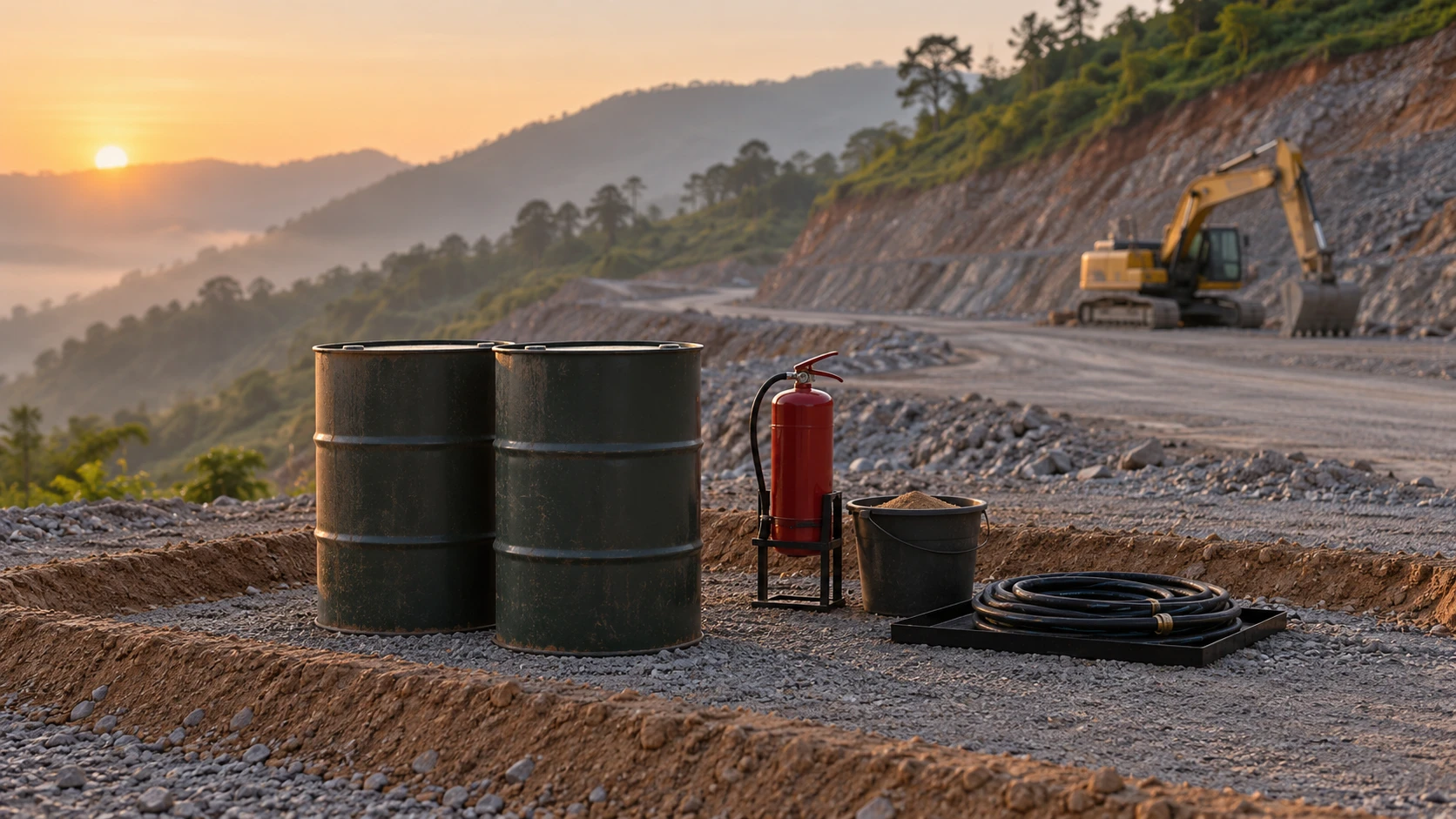
- Do not pour diesel from open cans into a vehicle that is running or sitting among others. Use an approved container and funnel or pump, refuel in the open, and move other vehicles and people back first. Diesel is harder to ignite than petrol, but it still burns, especially when spilled on a hot engine.
- Keep explosives and detonators apart from fuel and from vehicles. They belong in a licensed store and a vehicle approved for them, handled by a licensed blaster, not left in a worksite pickup.
- Keep people out of the blast zone. Stop traffic and keep villagers and passers-by well back whenever blasting or fuel work is under way. Houses about 20 metres away were damaged here, and a passing teacher died.
- Contractors and engineers: plan fuel supply for remote sites, so that nobody decants diesel from drums at the work face. Keep fire extinguishers and a first-aid kit on site and train workers to use them.
- If a vehicle catches fire, run upwind and at least 100 metres away, warn others and call 112 (and 101 for the fire service). Do not go back for equipment, and never try to fight a fire near explosives.
If you live or work near road or mining sites
Dial 112 for police, fire and ambulance, 101 for the fire service and 108 for an ambulance. Our state-wise helpline list has the Andhra Pradesh disaster numbers. If you see explosives or detonators left unattended, keep away and tell the police; do not touch them.
More on Paderu: see our fire and emergency safety guide for emergency numbers, the fire stations and the local risks to know.
What is still not known
We do not know the final forensic finding. The SP says no gelatin sticks or traces were found, and police point to diesel and an LPG cylinder in the pickup, but early reports said gelatin sticks and detonators were carried. We do not know exactly which vehicle was being filled, whether anyone died later in hospital, whether a case has been registered against the contractor or anyone else (one outlet says so), or whether the fuel handling broke any rule. The victims’ names, as published, are inconsistent, so we withhold them. We will update this page when police or the district administration publish a finding. Updated 26 October 2026, about 10.30 am IST.
- Diesel is being poured from cans into a vehicle at the road site; fire breaks out and spreads to other vehicles; an explosion follows
- Police and officials arrive; first toll of 4, then 5
- SP gives the final toll as seven; the Collector announces Rs 5 lakh per family from the contractor
- Deputy CM orders a probe; Home Minister speaks to the Collector and SP; CPM demands an inquiry
- Villagers with damaged houses ask for compensation and repairs
- SP tells The New Indian Express and the Times of India that police and forensic teams found no gelatin sticks or traces; police suspect a spark during diesel transfer, with diesel drums and an LPG cylinder in the pickup
Why consequences escalated
- A fire during diesel refuelling at a remote hill-road site led to an explosion near Pinakota; seven died.
- The toll rose from 4 to 5 to 7 within the day.
- Police call it an accidental fire and say no gelatin sticks or traces were found; early reports said gelatin sticks exploded. No written forensic report is published.
- Houses 20 metres away were damaged and a passing teacher was among the dead.
- The contractor is to pay Rs 5 lakh per family; no arrest or finding found through 26 October.
Failures and risk multipliers
- Diesel poured from cans into a vehicle with other vehicles close by (SP's account, spark suspected).
- Several early reports said blasting material was carried in the worksite vehicle with fuel; the SP says none was found. Police instead point to diesel drums and an LPG cylinder carried together in the pickup (Times of India, The Hindu).
- Workers reportedly not taking adequate precautions while refuelling (SP).
- People and a road kept open close to a site handling fuel and possibly explosives (a passing teacher died).
- No fuel arrangement for a site about 100 km from a fuel station, so drums were carried to the work face (SP via PTI).
Actions that reduce risk
- Switch off engines and remove every spark source before refuelling.
- Use approved containers and pumps, and move other vehicles back.
- Keep explosives and detonators in a licensed store, apart from fuel and vehicles.
- Stop traffic and clear people before blasting or fuel work.
- If a vehicle burns, run upwind, at least 100 metres, and call 112 and 101.

Leave a comment