

Quick answers
What is a confined space?
Factories Act section 36 speaks of a chamber, tank, vat, pit, pipe, flue or other confined space where gas, fume, vapour or dust is likely to be present to a risky extent. A fish hold, sump, sewer, septic tank, water tank and deep well all fit, because they have limited entry and exit and poor natural air.
Why do rescuers die in confined spaces?
The danger is in the air and it affects whoever enters. A 1986 NIOSH alert said more than 60 per cent of confined space fatalities occur among would-be rescuers, and a 1996 NIOSH review of 70 incidents found 36 per cent of victims were attempting rescue. These are US figures.
What should I do if someone collapses inside a tank or hold?
Do not go in. Raise the alarm, call 112 and the fire service, keep ventilating, and pull the person out from above only if they are on a line. Once out, move them to fresh air, check breathing and start CPR if you are trained.
What does the law say about entering a confined space?
Factories Act section 36(2) says no one is to enter until practicable measures have removed gas, fume, vapour or dust, unless a competent person has certified the space free of dangerous gas after his own test, or the person wears breathing apparatus and a belt on a rope held by someone outside. The OSH Code 2020 took effect on 21 November 2025 and we did not read its provision.
What does the CPHEEO sewer SOP ask for?
Ventilate for at least an hour, no entry if oxygen is below 19.5 or above 21 per cent, repeat gas tests every three minutes, at least two men at ground level, a safety belt, and a tripod with rope and pulley and harness for retrieval.
What happened at Tadadi?
On 27 October 2026 three fishermen died and two were rescued, one in critical condition, after going into the lower fish-storage compartment of a boat to clean it, according to the Deccan Chronicle and The Hans India. Suspected toxic gas or suffocation was reported and not confirmed, and Gokarna police registered a case.
How many sewer workers have died in India?
A Lok Sabha reply reported by Business Standard on 5 August 2026 said 498 sanitation workers died cleaning sewers and septic tanks between 1 January 2019 and 30 June 2026. The figure does not include fish holds, tanks, wells or factory pits.
Some of the deadliest places on a worksite do not look dangerous at all. A fish hold, a water tank, a sump, a manhole, an old well. There is a hatch or an opening, a ladder, a smell perhaps. A man goes down to clean it, to repair a pump or to bring something up. He stops answering. A second man goes down to see what is wrong, and then a third. This is the pattern that turns one emergency into a funeral procession, and it keeps repeating in India.
On Tuesday, 27 October 2026, at Tadadi port in Kumta taluk, Uttara Kannada, three fishermen died in the lower fish-storage compartment of a boat, and two others were pulled out, one of them in a critical condition, according to the Deccan Chronicle and The Hans India. After the catch and the ice had been unloaded, some of the crew reportedly went down to clean the compartment, met a strong foul atmosphere and collapsed. Gokarna police registered a case. The Hans India reports suspected toxic gas from rotting fish waste and the Deccan Chronicle says suspected suffocation, and both say the cause is not confirmed. They do not say whether the dead included men who went in to help. The day before, on 26 October, two workers died after four fell into a sump at the Sola sewage plant in Ahmedabad, and the cause there is also contested. We have written that up in our case study. This guide is about the hazard they share.
In short
- Do not enter a closed or poorly ventilated space unless the air has been tested, it is being ventilated, and someone outside is watching you.
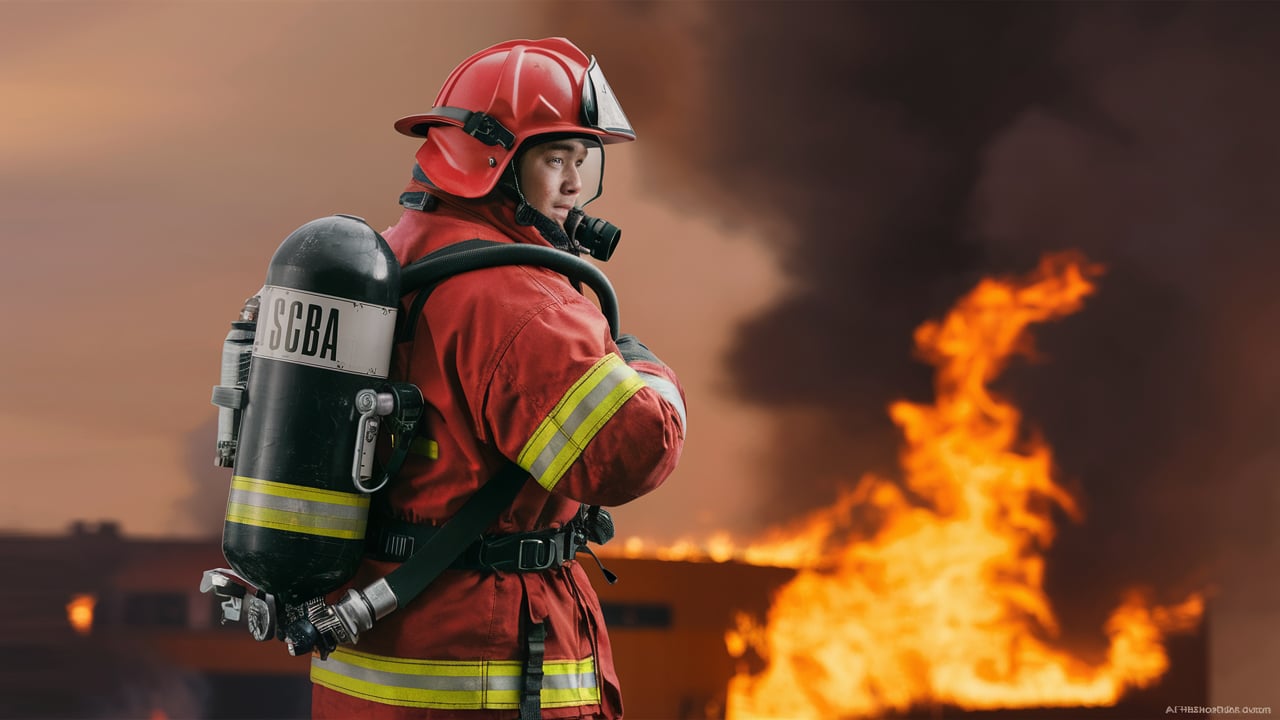
- If someone collapses inside, do not go in after them. Raise the alarm, call 112 and the fire service, and keep ventilating. A rescuer without breathing equipment is the next casualty.
- You cannot judge the air by smell or by looking. Low oxygen has no smell, and a space can smell of nothing and still be deadly.
- The law already asks for a test certificate or breathing apparatus and a lifeline. Section 36 of the Factories Act says so for factories.
- Plan the rescue before the job starts. A tripod, a harness and a trained crew at the opening are part of the work, not an extra.
What counts as a confined space
Section 36 of the Factories Act, 1948, which we read on 28 October 2026, speaks of a chamber, tank, vat, pit, pipe, flue or other confined space where gas, fume, vapour or dust is likely to be present to such an extent as to involve risk to persons being overcome. A fish hold fits. So does a sump, a septic tank, a sewer line, a water tank being cleaned, a grain bin, a ship’s tank and a deep well. What they share is not the size. It is a limited way in and out, poor natural air and a chance that the air inside is not fit to breathe.
Why the air kills
There are a few ways. The oxygen can be used up or pushed out. Gases can be produced by rot, which is the reason a fish hold, a sewer and a pit full of waste are dangerous. Fumes can leak in from a pipe or from welding, paint or cleaning chemicals. The Indian Society of Critical Care Medicine’s journal carried a note by doctors from Kasturba Medical College, Mangaluru, on a September 2023 case in which four fishermen were found unconscious in a fish storage tank and a person who went to help was also affected, according to a Times of India report reprinted by the ICSF fishworkers’ network. The note describes oxygen deficiency, toxic atmospheres and explosive atmospheres as the hazards, and says fish spoiling in wet, poorly ventilated conditions gives off harmful gases. We have not seen the paper itself, only that report. Another ICSF page, undated, describes a Mumbai fish jetty case in which one worker lost consciousness in a boat’s storage chamber and five others who went in after him also collapsed, and two of the six died in hospital.
The sewer rules written for India say the same in practice. The Central Public Health and Environmental Engineering Organisation (CPHEEO) of the housing ministry issued a Standard Operating Procedure for cleaning sewers and septic tanks in November 2018. It says the worker who opens a manhole must not bend over it, because he may be overcome by hydrogen sulphide and even fall in.
Why rescuers die
Rescuers die because the instinct to help is faster than the thought that the air might be the problem. NIOSH, the US workplace safety institute, said in a 1986 alert that more than 60 per cent of confined space fatalities occur among would-be rescuers. A later NIOSH study, Worker Deaths in Confined Spaces (1996), covered 670 deaths in 585 incidents between 1983 and 1993, with hydrogen sulphide, methane, inert gases, carbon monoxide and oxygen deficiency among the leading atmospheric causes. In its detailed review of 70 incidents, 36 per cent of the victims were trying to rescue someone. These are American figures and the two studies count differently, so we do not blend them. They tell the same story. We found no Indian official figure for how many confined-space deaths involve a rescuer.
What the rules say
- Factories Act, 1948, section 36. Under sub-section (1), no person is to be required or allowed to enter such a space unless it has a manhole of adequate size or another effective means of getting out. Under sub-section (2), no one is to enter until all practicable measures have been taken to remove gas, fume, vapour or dust and prevent its return, unless a competent person has given a written certificate, based on his own test, that the space is reasonably free from dangerous gas, or the person enters wearing suitable breathing apparatus and a belt attached to a rope whose free end is held by someone outside.
- A change in the law. The Occupational Safety, Health and Working Conditions Code, 2020 took effect on 21 November 2025, and the PIB release says it is built from 13 central labour laws including the Factories Act. We did not read the Code’s own provision on confined spaces or its rules, so please check what it now says for your workplace. The Factories Act text above is how the rule long stood.
- CPHEEO’s 2018 SOP for sewers and septic tanks. It asks for the sewer to be ventilated by opening two or three manholes on both sides for at least an hour before work. It says a worker should not enter if oxygen at any of three levels is below 19.5 per cent or above 21 per cent, that gas tests be repeated every three minutes while people are inside, and that entry be with a safety belt and at least two men at the ground level. It also asks for a tripod with rope and pulley and harness, or some other suitable system, to retrieve an injured worker. In a gas emergency, it says, those at ground level are trained rescuers who send down rescue sets and attempt rescue with the equipment they have. That is a rescue plan with equipment and training behind it.
Whether these rules applied to a fishing boat at Tadadi or to the Sola site is a question for the investigators, and we do not answer it. The CPHEEO document was written for sewer cleaning, so use it as a model, not as the law for every space. We did not find an Indian official guideline written for fish holds or open wells.
The rule of the watcher, the test and the plan
- Ask first whether anyone needs to go in. Can the hold be washed from the deck with a hose, the tank emptied with a pump, the well cleaned from outside? Entry should be the last option.
- Open and ventilate. Open every hatch and cover and run a blower where there is one. For a sewer line, CPHEEO’s hour of ventilation is the yardstick. Never ventilate with pure oxygen, which is our caution and not from the sources above.
- Test the air before entry and keep testing. A gas detector that reads oxygen and the gases you expect is the only answer. A candle or a lighted match is not a test, and it can set off a flammable atmosphere.
- Have a named watcher outside who stays outside, can see or speak to the person inside, and has the job of calling for help. CPHEEO asks for at least two at ground level.
- Wear a harness and line that can pull a person out from above without anyone else going down. Fix a tripod or a davit at the opening before the work begins.
- Write down who will rescue, with what equipment, and how the fire service will be called. A permit that has no rescue line is incomplete.
If someone collapses inside
- Shout for help and call 112 and the fire service. Give the exact place and say that a person is down in a closed space.
- Do not go in. Keep ventilating and, if you have a line on the person, pull them out from above.
- If the person comes out, move them to fresh air and check breathing. Start CPR if the person is not breathing normally and you are trained. Our first aid guide has the steps.
- Count and keep everyone back, so that no one else goes in. Tell the arriving crew everything you know about what the person was doing, and how long ago.
The numbers we can stand behind
A written reply by the Minister of State for Social Justice in the Lok Sabha, as reported by Business Standard on 5 August 2026, gave data from the National Commission for Safai Karamcharis. It said 498 sanitation workers died while cleaning sewers and septic tanks between 1 January 2019 and 30 June 2026. The yearly figures were 132, 34, 62, 88, 65, 54 and 47 for 2019 to 2025 and 16 for the first half of 2026. This counts only sewer and septic tank work, so it is a part of the picture. It leaves out fish holds, tanks, wells and factory pits. NCRB’s 2024 report separately counts 192 deaths from falls into manholes or sewers, 113 from poisonous gases and 1,774 from suffocation in India, and the tables do not say how many were confined-space work. Our chemical industry guide and PPE guide cover related ground at the workplace.
What we could not confirm
- The gas or cause at Tadadi, and whether anyone who died went in to help. Reports say suspected toxic gas or suffocation and nothing more.
- The cause at Sola. See our case study, where the accounts differ.
- Whether the Factories Act or the new Code’s provision applied to either place.
- The Mangaluru journal note, which we know only from a newspaper report reprinted by ICSF. That page itself says four were found unconscious and no deaths were reported, yet also says the rescuer met the same fate, so we describe it loosely.
- An Indian official count of rescuer deaths in confined spaces.
- We found no public Instagram, Facebook or LinkedIn video that we could open and match, so the videos below are from YouTube. One is a Kannada news report of the Tadadi deaths, one an English news clip on Sola, and five are general safety videos.
Do this today
If you run a boat, a housing society, a water tank, a farm or a factory, write down which spaces on your premises are confined spaces. Put a board at each saying that nobody enters without a test and a watcher. Keep a harness, a line and a gas detector where people can reach them, and save 112 and the nearest fire station’s number on the supervisor’s phone. Checked 28 October 2026.
What needs attention
- At Tadadi three fishermen died in a boat's fish hold on 27 October 2026, with suspected toxic gas or suffocation reported and the cause not confirmed.
- US studies by NIOSH found that a large share of confined space deaths were would-be rescuers (more than 60 per cent in a 1986 alert; 36 per cent in a detailed 1996 review of 70 incidents).
- Factories Act section 36 asks for a competent person's test certificate or breathing apparatus and a lifeline held by someone outside before entry; the OSH Code 2020 has since taken effect and its provision was not read.
- CPHEEO's 2018 SOP for sewers sets an oxygen band of 19.5 to 21 per cent, three-minute gas tests, two people at ground level and a tripod and harness for retrieval.
- 498 sanitation workers died cleaning sewers and septic tanks between 1 January 2019 and 30 June 2026 according to a Lok Sabha reply reported by Business Standard; the count excludes fish holds, tanks and wells.
- No Indian official count of rescuer deaths in confined spaces and no Indian guideline written for fish holds or open wells was found.
Controls that reduce risk
- List the confined spaces on your boat, tank, farm, society or factory.
- Put a no-entry-without-test-and-watcher board at each.
- Keep a gas detector, harness, line and tripod where they can be reached.
- Train at least two people in rescue and CPR.
- Save 112 and the nearest fire station's number on the supervisor's phone.
- Ask contractors for their entry permit and rescue plan before work starts.
Common unsafe practices
- Entering because the space looks empty or the work is only for a minute.
- Judging the air by smell, or testing with a flame.
- Rushing in after a collapsed colleague without breathing equipment.
- No watcher outside, or a watcher who also goes in.
- No harness, line or tripod, so the only way to reach a victim is to enter.
- Ventilating for a few minutes and not testing again.
- No rescue plan written before the work starts.



Leave a comment