
Quick answers
What should I do if a chemical tanker overturns near me?
Stop and move away crosswind, call 112, 101 or 108 from a safe distance, and do not go in to rescue. Cover your nose and mouth with a wet cloth only as a stop-gap while you move. Do not smoke or light anything near the spill.
Which way should I move?
NDMA-based guidance on Vikaspedia says to move perpendicular to the wind direction through the designated escape route. If you cannot tell the wind direction, move sideways and away from the smell and the haze.
What should I do if my eyes burn after a chemical leak?
ATSDR guidance for formaldehyde is to irrigate the eyes with plain water or saline for 15 minutes and remove contact lenses if they come out easily. Lucknow police also asked people to wash their eyes and face with clean cold water. See a doctor if pain or blurring continues.
Should I stay indoors or leave?
Follow the police and fire service. If you are told to stay in, shut doors and windows and switch off fans and air conditioners that draw in outside air. If you are told to leave, move crosswind. The shelter-in-place steps we cite are from a US state health department.
How long can lung symptoms last after formaldehyde?
ATSDR says lung injury from formaldehyde can keep worsening for 12 hours or more after exposure, and that some people with chest pain, tightness or cough should be observed for 6 to 12 hours. See a doctor early if breathing is affected.
How many people were affected by the Lucknow formalin spill?
Reports differ. Hindustan reported over 50,000 people troubled across more than ten villages, while ETV Bharat's first report said no cases had been recorded and called it a precaution. We could not settle a figure.
Who do I call?
112 covers fire, police and ambulance. The NDMA-based page lists 101 for fire and emergency services, 100 for police and 108 for medical services.
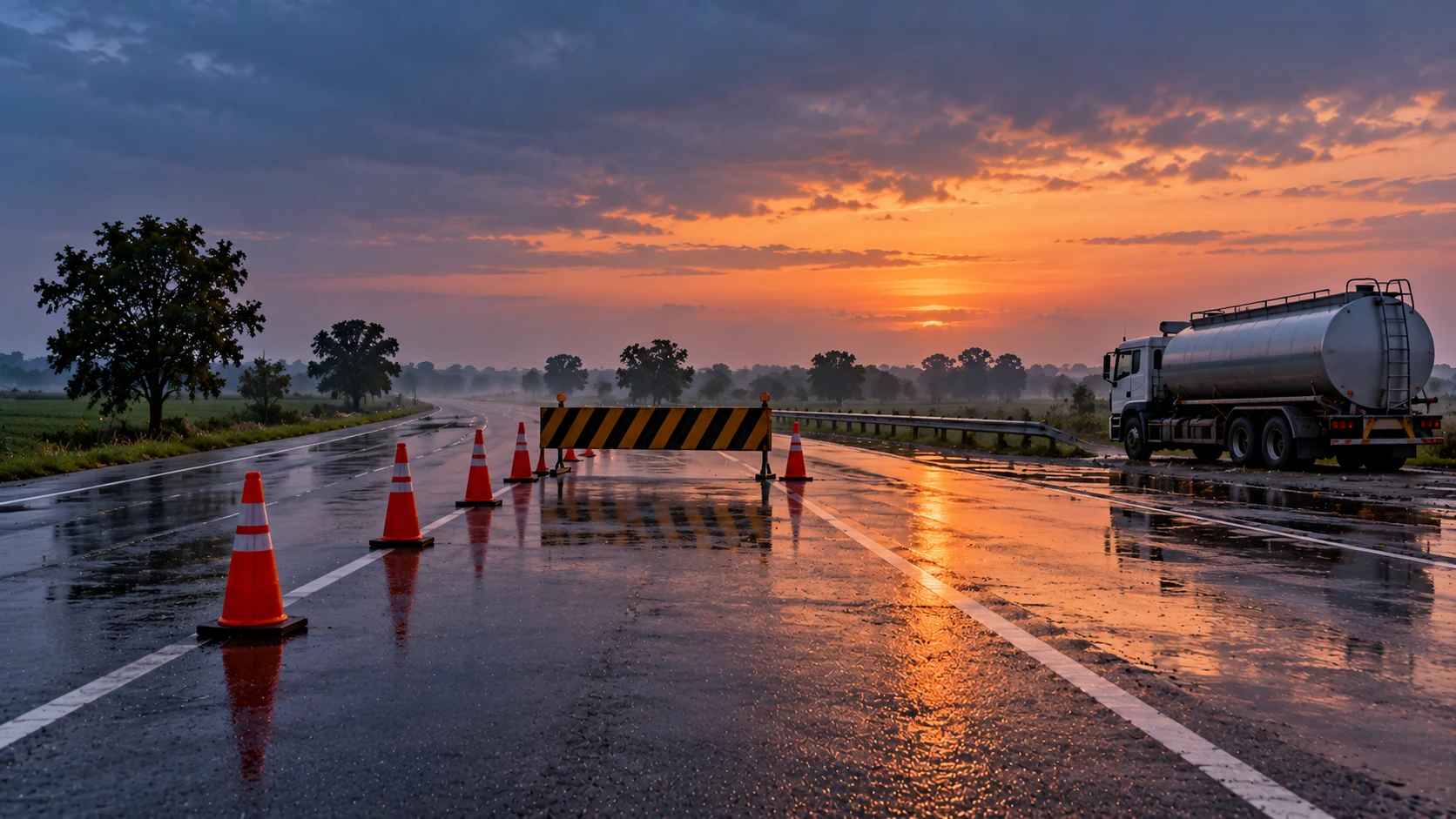
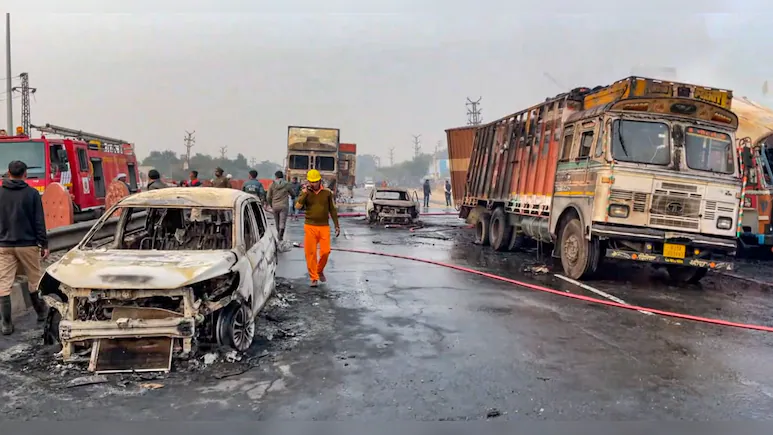
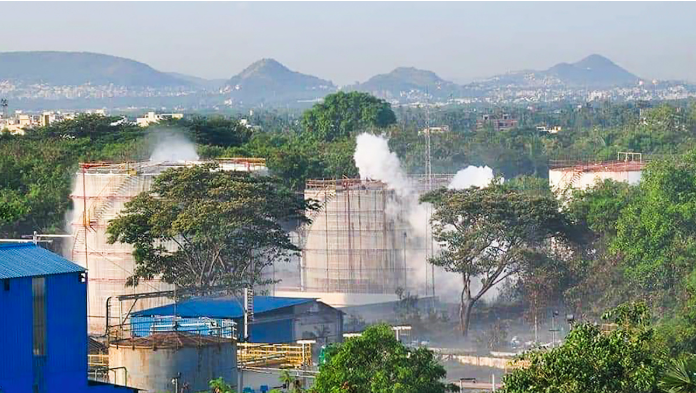
A tanker is a fact of life on Indian roads. We overtake them, sit behind them at toll plazas and rarely think about what is inside. On the evening of Monday, 26 October 2026, a tanker carrying formalin from Sandila in Hardoi to a plywood factory at Gudamba in Lucknow burst a front tyre, lost control and overturned on Kisan Path, in the Bakshi Ka Talab area. Reports say the chemical leaked, and people in villages and hostels nearby felt their eyes burn and began to cough. Police put up barricades, SDRF and the fire service arrived, and experts from the chemical industry were called in to neutralise the spill. The reports we read do not agree on how many people were affected, and we do not quote a figure. This guide is not a retelling of that night. It is about what you, standing by the road or living near it, should do in the first few minutes.
In short
- Move away first and film later, if at all. Go crosswind and away from the tanker. The NDMA-based government page on chemical disasters says to leave calmly and quickly at right angles to the wind direction.
- Call from a safe distance. Fire is 101, police 100, ambulance 108, and 112 covers all of them. Say where you are and what is leaking if you can see it.
- Do not go in to rescue. Untrained rescuers are how one casualty becomes three.
- If your eyes burn, rinse them with plenty of clean water for 15 minutes. Wash exposed skin and change your clothes.
- If you are told to stay in, or you cannot leave, shut doors and windows and switch off fans and air conditioners that pull in outside air.
What was in the tanker, and what it does
Formalin is a solution of formaldehyde in water, used in the plywood and resin trade among other things. The US NIOSH Pocket Guide lists the effects of formaldehyde as irritation of the eyes, nose, throat and respiratory system, with tears, cough and wheezing. In its medical management guidelines, ATSDR (part of the US CDC) says even fairly low concentrations can cause rapid irritation of the nose and throat, with cough, chest pain, shortness of breath and wheezing. That matches what Lucknow residents told reporters about watering eyes and a burning throat. A different chemical would need different advice, and this is the reason the label on the tank matters, as we explain below.
The first minute
- Stop, and do not walk towards it. If you are on a two-wheeler or in a car, do not drive into the haze. Turn around where it is safe to, and keep your windows up.
- Move away, crosswind. The page on chemical disasters on Vikaspedia, the government portal that credits NDMA, says to evacuate calmly and quickly perpendicular to the wind direction through the designated escape route. If the wind is blowing the smell towards you, step sideways first and then back.
- Cover your nose and mouth with a wet cloth while you move. The same page suggests a wet handkerchief or a piece of cloth. Treat it as a stop-gap and not as protection. It does not filter chemical vapour, so the point is still to get out.
- Do not smoke, strike a match or switch on anything that sparks near the spill. The page says not to smoke or light a fire or spark in the hazardous area.
- Call 112, 101 or 100 once you are clear. The page says to inform the fire and emergency services, police and medical services from a safe place by calling 101, 100 and 108.
Read the tank, from far away
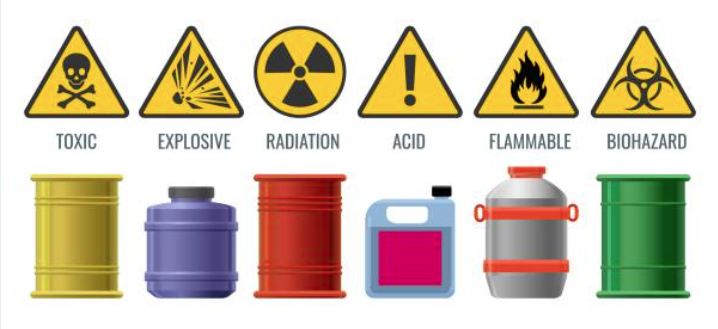
Look for the orange or coloured emergency panel on the side or rear of a tanker, and any diamond-shaped hazard label. If you can read a number or a name with your eyes or a phone zoom from a safe distance, say it to the control room. The NDMA-based page lists the Motor Vehicles Act 1988 among the laws on hazardous chemicals. We did not open the carrier rules themselves, so we say nothing here about what they require of a driver or owner. Our suggestion is simple. Never go close for a better photograph. A zoomed picture taken from a hundred steps away is worth more to the fire officer than one taken from five.
If you cannot leave, or you are told to stay in
Go indoors, shut every window and door, and switch off the air conditioner, cooler or fan that draws in outside air. The Washington State Department of Health, which we opened on 28 October 2026, advises picking a room with the fewest doors and windows, sealing it, and staying until the authorities say it is safe. It also warns that leaving your shelter to help victims can be fatal. This is American shelter-in-place advice and not an Indian government instruction. It matches what one Lucknow resident told a newspaper, who said he washed his face, shut doors and windows and sat in a closed room and felt better. The NDMA-based page says people who cannot evacuate, such as the sick, elderly or disabled, should stay inside with doors and windows shut tight. It also says not to eat or drink anything that was left uncovered in the open air.
If your eyes, skin or chest are affected
- Eyes. Rinse with plain water for 15 minutes, removing contact lenses if they come out easily. That is ATSDR’s guidance for formaldehyde. Lucknow’s BKT police advised people with burning eyes or skin to wash their face and eyes with clean, cold water.
- Skin and clothes. ATSDR says to flush liquid-exposed skin and hair with plain water for 3 to 5 minutes. Change out of clothes that smell of the chemical. The NDMA-based page says to change into fresh clothing and wash hands properly, and the Washington page suggests sealing outer clothes in a plastic bag.
- Breathing. Move to fresh air. If cough, chest pain or tightness continues, see a doctor. ATSDR says lung injury from formaldehyde can keep worsening for 12 hours or more after exposure, and that some people should be observed for 6 to 12 hours. A senior lung specialist from KGMU was quoted by Hindustan as saying a patient whose oxygen level falls below 90 should reach a hospital at once. We would add that children, the elderly and anyone with asthma should be checked early.
- Do not wait for a crowd at the hospital. In Lucknow, the Ram Sagar Mishra hospital kept its emergency ready and, in the reports we read, no one affected by the chemical had arrived by late night. That is a good sign but it is not proof that nobody was hurt.
If you drive past
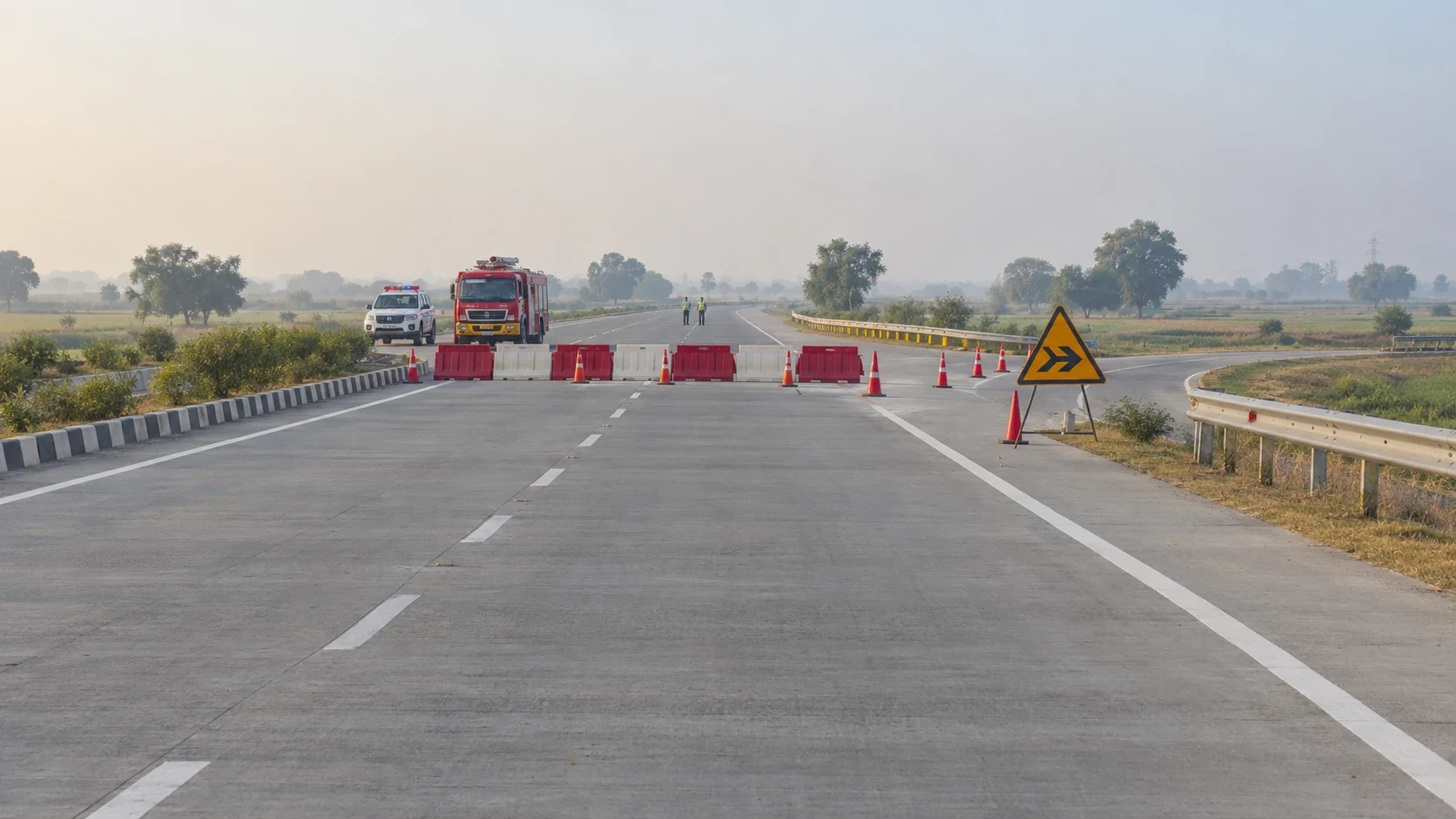
Do not slow down to look. A crowd of onlookers and a line of stopped vehicles are what make a spill worse. Obey the barricade, even when it adds half an hour to your trip, because in Lucknow police barricaded 500 metres on both sides of the site and diverted traffic. Close your windows, switch the air conditioner to recirculate, and leave by the nearest turn that points away from the haze.
What happened on the ground at Lucknow, as far as reports agree
Fire and SDRF teams first stopped the leak and then spread earth over the spilt chemical, according to Dainik Jagran. The soil was dumped into a roadside trench and covered with four dumper loads of earth so the chemical would not turn into vapour. Around 2.30 am the cargo was pumped into a second tanker, and the wrecked one was lifted off with a crane. One lane stayed closed for more than a day. The driver was admitted with an injury and discharged the next morning. Hindustan reported that more than ten villages and over 50,000 people were troubled, while ETV Bharat’s first report said no cases had actually been recorded and that the message was a precaution. We could not settle the number. We also do not know how much chemical spilled, why the tyre burst, or whether anyone will face action.
What drivers, owners and the authorities should answer
This part is not for the bystander. It is for everyone who put that tank on the road. Was the tyre checked before the trip? Was the written emergency information in the cab, and could the driver read it? Did the control room know who to call first? Did the villages along the route know what to do? We raise the questions and do not claim to know the answers for Lucknow. Our chemical industry safety guide looks at the factory end, and the related cards list our guides on chemical storage and gas leaks.
What we could not confirm
- How many people were affected at Lucknow. Reports differ, and an early report said no actual cases.
- The quantity of chemical that spilled and the cause of the tyre burst.
- Any exposure monitoring in the area, or any action against the owner or driver.
- An Indian official isolation distance for formalin. The NOAA CAMEO listing for formaldehyde solution that we opened gives none, so we do not give one.
- We found no public Instagram, Facebook or LinkedIn video of the Lucknow spill that we could open and match, so the videos below are from YouTube. Two are Hindi news reports and four are general chemical-spill or eye-rinse videos.
Do this today
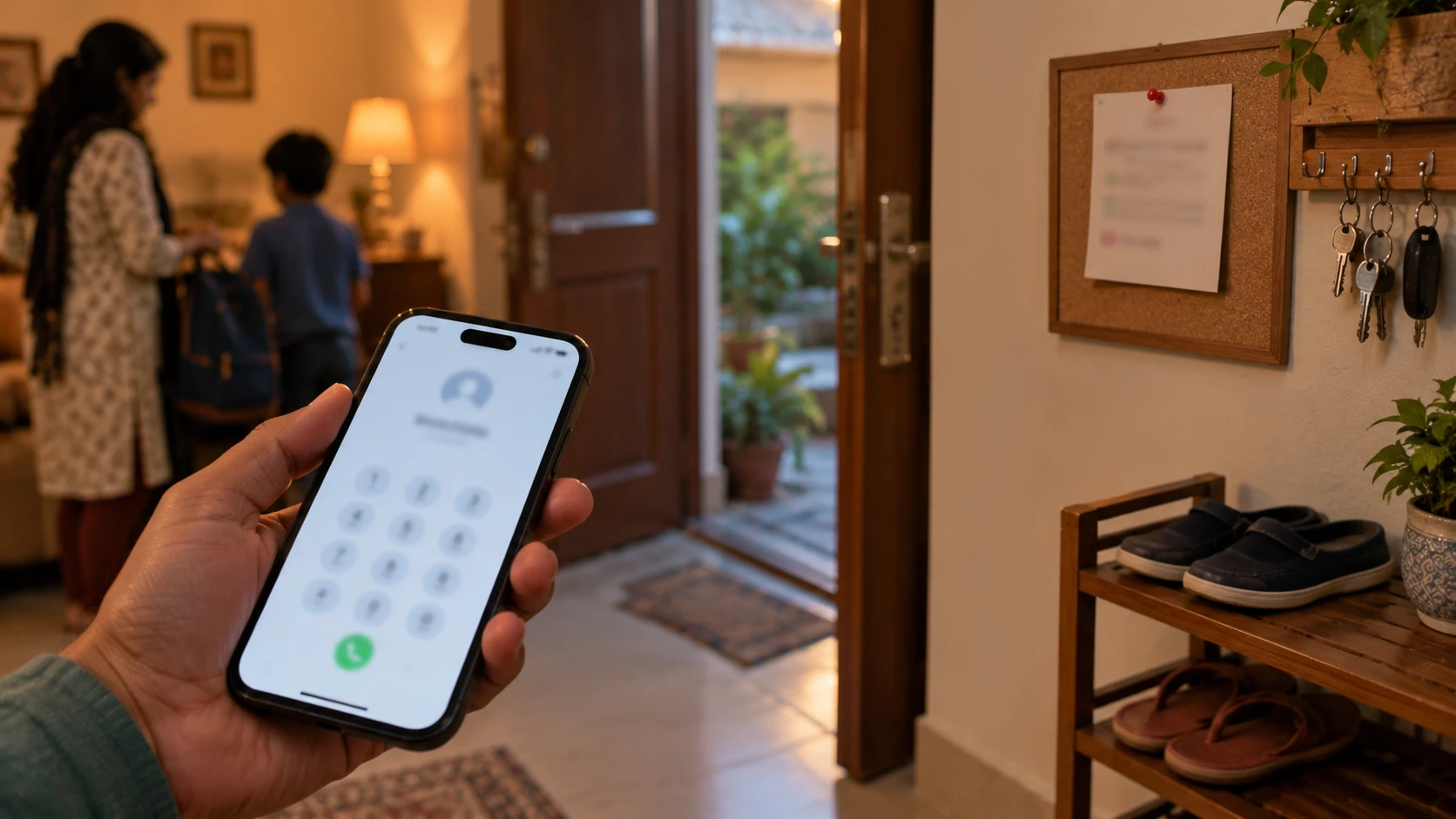
Save 112, 101 and 108 on your phone and teach your family the three things in order. Move crosswind, call from a distance, rinse eyes with water. If you live near a highway or an industrial area, ask your RWA or panchayat who gets called, and how people along the road will be told. Our emergency numbers guide explains which number to call for what. Checked 28 October 2026.
What needs attention
- The Lucknow spill involved a road tanker of formalin that overturned after a tyre burst; residents reported eye, nose and throat irritation and cough, and police barricaded 500 metres each way.
- Reports of the number of people affected differ, and an early report said there were no actual cases.
- NDMA-based government guidance asks people to move crosswind, use a wet cloth as a stop-gap, call 101, 100 and 108 from a safe place, and avoid smoke, flame and sparks.
- ATSDR guidance for formaldehyde is 15 minutes of eye irrigation and 3 to 5 minutes of skin flushing, with possible worsening of lung injury for 12 hours or more.
- NCRB recorded 113 deaths from poisonous gases in India in 2024, down from 119 in 2023; the figures do not say which came from road tankers.
- No Indian official isolation distance for formalin was found.
Controls that reduce risk
- Save 112, 101 and 108 on every phone at home.
- Teach children and elders three steps: move crosswind, call from far, rinse eyes with water.
- If you live near a highway or an industrial area, ask your RWA or panchayat how residents will be warned.
- Know where the nearest hospital emergency is.
- If you drive for a living, learn to read the emergency panel on tankers.
- Report a leaking or unsafe tanker to the police on 112.
Common unsafe practices
- Walking closer to look or film a leaking tanker.
- Trying to rescue the driver or others without training or breathing equipment.
- Driving into the haze, or stopping the vehicle to watch.
- Smoking or lighting anything near a spill.
- Leaving contaminated clothes on and rubbing the eyes.
- Ignoring a barricade or police instruction.
- Assuming that no hospital crowd means no one was hurt.
Leave a comment