
What happened here
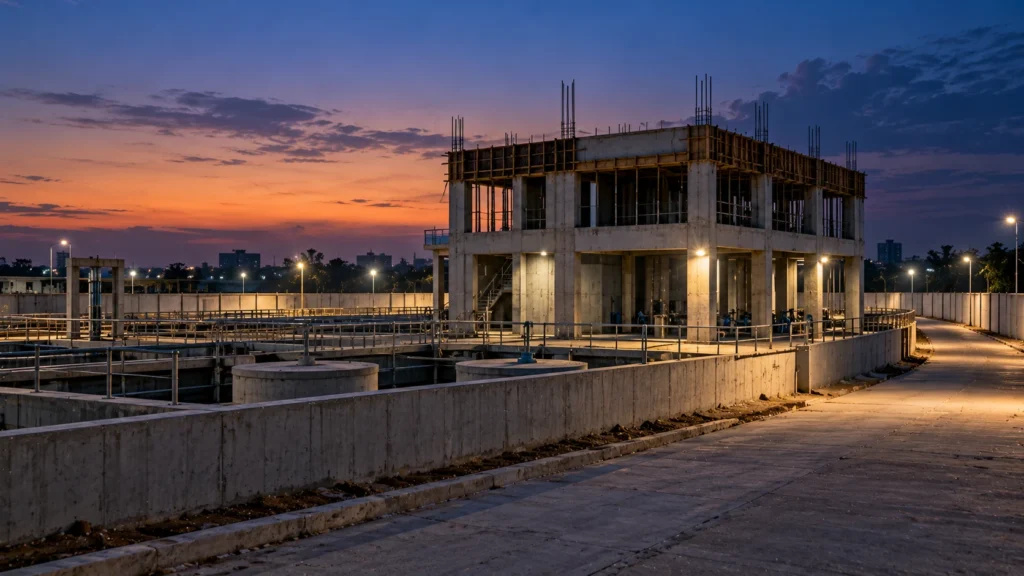
Four workers of a contractor fell unconscious into the pump-house sump of an AMC sewage treatment plant under construction at Sola, Ahmedabad, on 26 October 2026. Fire crews brought out all four; two died in hospital. Reports differ on whether toxic gas or a slip started it, and the cause is not established. The AMC issued a penalty notice to the contractor.
Quick answers
What happened at Sola on 26 October 2026?
Four workers of a contractor fell into the pump-house sump of an AMC sewage treatment plant under construction. Fire crews brought out all four; two died in hospital.
Was it toxic gas?
Not confirmed. Most reports say gas build-up during welding, the AMC says a worker slipped, and the fire department asked that gas not be named as the cause until confirmed.
Why did three more men go in?
Reports say the supervisor and two others went in to help the first man. This is the common pattern in confined-space accidents, and it is why rescuers should not enter without breathing sets.
What penalty was imposed?
The AMC issued a notice imposing Rs 50 lakh on the contractor, as reported; another outlet gives Rs 3.5 lakh.
Is there a safety procedure for sewers and sumps?
The CPHEEO procedure for cleaning sewers and septic tanks, issued in 2018, asks for air tests, ventilation, a safety belt, standby staff and a rescue plan.
Four men in a sump, two of them dead
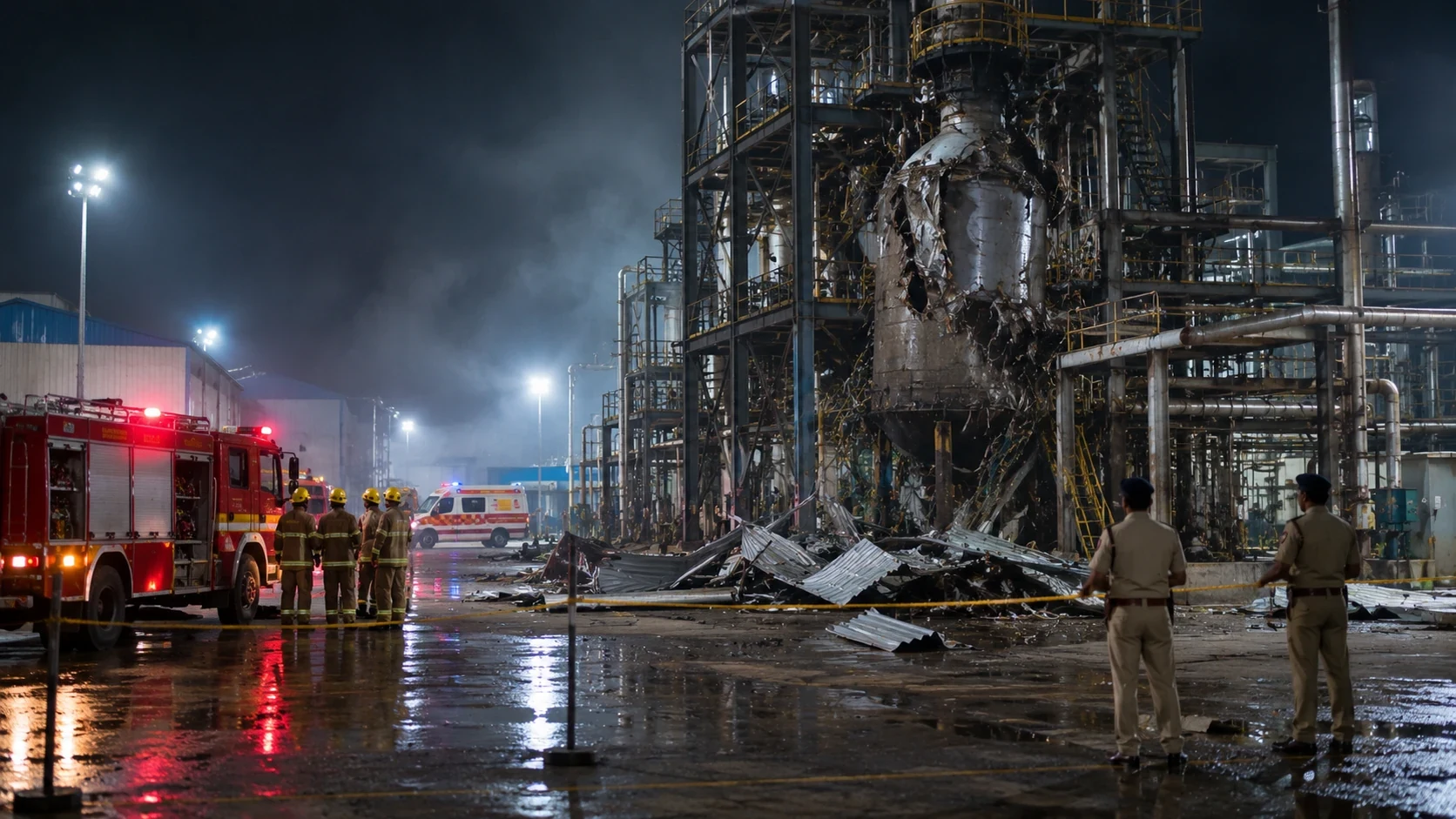
On Monday, 26 October 2026, four workers of a contractor fell unconscious into the pump-house sump of a sewage treatment plant that the Ahmedabad Municipal Corporation (AMC) is building at Sola, in the north-west of the city. It is a 30 MLD plant, meaning it is designed to treat 30 million litres a day. The first reports reached the news desks at about 5.30 pm. No report gives the exact minute of the fall.
The AMC’s account is that one worker slipped and fell into the sump during inspection work, and that the plant supervisor and two others went in after him. Fire crews from the Thaltej and Bodakdev stations were called and brought out all four. They were taken to Sola Civil Hospital. A site in-charge and a welder died there. The other two, a plant manager and a driver, were reported to be in stable condition by Tuesday. The rescue took about 45 minutes, according to the Divisional Fire Officer.
The gas question
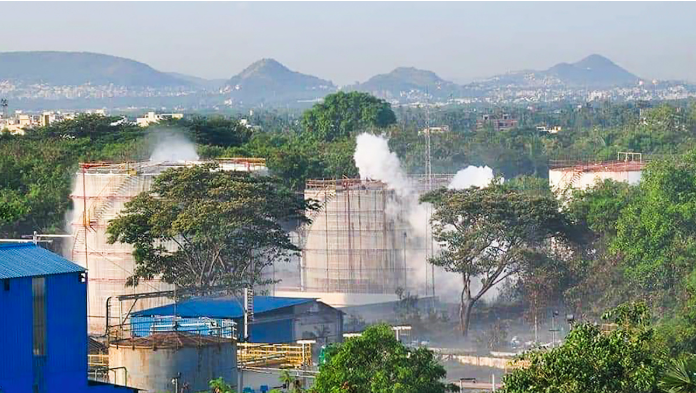
Most reports say a welder lost consciousness because of a gas build-up while welding, and that three others fell in while trying to help. That version is attributed to the fire department’s first information and to a city engineer. The same city engineer, in another report, said gas in the drainage line made one worker dizzy. A separate report quotes the AMC itself saying he slipped during inspection, and says the fire department asked people not to name gas, toxic gas or lack of oxygen as the cause until it is officially confirmed.
So the cause is open. It may have been gas, a lack of oxygen, a slip, or a mix of these. We cannot tell which, and we do not choose one for you. What is not in dispute is that four people ended up unconscious in a deep, enclosed space within minutes of each other, which is the pattern confined-space accidents follow.
Fine and compensation, with two different figures
The AMC said its department has issued a notice imposing a penalty of Rs 50 lakh on the contractor for negligence, and that the company has given an undertaking to pay Rs 25 lakh to the family of each of the two men who died. Another outlet puts the fine at Rs 3.5 lakh and says the Rs 25 lakh was announced by the ruling party and the AMC. A third says only that a notice was issued. We have used the AMC’s own statement for the Rs 50 lakh figure and flagged the rest as unsettled. An FIR had not been reported at the time of the latest coverage we read, though police were said to be looking at safety gear and the contractor’s conduct.
What the standards ask for
No official rule is quoted in the coverage as having been checked on site, so what follows is what the documents say, not a finding about this plant. The Central Public Health and Environmental Engineering Organisation (CPHEEO) of the housing ministry issued a Standard Operating Procedure for cleaning sewers and septic tanks in 2018. It was written for cleaning work, and this was a plant under construction, so it applies here only by comparison. Even so, its steps read like a list of what went missing in the reports.
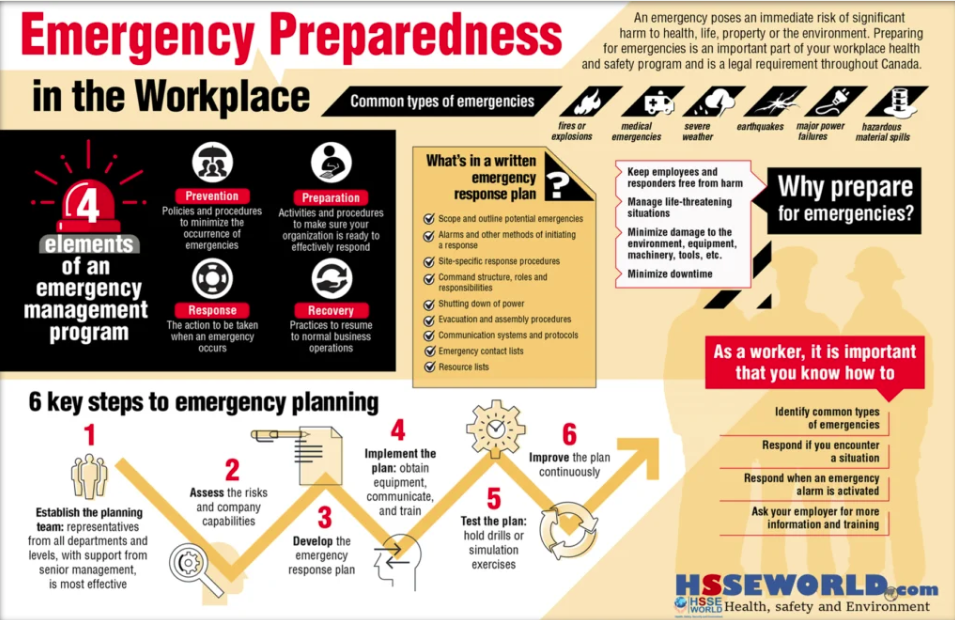
- Test the air before anyone goes down, for gases such as hydrogen sulphide, carbon monoxide and methane, and for oxygen. The SOP says staff are not to enter if oxygen is below 19.5 per cent or above 21 per cent at the bottom, middle or top.
- Ventilate first, and keep testing. The SOP repeats the gas test every three minutes while people are inside.
- No smoking, open flames or sparks where dangerous gas may be present. Welding is exactly that kind of ignition source.
- A safety belt on the person going in, and at least two trained people kept at ground level.
- An emergency plan made before the job, with a tripod, rope, pulley and harness ready to pull a casualty out.
For factories, section 36 of the Factories Act, 1948 says no one may be allowed into a tank, pit or similar space where harmful fumes may be present unless a competent person has tested it and certified it in writing, or the entrant wears breathing apparatus and a belt tied to a rope held by someone outside. Whether that Act covers a municipal construction site is for the authorities to say. No report tells us which permits, gas tests or breathing sets were in place at Sola.
Why the second and third man go in
Anyone who sees a colleague drop wants to jump in. That reflex is the reason confined-space accidents so often kill the rescuers. If the air is bad enough to put one person down, it will put the next one down too, usually within a minute. At Sola the supervisor and two others followed the first man into the sump. The AMC says the fire crew brought out all four, and that two of them survived. Trained firefighters with oxygen masks are the people who should make that entry, not co-workers.
Our earlier cases show the same pattern in different settings, such as the chloroform leak at a laboratory in Sangareddy, the gas exposure at a Bokaro steel plant and the jewellery factory fire in Jaipur where two workers died of suffocation. Workers of contractors are often the ones in the pit. Our note on PPE in Indian workplaces covers what an employer must provide, and the first aid guide covers what to do for someone who is not breathing after you have called for help.
If it happens near you
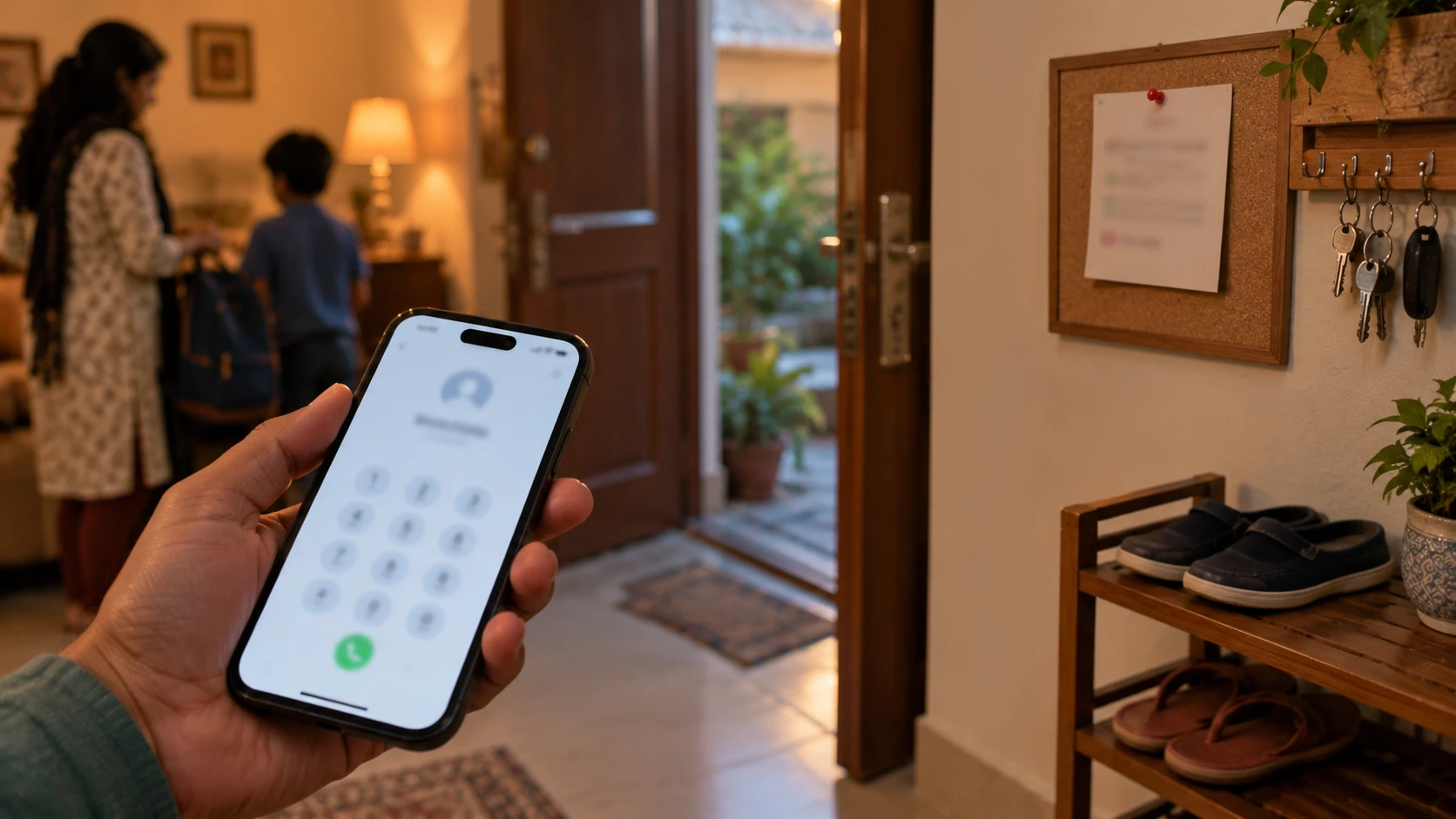
- Do not go in, even for a person you know well. Shout for help and call 112 or 101 at once, and say clearly that someone is down in a tank, sump or pit.
- Keep other workers and onlookers back from the opening, and keep flames, phones used as torches and engines away from it.
- Tell the fire crew how many are inside, how deep it is and what work was being done. These details decide which rescue gear they bring.
- Once a person is out, lay them flat in fresh air and start the steps in our first aid guide, then hand over to the ambulance. The emergency numbers guide explains which number to call.
Fire and emergency numbers, along with the AMC fire stations, are on our Ahmedabad safety guide, and Sola falls inside the area it covers.
What is still open
Nobody has said what was in the air, if anything, or whether it was tested before the work began. The reports differ on whether the plant is still under construction or recently went through a trial run, on how deep the sump is, and on whether the two survivors are stable or serious. The size of the fine is not settled. We do not name the men. Two families have lost someone, and the other two men are still recovering.
Tonight, if you manage any site with a tank, sump, pit or drain, write three lines on a card and fix it near the opening. Air tested and noted. One person stays outside, always. Call 112 first, and nobody goes in after anybody.
Updated 27 October 2026.
- Four workers of the contractor are at work in the pump house of the Sola plant; welding is reported under way
- A worker falls into the sump. The supervisor and two others go in after him. The fire brigade is called
- First reports say the Thaltej and Bodakdev fire stations are at the site; early reports say two are out and two are missing
- All four are brought out after about 45 minutes and taken to Sola Civil Hospital; two die there
- AMC says the contractor has been issued a notice and a Rs 50 lakh penalty; the company gives an undertaking of Rs 25 lakh to each family
- Cause still unconfirmed; the two survivors are reported stable
Why consequences escalated
- Four workers ended up unconscious in one sump within minutes; three of them went in to help.
- The cause is not established. Gas build-up, lack of oxygen and a slip are all reported.
- Welding was under way in a space where, if gas was present, a spark could also be a hazard.
- All four were brought out alive by fire crews; two died in hospital and two survived.
- The AMC has penalised the contractor; the amount differs between reports.
Failures and risk multipliers
- Men entered the sump to help a colleague who had fallen (reported by the AMC and most outlets).
- No report says the air was tested before work or while it went on.
- Welding in a pump house or sump where gas may collect (reported; gas not confirmed).
- No report mentions breathing sets, a rope or a person standing outside as in the CPHEEO procedure.
- The contractor was served a penalty notice for negligence by the AMC.
Actions that reduce risk
- Test the air for oxygen and gas before entering any tank, sump, pit or drain, and keep testing.
- Ventilate first. Keep flames and sparks away from a space that may hold gas.
- Keep a trained person outside with a rope, a harness and a phone; nobody enters after a fallen colleague.
- Call 112 or 101 first and give the number of people inside and the depth.
- Have the emergency plan and rescue gear ready before the job begins.
- Authorities and contractors: share the permit, gas-test and rescue arrangements for municipal projects.

Leave a comment