
What happened here
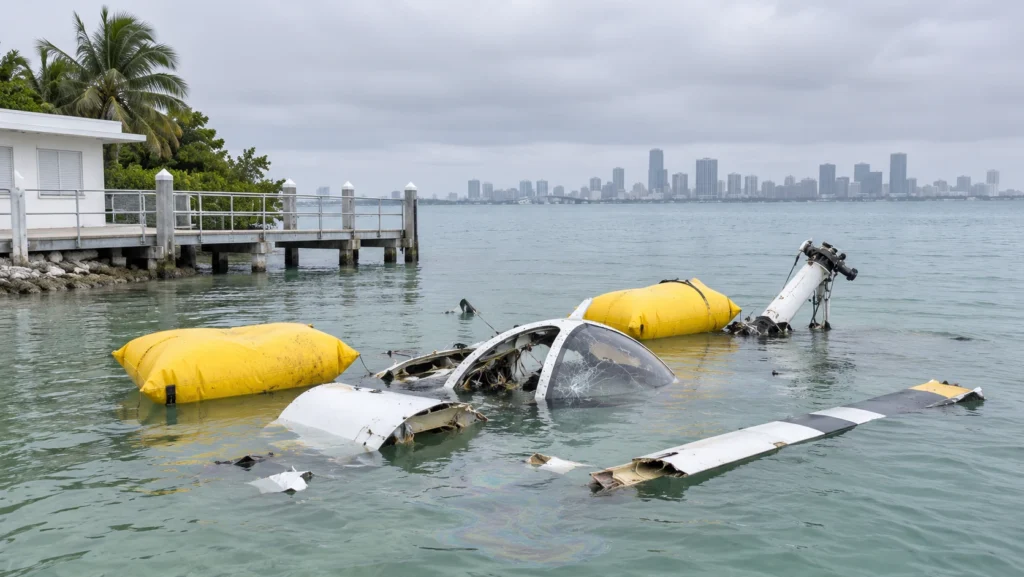
On the morning of Wednesday, 4 November 2026, a Robinson R44 II helicopter crashed into Biscayne Bay off Key Biscayne, near Bill Baggs Cape Florida State Park, south of Miami. The FAA gave the time as about 11.15 am Eastern. The NTSB said preliminary information indicates a photography flight, and the Miami-Dade sheriff said the chartered helicopter was filming boats. Three men were on board: one died and two were rescued from the water and taken to hospital, described by the sheriff as critical but stable. A good Samaritan on a boat had started first aid; US Customs and Border Protection boats heard the mayday call and recovered two people, and the Coast Guard, the sheriff's marine patrol and Miami-Dade Fire Rescue also responded. The helicopter was upside down in the water with its emergency floats out. The cause is unknown; the NTSB leads with the FAA and the sheriff's office. Reports differ on the exact location, the severity of injuries and how the two men reached hospital. One ABC News video mentions stormy weather, but the written reports do not. It is not linked to the 1 November Learjet crash.
Quick answers
What happened in Biscayne Bay on 4 November 2026?
A Robinson R44 II helicopter on a photography flight crashed into Biscayne Bay off Key Biscayne, Florida. One of the three men on board died and two were pulled from the water injured.
How many people died or were hurt?
One died at the scene. Two were injured and taken to hospital; the Miami-Dade sheriff described them as critical but stable.
What was the helicopter doing?
The NTSB said preliminary information indicates a photography flight. The sheriff said the chartered, commercial helicopter was filming boats.
What caused the crash?
Not known. The sheriff said there is no cause yet. The NTSB leads the investigation with the FAA and the sheriff's office.
Who rescued the men?
A good Samaritan on a boat started first aid, and US Customs and Border Protection boats recovered two people from the water. The Coast Guard, the sheriff's marine patrol and Miami-Dade Fire Rescue also responded.
Was the weather stormy?
Not established. One ABC News video mentions stormy weather, but the written reports we read do not describe the weather at the crash site.
Is this connected to the Florida Learjet crash?
No link has been reported. The Learjet 60 crashed at Greenacres, Palm Beach County, on 1 November 2026 with nine dead; it is a separate accident.
What should I do if I see an aircraft crash into water?
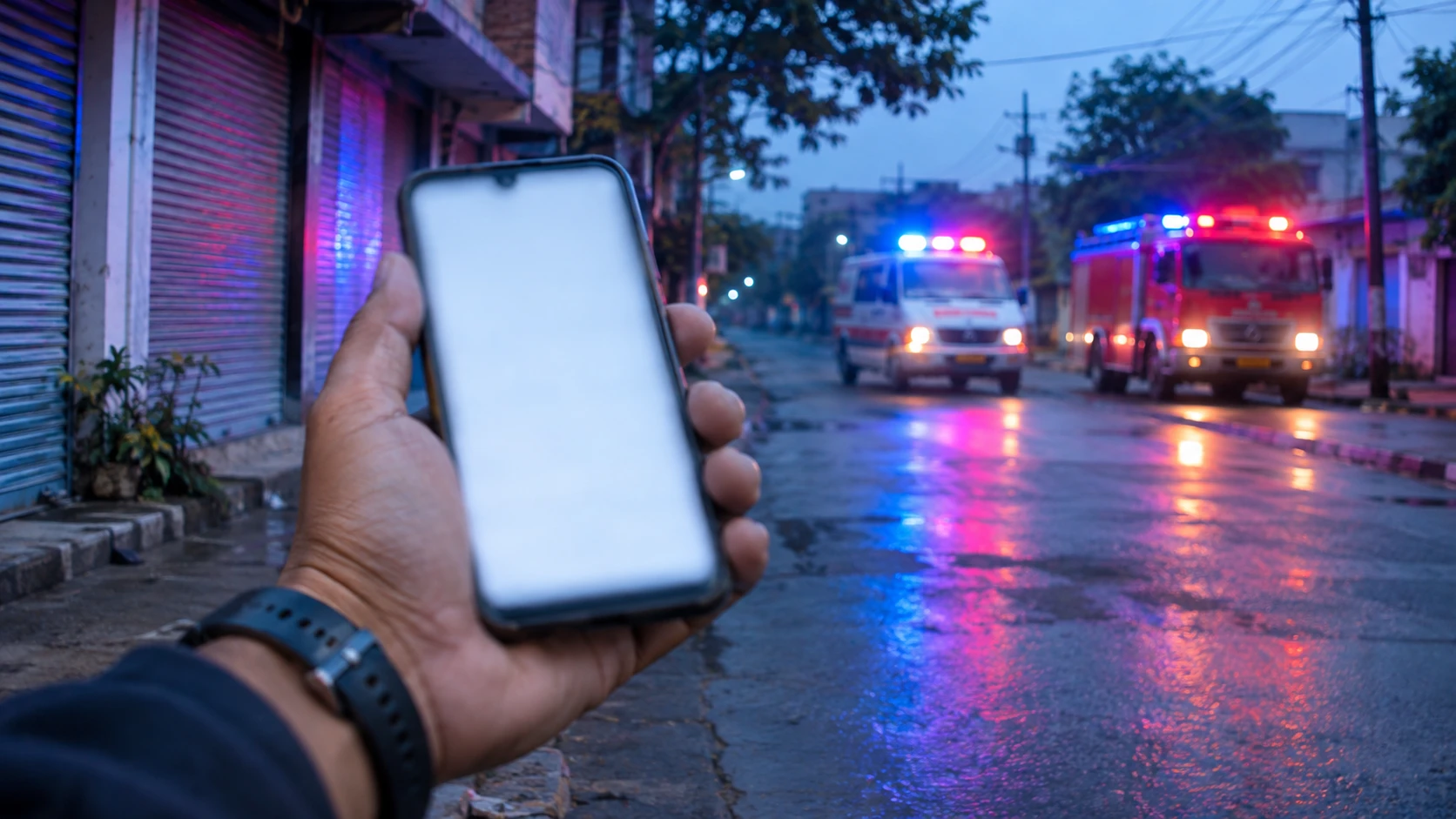
Call the emergency number straight away (112 in India, 911 in the US), give the place and what you see, throw a life jacket or float, and do not jump in unless you are a trained swimmer.
Is there a city safety guide for Miami?
No. We write city guides for Indian cities and towns only.
What happened on 4 November 2026
On the morning of Wednesday, 4 November 2026, a Robinson R44 II helicopter went into Biscayne Bay off Key Biscayne, near Bill Baggs Cape Florida State Park, south of Miami, Florida. Three adult men were on board. One died. Two were pulled from the water injured; the Miami-Dade sheriff described them as “critical, but stable” (ABC News, NBC Miami). The FAA put the crash at about 11.15 am Eastern time (ABC News), and Miami-Dade Fire Rescue is reported to have received the call at about 11.26 am. In India that was about 9.45 pm on the same day. We have not named anyone.
The US National Transportation Safety Board (NTSB) said preliminary information indicates it was a photography flight. The sheriff said the chartered, commercial helicopter was filming boats as they headed south (NBC Miami, CBS Miami). The cause is not known. The sheriff said plainly, “We don’t have a cause for the crash” (CBS Miami).
The response
- First help came from a boat: a good Samaritan was already helping one man towards the shore when rescuers arrived. First responders took over the effort but the man could not be saved (CBS Miami, ABC News).
- Federal marine crews: US Customs and Border Protection marine and air units heard a mayday call from a good Samaritan and sent boats. Two CBP interceptor vessel crews recovered two people from the water (NBC Miami), and the two injured men were taken to the dock at No Name Harbor (CBS Miami). The US Coast Guard and the Miami-Dade Sheriff’s marine patrol also responded.
- Medical care: Miami-Dade Fire Rescue worked with City of Miami and Key Biscayne fire units. Reports differ on how the two injured men reached hospital (see below).
- The helicopter: video from the scene shows it upside down in the water with its emergency flotation system deployed (The Daily Beast, citing CBS News). NBC Miami reported on the evening of 4 November that it was still underwater.
Who is investigating
The NTSB leads the investigation, supported by the FAA and the Miami-Dade Sheriff’s Office. NTSB investigators were due to reach the scene early on Thursday, 5 November (Yahoo, Fox 35). In a US investigation the NTSB normally issues a short preliminary report within a few weeks and a final report, with a probable cause, much later. Until then, nothing in this article is a finding of fault.
Where the reports differ, and what we do not know
- Location: ABC News, quoting the FAA, says the helicopter went down in the water east of Miami Executive Airport. Most local reports place it off Key Biscayne near Bill Baggs Cape Florida State Park (one says near Nixon Beach). We follow the local reports and mark the map point as approximate.
- Time: the FAA’s figure is about 11.15 am; reports of the call to fire rescue range from about 11.17 to 11.30 am.
- Injuries: ABC News and the sheriff describe the two men as critical but stable. The Coast Guard-based reports describe serious injuries, and WSVN said the severity was not known. We say “injured” and quote the sheriff.
- How they reached hospital: CBS Miami says both men were airlifted by Miami-Dade Fire Rescue. NBC Miami says one went by ground and one by air. Another report says both were taken by ground to a landing zone and then flown. Reports name Jackson Memorial’s Ryder Trauma Center (WSVN, Cuba Headlines); CBS Miami and ABC News do not name the hospital.
- Flight path: flight-tracking data cited by WSVN and NBC Miami suggests the helicopter left North Perry Airport in Broward County at about 10.48 am and was over the bay for several minutes before it lost height quickly, circling near the Key Biscayne Bridge. NBC Miami notes that authorities have not confirmed the tracked aircraft was this one.
- Weather: one ABC News video describes “stormy weather”. The written reports we read (ABC News, CBS Miami, NBC Miami, Yahoo, Fox 35) say nothing about the weather at the crash site. We do not treat weather as established.
- Operator: several reports say the helicopter was chartered or commercial and may be linked to a company in Broward County. No operator, registration or pilot details have been officially released.
- Not reported: the cause, the aircraft’s maintenance history, any radio call beyond the mayday heard by the CBP crews, and the final condition of the two injured men. The latest reports we found are from the evening of 4 November (CBS Miami 6.55 pm Eastern).
Not the same crash as the Florida Learjet
Several outlets mention this crash in the same breath as the Learjet 60 that crashed at Greenacres in Palm Beach County on 1 November, about 78 miles away. They are two separate accidents: a business jet at 35,000 feet, with nine killed, and a small helicopter on a low-level filming flight, with one dead. There is no reported link, and no investigator has suggested one. Our case on the first is Learjet 60 Crash, Greenacres, Florida.
What this case teaches
The facts we have are few, so the lessons are about the situation, not the cause. Filming or photography flights are flown low and slow, often over water or crowds, so there is little height and time to recover if something goes wrong. The reports point to three things that helped: a mayday call was made by a good Samaritan and heard by federal boat crews; the helicopter’s emergency floats are reported to have inflated; and boats were close by. A good Samaritan was already helping a casualty when the rescuers arrived. When a crash happens over water, the first minutes decide what happens next.
For readers in India this is a useful reminder for helicopter rides, pilgrimage heli services and aerial photography. We have a guide on pilgrimage helicopter flights in India: what to check before you book and board, and two earlier helicopter cases: the Joshimath helicopter crash in Uttarakhand and the Pheriche helipad collision in Nepal.
What passengers, bystanders and boat owners can do
- Before you fly: ask for the safety briefing and listen to it. Ask whether life jackets or floats are fitted when the route is over water, how the seat belt and the doors work, and what the pilot will do in an emergency. Choose operators who answer these questions plainly.
- On board: keep the seat belt fastened for the whole flight, keep loose items and cameras strapped or stowed, and follow the pilot’s instructions without delay. Do not open a door in flight.
- If you see an aircraft go down in water: call the emergency number at once (112 in India, 911 in the United States) and give the place and what you can see. Do not jump in unless you are a trained swimmer, and throw a life jacket or float instead of going in yourself. Our guide How to Save a Drowning Person Without Risking Your Own Life explains how.
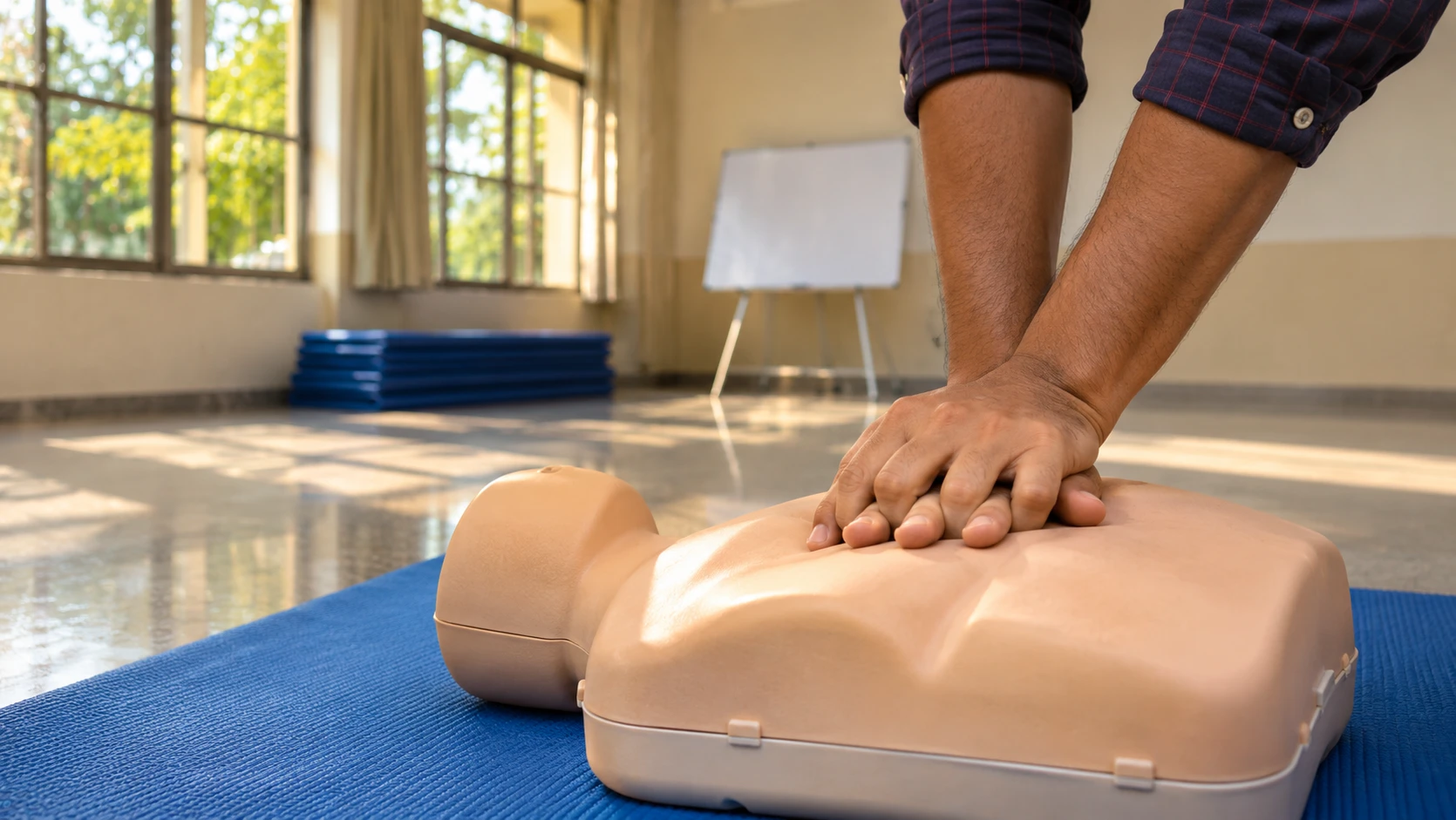
- If you are on a boat: go towards the casualties slowly, keep clear of fuel and wreckage, bring people on board from the stern or side with the engine in neutral, and start CPR if a person is not breathing. See How to Do CPR: Hands-Only CPR in 3 Steps and Basic First Aid for Emergencies.
- Everyone: Emergency Numbers in India and How to call 112, 101 or 108 explain which number to call, and The Golden Hour After a Road Crash explains why the first hour matters.
Miami is outside India, so we do not have a city safety guide for it. We follow the case for updates as the NTSB and the sheriff’s office share more.
- Flight-tracking data cited by WSVN and NBC Miami: a helicopter of this type leaves North Perry Airport (not confirmed to be this aircraft)
- FAA time of the crash into Biscayne Bay; a mayday call from a good Samaritan is heard by a US Customs and Border Protection crew
- Miami-Dade Fire Rescue receives the call; fire, sheriff, Coast Guard and CBP units respond
- Two men are recovered from the water by CBP boats; one man dies despite first aid by a good Samaritan and responders; the two survivors go to hospital
- NBC Miami and CBS Miami updates: sheriff says no cause yet, helicopter still underwater, NTSB to lead
- NTSB investigators due to arrive at the scene (Yahoo, Fox 35)
Why consequences escalated
- A Robinson R44 II helicopter on a photography flight crashed into Biscayne Bay off Key Biscayne on 4 November 2026.
- One of the three men on board died; two were rescued from the water and taken to hospital, described by the sheriff as critical but stable.
- A good Samaritan, US Customs and Border Protection boats, the Coast Guard, the sheriff's marine patrol and fire rescue responded within minutes.
- The helicopter was found upside down with its emergency floats out; the cause is unknown and the NTSB, with the FAA, is investigating.
- It is a separate accident from the Learjet crash of 1 November.
Failures and risk multipliers
- No finding of fault exists. What the reports raise as open questions:
- Why the helicopter lost height over the bay is not known; the sheriff said there is no cause yet.
- One ABC News video mentions stormy weather, but the written reports do not, so weather is not established.
- Filming flights are flown low over water, which leaves little height and time to recover.
- These are questions, not findings of fault.
Actions that reduce risk
- Before a helicopter flight: ask for a safety briefing, ask about floats or life jackets for water routes, and how doors and seat belts work.
- On board: keep the seat belt fastened, stow loose items and follow the pilot at once.
- If you see an aircraft go down in water: call 112 in India (911 in the US), give the place, and throw a float instead of jumping in.
- On a boat: approach slowly, keep clear of fuel and wreckage, bring casualties on board carefully and start CPR if a person is not breathing.




Leave a comment