
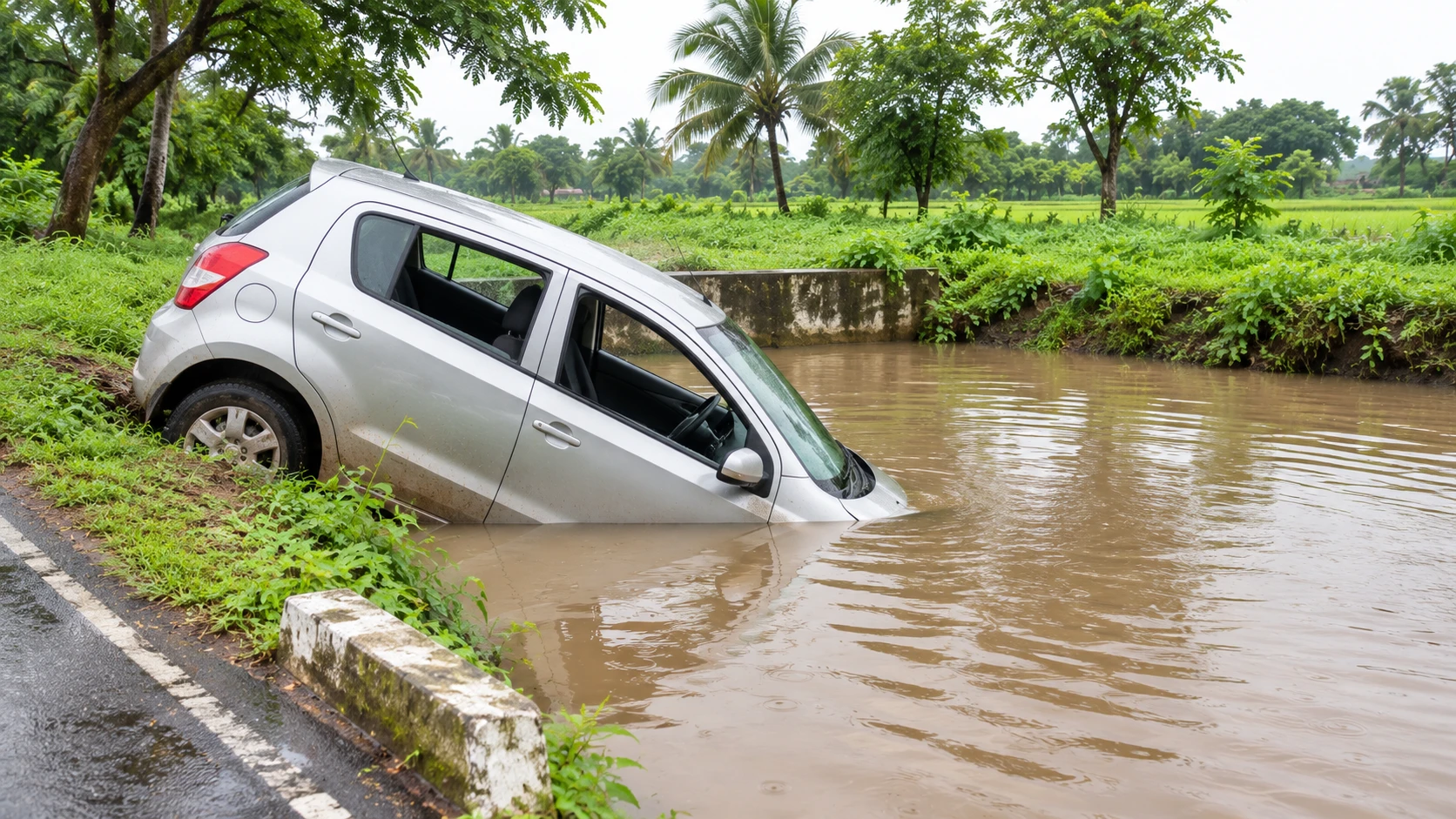
Quick answers
What should I do first if my car goes into water?
Take off your seatbelt, then open a window, then get out, children first from oldest to youngest. Do this within the first minute, while the car is still floating. Do not stop to call or to collect things; ring 112 or 108 once you are out.
Why should I use the window and not the door?
While there is air in the car, the water outside presses harder than the air inside, and the door will not open. Giesbrecht's team tells people to use the window instead, and a window escape is possible even with water coming in.
How long do I have to get out of a sinking car?
Giesbrecht's tests found that a car floats for roughly 15 to 63 seconds, until the water reaches the bottom of the side windows, and that electric windows usually work for about 30 to 60 seconds after it goes under. Treat the first minute as the time to act. The figures vary with the car.
What if the electric window will not open?
Break a side window with a small hammer or punch. The Globe and Mail interview with Giesbrecht gives this as the backup, and he keeps one on his dash. Keep one within the driver's reach; one kept in a boot is no use.
Should I call 112 before I get out of a sinking car?
No. JEMS reports that Giesbrecht believes calling takes seconds away from the minute that decides survival. Get out first, then call 112 or 108.
How do I get children out of a sinking car?
Undo their belts or child seat straps, bring them close to an adult and get them out through the window, oldest first. Giesbrecht's protocol says to free the children after the windows are open.
What should I do if floodwater is rising around my stalled car?
Do not try to drive on. The Jammu and Kashmir disaster management flood page says to abandon the car and move to higher ground if you can do so safely. Essex Fire and Rescue in England says to open the windows if the car is stalled in shallow water and to get out onto the roof if water is coming in. Call 112.
How much water can carry away a car?
The US National Weather Service says 12 inches (about 30 cm) of rushing water can carry away most cars, and 2 feet (about 60 cm) can carry away SUVs and trucks. These are American figures, not Indian ones, and not a safe depth to cross.
Should I see a doctor after getting out of the water, if I feel fine?
Yes. St John Ambulance says medical advice should be sought after a near-drowning even if the person seems well, and some people need short observation in hospital.
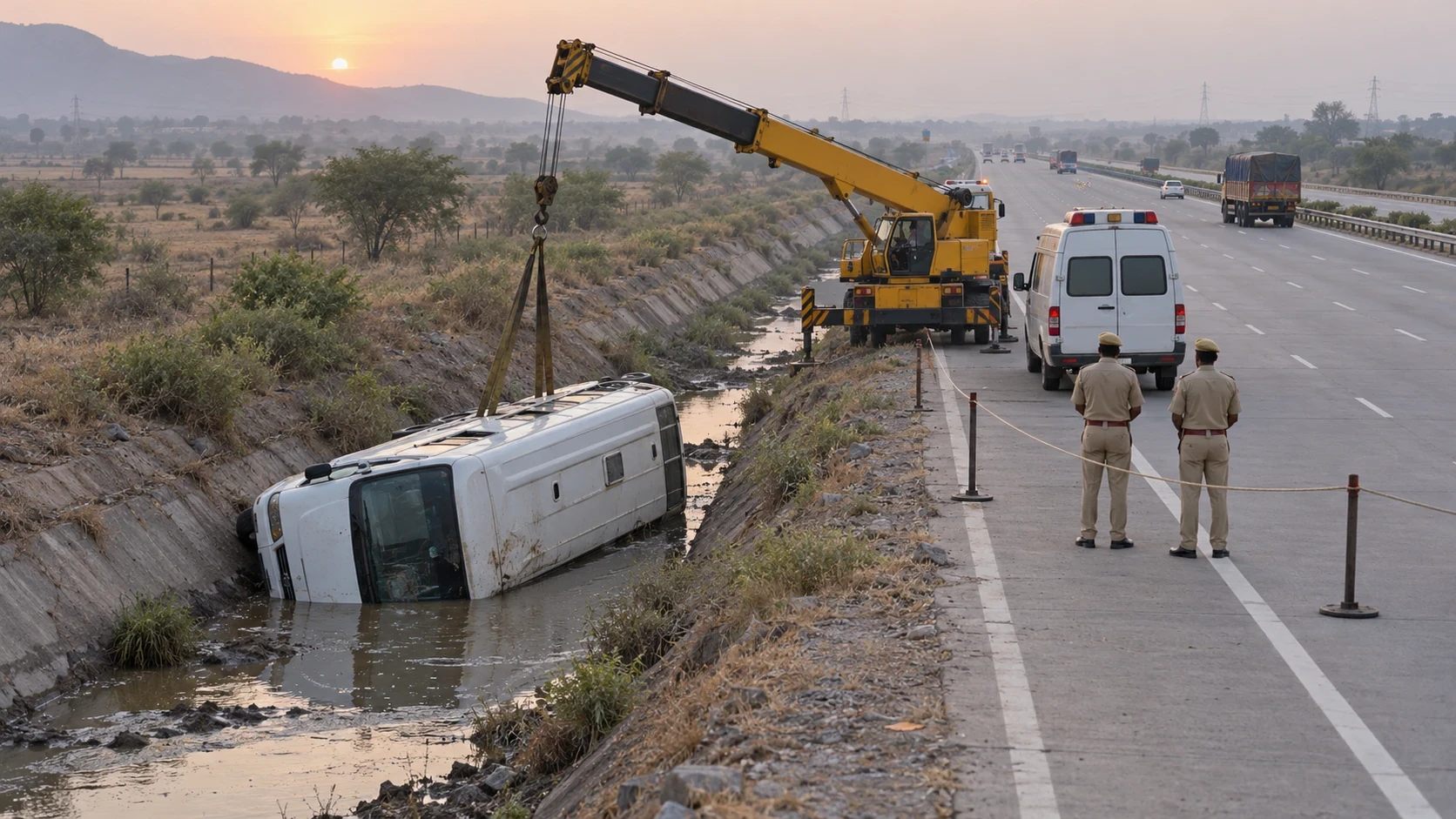
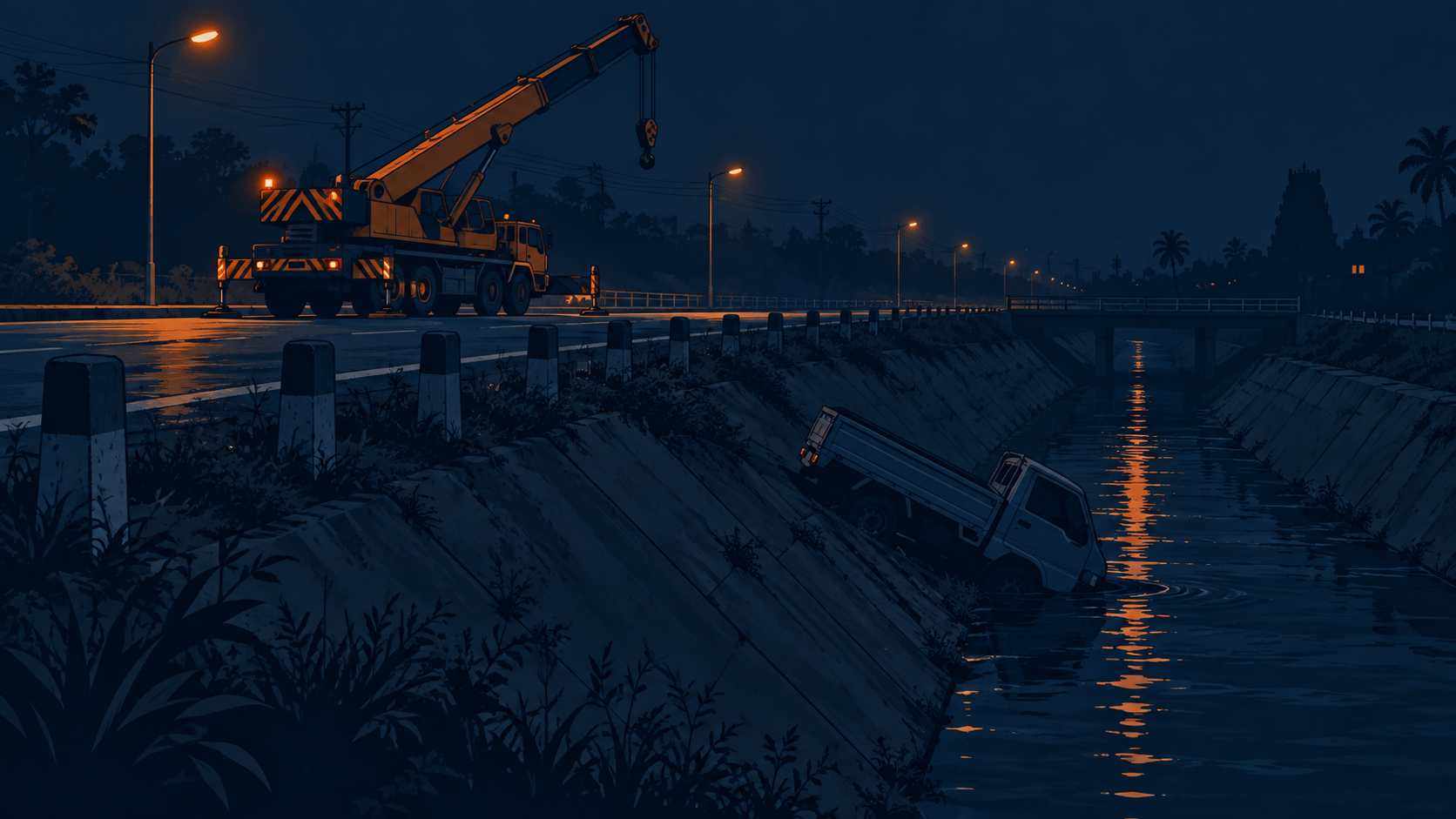
Every monsoon and every foggy winter morning, a vehicle ends up in a canal, a nullah, a pond, a water-filled drain or a flooded underpass somewhere in India. Our case pages record some, such as the minibus that fell into a water-filled drain near Kota and the pickup that went into an open drain in Gonda; neither page says what could have been done inside the vehicle, and we do not guess. This page is about the minute after it happens, and about what to do when floodwater rises around a stalled car on a road. Our pages on not driving through floodwater and on flood myths are about staying out of the water in the first place; this one is what to do if you are already in it. We found no Indian official guidance on escaping a sinking vehicle, so the steps rest on Canadian research, a UK fire service, the US National Weather Service and a flood page of the Jammu and Kashmir disaster management department, labelled as such. Checked 5 November 2026.
In short
- Seatbelts off, windows open, out. That is the order, and it has to happen in the first minute, while the car is still floating. Do it before you do anything else.
- Use the window, not the door. Water pressure holds the door shut while there is air in the car.
- Children next, oldest first. Free them from their seats and get them out through the window ahead of you.
- Do not waste seconds on the phone. Ring 112 once you are out.
- On a flooded road, do not wait until the water is inside. The Jammu and Kashmir disaster management department’s flood page says that if floodwater rises around the car, you should abandon it and move to higher ground if you can do so safely.
If the car goes into deep water: the first minute
Professor Gordon Giesbrecht of the University of Manitoba had, by 2010, run about a hundred vehicle submersions with people inside. His team’s rule, taught by the Lifesaving Society Manitoba, is short: seatbelts off, windows open or broken, out, with children first from oldest to youngest. The International Academies of Emergency Dispatch use the same four steps in a protocol for call-takers. A sinking car does not go down at once. It floats for roughly 15 to 63 seconds, until the water reaches the bottom of the side windows, then sinks and fills. The electric windows usually keep working for about 30 to 60 seconds after the car goes under, so the first thing is to get them down.
- Stay as calm as you can and do not reach for your phone. Giesbrecht says the minute is for escaping. Calling comes after.
- Seatbelt off, now. Panic makes people forget this one. Press the buckle.
- Open the window, the driver’s side or a rear side window, while the electric motors still work. The Globe and Mail’s 2010 interview with Giesbrecht says that if the power windows fail, a small hammer or a punch is the backup, and that he keeps one on his own dash. Older advice, reported by JEMS, is to break a side window with a heavy object.
- Do not try the door. The Globe and Mail report says that doors cannot be opened while any air is left in the car, because the water outside presses harder than the air inside. A window escape works even with water rushing in.
- Children. Undo their belts or child seat straps first, bring them close to an adult and get them out through the window, oldest first. JEMS describes the protocol as releasing the children from their restraints and bringing them close to an adult before everyone gets out.
- Get out, swim or pull yourselves clear of the vehicle to firm ground or something that floats, and stay together.
- Then call 112 or 108. 112 is India’s single emergency number (PIB) and 108 is the ambulance number (PIB, June 2026). Say where you are and that people have come out of a vehicle in water.
Why not call first? JEMS reports that Giesbrecht believes calling takes seconds away from the minute that decides survival. He accepts that some people will call anyway and suggests dispatchers could coach the escape over the phone, much like they coach CPR. Until that happens in India, the sensible order is: out first, call second.
If the car is surrounded by floodwater on a road
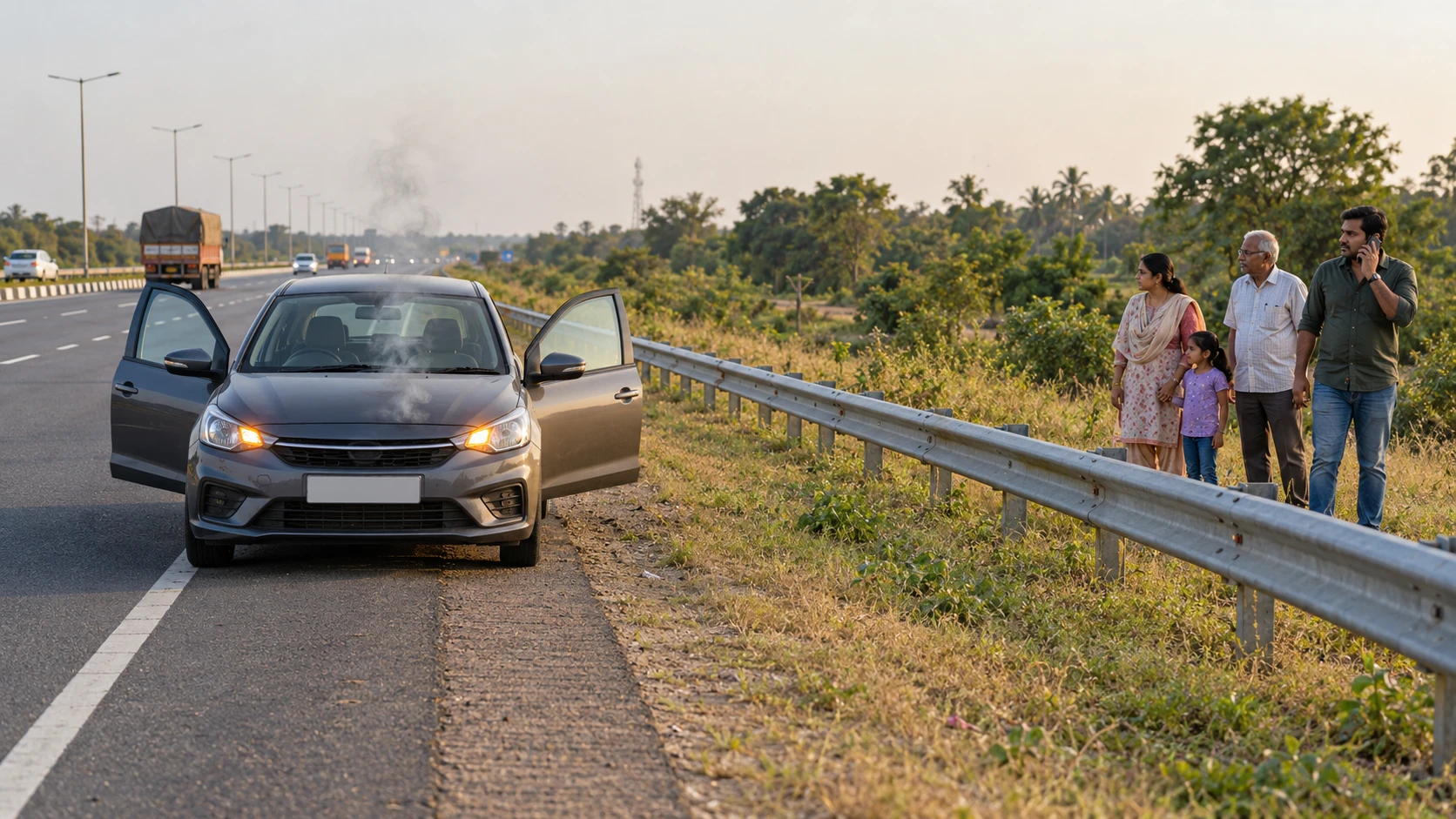
This is a different situation: the car stalls, or the water is rising round it, but you are not yet underwater.
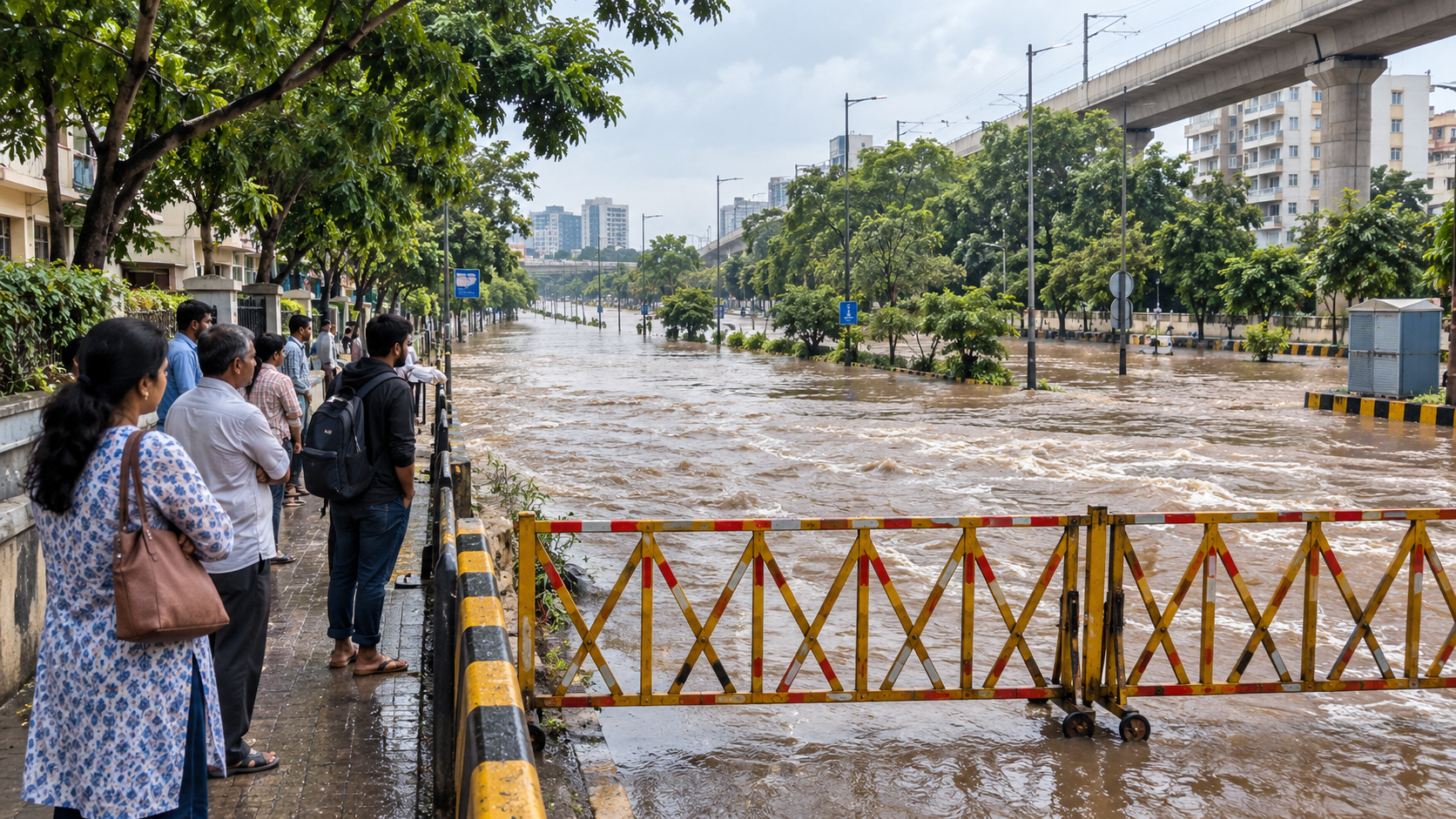
- Do not drive on into the water. the J&K flood page says not to drive into flooded areas, and warns that you and the vehicle can be swept away quickly.
- If water rises round the car, leave it and go to higher ground, but only if you can do so safely (J&K disaster management page). The US National Weather Service warns that 12 inches (about 30 cm) of rushing water can carry away most cars, and 2 feet (about 60 cm) can carry away SUVs and trucks. The Essex Fire and Rescue Service in England says two feet of water will float a car.
- If the car is stalled in shallow water, Essex Fire and Rescue says to open the windows and stay in the car; if water is coming in at a greater depth, it says to get out through the windows, sunroof or doors and onto the roof. Those are UK advice. Where the J&K page says to go to higher ground, we read it as: walk away from the car only where the water is not moving and the ground is firm.
- If the car is being carried by the current, Essex Fire and Rescue says to get off it, stay upstream of it and swim hard for safety. We found no Indian page that says the same.
- Call 112, and if you have time before the water reaches you, switch on the lights and horn to help rescuers find you (Essex).
The sources differ here. Some US pages say to stay in the car in rapidly moving water; the J&K page says to leave it if the water rises. Both agree that the safest choice is the one made before: do not drive into the water. If you cannot tell which applies, call 112 first and follow the operator, because on a flooded road you usually have more than a minute.
If you did not get out in the first minute
Older advice says to wait until the car has filled with water so that the pressure inside and outside equalises, and then open the door. JEMS says Giesbrecht wants people to leave through the windows quickly instead. We found no Indian guidance and found no Indian source that backs the older advice, so we do not recommend planning for it. Keep trying the window while you have any chance.
Once you are out
- Get to firm ground, away from the edge and from the current.
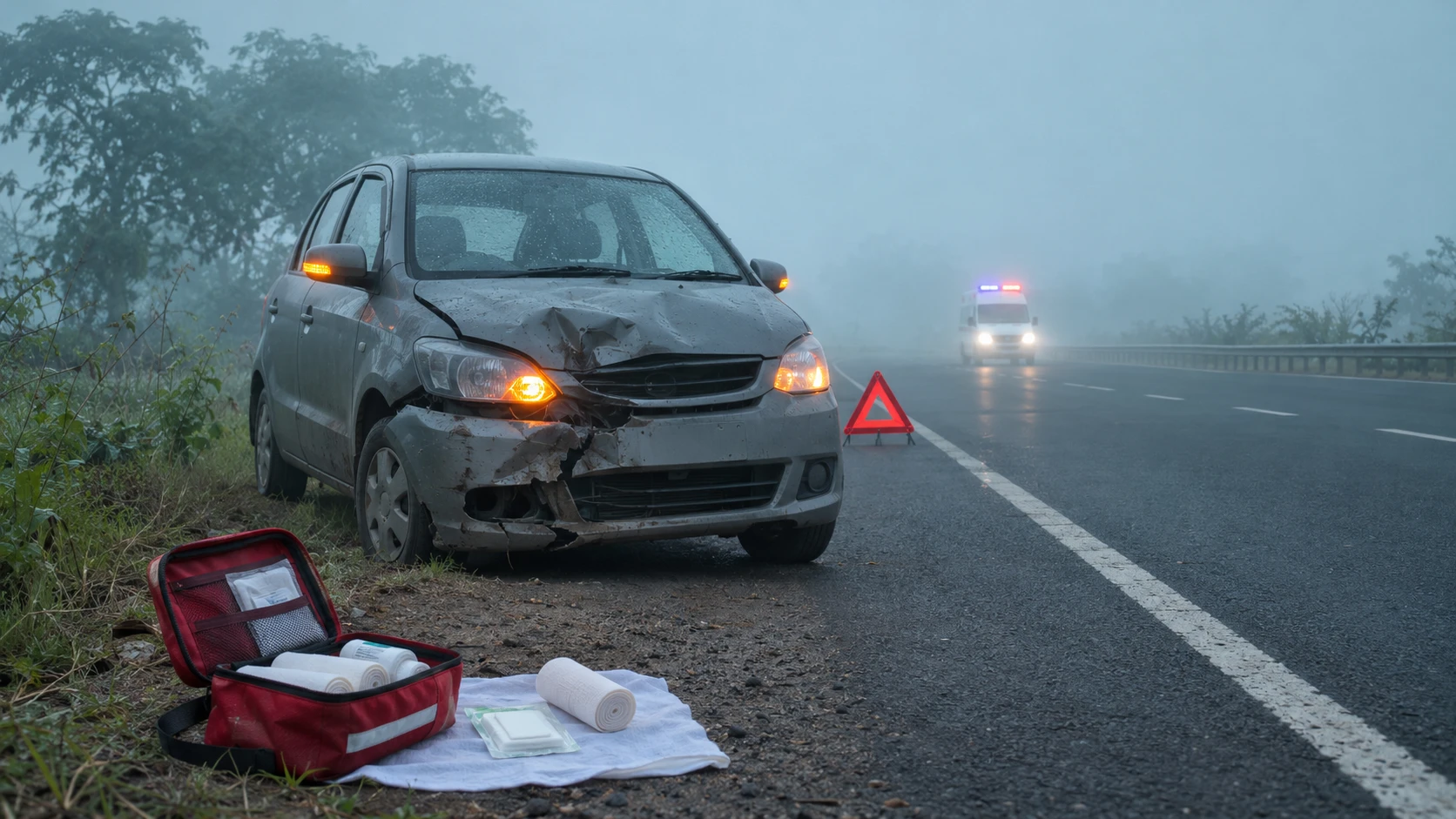
- Call 112 or 108 if no one has. If someone is not breathing normally, start CPR as the operator tells you; our page on road accident first aid covers the basics and saving a drowning person covers the water side.
- Everyone who was in the water or breathed it in should see a doctor, even if they seem fine. St John Ambulance says medical advice should be sought even if a rescued person appears well, and that some people need short observation in hospital.
- Do not go back to the car for bags or the phone.
What not to do
- Do not wait inside for the car to fill, or for help to arrive.
- Do not spend the first seconds calling, filming or looking for your phone.
- Do not try to open the door while the car still has air in it.
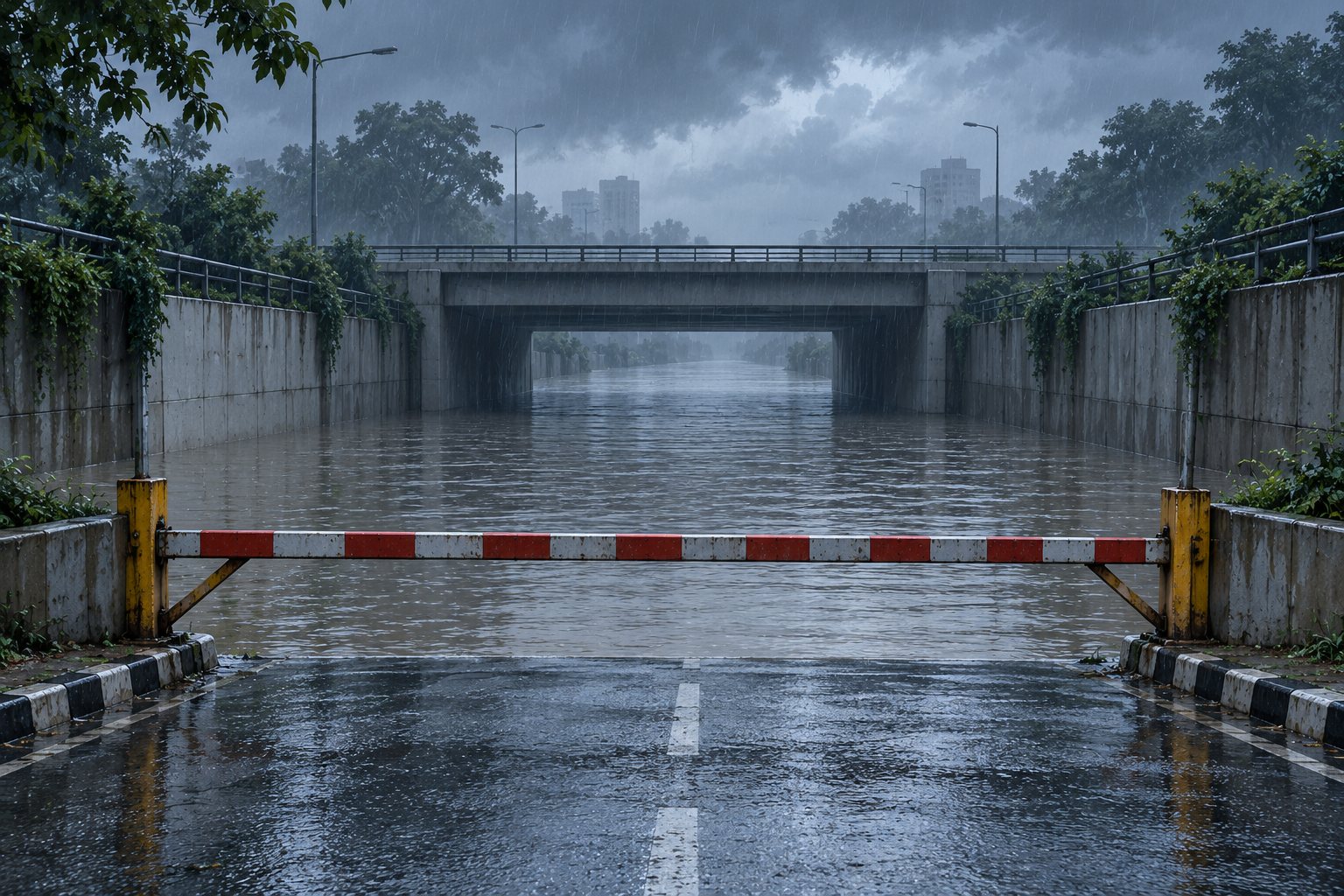
- Do not drive around a barrier or follow another vehicle into floodwater. A bigger car is not safe: the US figure for SUVs and trucks is 2 feet of rushing water.
- Do not enter the water to rescue someone from the bank without training; call 112 and help from firm ground. See our page on saving a drowning person.
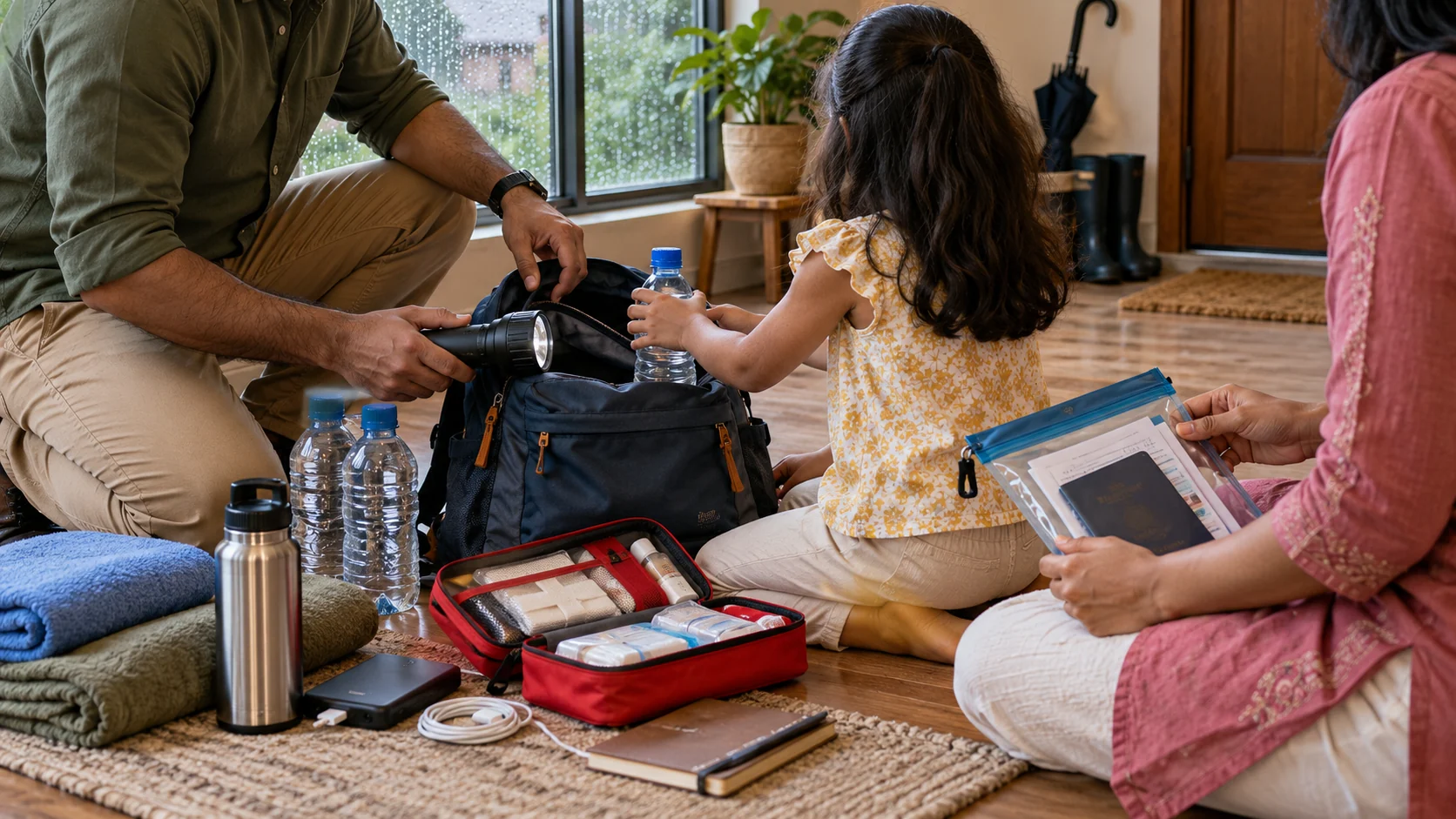
Do these today
- Sit in your car and find the seatbelt buckle and the window switch by touch, without looking. Show the family. This is our suggestion.
- Keep a small window breaker within reach of the driver, not in the boot or a glove box. Giesbrecht keeps one on his dash. This is a research-based suggestion, not an Indian rule, and we name no brand.
- Teach older children how to unbuckle themselves and to keep the window as their exit.
- Save 112 and 108 in your phone. Our pages on emergency numbers and how to call 112, 101 or 108 show what to say.
- Read when to stop, turn around and evacuate and plan another route for the monsoon. Not driving into the water is the one rule that every source here agrees on.
What we could not confirm
We found no Indian official advice on escaping a sinking vehicle. The steps come from Giesbrecht’s research as described by the University of Manitoba, JEMS and the Globe and Mail, and from the UK Essex Fire and Rescue Service, the US National Weather Service and the J&K flood page. The timings (15 to 63 seconds afloat, windows working for 30 to 60 seconds) come from one researcher and vary between cars and conditions; we could not test them. We did not find guidance specific to electric cars, central locking, or sunroofs on Indian cars, and we cannot say how any one car behaves. The Globe and Mail interview is from 2010. The Essex and J&K advice for floodwater is not tested for Indian roads, and the sources differ on whether to stay in or leave a car in fast water. We did not watch the three videos in full. This page is general safety information.
What needs attention
- Giesbrecht's tests, as reported, found that a car floats for roughly 15 to 63 seconds and that the first minute is when escape is possible.
- Windows, not doors, are the exit: the door will not open while air remains in the car.
- On a flooded road, the Jammu and Kashmir flood page says to leave the car and go to higher ground if you can do so safely; UK and US pages differ on staying in the car in fast water.
- We found no Indian official guidance on escaping a sinking vehicle.
Controls that reduce risk
- Seatbelts off, window open, out, children first.
- Ring 112 or 108 once out.
- Keep a window breaker within the driver's reach.
- Find the belt buckle and window switch by touch.
- Do not drive into floodwater.
Common unsafe practices
- Waiting in the car for it to fill.
- Trying the door first.
- Calling or filming in the first seconds.
- Keeping the window breaker in the boot.
- Driving around a barrier into floodwater.
- Freeing yourself and leaving the children for later.


Leave a comment