
Quick answers
How long should I keep a burn under running water?
At least 10 minutes without a break, and up to 20 for a small burn if the person is comfortable. The Ministry's burns guideline says the first 10 minutes matter most; WHO and the NHS say about 20 minutes. For a baby, a young child or a large burn, do not keep the body under water for long; cool the burnt part, then keep the child warm and get medical help.
Should I put ice on a burn?
No. The Ministry's burns guideline says ice or ice-cold water can damage the tissue further and increases the risk of hypothermia. Use cool or lukewarm running water.
Can I put toothpaste, ghee, butter or haldi on a burn?
No. The Ministry's burns guideline names ghee, butter, toothpaste, powders, creams and colouring agents among the things not to apply, and WHO adds oils and traditional pastes. They trap heat and make it harder for the doctor to judge the burn.
Should I burst a blister?
No. Leave blisters alone; the Ministry's guideline says the decision to open one is for a burn specialist. Cover the burn loosely with a clean, dry cloth.
What should I do if hot oil splashes on my skin?
Take off any clothing soaked in oil from the area, hold the skin under cool running water for 10 to 20 minutes, remove rings and bangles, then cover loosely with a clean cloth. Get it seen if the burn is deep, bigger than your palm or on the face, hands, feet or joints.
A child has spilled hot tea or boiling water on themselves. What now?
Take off wet clothing from the area, cool the burnt part under cool running water, but do not put the whole child in cold water, wrap the child warmly and get medical help. The British Red Cross says always to seek medical advice for a baby or child, even for a small burn.
Which burns need a hospital?
Deep burns, burns bigger than the person's palm, burns on the face, hands, feet, joints or private parts, burns on babies, children and older people, chemical and electric burns, burns with breathing trouble, and any burn that gets worse. Call 112 or 108 if it is serious.
What should I do for a chemical burn from acid or toilet cleaner?
Brush off any dry powder, take off clothing that has the chemical on it, rinse the skin with plenty of running water for a long time (30 minutes to 2 hours in the Ministry's guideline, about an hour for the NHS), do not stand in a bucket, and call 112 or 108. For the eyes, flush with clean water for at least 15 to 20 minutes.
Is an electric burn minor if the skin looks fine?
No. An electric burn can injure the heart and deeper tissues. The Ministry's burns guideline recommends an ECG for anyone who has had contact with an electric current. Switch off the power first, then call 112 or 108.
Which number should I call for a serious burn in India?
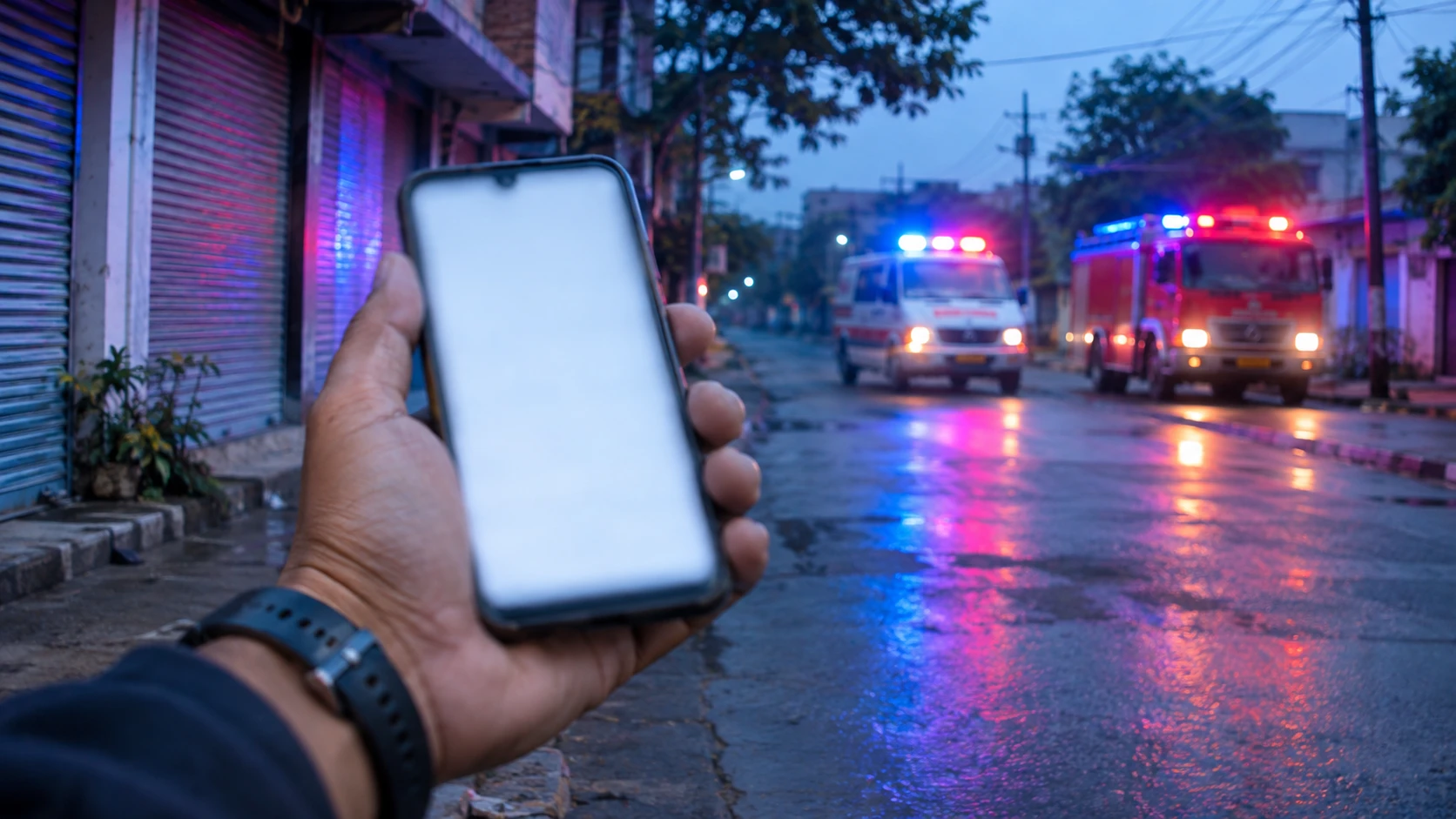
Call 108 for an ambulance or 112, the single emergency number, and 101 if a fire is still burning. Give the exact address and say that it is a burn.
Most burns in a house are not dramatic. A splash of hot oil while tempering dal, a cup of tea knocked over onto a toddler, a steam burn from a pressure cooker, a hand on a hot tawa, a bucket of geyser water that was hotter than it looked. What you do in the first few minutes decides a lot, and most of what people reach for first, like toothpaste, ghee or ice, does harm. This page is first aid for the ordinary household burn and scald, with the extra steps for chemical and electric burns and a clear list of when to get to a hospital. The cooling steps follow the Ministry of Health’s own guidelines. If it is clothes on fire, go to our page on stop, drop and roll; for a cracker burn or eye injury, see firecracker burns and eye injuries. This is first aid, not a replacement for a doctor. Checked 5 November 2026.
In short
- Stop the burning first. Move away from the heat, take hot, wet clothing off the area, and put out any flames safely.
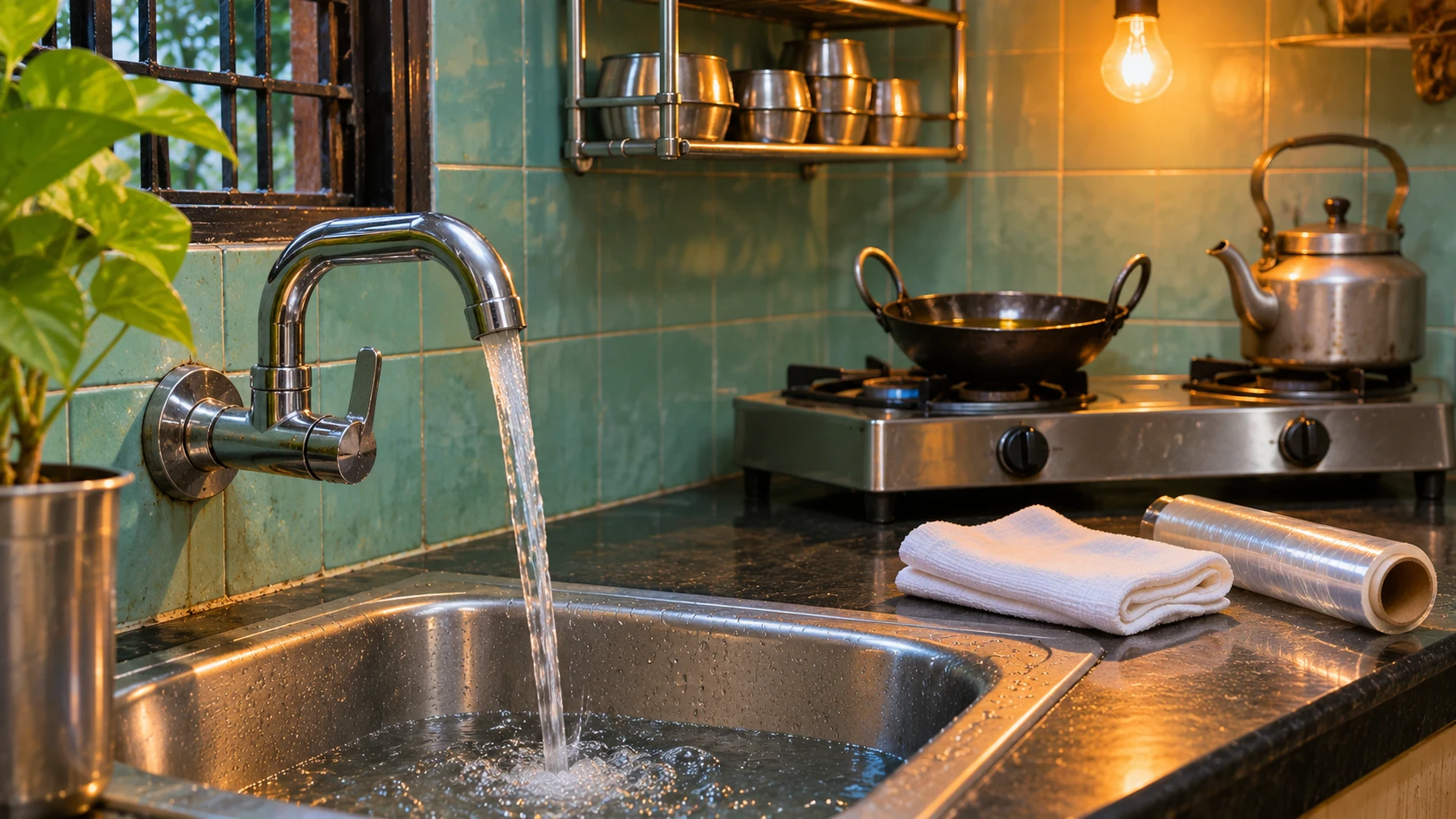
- Cool it under cool running water. Keep going for at least 10 minutes, and up to 20 if you can. Lukewarm or cool tap water is fine. No ice.
- Take off rings, bangles and watches early, before the skin swells. Leave alone any cloth that is stuck to the burn.
- Cover loosely with a clean, dry, non-fluffy cloth or cling film. Do not burst blisters. Do not put anything on the burn.
- Call 112 or 108, or go straight to a hospital, for a deep or large burn, any burn on the face, hands, feet, joints or private parts, any burn on a child or an older person, and every chemical or electric burn.
Step by step for any burn or scald
- Get yourself and the person out of danger. Switch off the stove or the heater, move away from the spill, and keep other people, especially children, back. The Indian burns guideline reminds first aiders that the aim is to preserve life without endangering your own, and that firefighting is not the first aider’s job.
- Stop the burning. If clothes are soaked in hot oil, tea or water, take them off the area at once, as long as they are not stuck. If flames are on clothing, smother with a heavy cotton cloth or blanket, or use water; the Ministry guideline says nylon and other synthetic cloth should not be used.
- Cool the burn. Hold the burnt part under cool running tap water, or use a shower or a hosepipe for a larger area. Do not point a strong jet at a burnt face, because high pressure hurts and can damage the eyes. If there is no running water, the Ministry’s firecracker guideline says to dip the part in a container of cool water, and the NHS says cool bottled water or a wet towel will do.
- Take off rings, bangles, watches and tight clothing near the burn straight away. Swelling comes quickly and a ring can act like a tight band.
- Cover it. Once it is cooled, cover loosely with a clean, dry, lint-free cloth, a non-stick dressing or cling film. The NHS says not to wrap cling film right round a limb. Do not use cotton wool, because the fibres stick.
- Decide about help using the list further down. If in doubt, get it seen. A burn can look small and still be deep.
- Keep the person warm and calm, apart from the burnt area. WHO and the Indian guideline both warn that cooling for too long, or chilling a small child or a person with a big burn, can bring on hypothermia.
How long to cool, and why the numbers differ
The sources do not give one number. The Ministry’s burns guideline of 2025 says continuous cooling for the first 10 minutes takes the heat out, eases pain and limits how deep the burn goes. The Ministry’s 2026 firecracker guideline says 10 to 20 minutes, or until the pain eases a good deal. WHO says about 20 minutes is commonly advised for smaller burns. The Delhi Fire Service sheet says to pour water over a burn until the pain subsides. The NHS says 20 minutes, started as soon as possible and within 3 hours. So the practical rule is this: at least 10 minutes without a break, and 20 if it is a small burn and the person is comfortable. For an infant, a young child or a big burn, the Indian guideline says not to keep the body under water for long and not to immerse it, because of hypothermia, so cool the burnt part and then wrap the child warmly and get to a doctor.
Hot oil, ghee, tea, milk and steam
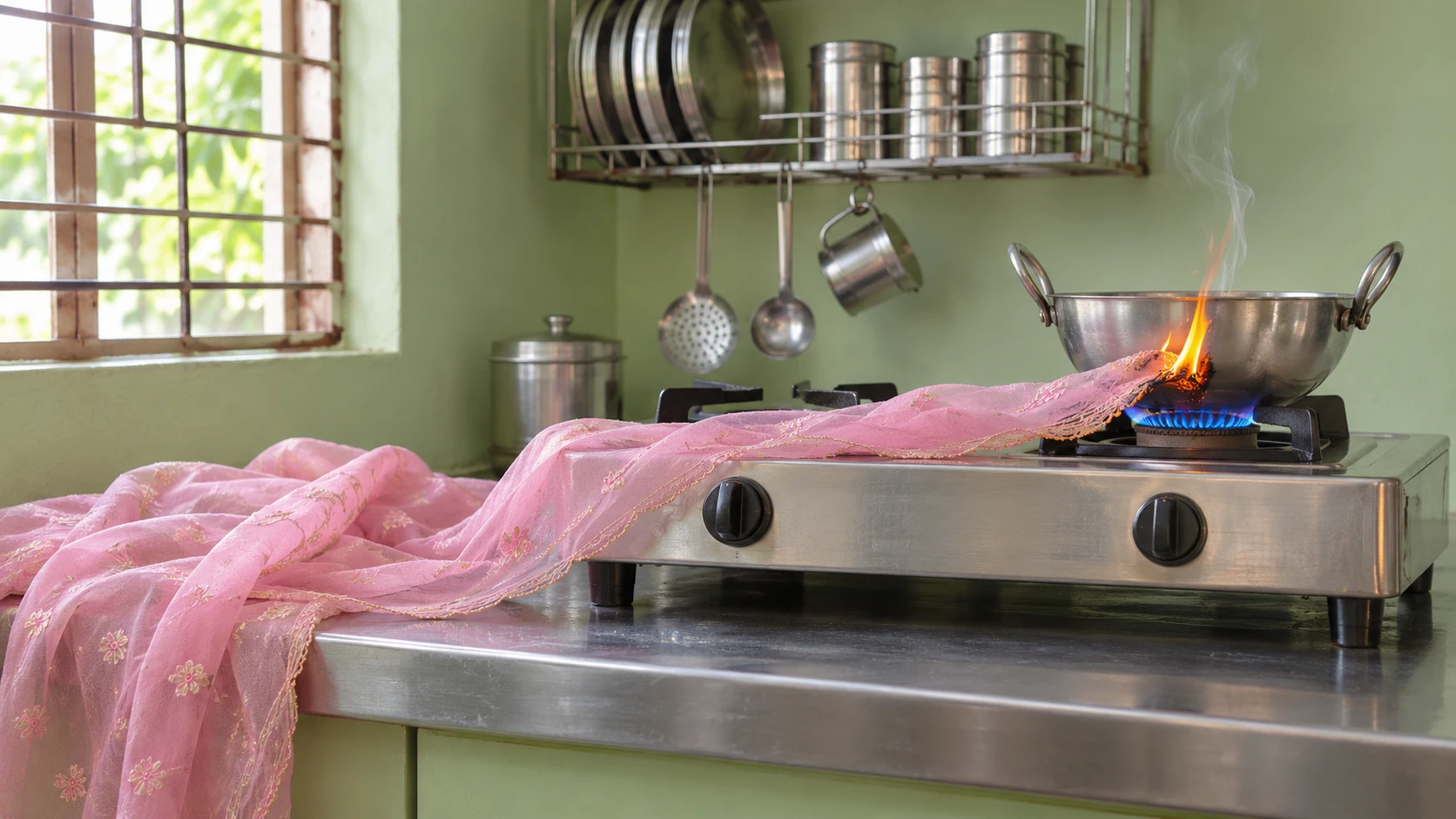
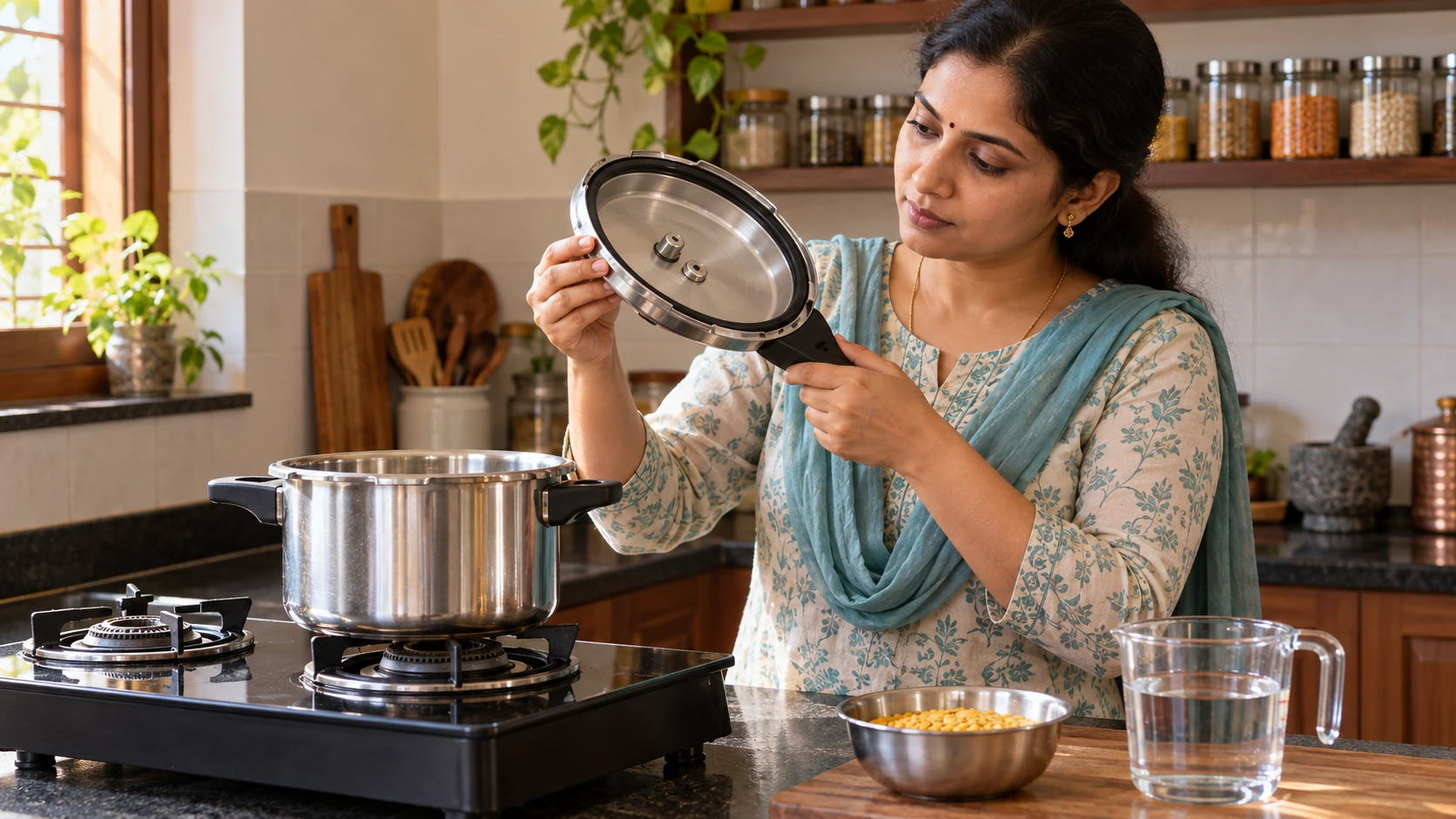
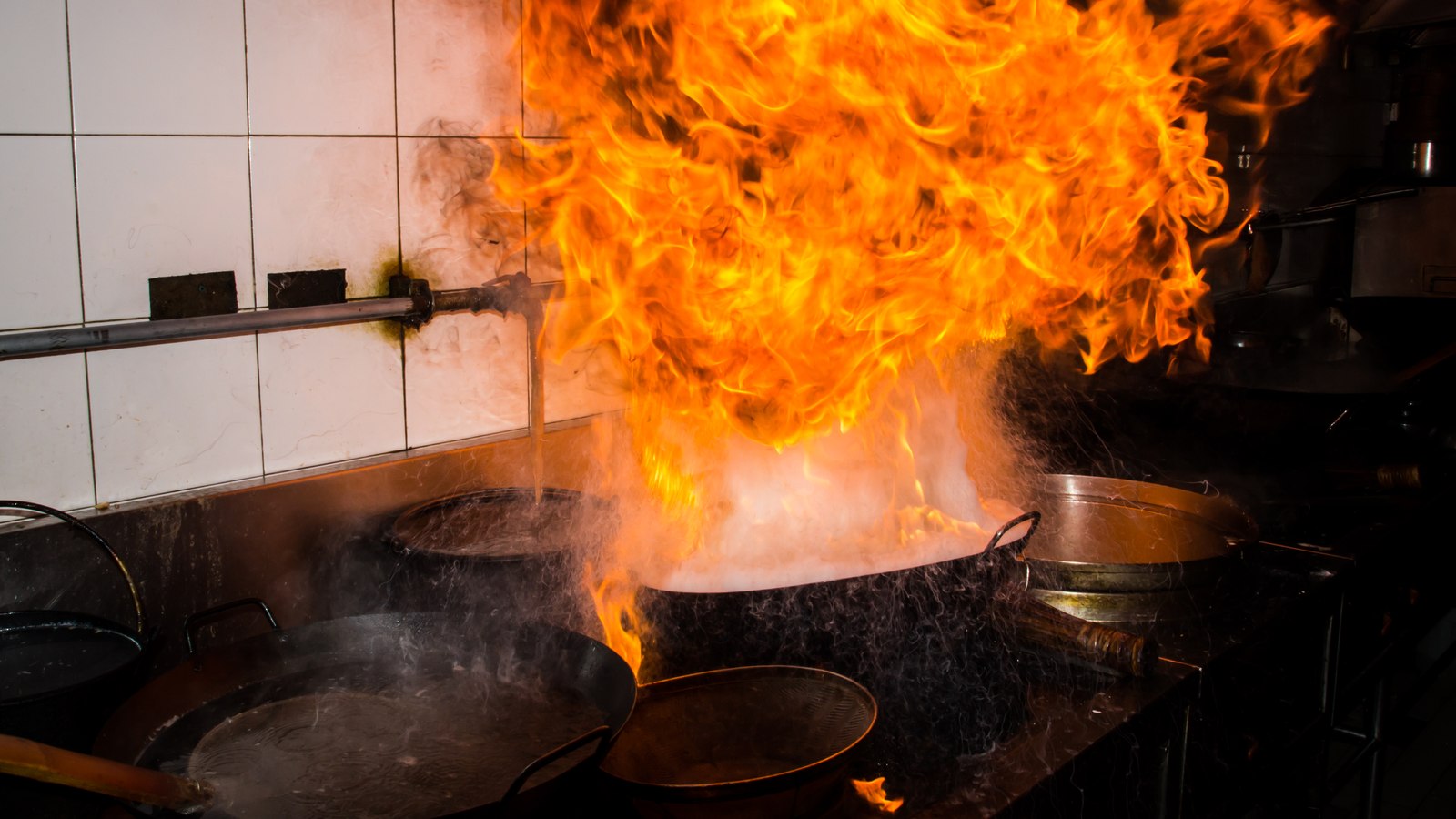
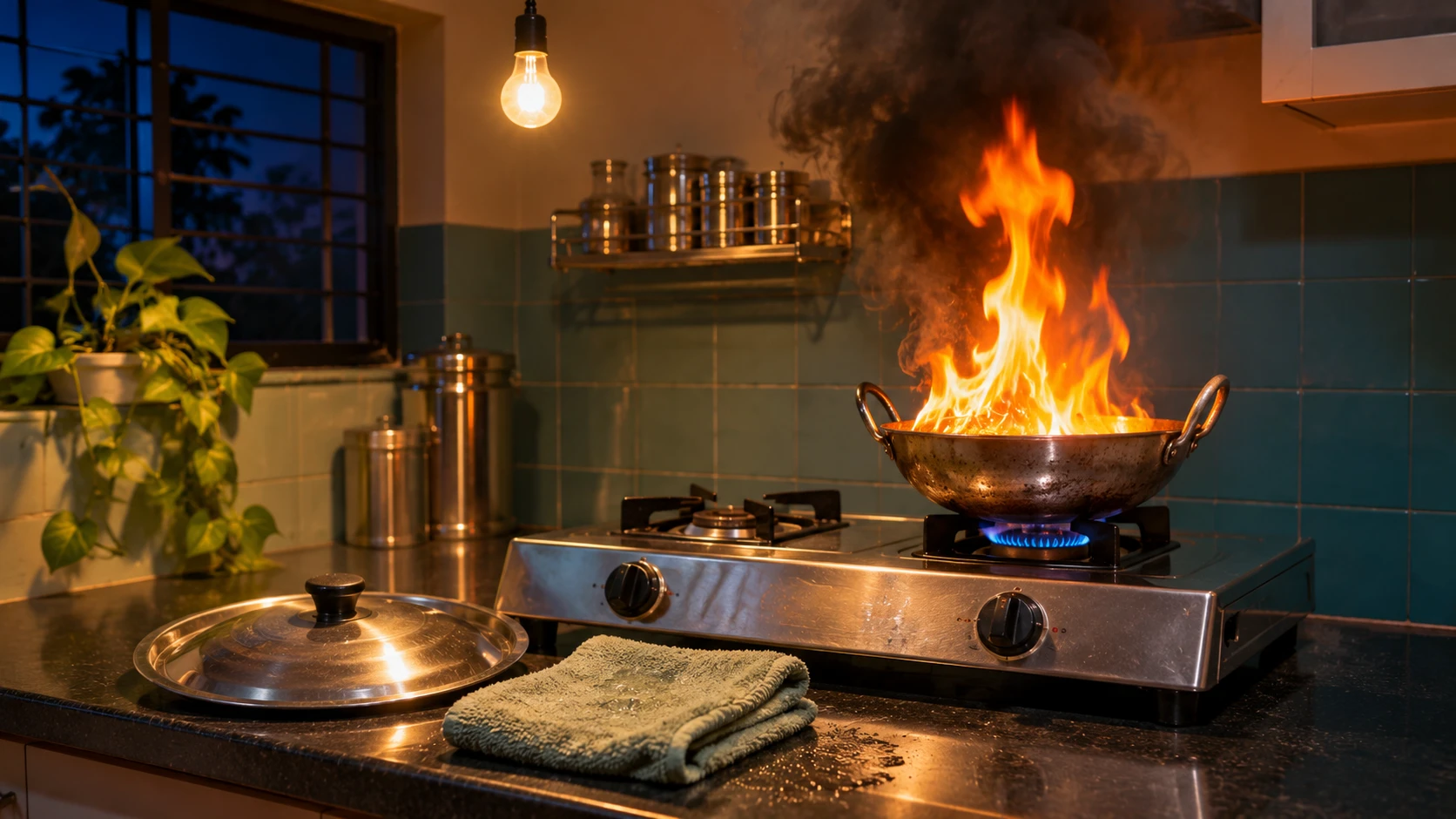
These are the usual household scalds, and they are often on the hands, forearms, chest and the faces of children. Treat them as above. The extra points are about speed and clothing. Soaked clothing holds the heat against the skin, so remove it from the area quickly. A pressure cooker or a kettle can scald through steam as well as water, and steam near the face is a reason to watch the breathing. If the oil in the pan is still on fire, do not carry it or throw water on it; our page on a kadhai on fire covers that. For cooker safety, see pressure cooker safety at home.
Burns from chemicals: acids, toilet cleaner, caustic soda, lime
- Protect yourself, take off clothing that has the chemical on it and, if the chemical is a dry powder, brush it off the skin before using water. The Ministry’s burns guideline says dry lime and other powders should be dusted off first.
- Rinse with plenty of running water for a long time. The Ministry guideline says 30 minutes to 2 hours of copious irrigation, the NHS says about an hour. Do not stand in a tub or bucket, because that can spread the chemical to clean skin.
- For the eyes, the Ministry’s firecracker guideline says to flush with clean, cool water for at least 15 to 20 minutes with the lids held open, and not to rub.
- Call 112 or 108 at once, and keep the container or its label so that the doctors know what it was. All chemical burns need medical care.
Burns from electricity
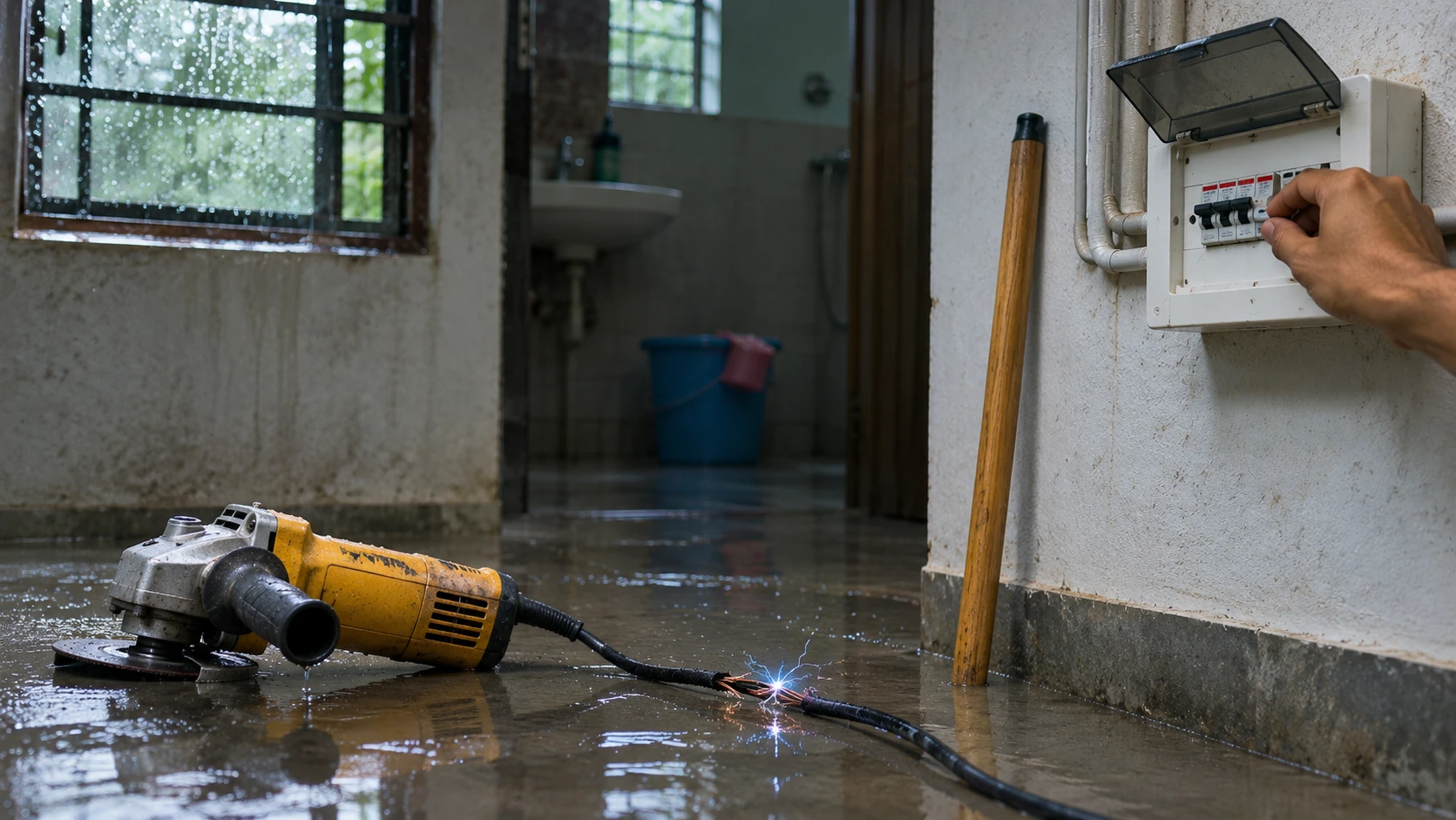
Do not touch the person until the power is off at the mains or the plug, or you will become the second casualty; our page on rescuing someone from an electric shock explains how. Then call 112 or 108. An electric burn can leave only a small mark on the skin and still have hurt the heart and tissues underneath. The Ministry’s burns guideline recommends an ECG for everyone who has had contact with an electric current, high or low voltage, and the NHS says every electric burn needs emergency care. Do not treat it as a minor burn because the skin looks fine.
When to call 112 or 108 or go to a hospital
The Ministry’s firecracker guideline lists these, and the NHS and the burns guideline add to them. Go to the nearest hospital, or call 112 or 108, for:
- a deep burn, one that looks charred, white or leathery, or feels numb;
- a burn larger than the injured person’s palm;
- a burn on the face, eyes, ears, hands, feet, joints or the groin and genitals; the burns guideline sends burns on the face, hands, feet, joints and private parts to a hospital;
- any burn on a baby, a child or an older person;
- a chemical burn or an electric burn;
- breathing trouble, a hoarse voice, coughing, or burns on the face after smoke or steam;
- signs of shock: pale, clammy skin, weakness, fast shallow breathing;
- a burn that gets worse, or turns red, swollen, painful or starts to ooze pus over the next days.
108 is the ambulance number (PIB, June 2026) and 112 is the single emergency number that connects police, fire and ambulance (PIB). Call 101 as well if a fire is still burning. At the hospital, a doctor may give a tetanus injection and dress the burn; the burns guideline lists tetanus toxoid in its treatment for small burns. If you can get an ambulance, do not drive a seriously burnt person yourself.
What not to do
- No ice or ice-cold water. The Indian guideline says it causes numbness and tight blood vessels that damage the tissue further, and adds a risk of hypothermia.
- No toothpaste, ghee, butter, oil, powder or paste. The Ministry’s guideline names ointments, creams, lotions, powders, grease, ghee, gentian violet, calamine, toothpaste, butter and colouring agents. WHO adds oils and traditional pastes. Haldi paste is not named in the sources, but the same objection applies. They trap heat, add germs and hide the burn from the doctor.
- Do not burst blisters. Leave that to a doctor.
- Do not pull off cloth that is stuck to the burn. The Ministry’s firecracker guideline and WHO say to cut around it and leave it. (The older burns guideline says to remove all burnt clothing; where the two differ, we follow the newer and the WHO advice.)
- Do not use cotton wool or a tight bandage.
- Do not put a child’s whole body in a cold bath. The British Red Cross says to avoid whole-body cold showers or baths because of hypothermia.
Why children are at the most risk
WHO says children are particularly at risk of scalds, mostly from hot drinks, cooking liquids and very hot tap water. WHO’s fact sheet counted about 35,600 deaths of children under 15 from fire, heat and hot substances in 2023, about 22 per cent of the world total. For all ages in the South-East Asia Region, WHO says about 70 per cent of the people who died were female. India has no national burn registry. The Ministry’s programme page puts the burden at roughly 6 to 7 million burn injuries and about 1.4 lakh deaths a year, an estimate drawn from three Delhi government hospitals, while the burns guideline speaks of 60 to 70 lakh cases and 1 to 1.5 lakh deaths. Both are estimates, not counts.
Do these today
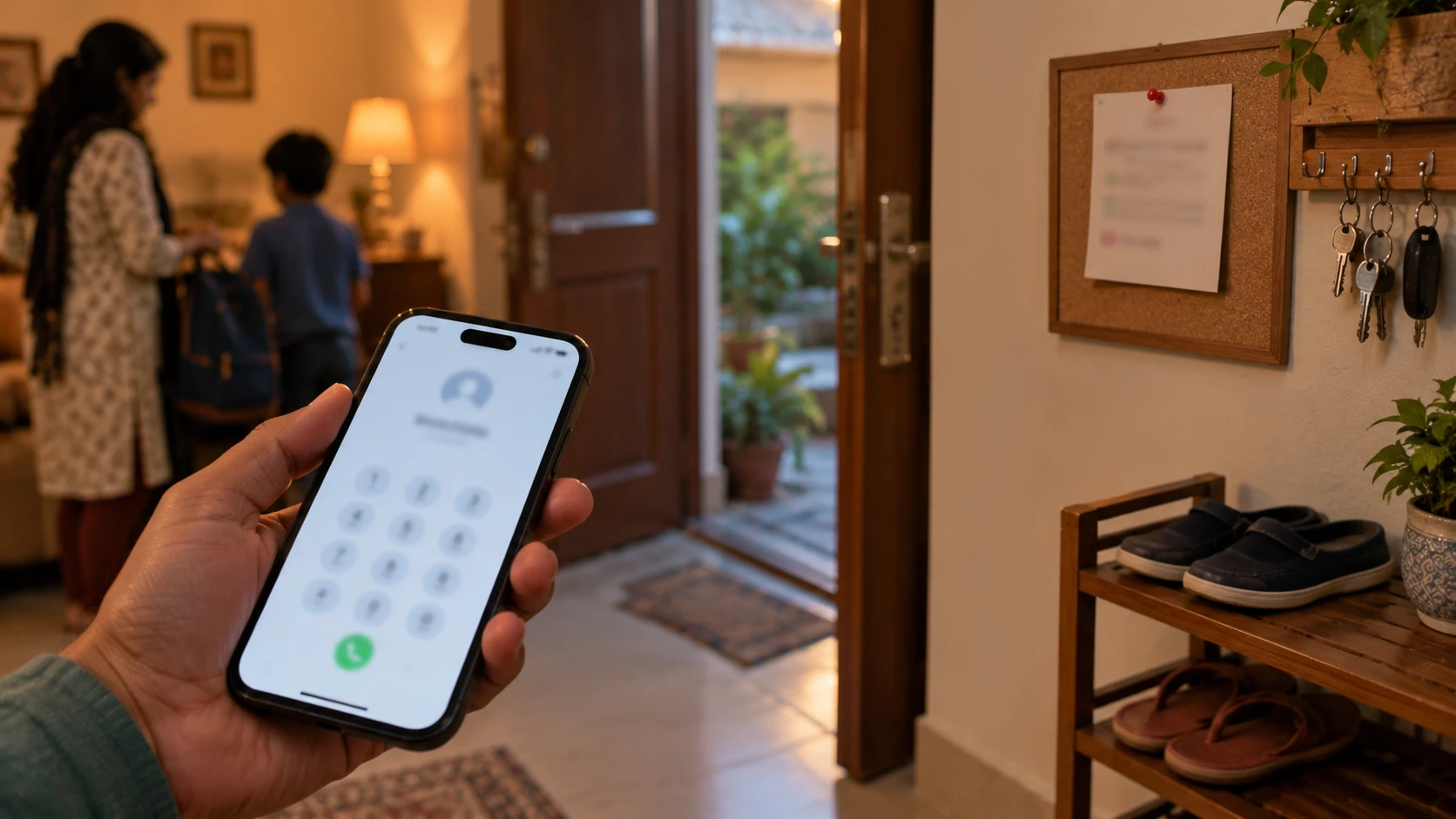
- Save 112 and 108 in your phone. Our page on emergency numbers in India says which to use when.
- Turn pot handles inward and keep kettles, hot tea and the pressure cooker out of a child’s reach. Never carry a child while you handle hot oil or hot tea.
- When filling a bucket for a child’s bath, run the cold water in first and mix by hand, before the child is brought near. This is our own suggestion, not a quoted rule.
- Keep a clean cotton cloth and a roll of cling film in the kitchen drawer.
- Read our seven kitchen fire rules and basic first aid page with the family.
What we could not confirm
We found no Indian official page that deals with hot-oil splashes by themselves, so the oil and tea notes apply the general burn steps. The cooling time differs between the Indian guideline (10 minutes), the Indian firecracker guideline (10 to 20 minutes), WHO and the NHS (20 minutes); we give the range. On painkillers the sources disagree: the NHS and the Ministry’s firecracker guideline allow paracetamol or ibuprofen for mild pain, while the burns guideline says oral painkillers are not usually advised before the patient reaches a hospital; we leave the choice to a doctor or pharmacist. The chemical rinse times (30 minutes to 2 hours against about an hour) come from two different sources. The NHS and British Red Cross pages are British and are used only where the Indian guidelines are silent. We did not watch the three videos in full. This page is general first-aid information and cannot judge the depth or seriousness of a particular burn.
What needs attention
- The Ministry's burns guideline says cooling for the first 10 minutes reduces pain and limits the depth of the burn; WHO and the NHS say about 20 minutes.
- Ice, ghee, butter, toothpaste, creams and powders are named as things not to apply.
- Electric and chemical burns always need medical care, whatever they look like.
- Children are particularly at risk of scalds (WHO); India has no national burn registry and the burden is an estimate.
- No Indian official page was found that deals with hot-oil splashes by themselves.
Controls that reduce risk
- Cool under running water for 10 to 20 minutes.
- Remove rings, bangles and watches early.
- Cover loosely with a clean cloth or cling film.
- Call 112 or 108 for a deep, large, facial, chemical or electric burn, or any burn on a child.
- Keep pot handles inward and hot liquids away from children.
Common unsafe practices
- Putting ice on the burn.
- Applying toothpaste, ghee, butter, haldi, oil or powder.
- Bursting blisters or pulling off stuck cloth.
- Leaving rings and bangles on until the swelling starts.
- Putting a small child in a cold bath.
- Treating an electric burn as minor because the skin looks fine.
- Standing in a bucket to rinse a chemical burn.


Leave a comment