What happened here
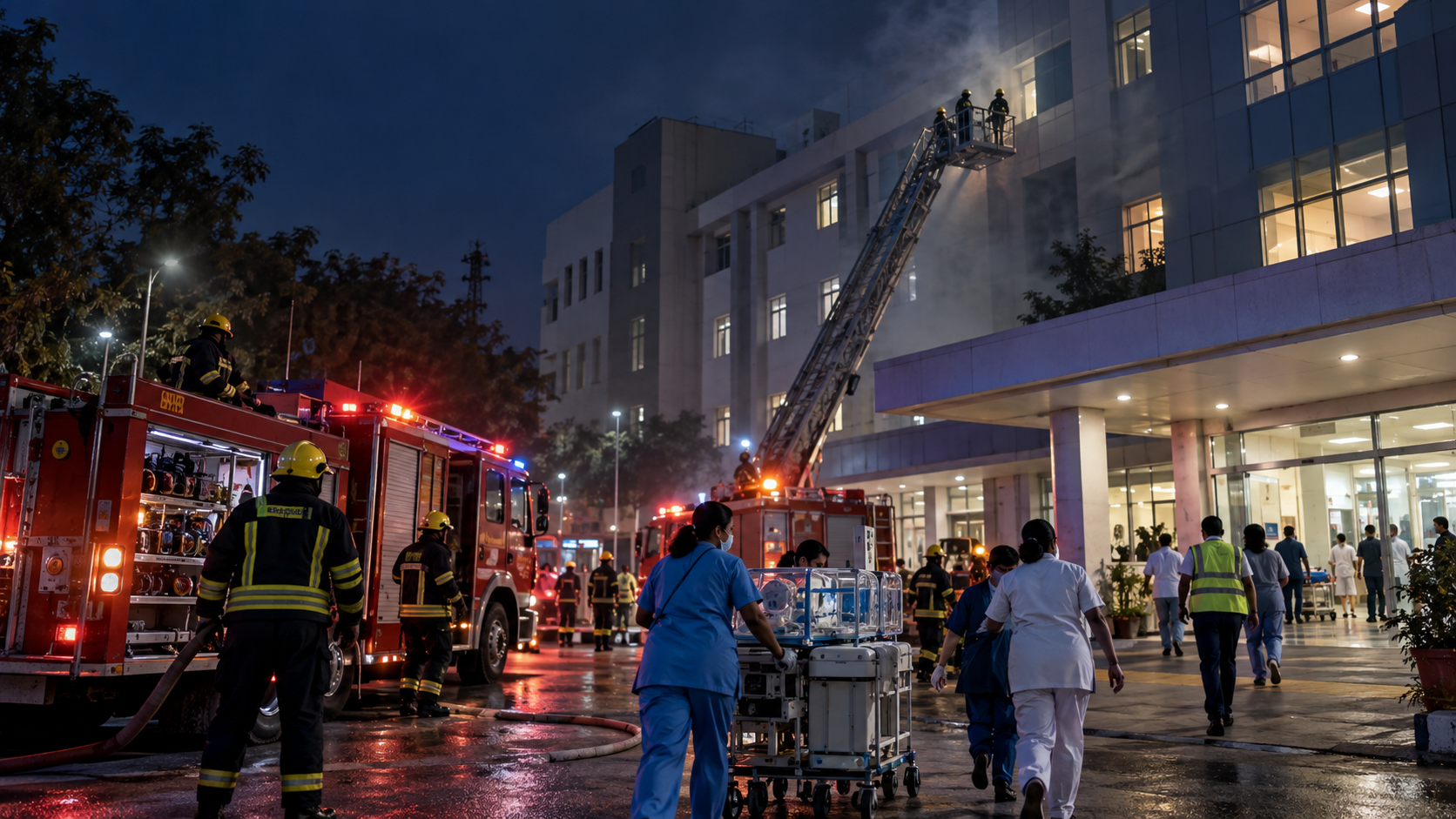
A late-night fire and dense smoke affected the Special Newborn Care Unit at RIMS Adilabad. Three infants died, staff evacuated approximately 28 infants, and Telangana ordered an inquiry and fire-safety audits of government hospitals.
What happened
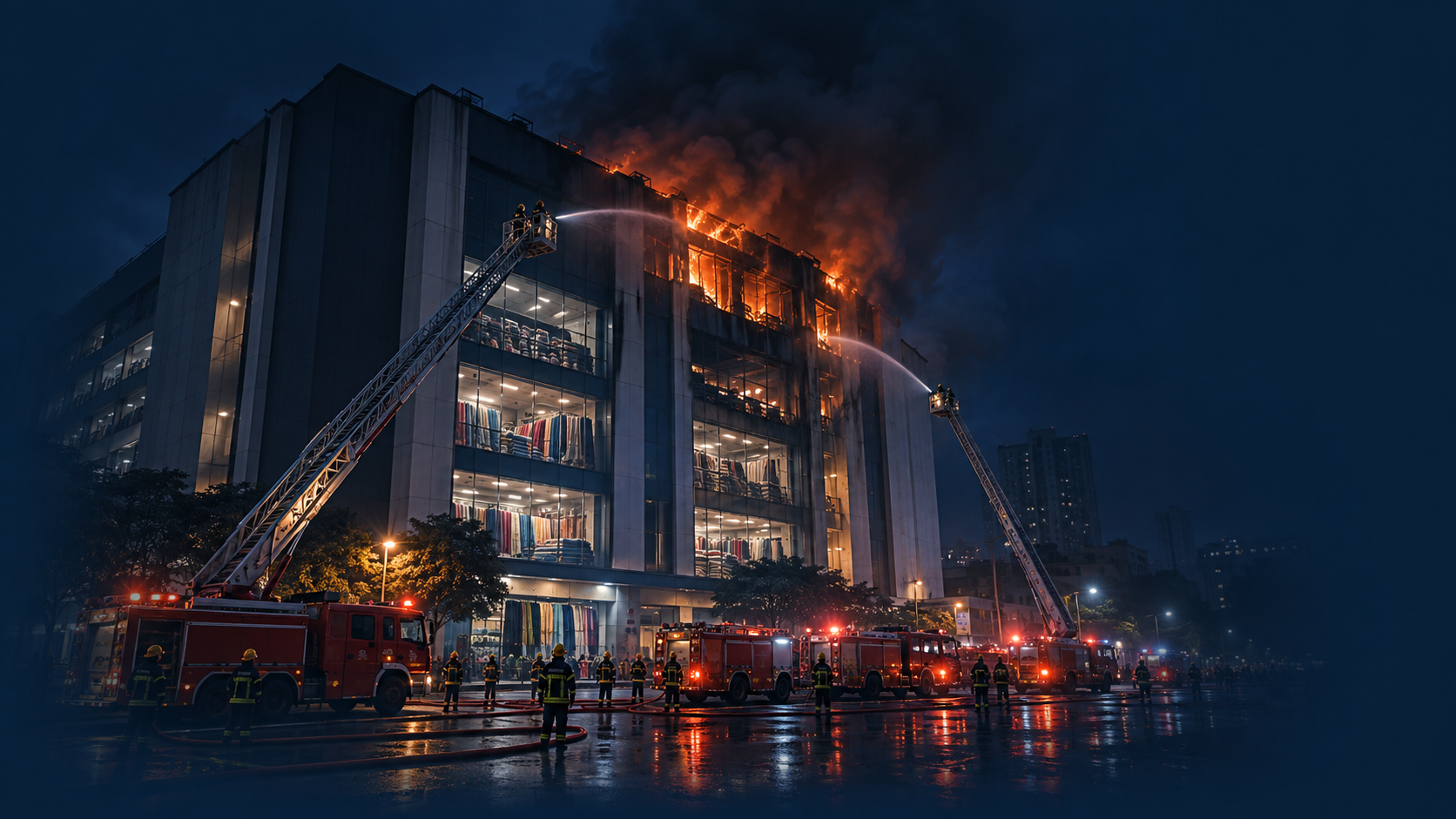
Late on 21 September 2026, fire and dense smoke affected the Special Newborn Care Unit at the Rajiv Gandhi Institute of Medical Sciences in Adilabad. Reporting described an air-conditioning unit malfunction or electrical short circuit as a suspected starting point, but the final cause had not been published at the time of this review.
Staff, relatives and emergency personnel moved infants out of the smoke-filled unit. Glass panes were reportedly broken to improve access and assist evacuation. Three infants died across the initial incident and subsequent treatment period. Two nurses and other staff were reported injured during the rescue, while several evacuated infants required respiratory support or transfer to other hospitals.
Why this incident matters
A neonatal ward is not an ordinary occupancy. Patients cannot self-evacuate, many depend on powered equipment and oxygen, and even a small fire can rapidly become a smoke emergency. Safe design therefore depends on prevention, early detection, compartmentation, reliable electrical maintenance and a practised staff-led evacuation plan that keeps clinical support with each infant.
What remains under investigation
The public record does not yet establish the exact electrical failure, the condition of the air-conditioning equipment, whether alarms and suppression systems operated as designed, or whether maintenance findings had been closed. Those questions belong to the official inquiry. This case study separates confirmed outcomes from suspected cause and will be updated when an inquiry report is released.
Lessons for hospitals
Fire audits should test real systems and close defects, not end with a certificate. Electrical loads, air conditioners, incubators, oxygen-enriched areas, alarms, fire doors and smoke movement must be reviewed together. Staff on every shift need role-based drills covering alarm raising, isolation of hazards where safe, horizontal evacuation, continuity of neonatal support, patient identification and transfer accountability.
- Infants were receiving care inside the Special Newborn Care Unit. Public reporting did not establish the unit's exact census consistently.
- Fire and heavy smoke were reported inside the unit. An air conditioner or associated electrical fault was suspected, but the final cause remained under investigation.
- Staff and relatives raised the alarm, disconnected power as a precaution and began moving infants. Glass panes were reportedly broken as smoke filled the ward.
- Firefighters contained the incident within the children's ward after an operation reported to have lasted more than an hour.
- Reports confirmed that infants had been transferred to private facilities and Nizamabad where required. The reported toll rose to three infant deaths.
- The Chief Minister ordered an inquiry, treatment monitoring and fire-prevention audits across government hospitals.
- No final technical investigation report had been located. Suspected electrical or AC failure must not be stated as the confirmed cause.
Why consequences escalated
- Dense smoke, not only flame, created an immediate threat to non-ambulatory neonatal patients.
- Evacuation depended on staff and family action because infants could not self-rescue.
- Transfers had to preserve oxygen, thermal support, identification and clinical accountability.
- The difference between an audit being completed and every defect being closed requires investigation.
- A suspected electrical cause should remain explicitly provisional until forensic findings are published.
Failures and risk multipliers
- Treating an annual fire certificate as proof that every system works today.
- Running high-load equipment without documented preventive maintenance and defect closure.
- Allowing corridors, doors or evacuation routes to become obstructed.
- Conducting drills that do not include neonatal transport, oxygen and patient identification.
- Repeating an early suspected cause as a confirmed technical finding.
Actions that reduce risk
- Inspect air-conditioning circuits, distribution boards, protective devices, cabling, earthing and thermal loading in critical-care areas.
- Test alarms, detection, fire doors, emergency lighting and communication on every shift pattern.
- Keep smoke compartments and horizontal evacuation routes usable at all times.
- Prepare neonatal evacuation kits with identification bands, transfer records, thermal protection and compatible respiratory support.
- Assign staff roles for alarm, clinical prioritisation, evacuation, receiving-area control and family communication.
- Track every fire-audit defect to named ownership, deadline, evidence of closure and independent re-test.
- Preserve CCTV, alarm logs, maintenance records and failed components for the inquiry.
Leave a comment