
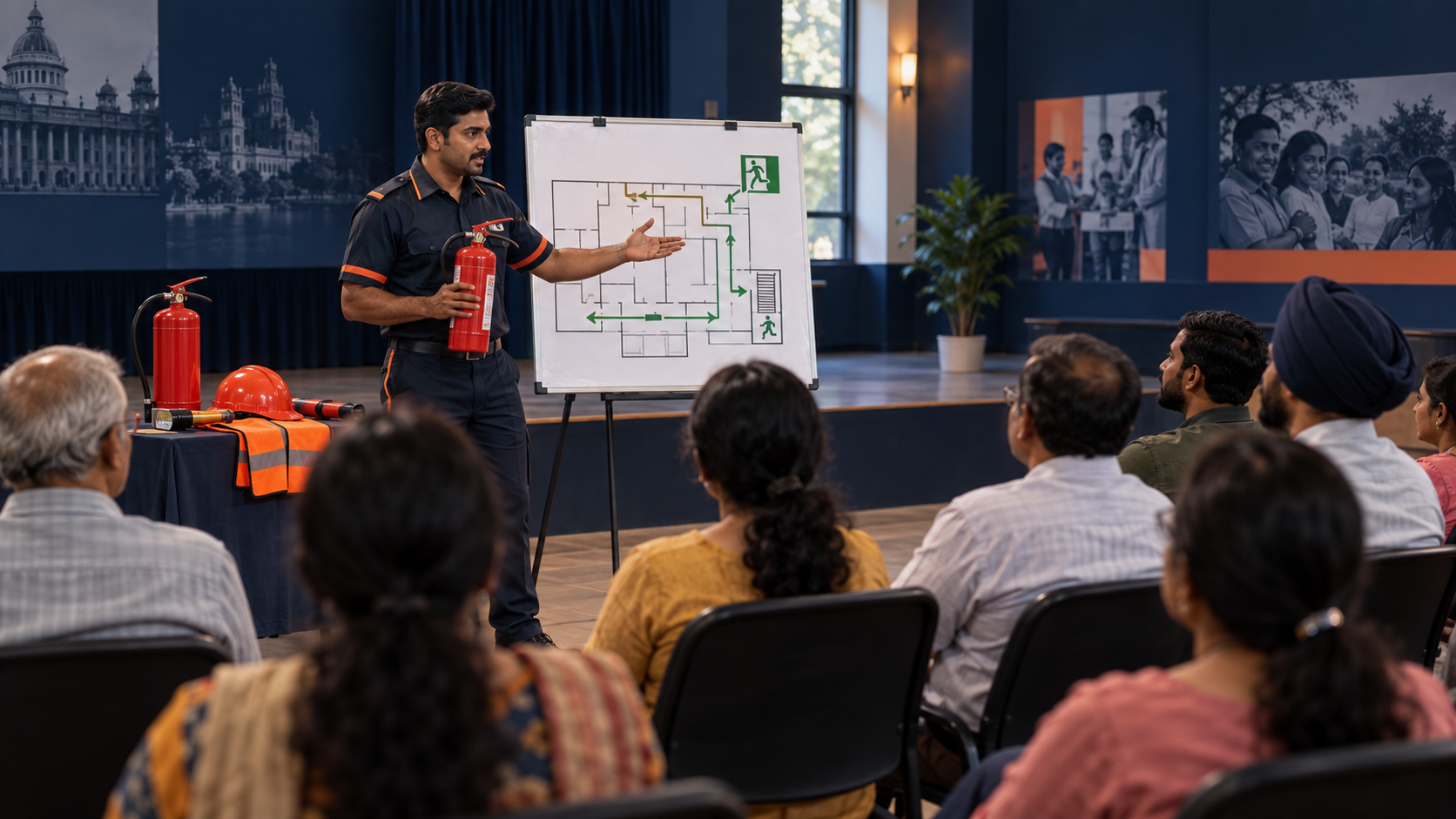
Quick answers
What should children be taught about fire safety at school?
Children should learn how fire starts, how to report danger and how to leave without hiding, pushing or returning. Lessons should use demonstrations, stories, maps and practice suited to age and disability, and be reinforced at home.
What should students do when the school fire alarm rings?
Stop work and leave immediately, walking quickly in the assigned line without running, pushing, hiding or collecting bags. Go directly to the assembly point, stay with the class for head count and never re-enter.
Should children be asked to fight a fire or rescue others at school?
No. Expecting children to fight a fire or rescue others is a mistake. Adults remain responsible for prevention, alarm, supervision, evacuation, accountability and reunification, and children should help only in the role practised.
What lesson does the Kumbakonam school fire teach?
It shows why education and building safety must operate together. An official statement recorded a thatched school area, a nearby meal kitchen, one narrow staircase, no emergency exit and a crowded escape route.
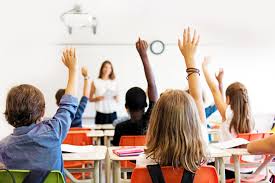
Children spend about six hours a day in school, and what they learn there they carry home. Ask any teacher: a child who has just learnt about fire will come home and check the gas knob, tell off an uncle who smokes in bed and ask where the family would meet if the house caught fire. That makes the classroom one of the best places to teach fire safety.

But lessons are only half of it. On 16 July 2004, a fire broke out in a school building in Kumbakonam, Tamil Nadu, that housed three schools with more than 870 students. The Union Home Minister told the Rajya Sabha on 19 July that 90 children had died and 19 were injured. Later accounts often give the final toll as 94. His statement described a thatched area in the school, a meal kitchen nearby, one narrow staircase, no emergency exit and a crowded way out. No classroom lesson can make up for a building like that. Safe buildings and good teaching have to go together.
What children should learn
How fires start
Teach children what starts fires in Indian homes and schools: an unattended stove or kadhai, an overloaded extension board, a mosquito coil near a curtain, a diya near a dupatta, crackers, candles and matches. Use examples from your own area, such as stubble burning, bonfires in winter or festival decorations.
What to do when they see fire or smoke
- Tell an adult straight away. Never hide, especially not under a bed or in a cupboard.
- Leave the room and the building. Do not go back for a bag, a pet or a phone.
- If there is smoke, get down low and crawl, where the air is cleaner.
- If your clothes catch fire, stop, drop to the ground and roll.
- Know the fire brigade number, 101, and the emergency number, 112.
What children should never be asked to do
Children should not be asked to fight a fire or rescue other people. That is the job of trained adults and the fire brigade. A child’s job is to raise the alarm, leave calmly and stay with the class.
How to teach it
Children remember what they see and do, not what they copy from the board.
- Walk the routes. Take each class along its main exit and its second exit, all the way to the assembly point.
- Use maps. Ask older students to draw the evacuation map for their own floor.
- Tell real stories, suited to their age, about what went wrong and what saved people.
- Practise often. Hold drills through the year, at different times of day, and include children who use wheelchairs, cannot see or hear well, or need extra help.
- Send homework. Ask each child to sit with the family and find two ways out of their home and a meeting point outside.
Keep drills calm and safe. There is no need for theatrical smoke or frightening simulations with small children.
Where to find Indian teaching material
You do not need to buy anything. Free material is available from:
- the Ministry of Education’s Guidelines on School Safety and Security, which ask every school to have its own safety plan, clear roles for staff, training for teachers and students, awareness activities and regular drills;
- the Directorate General Fire Services, Civil Defence and Home Guards, which publishes fire safety awareness material;
- the National Institute of Disaster Management, which has school safety learning material;
- your local fire station, which may send officers to talk to students or watch a drill.
The adults’ job
The principal, management and staff carry the bigger responsibility. Keep every exit unlocked during school hours and both staircases clear of furniture and stock. Keep the mid-day meal kitchen, gas cylinders and laboratory chemicals away from classrooms and escape routes. Make sure the alarm can be heard in every classroom, washroom, lab and playground. Keep class, staff and visitor registers up to date so you can count heads at the assembly point. Give named adults the job of helping children who need it.
This week, ask one child in each class to point to the nearest exit and the second exit. If they cannot, that is your next lesson.
What needs attention
- A school safety plan must fit the actual building, its hazards, where each class sits and how many people are inside, not copy a general checklist
- Students need a few simple actions, while adults need detailed roles and the authority to decide
- Escape routes fail when they are locked, blocked, too narrow or depend on a single staircase
- Kitchens, labs, temporary decorations, electrical loads and roofs that can burn all need active control
- Attendance and visitor registers are essential for the head count at the assembly point
- Drills should test the alarm, movement, help for those who need it and the head count, without frightening children with smoke or unsafe simulations
- Lessons stick when they are repeated and linked to a talk at home about escaping
Controls that reduce risk
- Put an accurate evacuation map and the numbers 101 and 112 beside every classroom door
- Walk every main and second route with staff; remove locks, stored items and trip hazards
- Check that the alarm has a clear sound and can be heard in classrooms, washrooms, labs and outdoor areas
- Name the adults who will help each pupil who may need assistance
- Keep cooking gas and anything that can start a fire away from classrooms and escape routes
- Keep class, staff and visitor registers up to date for the head count
- Invite the local fire station to review the plan or help with training
- Send a short home activity asking families to find two exits and a meeting point outside
Common unsafe practices
- Treating one extinguisher demonstration as the whole school fire programme
- Expecting children to fight a fire or rescue others
- Locking exits or storing furniture and material in corridors and stairs
- Using lifts in a fire unless a specially designed evacuation lift and plan allow it
- Running, pushing, shouting or letting classes mix without supervision
- Holding drills with no plan for small children or pupils with mobility, sight, hearing, learning or medical needs
- Not taking attendance or reporting visitors and missing people
- Going back in before the fire brigade says it is safe
Leave a comment