

Quick answers
How many people die from falls in India?
NCRB recorded 26,437 deaths from falls in 2024, 5.7 per cent of all accidental deaths, or about 72 a day. Maharashtra had the most, 5,092, and the 53 big cities together 4,604.
Are older people the main victims of falls?
WHO says about 71 per cent of fall deaths worldwide in 2023 were among people aged 60 and older. NCRB's chapter text does not give the age split for falls in India.
How do I make my stairs safer?
Fit a handrail on both sides, use brighter bulbs, and keep the steps free of anything you could trip over (CDC, NHS). Wear shoes or slippers that grip. A night light on the route to the toilet is our own suggestion.
How do I use a ladder safely?
Set it on firm level ground at about 75 degrees (the 1 in 4 rule), tie it at the top if you can, keep three points of contact, do not overreach, and do not use the top rungs. These points are from the Irish Health and Safety Authority and are not Indian rules.
Can exercise really prevent falls in older people?
WHO says a Cochrane review found that tailored strength and balance exercise reduced fall rates by about 23 per cent in the trials studied. Ask a doctor or physiotherapist what suits the person.
What should I do if someone falls and cannot get up?
If the head, back, neck or hip may be hurt, call 112 or 108 and do not lift them yourself. Keep them warm and comfortable until help comes.
Does changing the home really cut falls?
WHO says home hazard changes reduced falls by about 38 per cent in people already at higher risk, but showed no effect in people chosen at random. Start with the home of someone who has already fallen or is unsteady.
Falls in India kill far more people than most families would guess: 26,437 in 2024, according to the National Crime Records Bureau (NCRB). That is about 72 a day. Falls do not make big headlines because they happen one at a time, on a staircase, in a bathroom, from a ladder or off a roof, and they are rarely counted as a disaster. This guide sets out what the NCRB figures say, and then the plain changes that health and safety bodies recommend for the places where people fall. Checked 12 November 2026.
In short
- 26,437 people died in falls in India in 2024, 5.7 per cent of all accidental deaths. Maharashtra had the most, 5,092. In the 53 big cities the count was 4,604 (NCRB).
- Stairs: a handrail on both sides, brighter bulbs, and nothing left on the steps (CDC).
- Bathroom: a non-slip mat in the bath or shower and grab rails near the tub and toilet (NHS, CDC).
- Ladders: firm level ground, set at about 75 degrees (the 1 in 4 rule), three points of contact, tied at the top (Health and Safety Authority, Ireland).
- Roofs, windows and balconies: keep children well back from open edges and guard windows, stairs and balconies (WHO).
- Older relatives: balance and strength exercise, a medicines review, a yearly eye test, and shoes that grip.
- After a fall: if the head, back, neck or hip may be hurt, or the person cannot get up, call 112 or 108 and do not lift them yourself.

What the numbers say
NCRB’s Accidental Deaths and Suicides in India 2024 counts 4,67,857 accidental deaths. Of the 4,59,954 not caused by forces of nature, 26,437 were falls, or 5.7 per cent; on NCRB’s chart of all accidental deaths falls are also 5.7 per cent. Falls are the fourth largest named cause there, after traffic accidents (1,99,443), sudden deaths (76,024) and drowning (40,044), and ahead of poisoning (21,747). Maharashtra recorded the most fall deaths, 5,092, which is about 19 per cent of the national figure (our division). In the 53 mega cities there were 4,604 fall deaths, 6.7 per cent of the deaths from causes other than forces of nature counted in those cities. NCRB says deaths from falls rose in 2024 compared with 2023, but the 2023 figure is not in the chapter text we read.
The World Health Organization estimates about 842,000 deaths from falls worldwide in 2023, the second leading cause of unintentional injury death after road injuries. About 71 per cent were among people aged 60 and older, and about 284,200 deaths were in WHO’s South-East Asia Region, which includes India.
What these numbers cannot tell you
- The NCRB chapter text does not split falls by place (home, work, roof), by height, by age or by sex, so we cannot say how many of the 26,437 were on stairs, ladders or terraces.
- The figures for men and for people aged 60 and above that appear in the same chapter are for all accidental deaths, not for falls alone.
- NCRB counts deaths, not injuries that never reach a police record. WHO’s figure is a modelled world estimate and not an Indian count.
Stairs and the rest of the house
- Handrails on both sides of the stairs, and more light or brighter bulbs so the steps are easy to see (CDC).
- Clear the trip hazards. The CDC says to get rid of things you could trip over, and the NHS adds loose wires and loose rugs. Our own suggestion: keep the steps and the landing free of shoes, buckets and bags, and keep one hand free for the rail.
- Shoes and slippers that grip. The NHS advises well-fitting shoes or slippers with a good grip, and a mobile phone or personal alarm you can reach.
- Light on the way to the toilet at night. This one is our suggestion: a small night light on the route is cheap, and it matters most for older family members.
The bathroom
- A non-slip mat in the bath or shower (NHS).
- Grab bars near the tub, shower and toilet, inside and outside the tub or shower (CDC). The NHS also suggests grab rails in the bathroom.
- Our suggestion: wipe up water after a bath, and in the monsoon keep a mat at the door where wet feet come in from the street.
Ladders
The Health and Safety Authority of Ireland says falls from ladders account for numerous serious and fatal injuries each year, and that many occur from incorrect use. Its points are British-Isles guidance, not Indian rules, but a ladder behaves the same everywhere:
- Firm, level ground. Do not lean the ladder on a surface that may be slippery or too weak, such as a gutter or glass.
- The right angle. About 75 degrees, which is the 1 in 4 rule: one unit out for every four units up.
- Tie it. Tie both sides at the top if you can. The top should reach about 1 metre past the landing, or give you another handhold. Stepping on or off the top onto another surface is high risk unless the ladder is secured.
- Three points of contact, hands and feet. Keep your belt buckle inside the sides of the ladder and do not overreach.
- Do not use the top three rungs of a ladder or the top two steps of a stepladder unless it has a handrail. Never straddle a stepladder.
- Short, light jobs only. It says ladders are not suitable where you stay in one position for 30 minutes or more, or for heavy or awkward loads.
- Look before you climb. Check for cracked or bent sides or rungs, corrosion and missing fittings.
Roofs, terraces, windows and balconies
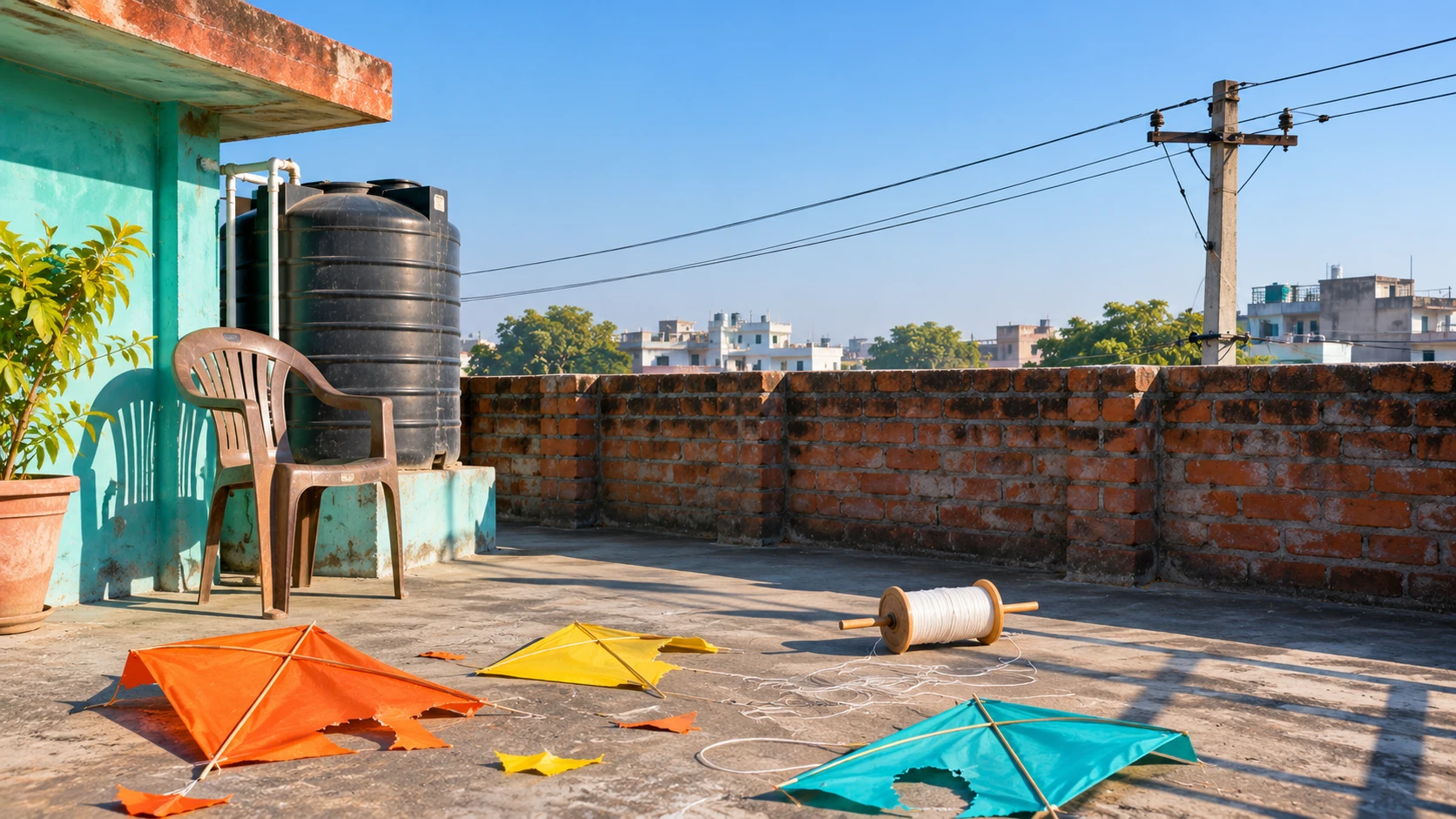
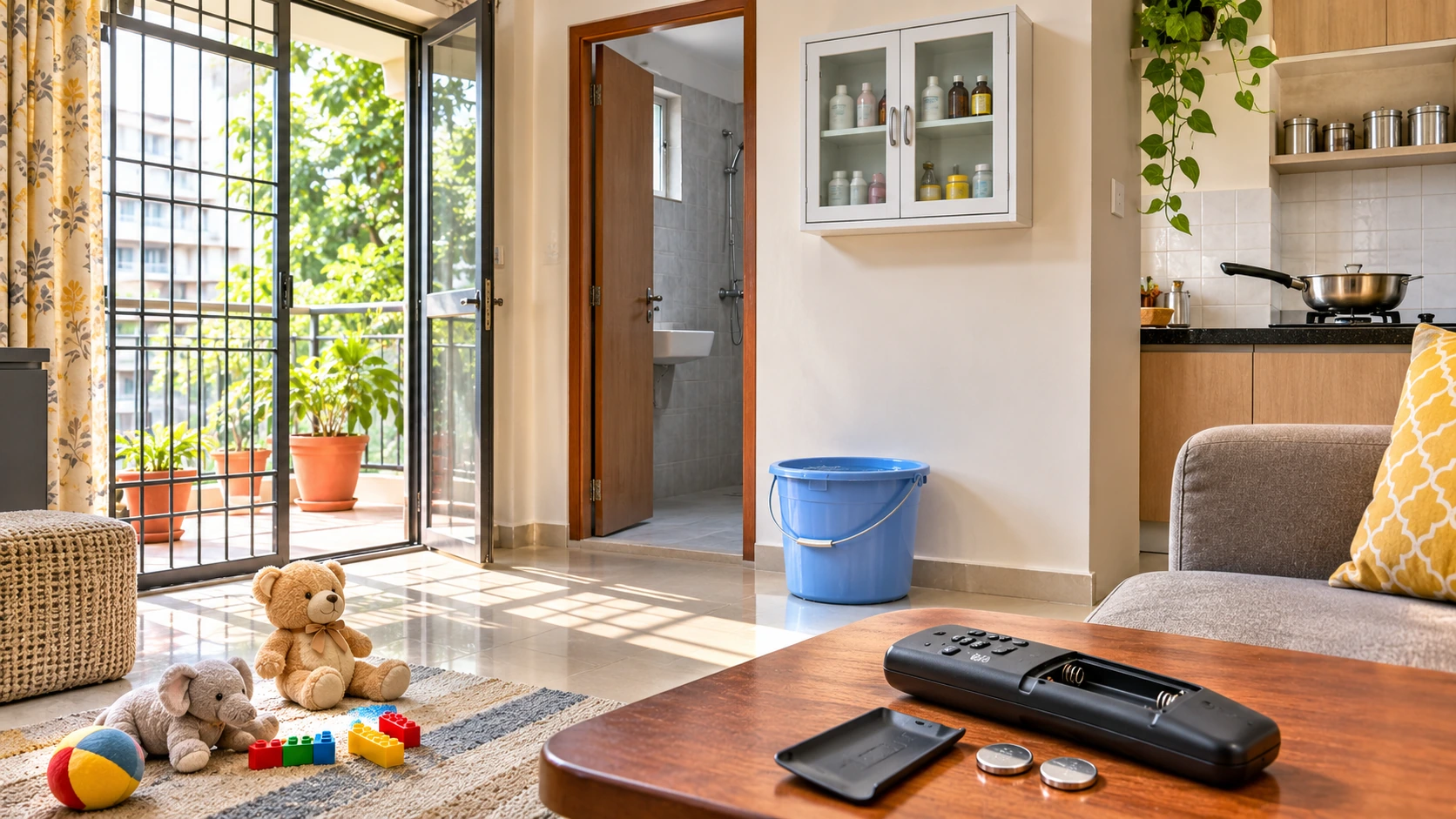
WHO’s advice for children is to protect windows, stairs and balconies, and to give families targeted information and home-safety visits. For the terrace, our own suggestions: keep children and festival crowds well back from the parapet, never lean out for a kite or a cloth on a line, and do not let anyone climb to fetch a kite. Our guide to kite flying safety covers rooftop falls and wires, our guide to child safety at home covers windows and balconies, and our guide to electric wires close to your house, balcony or terrace covers the other danger on a terrace.
At work
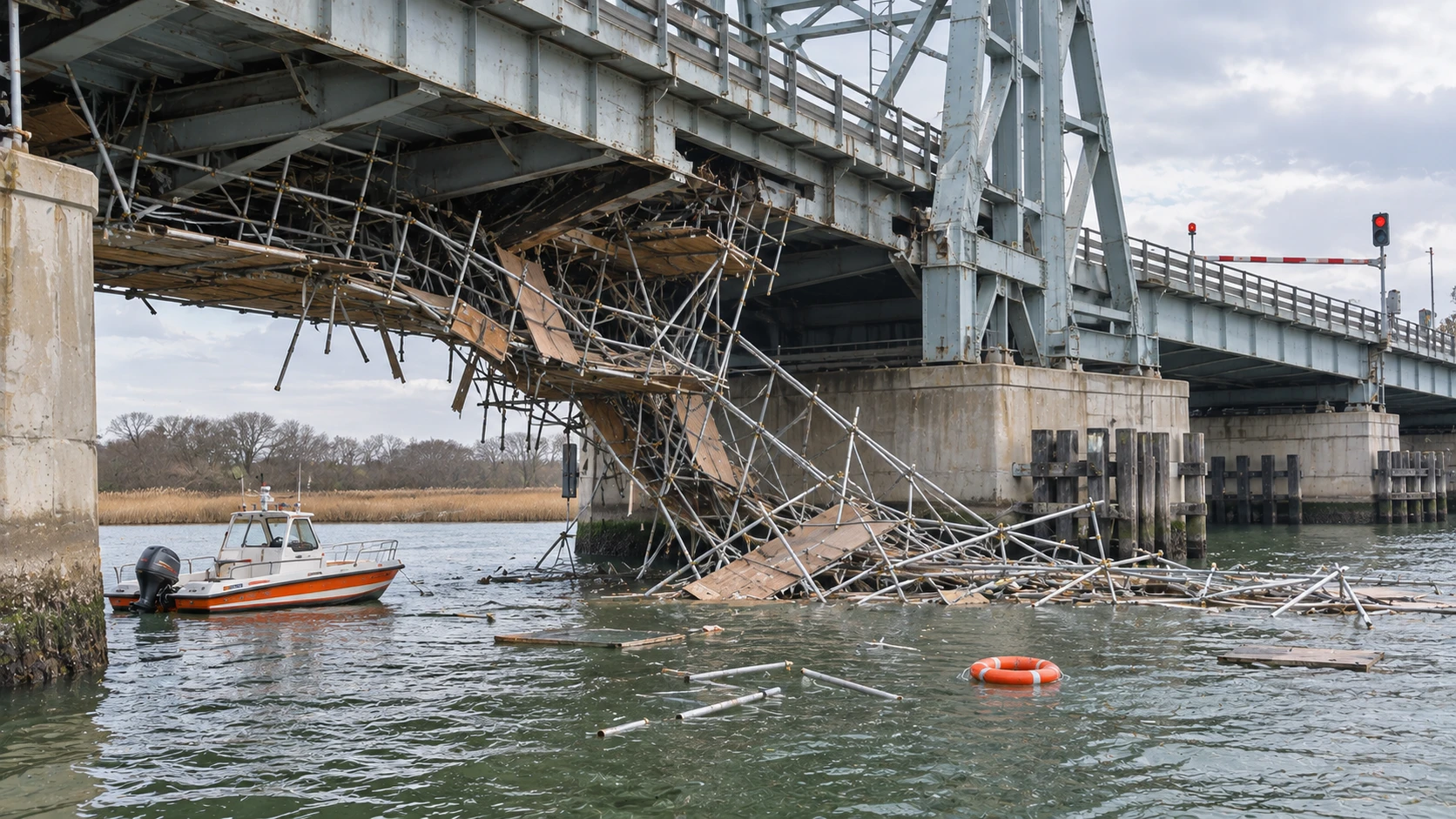
WHO says employers should remove work at height where possible, and otherwise use safe platforms, guard rails, scaffolding and fall-protection systems, with training and supervision. Our guide to scaffolding and work at height lists the checks to ask for before you step on a scaffold, and our Loop Parkway Bridge case shows what a scaffold failure looks like.
Older relatives
These come from WHO, the CDC and the NHS, and are the most useful part of the page for a family with someone elderly at home.
- Exercise. Strength and balance exercise, such as Tai Chi. WHO notes that a Cochrane review found exercise reduced fall rates by about 23 per cent in the trials it studied. The NHS suggests strength and balance activity at least twice a week.
- Medicines. Ask the doctor or pharmacist to review medicines that may cause dizziness or sleepiness, including medicines bought over the counter.
- Eyes. An eye test at least once a year and updated glasses (CDC). For walking outdoors, the CDC suggests glasses with only the distance prescription, because bifocals can make things look closer or farther than they are.
- Dizziness on standing and weak legs. WHO lists dizziness, low blood pressure on standing and limited mobility as risk factors to be looked at by a doctor.
- Home changes. WHO says changing home hazards reduced falls by about 38 per cent in people already at higher risk, but no effect was shown in people picked at random, so target the home of someone who has already fallen or is unsteady.
- Do not struggle alone. The NHS says not to attempt difficult lifting or reaching, but to ask for help.
After a fall
- Call for help if the head, back, neck or hip may be injured, or the person cannot get up. In India that means 112, or 108 for an ambulance; our guide to how to call 112, 101 or 108 says what to tell the control room. The NHS wording uses the British numbers; the principle is the same.
- If you feel able to get up, go slowly. The NHS says to roll onto your side, get onto your hands and knees, hold something stable, put one foot flat on the floor and stand up slowly, then sit and rest.
- If you cannot get up, use a phone or alarm, or shout or bang on the wall, and keep warm with a blanket or coat until help comes.
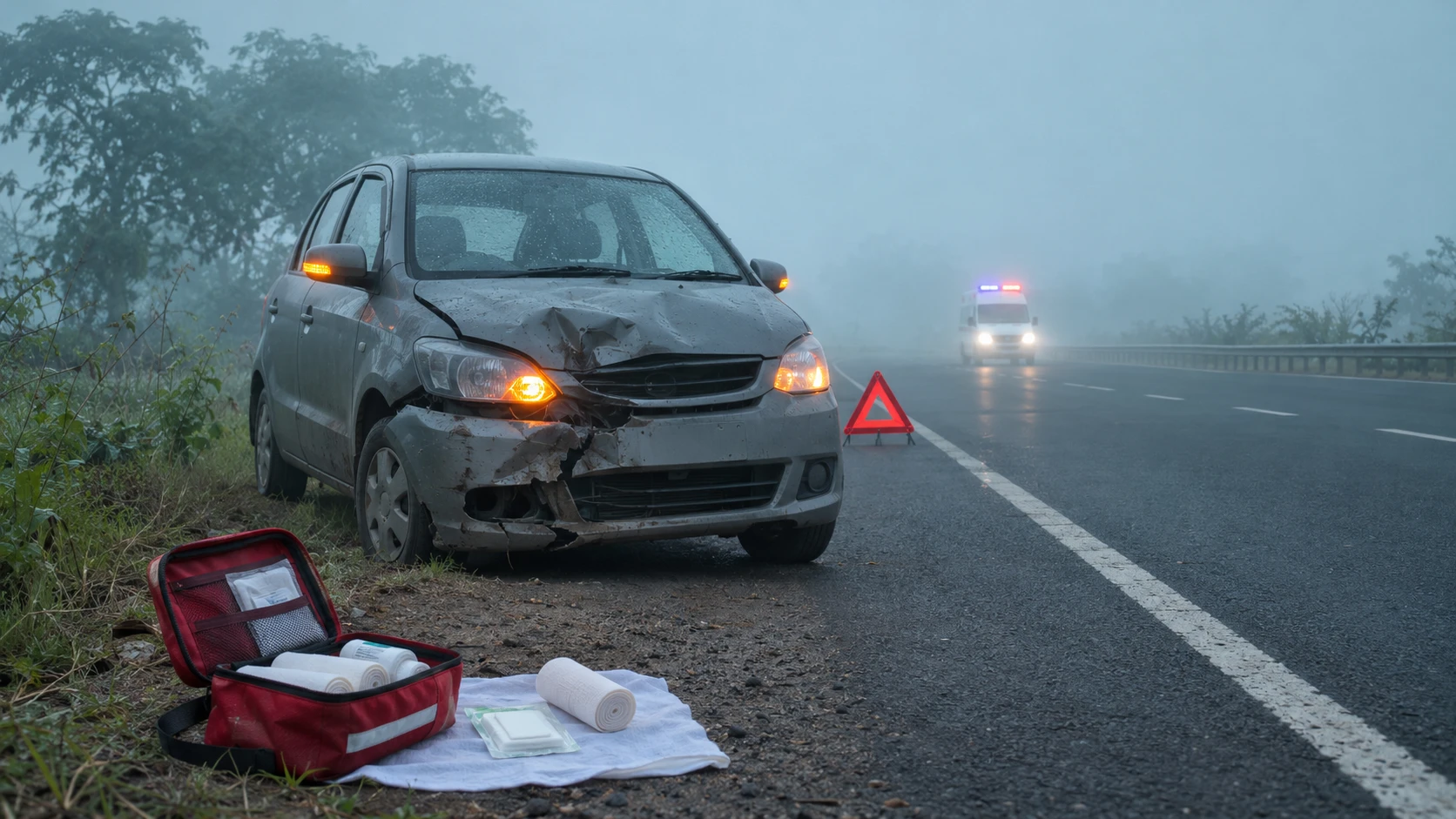
- If you are helping someone else, keep them comfortable and warm, and help them up only if they can get up themselves. Do not lift them yourself. Our guide to road accident first aid covers waiting for the ambulance.
What we could not confirm
The NCRB chapter text has no break-up of falls by place, age or height. We found no Indian government text on household fall prevention in the pages we could open, so the advice is from WHO, the CDC, the NHS and the Irish Health and Safety Authority, and the ladder angle and rung rules are not Indian standards. The two videos below are general safety learning and were not watched in full. This page is general safety information, not medical advice; a person with repeated falls should see a doctor.
Do this this week
- Fix or fit a handrail on your stairs and put a brighter bulb on the landing.
- Put a non-slip mat and a grab rail in the bathroom, especially for older relatives.
- Before the next ladder job, check the ground, the angle, the rungs and who will hold it.
- Ask the family doctor to review the medicines of anyone elderly at home who has been dizzy or has fallen.
What needs attention
- Falls killed 26,437 people in India in 2024, the fourth largest named cause of accidental death in NCRB's chart.
- Maharashtra recorded 5,092 fall deaths and the 53 big cities 4,604.
- NCRB's chapter text does not split falls by place, age or height.
- WHO says about 71 per cent of fall deaths worldwide in 2023 were among people aged 60 and older.
- Exercise and a medicines review are among the measures WHO, CDC and NHS recommend for older people.
Controls that reduce risk
- Fit handrails on both sides of the stairs and brighter bulbs.
- Put a non-slip mat and a grab rail in the bathroom.
- Set a ladder at about 75 degrees on firm ground and tie it at the top.
- Keep children and kite flyers away from open edges and guard windows and balconies.
- Arrange a medicines review, an eye test and balance exercise for older relatives.
Common unsafe practices
- Leaving things on the stairs or a loose rug at the top of them.
- Using a ladder on soft or slippery ground, or leaning it on a gutter or glass.
- Overreaching from a ladder instead of climbing down and moving it.
- Standing on the top rungs of a ladder or straddling a stepladder.
- Lifting a person who has fallen when the head, back, neck or hip may be hurt.
- Ignoring dizziness or repeated falls in an older relative.



Leave a comment