

Quick answers
What time of day do most road accidents happen in India?
The busiest three-hour slot is 6 pm to 9 pm. NCRB 2024 recorded 97,349 road accidents then (20.8 per cent of 4,67,967), and MoRTH 2024 recorded 1,02,897 (21.1 per cent of 4,87,707). The next busiest slot is 3 pm to 6 pm, at 17.4 per cent in both.
Why are road accidents high between 6 pm and 9 pm?
Neither NCRB nor MoRTH gives a cause for the peak. It is also the time when roads and footpaths are fullest. Arrive Alive, a South African road safety organisation, says dusk is hard on the eyes because the sky is bright but the road is dark, and drivers are often tired.
Does this mean the evening is more dangerous than the night?
Not necessarily. The figures count accidents, not deaths or risk per vehicle. Late-night slots have far fewer accidents because far fewer vehicles are on the road. No per-vehicle rate for each hour was in the pages we opened.
Which month has the most road accidents in India?
May. NCRB recorded 41,364 road accidents in May 2024, which is 8.8 per cent of the year. The chapter does not give a reason.
When should I switch on my headlights in the evening?
Arrive Alive says to use headlights at dusk and low beam when other vehicles are near. Our night driving guide sets out the lighting rule in the Motor Vehicles (Driving) Regulations, which applies at nightfall. Two-wheelers must keep the dipped headlight on in the daytime too.
What should I do if oncoming lights blind me?
Do not stare at them. Look ahead and towards the left edge of the road, slow down and steer towards the left edge until you can see again. Never stop on the travelled part of the road.
How can pedestrians stay safe at dusk?
Cross at a crossing or signal, wear light or reflective clothing, keep to the footpath and do not assume the driver can see you. Arrive Alive says a cyclist's crash risk is four to five times higher in darkness than in daylight.
Evening road accidents in India get less attention than night crashes, but the official numbers point at the hours before it is fully dark. In 2024 the busiest three hours of the day for road accidents were 6 pm to 9 pm. The National Crime Records Bureau (NCRB) counted 97,349 road accidents in that window, which is 20.8 per cent of the 4,67,967 road accidents it recorded for the year. The Ministry of Road Transport and Highways (MoRTH) counted 1,02,897, or 21.1 per cent of its 4,87,707. Two agencies, two counts, one answer. This guide says what the figures show and what they do not, and then what to change in the way you drive, ride and walk home. Checked 12 November 2026.
In short
- 6 pm to 9 pm is the busiest slot for road accidents. NCRB 2024: 97,349 accidents, 20.8 per cent. MoRTH 2024: 1,02,897, 21.1 per cent. In MoRTH’s table it has been the busiest slot in every year from 2020 to 2024.
- 3 pm to 9 pm is six hours of the clock and about 38 per cent of accidents (NCRB 38.2 per cent, MoRTH 38.5 per cent, our own sums of the two slots).
- These are counts of accidents, not deaths and not risk per vehicle. The evening is also when the roads are fullest.
- Dusk is hard on the eyes. The sky is still bright but the road is dark, and your eyes take time to adjust. Switch on your lights, slow down, keep a longer gap and do not stare at oncoming glare.
- On foot, do not assume the driver has seen you. Use a crossing or signal and be easy to see.
- Tired after a day’s work? Rest before you drive on. That is our advice; the numbers do not measure tiredness.

What the numbers say
NCRB’s chapter on traffic accidents (Accidental Deaths and Suicides in India 2024) splits the day into three-hour slots. For road accidents it gives these three, and labels the first as night and the other two as day:
- 6 pm to 9 pm: 97,349 accidents, 20.8 per cent. The most in this slot were in Tamil Nadu (16,823), Madhya Pradesh (11,208) and Kerala (9,711).
- 3 pm to 6 pm: 81,209 accidents, 17.4 per cent.
- 12 noon to 3 pm: 69,279 accidents, 14.8 per cent.
MoRTH’s report Road Accidents in India 2024 (Table 7.3) gives all the slots, as a share of 4,87,707 accidents: 6 am to 9 am 10.1 per cent, 9 am to 12 noon 14.0, 12 noon to 3 pm 14.6, 3 pm to 6 pm 17.4, 6 pm to 9 pm 21.1, 9 pm to midnight 11.5, midnight to 3 am 5.1, 3 am to 6 am 4.8, and 1.3 per cent with no time recorded. Over five years the 6 pm to 9 pm share in MoRTH’s table has been 19.9, 20.7, 20.4, 20.8 and 21.1 per cent for 2020 to 2024. The slots after midnight have the fewest accidents because the roads are emptier, not because those hours are safe for any one driver.
One more number from NCRB, because readers ask: the busiest month for road accidents in 2024 was May, with 41,364 accidents, 8.8 per cent of the year. The chapter does not say why, and we do not guess.
What these numbers cannot tell you
- They count accidents, not deaths. The NCRB chapter text and MoRTH’s time table do not give deaths by hour.
- They do not measure risk. The evening has more vehicles and more people on foot, so more accidents is what you would expect. A rate per vehicle-kilometre for each hour is not published in the pages we opened.
- A clock slot is not the same as dusk. Sunset moves with the season and the place, so 6 pm is daylight in some months and full dark in others. NCRB does not split the slot.
- Neither source gives a cause for the evening peak, and we do not offer one as fact.
Why dusk is hard on the driver
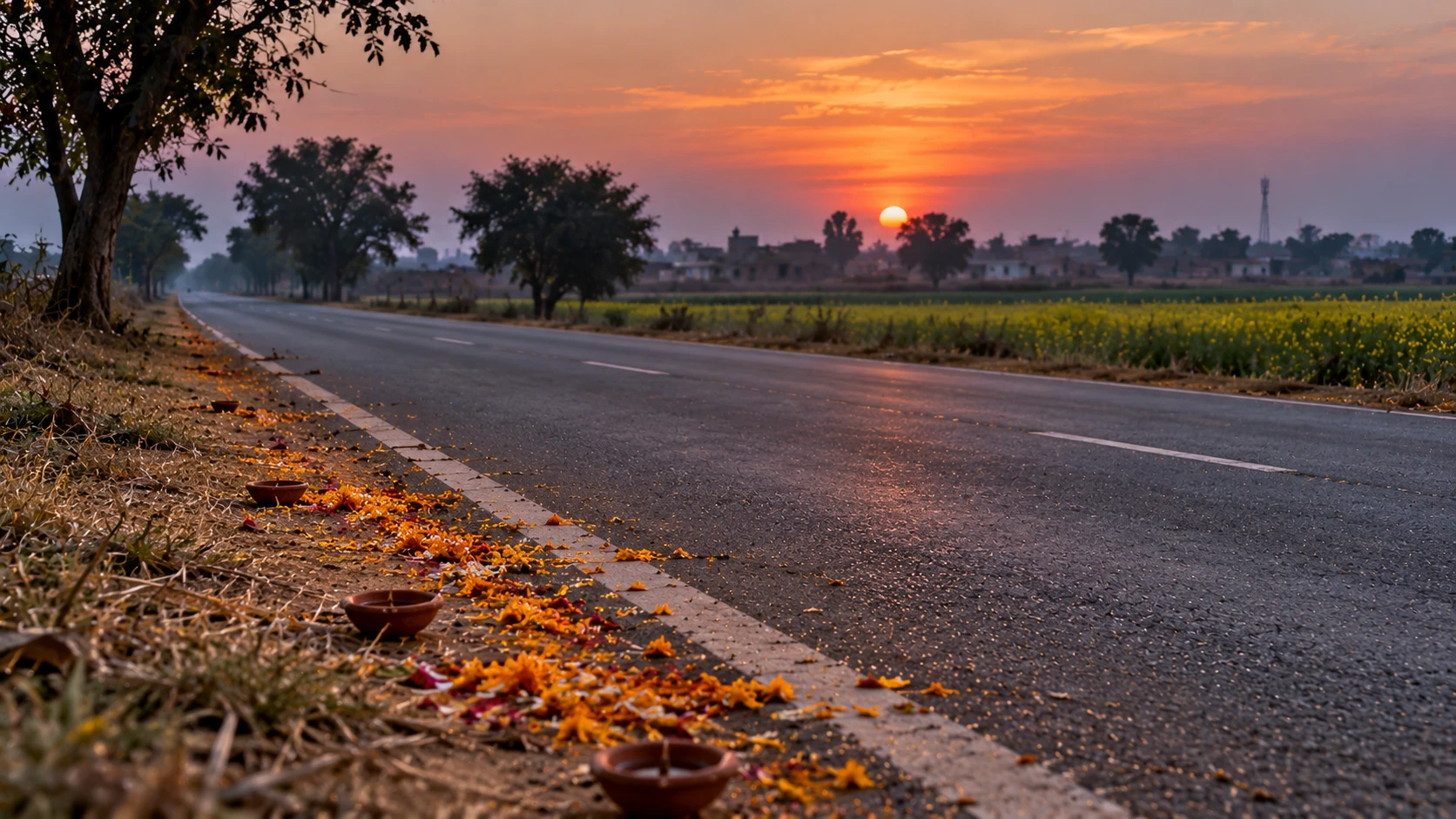
Arrive Alive, a South African road safety organisation, explains it plainly. Your eyes have to keep adjusting to changing light. The sky may still be bright while the road is darker, with deep shadows and less contrast. There is not enough darkness for headlights to work at their best, hazards appear closer before you can react, and many drivers are tired after the day. It says the eyes can take up to 30 minutes to adapt fully to darkness, and that a 50-year-old may need twice as much light to see comfortably as a 30-year-old. The advice is from South Africa, which also drives on the left, and is not Indian guidance, but the eye is the same.
If you drive or ride
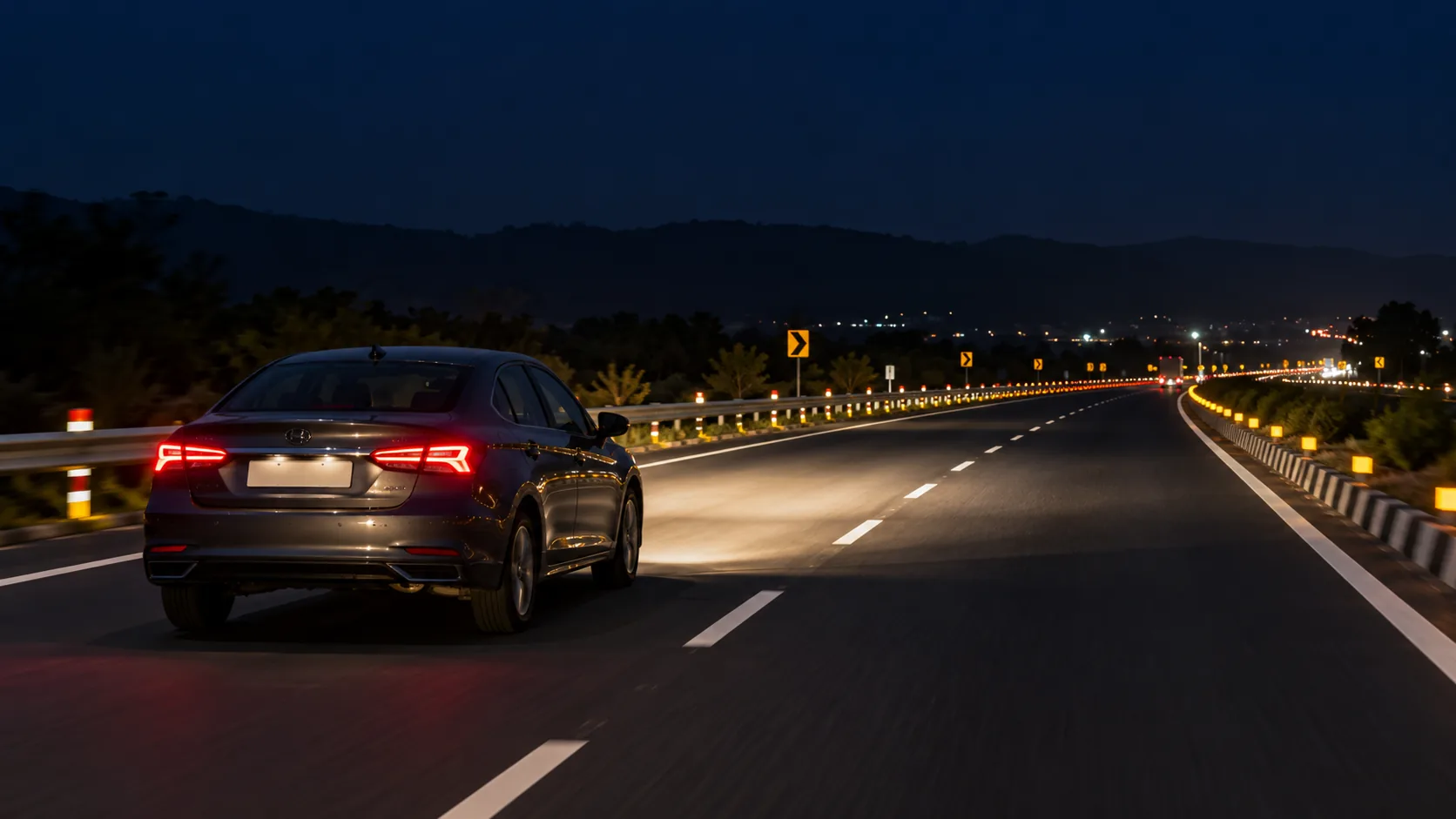
- Put your lights on early. Arrive Alive says to use headlights at dusk and switch to low beam when other vehicles are near. Our guide to night driving safety sets out the lighting rule in the Motor Vehicles (Driving) Regulations, including dipping the high beam in good time.
- Clean glass and lamps. Clean the windscreen on both sides, the mirrors and the lamps, and keep sunglasses and the sun visor within reach for a low western sun. Take tinted glasses off once it is dark. Dim the dashboard lights.
- Slow down and leave more room. Speed matters more than it feels. The World Health Organization says every 1 per cent rise in mean speed brings a 4 per cent rise in the risk of a fatal crash, and that a pedestrian’s risk of death when hit by the front of a car rises 4.5 times between 50 and 65 kilometres an hour.
- Do not stare into glare. Look ahead and towards the left edge of the road. If you are blinded, slow down and steer towards the left edge until you can see again, and never stop on the travelled part of the road.
- Watch for people, cyclists and animals. Arrive Alive tells drivers to look out for pedestrians, joggers, cyclists and livestock, especially on rural roads. Rural roads had 59.7 per cent of road accidents in NCRB’s 2024 figures.
- On a two-wheeler, keep the headlight on, wipe the visor, strap the helmet and stay out of a truck’s blind spot. These last points are our suggestions. Two-wheeler riders were 48.3 per cent of road deaths in NCRB’s 2024 count (84,599), and 46.2 per cent in MoRTH’s. Our guide to choosing and fitting a BIS helmet covers the helmet.
- Tired after work? Arrive Alive notes that evening drivers are often tired. If your eyelids droop or you drift in the lane, stop at a safe place and rest. Our guide to driving home after a family function covers tiredness in more detail.
If you walk, or your children do
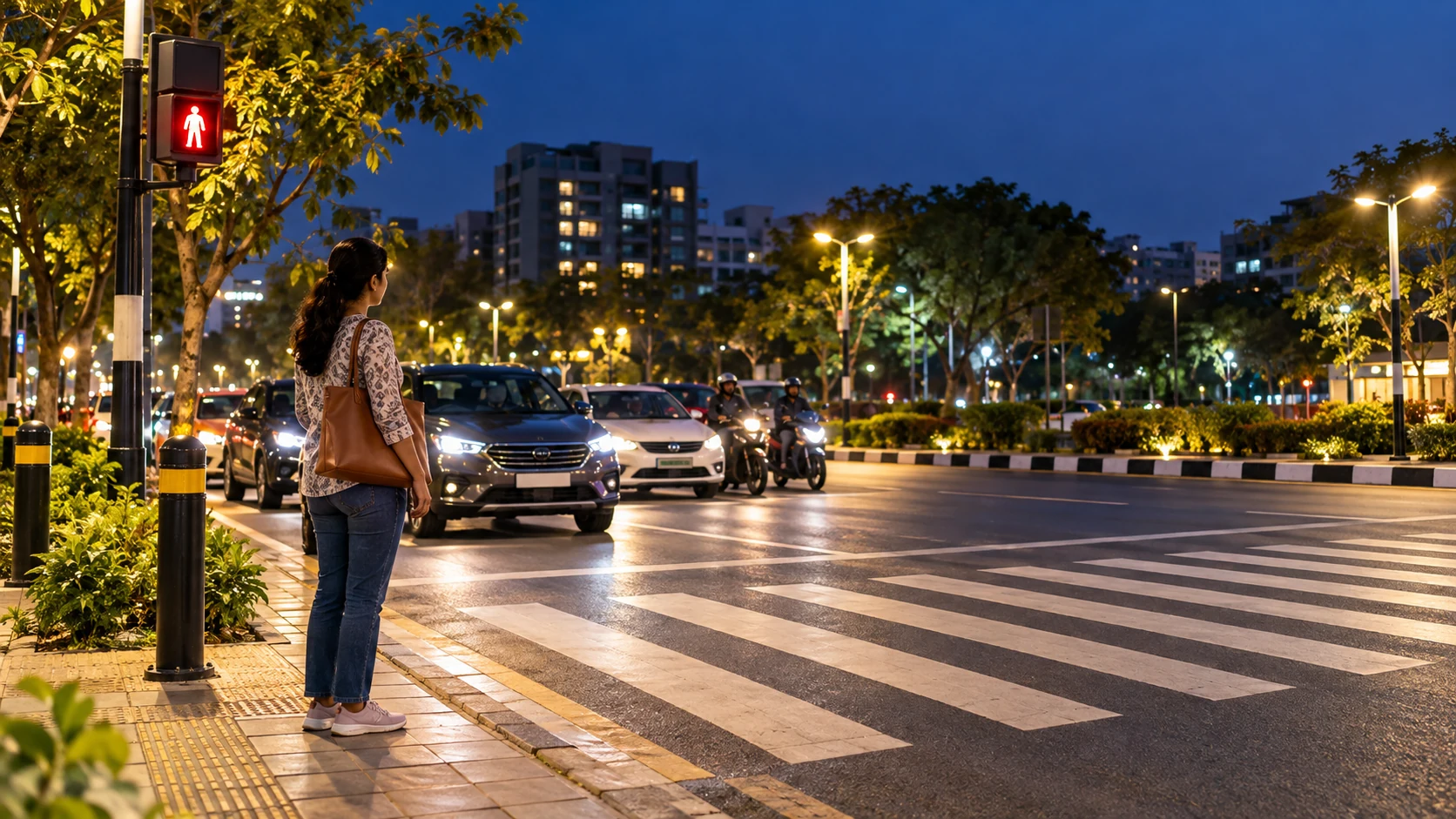
- Use the crossing or the signal, and look in every direction before you step out. A driver whose eyes are still adjusting may not see you, even if you can see him. Our guide to night walking safety has a route plan, and our guide to walking on Indian roads covers crossings.
- Be easy to see. Light or reflective clothing helps. Arrive Alive says a cyclist’s risk of a crash is four to five times higher in darkness than in daylight. Our guide to high visibility clothing explains what to buy.
- Keep to the footpath and do not step into the lane to save a minute.
- Parents: if you can, plan tuition, play and market trips so that the walk or ride home is not at the darkest and busiest point of the evening. This is our suggestion, not a rule.
If there is a crash
Do not make a second one. Stop only where it is safe, switch on the hazard lights and call 112, or 108 for an ambulance. Our guide to how to call 112, 101 or 108 says what to tell the control room, and our guide to road accident first aid covers what to do before the ambulance arrives. Two recent evening cases on our site show how fast it happens: the Jalore road crash in Rajasthan, at about 7 pm on 8 November 2026, and the Firozabad procession crash in Uttar Pradesh, at about 8.30 to 9 pm on 25 October 2026. Neither has a cause established here.
What we could not confirm
We did not find an Indian official advisory on evening or dusk driving in the pages we could open; the Delhi Traffic Police page we tried returned an access error. The driving tips come from a South African road safety organisation and the speed figures from the WHO. We read NCRB’s chapter text, not its State-by-time table, so only the figures in the text are used. The video below is general road safety learning and was not watched in full. This page is general safety information, not a legal checklist.
Do this today
- Switch your lights on before it is dark, and clean the windscreen and lamps.
- Leave a longer gap between 6 pm and 9 pm than you would at noon.
- Cross only at a crossing or signal, and wear something light or reflective.
- If you are tired at the end of the day, rest before you drive on.
What needs attention
- 6 pm to 9 pm is the busiest slot for road accidents in both NCRB's and MoRTH's 2024 data; in MoRTH's table it has been busiest every year from 2020 to 2024.
- The three hours from 3 pm to 9 pm hold about 38 per cent of accidents (our sums).
- The figures count accidents, not deaths, and are not adjusted for traffic volume.
- No source we opened gives a cause for the evening peak.
- Dusk is hard on the eyes: the sky is bright, the road is dark and drivers are often tired (Arrive Alive).
Controls that reduce risk
- Switch your lights on before it is dark.
- Clean the windscreen, mirrors and lamps.
- Slow down and leave a longer gap from 6 pm to 9 pm.
- Cross only at a crossing or signal, in light or reflective clothing.
- Rest if you are tired.
Common unsafe practices
- Leaving the headlights off because the sky still looks bright.
- Driving at noon speed through the dusk hour.
- Staring into oncoming headlights instead of looking at the left edge of the road.
- Stopping on the travelled part of the road when blinded.
- Crossing in a gap because you can see the traffic, forgetting that the driver may not see you.
- Driving on when tired at the end of the day.


Leave a comment