
Quick answers
What is the LPG gas leakage complaint number?
1906, the 24x7 LPG emergency helpline. HPCL's complaints page says to call it in case of LPG gas leakage, and the Indian Oil and Ministry of Petroleum videos give the same number. Use it for the leak itself. Delivery and billing complaints go to your distributor.
What should I do if I smell LPG gas at home?
Close the burner knobs, put out every flame, turn the regulator knob clockwise to OFF, open all doors and windows, avoid electrical switches and get everyone out. Call 1906 from outside. Call 101 or 112 if there is a fire or the leak does not stop.
Can I switch on the light or fan if I smell gas?
No. The PMUY guidance says not to operate electrical switches when you smell gas. A small spark can ignite a gas-filled room. Open the doors and windows by hand and leave.
How do I check an LPG cylinder for a leak?
Never use a match or lighter. PMUY's guidance suggests placing your thumb on the cylinder valve, where a strong leak can be felt as pressure, and using soap solution only for the bung and body. For a hose or regulator, switch the regulator off and call your distributor.
Should I call 1906 or 101 or 112?
Call 1906 for a gas leak you can contain by switching the regulator off and ventilating. Call 101 or 112 if there is a fire, if the leak does not stop, if someone is unwell or if the smell is in a shared stairwell.
How do I read the date on my LPG cylinder?
The code on the inside of a stay plate is a letter and two digits. It is the due date for the next safety test, not an expiry date. Our LPG cylinder test date checker reads it for you.
How often should I change the LPG hose?
PMUY's guidance says a Suraksha hose has a life of five years. Check it regularly, replace it if it cracks and change it before its expiry date. Keep it uncovered and visible.
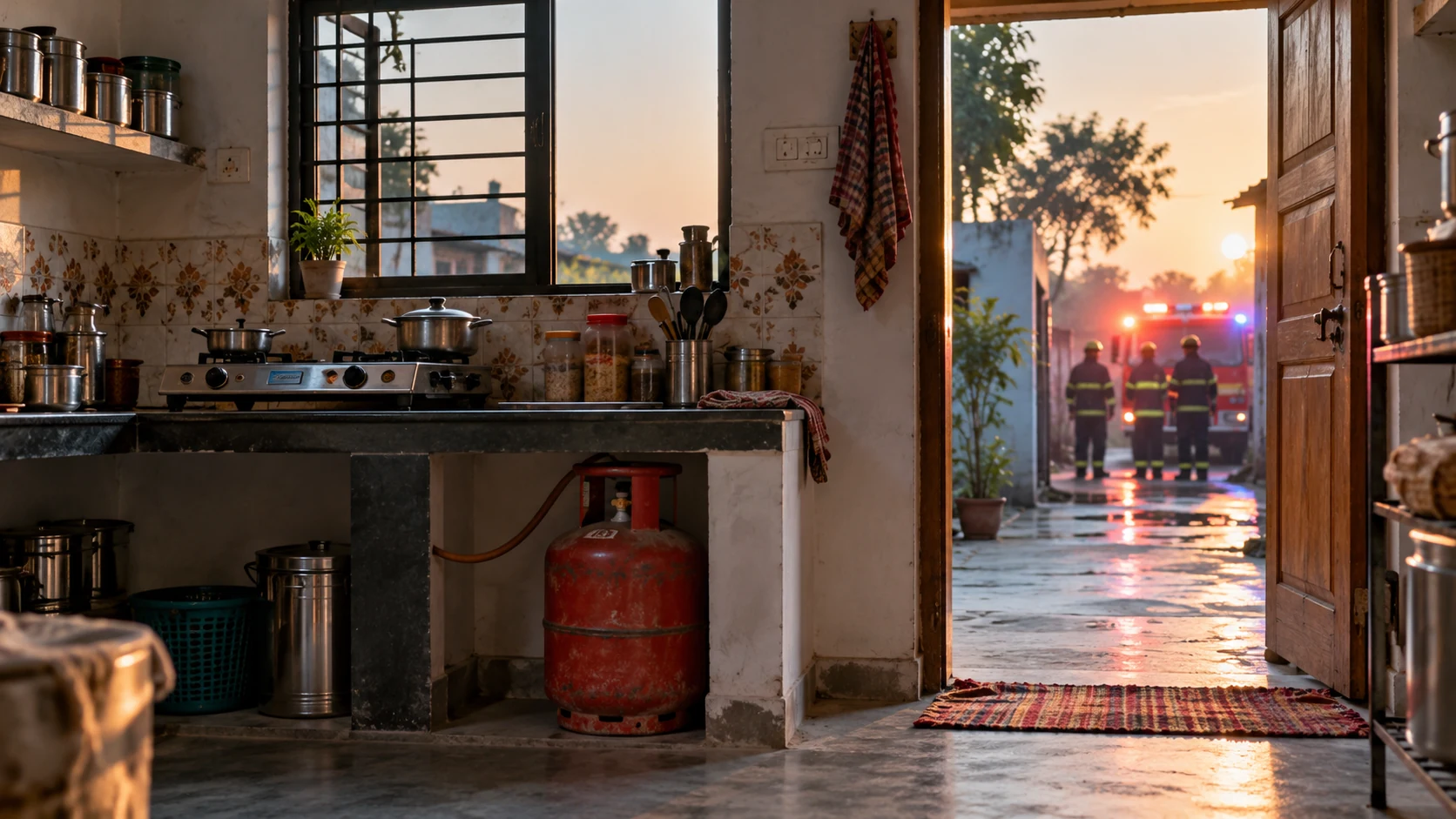
It is late evening, the dal is on the stove, and you catch a sharp smell that was not there a minute ago. Most of us have been through that moment at least once. What you do in the next sixty seconds matters more than anything you do afterwards. This page is written to be read once now, in calm, so that the steps are already in your head when the smell comes. It is about a leak from a household LPG cylinder, regulator or hose. We have separate pieces on kitchen fire rules and on the bigger picture of gas leaks in India, which you will find in the related reading below.
In short
- No flame, no switch. Do not light a match, and do not switch any light, fan or appliance on or off.
- Regulator off. Close the burner knobs and turn the regulator knob clockwise to OFF.
- Air in. Open all doors and windows by hand, then get everyone out.
- Call from outside. The LPG emergency helpline is 1906. For a fire, or a leak you cannot stop, call 101 or 112.
The first minute, step by step
- Check that every burner knob is in the closed position.
- Put out every flame in the room. That includes the diya, the agarbatti and the puja lamp, which are easy to forget.
- Do not light a match or a lighter to look for the leak.
- Turn the regulator knob clockwise to the OFF position.
- Open all doors and windows by hand. Do not touch the switch of a fan or an exhaust to push the gas out.
- Do not operate any electrical switch, and keep your phone out of the room until you are outside.
- If the smell persists, the PMUY consumer guidance says to detach the regulator, fix the safety cap on the valve and take the cylinder to a safe, ventilated place away from any flame. Our suggestion: do this only if the smell is mild and you can reach the cylinder without walking through a room full of gas. If the room is thick with gas, do not go back in. Leave it to the distributor or the fire brigade.
- Get everyone out, children and elders first, and call from outside.
Who to call, and in what order
1906 is the 24×7 LPG emergency helpline run by the oil companies. HPCL’s own complaints page says: in case of LPG gas leakage, call 1906. The Indian Oil and Ministry of Petroleum videos listed below carry the same number. It is the line for the gas leak itself, and it is also the number people search for as the LPG gas leakage complaint number. You can also tell your distributor.
101 or 112 is for when there is already a fire, when the leak does not stop after the regulator is off and the cap is on, when someone feels dizzy or unwell, or when the smell is in a stairwell or a shared passage of a building. Our guide on the fire brigade number in India tells you what to say when the control room answers, and the emergency numbers page keeps the other numbers together.
What not to do
- Do not use a match or lighter to find the leak. The PMUY guidance says exactly this.
- Do not flip a switch, plug in a charger or use the doorbell. A small spark is enough.
- Do not repair a leaking regulator or hose yourself. PMUY’s guidance puts it in three words: self repair is unsafe.
- Do not go back in for the phone, the documents or the pets once you are out.
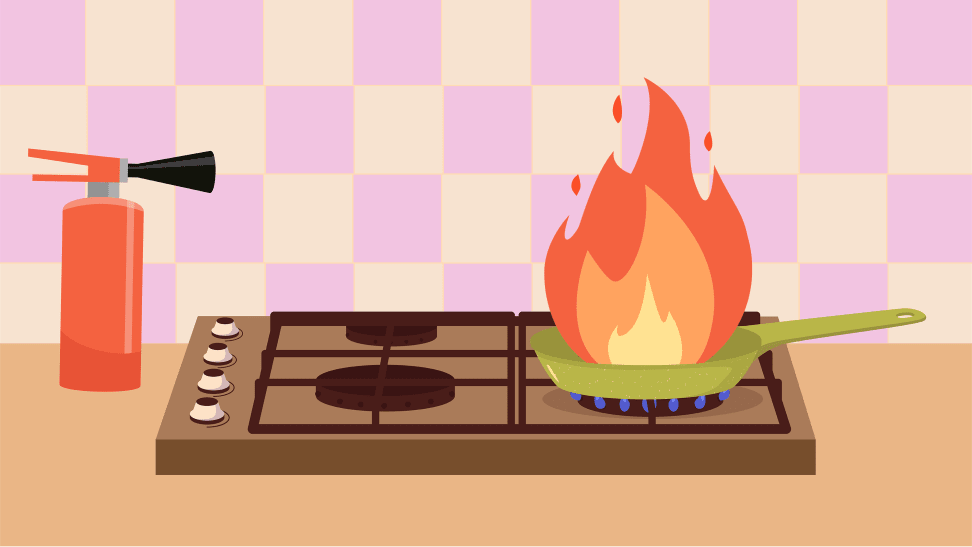
- Do not try to fight a burning cylinder with a household extinguisher. Move away and call 101 or 112.
How to check a cylinder and the kitchen
The PMUY guidance gives a simple way to look for a leak at the valve: place your thumb on the cylinder valve for a few seconds, and a strong leak can be felt as pressure. It says soap solution may be used only for checking the bung and body of the cylinder. For a hose or regulator you suspect, switch the regulator off and call your distributor instead of experimenting.
Every cylinder also carries a code stamped inside one of its stay plates. It is not an expiry date but a due date for the next safety test, and it is worth reading every time a new cylinder is delivered. Our LPG cylinder test date checker reads it for you in a few seconds.
Small habits that prevent most leaks
- Switch the regulator off every night before you go to bed.
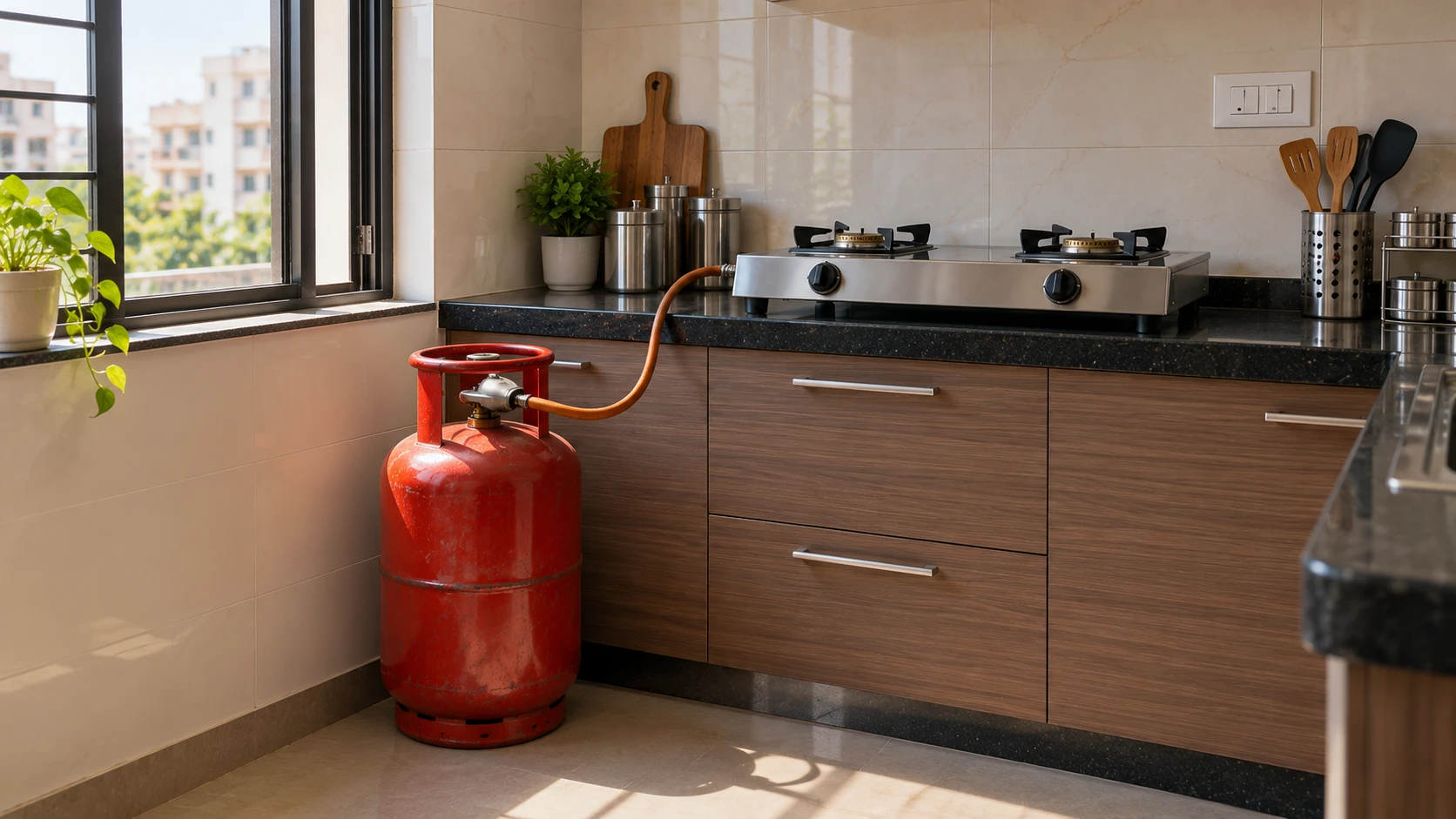
- Keep the cylinder upright, and keep the stove on a platform above the level of the cylinder. Never keep a cylinder in a pit below floor level or inside a closed cabinet.
- Use a Suraksha hose with ISI-marked fittings. PMUY says its life is five years, to check it often and to change it before the expiry date. Keep it uncovered and visible.
- Keep the safety cap that comes tied to the cylinder, and put it back whenever a cylinder is changed.
- Put off all flames, including puja lamps and agarbatti, and do not touch electrical switches while connecting or disconnecting a cylinder.
- Keep curtains away from the window near the stove, and keep children away from the cylinder.
- Get the whole installation checked every two years, as PMUY advises.
What went wrong in real cases
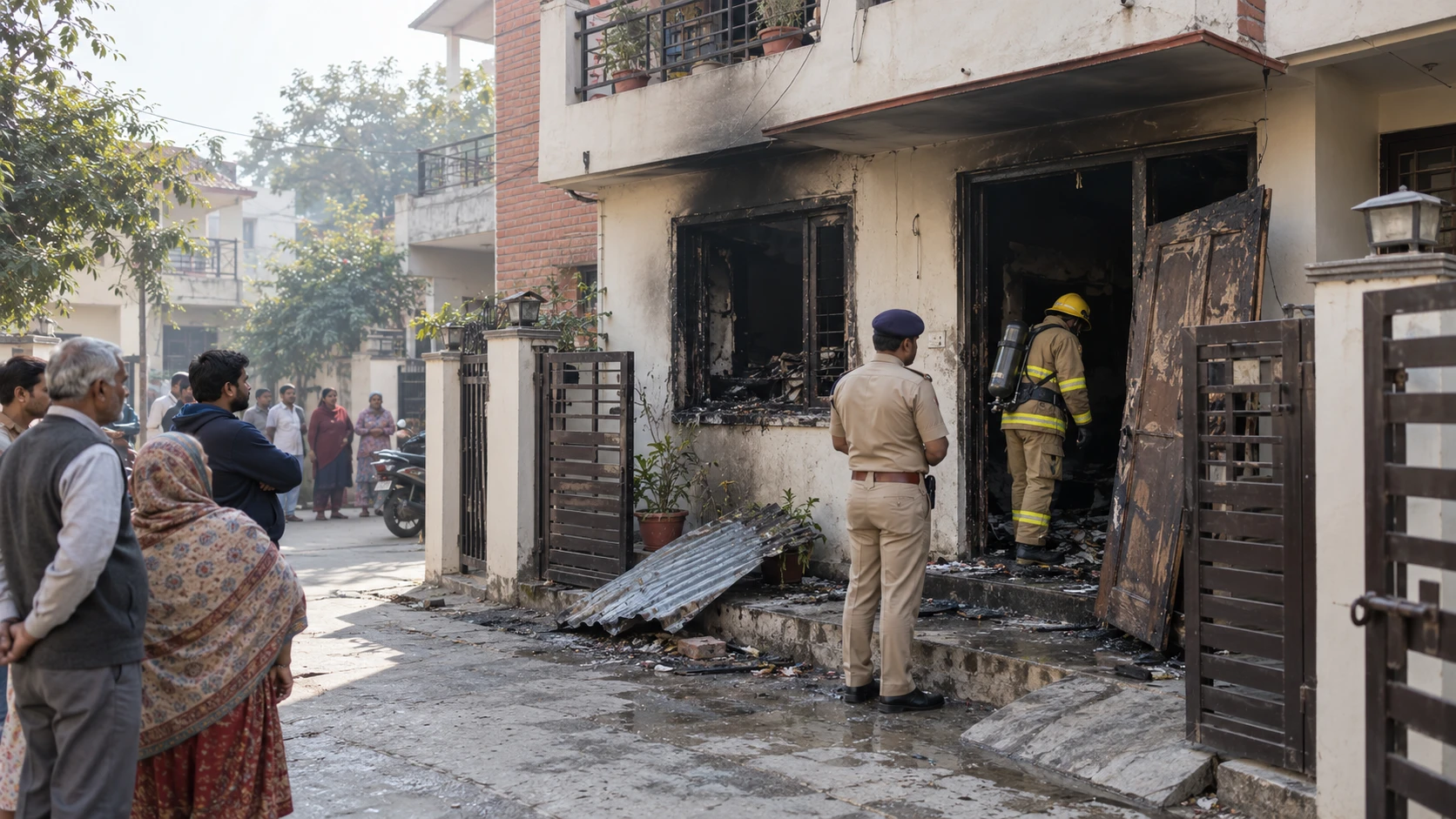
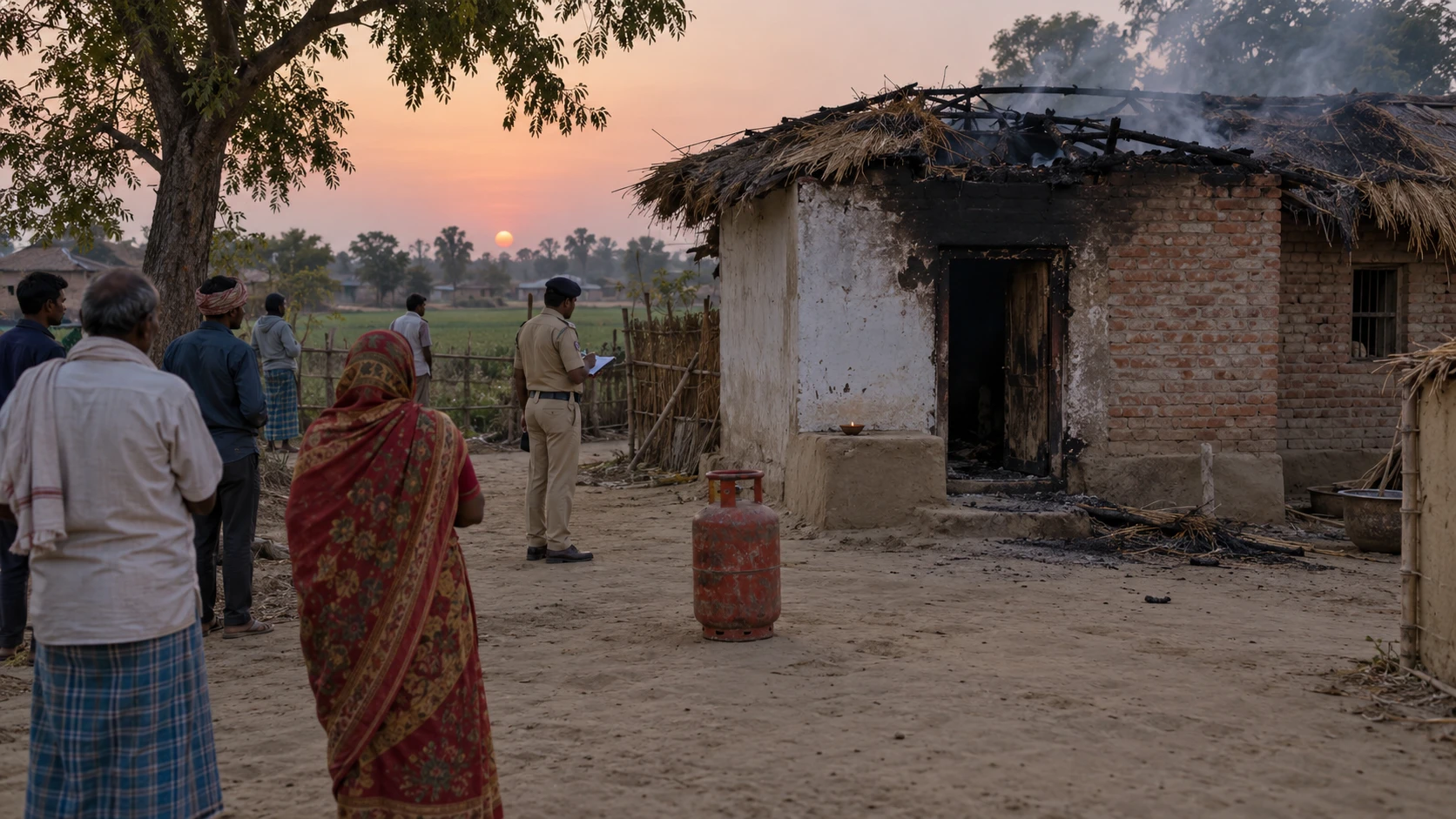
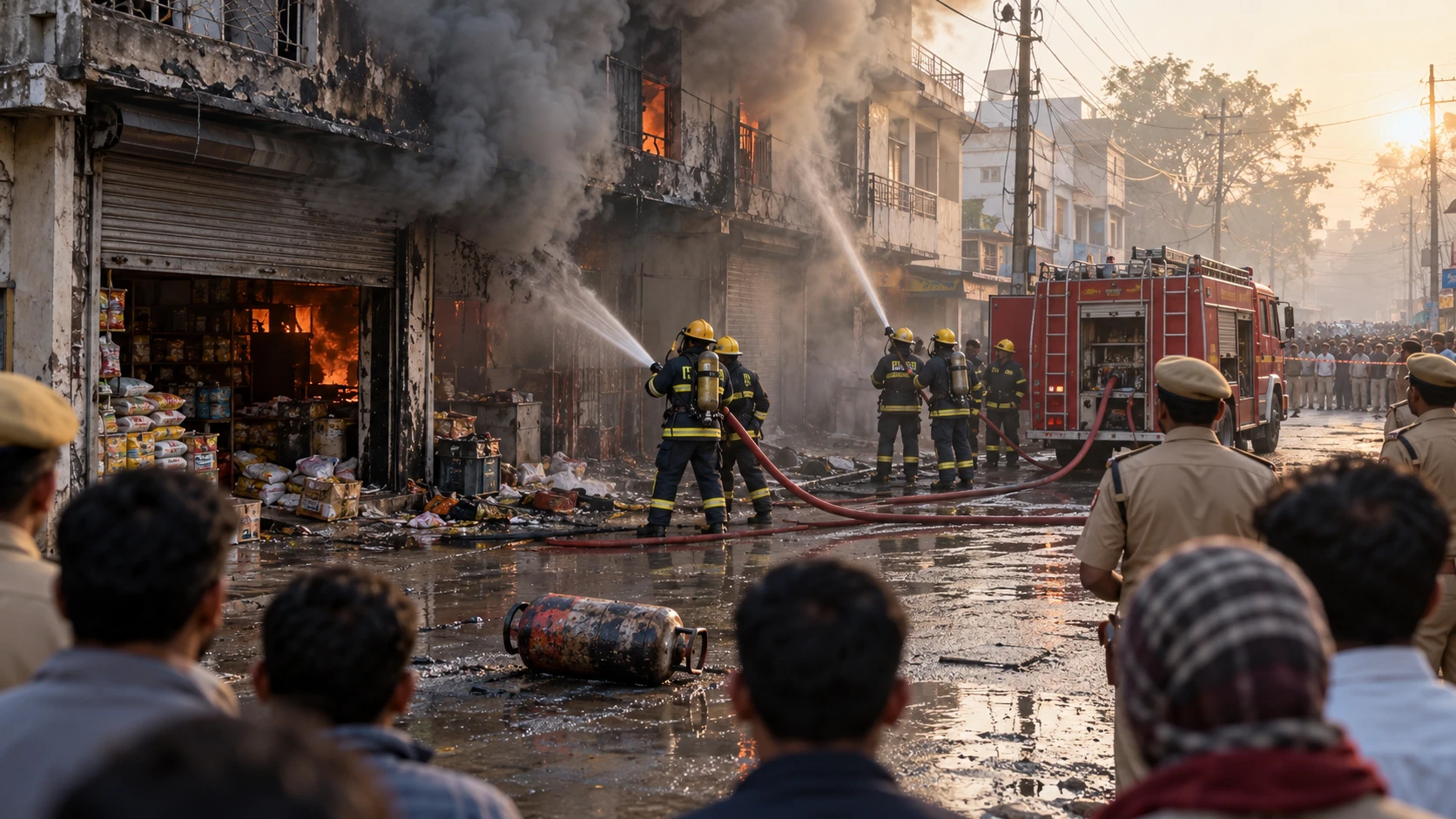
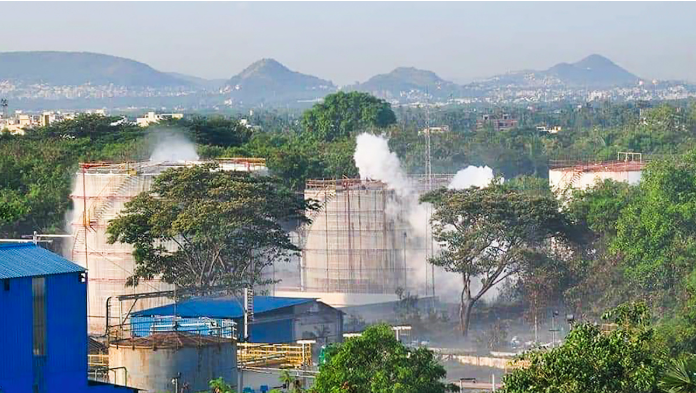
In several of our case studies a leak turned into a fire because of something small. One report from Gorakhpur, the Rapti Nagar LPG fire, involved a gas leak during cylinder repair, and another from Bihar, the Gopalganj LPG leak fire, involved children. Both are reminders that the first minute decides the outcome. If you want the statistics side, read our explainer on gas leaks since Vizag 2020 in the related reading.
What we could not confirm
- How quickly the 1906 call centre sends someone. The ministry’s video says leaks are resolved within a few hours, but we saw no official service level, so we have not promised one.
- Whether your own distributor has a different or additional emergency number. Check the sticker on your cylinder card or booking receipt.
- The exact wording of every oil company’s own leak guidance. We read the PMUY consumer guidance and the HPCL helpline page. The Indane, Bharat Gas and PCRA videos listed below were not watched in full.
- We found one public Facebook video from Indian Oil that we could open and match. We found no public Instagram or LinkedIn video we could open and match.
Do this today
Walk to your kitchen and find the regulator knob. Show everyone at home which way is OFF. Look at the date on your hose. Save 1906 in your phone and write it on the kitchen wall near the cylinder. Checked 28 October 2026.
What needs attention
- PMUY's consumer guidance tells users who smell gas to close the regulator and burner knobs, open all doors and windows, put off all flames and avoid electric switches.
- The same guidance says not to use a lighted match to check for leaks and that self repair is unsafe.
- HPCL's complaints page lists 1906 as a 24x7 LPG emergency helpline for gas leakage.
- Indian Oil and Ministry of Petroleum videos on YouTube carry the same number in their titles or descriptions.
- The guidance calls for a Suraksha hose with a five-year life, kept visible, and an installation check every two years.
- We found no official figure for how fast a 1906 call is answered on the ground.
Controls that reduce risk
- Teach every adult and older child which way the regulator knob turns to OFF.
- Save 1906 and your distributor's number in your phone.
- Check the hose date and change it before it expires.
- Keep the stove above the cylinder level and the cylinder upright.
- Check the test-date code each time a new cylinder arrives.
- Switch the regulator off every night.
Common unsafe practices
- Switching on the light or fan to see where the smell is coming from.
- Lighting a match or lighter to find the leak.
- Staying inside to fix the regulator or hose.
- Forgetting the diya, agarbatti or a pilot flame in the next room.
- Calling for help from inside the gas-filled room.
- Leaving the regulator on overnight and the hose uncovered under clutter.
 ↗



Leave a comment