
Quick answers
What is the hit and run compensation scheme?
The Compensation to Victims of Hit and Run Motor Accidents Scheme, 2022 came into force on 1 April 2022. According to a Delhi district magistrate page it pays Rs 2,00,000 for a death and Rs 50,000 for grievous hurt, where the vehicle remains unidentified despite investigation.
How do I claim hit and run compensation?
The police should tell the victim or family about the scheme within a month of identifying a hit-and-run case. Claimants apply on Form I (injured person) or Form IV (family) to the Claims Enquiry Officer, who is the sub-divisional magistrate. The page we read states no deadline.
What does Section 134 of the Motor Vehicles Act say?
A driver, or the person in charge of the vehicle, must take all reasonable steps to get the injured person medical attention, report the accident at the nearest police station within 24 hours if no officer is present and give the insurer written particulars. A driver includes the owner.
What are the night driving safety tips for a hill highway?
Drive at a speed that lets you stop within the distance you can see, use dipped beam, use a lower gear downhill, do not overtake on curves, sound the horn at blind turns and stop at a safe wide spot if fog or rain cuts visibility. These are common practice, not a legal checklist.
Is it safe to travel in a shared tempo at night?
There is more risk than in a regulated vehicle with seat belts and lighting. If it is overloaded, or the driver looks tired or drunk, do not board. Share your trip details and prefer an authorised cab for the last stretch if you can.
What should I do after a road crash at night?
Switch on hazard lights, keep out of the lane and call 112 with the highway number and landmark. Do not move the injured unless there is danger, stop heavy bleeding with firm pressure and note the number of any vehicle that left.
Does a driver who flees after a crash break the law?
Section 134 requires a driver to take reasonable steps to get the injured person medical attention and to report to the police within 24 hours if no officer is present. Whether a particular driver has broken it is for the police and the courts to decide.
Two road crashes on the evening and night of Tuesday 27 October 2026 point at the same quiet risk. Late that night near Garkha in Saran district of Bihar, a truck and a passenger tempo collided head-on on NH-722, and four people died; the truck driver is reported to have driven off. Our report on the NH-722 truck and tempo crash says, citing some reports, that the tempo was carrying a family returning from a wedding, who had hired it at a railway station for the last stretch. The same evening in Padrauna, Uttar Pradesh, a roadways bus ran through the town for about five kilometres; police say a breath test found the driver drunk, and one person died. See the Padrauna bus case. Neither case has a final finding, and nothing here is blame. They are the reason for this page: what you can do before and during a night journey in a shared tempo, auto or bus, on a hill road or a plain one, and what the law asks of a driver after a crash.
In short
- The last stretch is the risky one. A shared tempo or auto at night has no seat belts, little lighting and often too many people.
- If it looks overloaded or the driver looks tired or drunk, do not get in. Wait for the next one.
- After a crash: call 112, keep clear of traffic and do not move the injured unless there is danger.
- The law asks a driver to stop and help. Section 134 of the Motor Vehicles Act requires reasonable steps to get the injured person medical help and a report to the police within 24 hours.
- If the vehicle that hit you ran away, a government scheme pays Rs 2,00,000 for a death and Rs 50,000 for grievous hurt.
Before you get in a tempo or auto at night
- Look at the vehicle. Check the lights, tyres and the load. If it is packed beyond its seats, or people are hanging off the back or the sides, wait. This is our suggestion, not a tested rule, but it is the simplest one.
- Look at the driver. If he is drowsy, smells of alcohol or drives badly, do not board. If you are already on board, ask him to stop and get off at a lit place, then call 112.
- Share your trip. Message a family member the vehicle number, the time and your drop point. It takes ten seconds.
- For the last stretch, an authorised cab or a prepaid auto from the station is better than a stranger’s tempo, if one is available. If it is not, and the journey is short, wait for daylight, or travel in a group.
Where to sit and how to ride
There is no tested seating rule for a shared tempo in the sources we read, so these are plain suggestions. In a head-on crash the front takes the hit, so if you have a choice, avoid the seat next to the driver and keep children away from the open sides and the tailgate. Sit where you have something solid in front of you to brace against, and do not stand or hang on the door. Keep your phone charged, and keep your bags on your lap or at your feet, not on the seat beside you, so you can get out fast.
Night visibility and fog
At night a driver sees less road and less warning. Our guide to night driving safety says to drive at a speed that still lets you stop within the distance you can actually see. In fog, use dipped beam and the hazard lights when you are stopped, and slow down early. Do not overtake into a distance you cannot see. As a passenger you can say so: ask the driver to slow down, politely and early. Our page on night bus crashes in India and South Asia has the official figures and what a passenger can check on a long-distance coach.
Hill highways at night
Hill roads add bends, drops and blind turns. A few habits that most drivers are taught: use a lower gear going down instead of riding the brake, keep to your side on a bend, do not overtake on a curve or near a crest, sound the horn at blind turns, and let the uphill vehicle pass where the road is narrow. On 28 October four men returning from the Kullu Dussehra fair died when their vehicle fell into a gorge near Kiratpur Sahib in Punjab; the cause is not known, and our report sets out what was published. These are common practice, not a legal checklist, and we did not read a rule that says so. In the rains, check the weather colour code before you start, as we explain in our guide to driving hill roads in red-alert rain. If there is fog, mist or rain after dark, the sensible choice on a hill road is to stop at a safe wide spot and wait.
If a crash happens
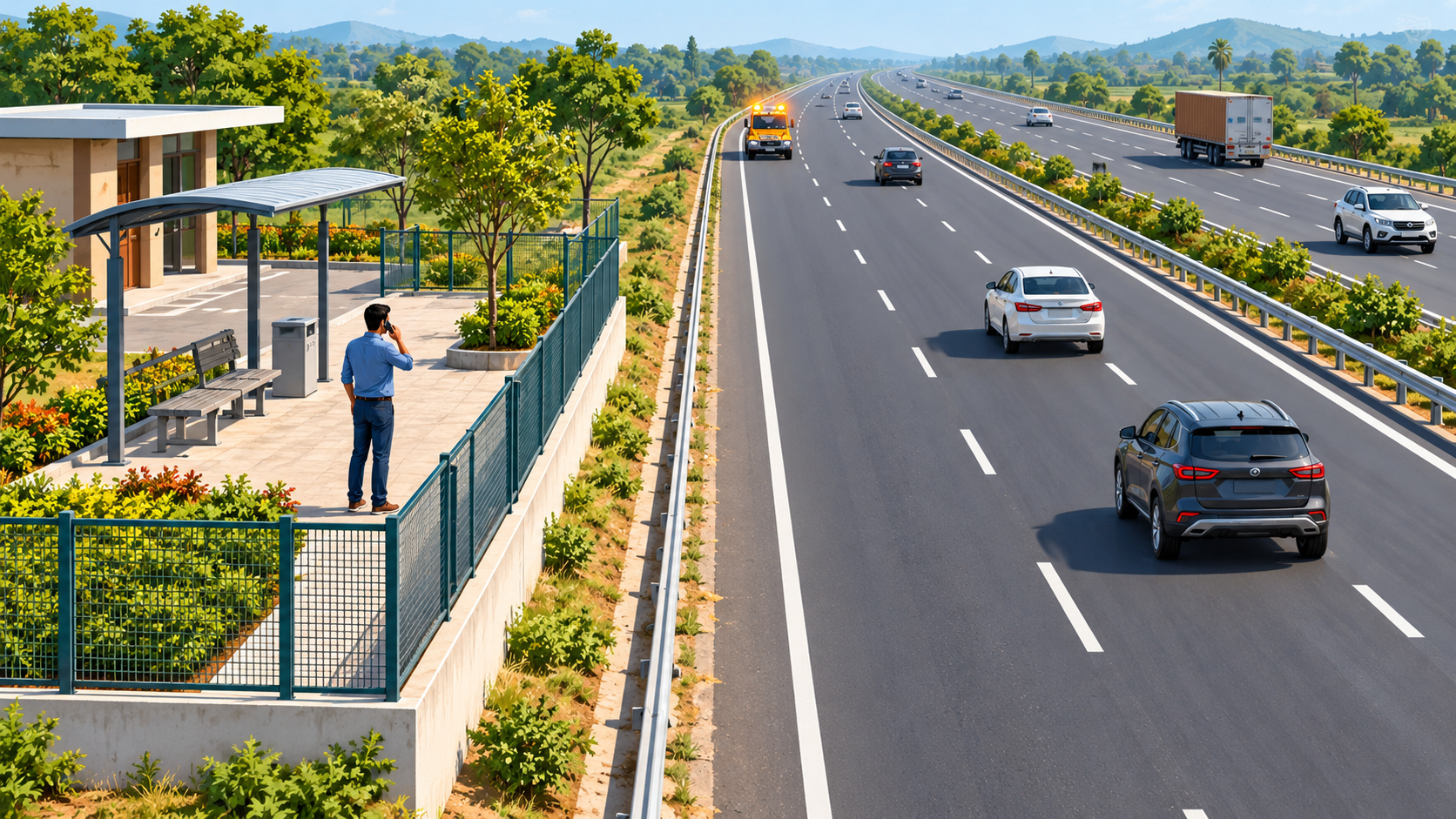
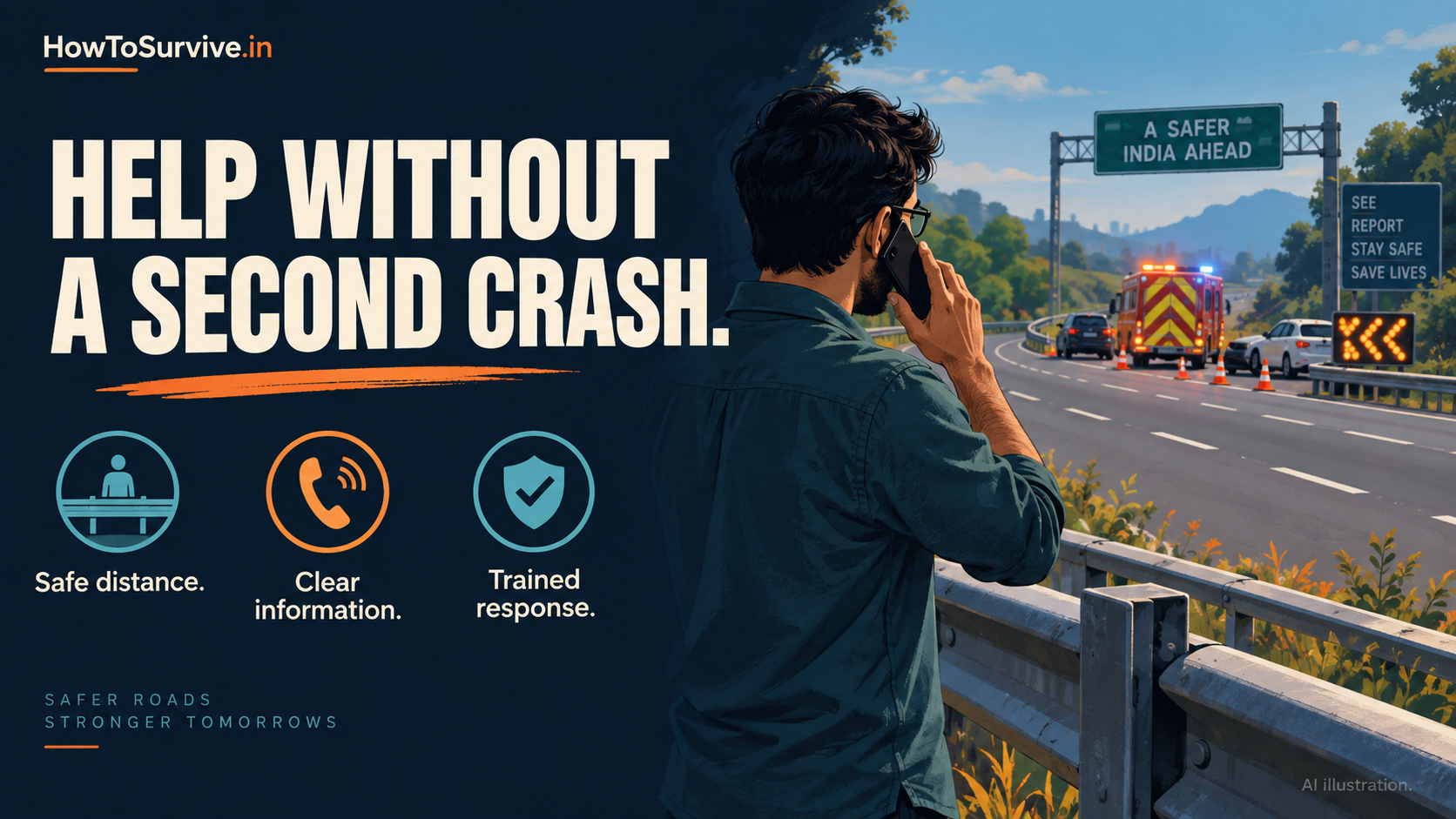
- Stop where you are safe, switch on the hazard lights and keep out of the traffic lane. Do not create a second crash.
- Call 112. Give the highway number, the nearest landmark or kilometre stone and the direction.
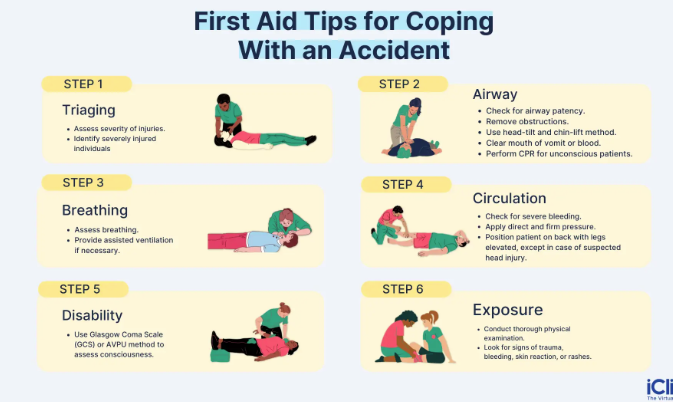
- Do not move an injured person unless there is danger such as fire or oncoming traffic. Stop heavy bleeding with firm pressure. Our guides to road accident first aid and the golden hour explain what a bystander can do.
- Do not let a crowd gather in the road. Send someone up the road to warn oncoming vehicles.
- Note the vehicle number, colour and the direction it went if anyone left. Photograph the scene if it is safe to do so.
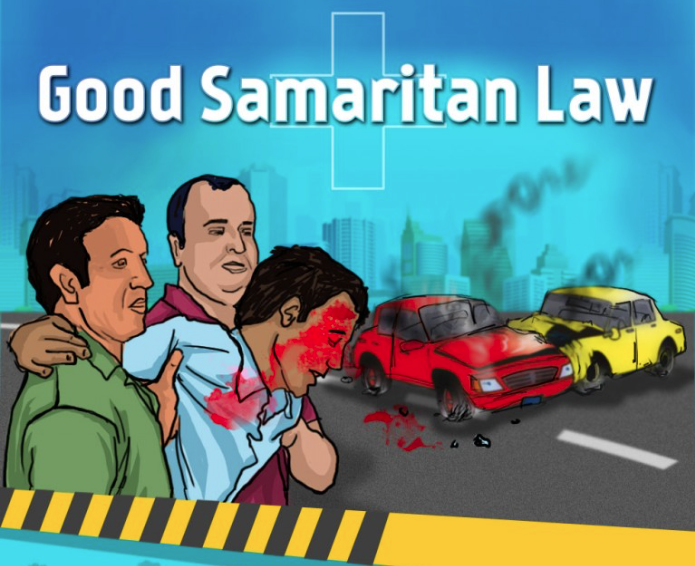
- Remember that a bystander who helps is covered by the Good Samaritan rules. Read our explainer on the witness’s safe-help guide and the Good Samaritan rules in the related reading below.
What the law asks of a driver after a crash
Section 134 of the Motor Vehicles Act, 1988 is headed duty of driver in case of accident and injury to a person. It asks the driver, or the person in charge of the vehicle, to take all reasonable steps to secure medical attention for the injured person, unless it is not practicable because of mob fury or another reason beyond his control. On a police officer’s demand he must give the information asked for; if no officer is present, he must report the accident at the nearest police station as soon as possible and within 24 hours. He must also give the insurer written particulars of the accident. The section says that a driver includes the owner of the vehicle. A driver who flees breaks these duties.
If the vehicle that hit you was never found
The Compensation to Victims of Hit and Run Motor Accidents Scheme, 2022 came into force on 1 April 2022. According to the Delhi South-West district page we opened, it pays Rs 2,00,000 to the family of a person who dies and Rs 50,000 to a person who suffers grievous hurt, from the Motor Vehicle Accident Fund, where the vehicle remains unidentified despite investigation. Police are to tell the victim or family about the scheme within one month of identifying a hit-and-run case, and to send the first accident report to the Claims Enquiry Officer within one month of registering the accident. Claimants apply on Form I (injured) or Form IV (family) to the Claims Enquiry Officer, who is the sub-divisional magistrate. The page states no deadline for the claim. This page is about Delhi’s South-West district, so ask your district magistrate’s office who your Claims Enquiry Officer is.
What we could not confirm
- Any official seating rule for shared tempos. The seating advice above is ours.
- Any rule on how many passengers a tempo or auto may carry in your state. Check your vehicle’s registration or permit.
- The cause of the Saran crash. Reports describe a head-on collision and a truck driver who left; no report we read gives the truck’s number, the speed or a police finding.
- The Padrauna driver’s guilt. It is the police version, and no court has decided.
- Whether the hit-and-run scheme’s amounts or forms have changed since 2022. We read one district magistrate page, and Section 134 on a legal site, not the official gazette.
- We found no public Instagram, Facebook or LinkedIn video we could open and match, so the videos below are from YouTube.
Do this today
Save 112 in your phone. Tell the people who travel late, a parent, a child, a night-shift worker, that they can say no to a crowded or unsafe vehicle and wait. Share the page with them. Checked 28 October 2026.
What needs attention
- Section 134 of the Motor Vehicles Act, 1988 requires a driver to take all reasonable steps to secure medical attention for an injured person, and to report at the nearest police station within 24 hours if no police officer is present.
- The section also requires written particulars to the insurer, and says a driver includes the owner.
- The 2022 hit-and-run scheme pays Rs 2,00,000 for a death and Rs 50,000 for grievous hurt where the vehicle remains unidentified.
- Our report on the Saran NH-722 crash records a head-on truck and tempo collision late on 27 October 2026 with four dead and a truck driver who reportedly left the spot; no cause has been established.
- Our report on the Padrauna bus case records police saying a breath test found the driver drunk; the driver's guilt has not been decided.
- We found no official seating or passenger-limit rule for shared tempos in the sources we read.
Controls that reduce risk
- Check the vehicle, the load and the driver before boarding.
- Share the vehicle number and time with someone at home.
- Ask the driver to slow down, early and politely, in fog or on bends.
- After a crash: hazard lights, 112, no unnecessary moving of the injured.
- Keep the first accident report and the FIR copy if the vehicle fled.
- Ask the police and the district magistrate's office about the hit-and-run scheme.
Common unsafe practices
- Getting into an overloaded tempo or auto because it is the only one.
- Staying on board with a driver who seems drowsy or drunk.
- Hanging on the door or sitting on the tailgate.
- Moving an injured person without need.
- Letting a crowd stand on the carriageway.
- Not noting the number of a vehicle that fled.


Leave a comment