
Quick answers
How often should I test the smoke alarms at home?
Test every smoke alarm once a month and follow the device instructions for placement, cleaning, battery and unit replacement. A monthly test does not mean every battery must be replaced monthly.
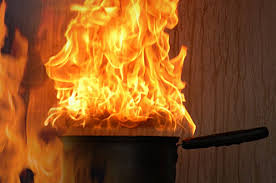
What should I do if a small oil pan catches fire while cooking?
Turn off the heat if it is safe and slide a lid over the small pan, leaving it covered until cool. Never add water or carry the burning pan, and evacuate if the fire grows.
How do I make a home fire escape plan for my family?
Draw the home with its exits, stairs and an outside meeting point, identify two routes where physically possible and assign a helper for each child, older adult or person with a disability. Practise the plan in daylight and darkness.
Can I plug a fridge or microwave into an extension cord?
Avoid temporary extension leads or overloaded power strips for major appliances; high-load equipment needs a suitable fixed supply. Get electrical work done by a qualified electrician.
Everyone wants to make sure their family and friends are safe. Putting fire safety first in your home is one way to keep your family safe. Teach your family how to avoid fires and what to do if one does happen. This will make sure your family is ready. Here are some tips for home fire safety:

Be Smart When Cooking
- Cooking is one of the main causes of home fires. Make sure you and your family use common sense and stay safe in the kitchen. Don’t walk away from your food while it’s cooking. Stay away from the stovetop with anything that could catch fire. Stay awake when you’re cooking, and don’t cook if you’re drunk or tired.
Home Escape Planning
- Make an escape plan for your home in case of a fire. Make sure that every room has two ways out. Walk through each room and find two ways out. Then, draw a map of your home that shows the exits and the place where everyone will meet. Pick a spot in front of your house to meet. Make sure that everyone in your house knows how to get out of the house.
Install Smoke Detectors
- If your home doesn’t already have them, you should put in smoke detectors. Every bedroom and every floor should have a smoke detector. More smoke alarms will be needed in bigger homes. Replace each alarm when its maker says to, or when it gives an end-of-life warning. US fire-safety advice is to replace smoke alarms every 10 years.
Test Smoke Detectors
- You should test the smoke alarms in your home once a month. Check to see that they all work. Change the batteries if you need to.
Electrical Safety
- Electrical fires can be stopped by making sure people know how to use electrical equipment safely. Make sure that a trained electrician does all of the electrical work in your home. Use only one heat-making appliance per plug. Don’t use extension cords or plug strips for big appliances like refrigerators, dryers, stoves, and microwaves.
Don’t Smoke Inside
- If you or someone else in your house smokes, you shouldn’t smoke inside. Smoking can cause fires. Make sure that cigarettes are put out and thrown away the right way. Don’t put a cigarette in mulch, grass, or other things that can easily catch fire.
Consider Installing Home Fire Sprinklers
- Put in a home fire sprinkler system to protect your home and your family. Fire sprinklers are one of the best ways to keep your family safe in case of a fire.
What needs attention
- The legacy statement that most house fires start in kitchens is a U.S. statistic; cooking is a major household hazard, but an India-specific national percentage was not verified
- The legacy 'three out of five' smoke-alarm death statistic and 'more than 80%' home-fire-death statistic were U.S. data and have been removed from India-facing claims
- A monthly alarm test does not mean every battery must be replaced monthly; sealed, replaceable and hard-wired backup batteries follow different instructions
- A ten-year alarm life is a common U.S. benchmark, not a universal Indian legal interval; check manufacture date, end-of-life signal and product instructions
- Smoke alarms warn; sprinklers control heat and fire; neither substitutes for the other or for escape
- A circuit breaker alone does not make an overloaded, undersized, poorly joined or unearthed circuit safe
- Repeated tripping, hot plugs, buzzing, discolouration and burning smell are warning signs that require isolation and competent assessment
- Inverter, rooftop solar, e-bike, power-bank and EV charging can introduce high energy and battery hazards that older home guides omit
- Apartment risk extends beyond the flat because common fire doors, stairs, alarms, pumps and access affect escape and firefighting
- Security grilles and locked doors can trap residents unless they open quickly from inside and are incorporated into drills
- Children should be taught to escape and report, not to retrieve valuables, pets or extinguish fires
- Sprinkler feasibility depends on approved design, water supply, maintenance and local requirements—not a do-it-yourself retrofit
Controls that reduce risk
- Put 112, LPG emergency 1906 and the full home address on a visible emergency card
- Test every smoke alarm and record its model, date and instructions
- Draw the home, exits, stairs and meeting point; mark the safest alternative where one exists
- Assign a primary and backup helper for each child, older adult or person with a disability
- Practise unlocking doors and reaching stairs in darkness
- Clear all exit routes, fire doors, alarm points, extinguishers and hose cabinets
- Inspect kitchen combustibles, chimney or hood grease, LPG hose and regulator area
- Remove high-load appliances from extension leads and arrange qualified electrical correction
- Check chargers and batteries for damage, swelling, heat, recall or makeshift repair
- Move smoking outside and provide a stable non-combustible ashtray
- Ask apartment management for alarm, pump, emergency-lighting and fire-door defect closure records
- Discuss residential sprinklers with a competent designer during construction or major renovation
- Teach children to get out, meet outside and tell an adult—never to hide
- Repeat the drill twice a year and after every major household change
- Report and document shared-area defects instead of assuming someone else has done so
Common unsafe practices
- Leaving frying or high-heat cooking unattended
- Throwing water on burning oil or moving the burning pan
- Operating a switch, fan or phone beside a suspected LPG leak
- Using extension cords or multi-plug adapters for high-load appliances
- Ignoring repeated breaker trips, hot outlets, loose plugs, buzzing or burning odour
- Charging e-bike or power-tool batteries in exits, bedrooms or beside combustibles
- Covering, removing or silencing smoke alarms after nuisance alarms
- Testing alarms but never practising what happens when they sound
- Blocking corridors, balconies, stairs, fire doors or firefighting equipment with household storage
- Locking an exit so keys cannot be found during smoke conditions
- Using the lift during a fire
- Smoking in bed, while sleepy, or near oxygen
- Buying an extinguisher or sprinkler product without design, training and maintenance
- Assuming apartment management alone is responsible for reporting visible fire-safety defects
- Returning inside for possessions or pets after evacuation

Leave a comment