
What happened here
 1 / 2
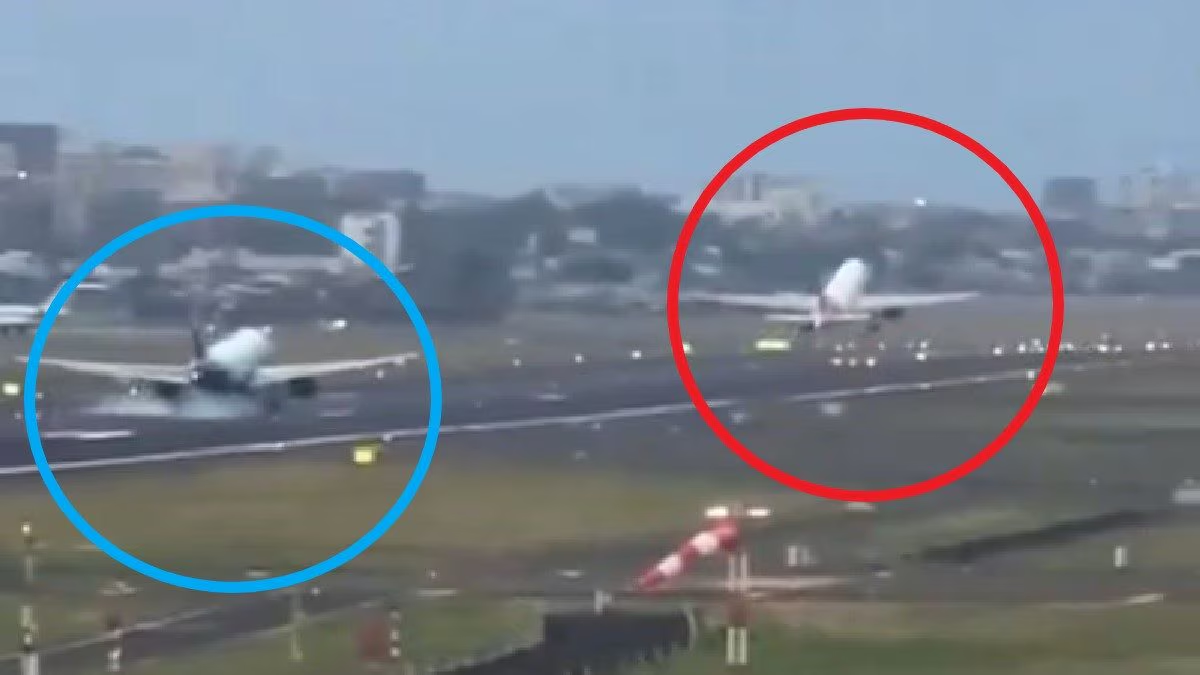
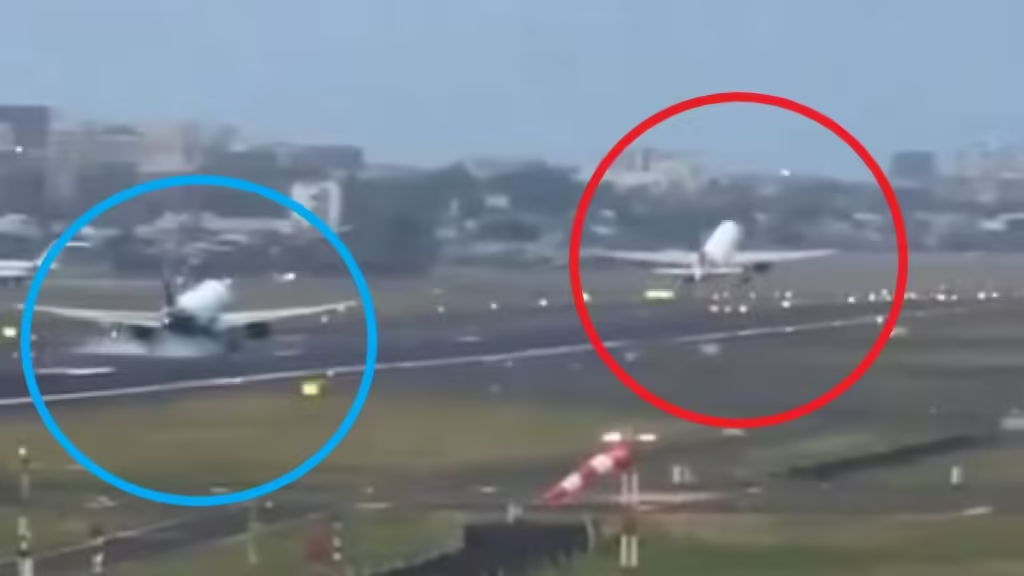
1 / 2 An Air India A320 was taking off as an IndiGo A320 landed on the same runway shortly afterward. No collision or injury occurred, and DGCA de-rostered the controller while investigating.
Quick answers
What happened at Mumbai airport on 8 June 2024?
An IndiGo flight from Indore landed on the same runway that Air India flight AI657 to Trivandrum was taking off from, shortly after the Air India aircraft got airborne. The aircraft did not collide and nobody was hurt.
What did DGCA do after the Mumbai runway incident?
It de-rostered the air traffic controller on duty and started an investigation. IndiGo and Air India began their own inquiries, and IndiGo said its aircraft had followed ATC instructions.
Can ATC clear a landing and a take-off on the same runway so close together?
Media reports say standard procedures allow up to two arrivals and departures within a three-minute window, depending on visibility and other conditions. The question was whether every protocol was followed that day.
Does a viral video show who was at fault in a runway near miss?
No. A video cannot measure the exact separation or decide blame. Near misses still need a proper investigation even when nobody is hurt, so that checks such as read-back and runway monitoring can be made stronger.
On 8 June 2024 at Mumbai airport, an IndiGo flight landed on the same runway that an Air India flight was taking off from, within about a minute of each other. Nobody was hurt and the aircraft did not touch. A video of the moment was widely shared on social media, and people started asking how air traffic control (ATC) had let it happen.
Who was involved
- IndiGo flight 6E 6053 from Indore, which was landing. IndiGo said its aircraft followed ATC instructions.
- Air India flight AI657 from Mumbai to Trivandrum, which was on its take-off roll. Air India, owned by the Tata group, started its own investigation.
- DGCA (Directorate General of Civil Aviation), India’s aviation regulator. It de-rostered the air traffic controller on duty and started a probe.
What happened
- ATC cleared the Air India aircraft for take-off and the IndiGo aircraft for landing on the same runway.
- The IndiGo aircraft touched down shortly after the Air India aircraft had become airborne.
- A video showing one aircraft landing while the other took off went viral.
- DGCA took the controller off duty and started an investigation. IndiGo and Air India began their own inquiries.
What the rules allow
According to media reports, standard procedures let controllers clear up to two arrivals and departures within a three-minute window, depending on visibility and other conditions. Visibility was good that day, and good visibility allows a smaller separation between aircraft. Even so, a landing aircraft so close behind a departing one raised obvious questions about whether every step was followed.
We have not checked this rule against the regulator’s own text, and we have not seen a final investigation report. Until there is one, nobody should be named as being at fault.
Why busy runways run so tight
Mumbai handles a heavy flow of flights on one active runway at a time. At peak hours, controllers are under real pressure to keep arrivals and departures moving. The investigation was expected to look at whether that pressure led to any slip in procedure.
What should change
- Closer supervision of ATC. Keep watching how clearances are given, especially during the busiest hours.
- Training. Controllers and airline crews should be drilled to stick to procedure when traffic is heavy, and to order or fly a go-around when the runway is not clear.
- Better tools. Runway alerting and automation in ATC systems can catch a conflict that a busy person might miss.
- Learning from near misses. Nobody was hurt, and that is exactly why this one should be studied. A near miss is a free warning.
What you can do as a passenger
You cannot control the runway, but you can be ready if something goes wrong. Read the safety card even if you fly every week. Count the rows to your nearest exit, in front and behind. Keep your seat belt fastened whenever you are seated, keep your shoes on for take-off and landing, and take the earphones out so you can hear the crew. If there is ever an evacuation, leave your bags behind.
More on Mumbai: see our Mumbai fire and emergency safety guide for fire brigade numbers, every fire station and the local risks to know.
- Air India aircraft begins take-off roll
- IndiGo aircraft continues approach with landing clearance
- Landing occurs shortly after departing aircraft becomes airborne
- Public attention focuses on spacing
- DGCA de-rosters controller and investigates
Why consequences escalated
- Runway separation depends on controller judgement, crew compliance and predictable aircraft performance
- A stable approach does not remove the option to go around
- Read-back and runway-occupancy monitoring are critical defences
- Viral video cannot by itself establish exact separation or culpability
- Near misses should be investigated without waiting for harm
Failures and risk multipliers
- Running a busy runway on such tight spacing that a slow take-off leaves no margin
- Treating a near miss as harmless because nobody was hurt
- Judging who was at fault from a viral video alone
- Letting peak-hour pressure squeeze safety margins
- Passengers ignoring the safety briefing because they fly often
Actions that reduce risk
- Investigate every runway near miss and share what was learned
- Controllers and crews: keep watching runway occupancy and be ready to order or fly a go-around
- Airports: plan peak-hour traffic so it does not eat into separation
- Use runway alerting tools where they are available
- Report near misses openly so others can learn from them
Leave a comment