
Case Study
What happened here
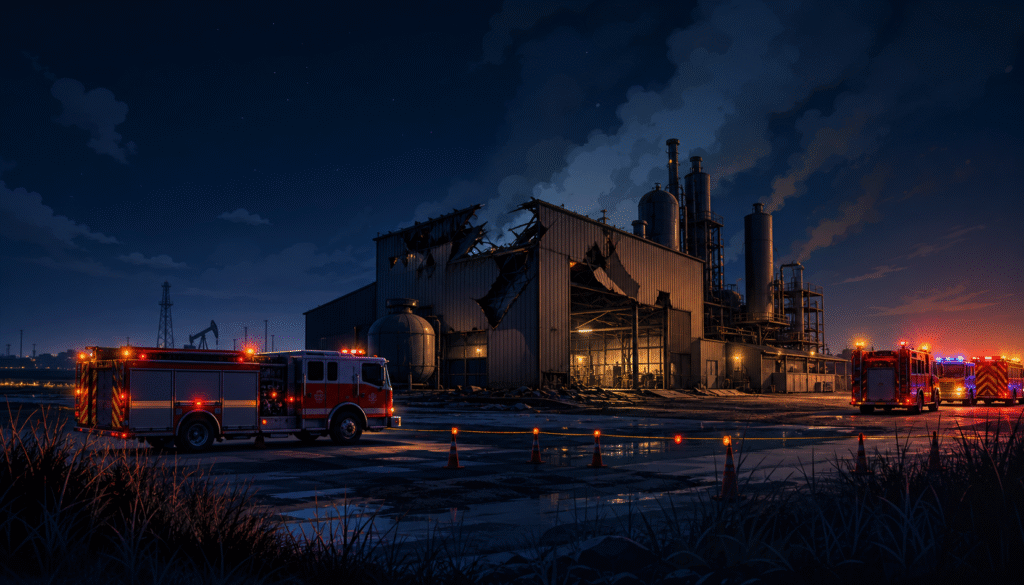
EventIndustrial explosion at an extraction facility.
Human impactTwo employees died.
Reported hazardsLiquid propane, other hazardous material and ventilation concerns in court records.
Legal statusOwner charged; no conviction established in this record.
Technical statusFinal fuel concentration, ignition source and complete causal chain not publicly determined.
An explosion at a marijuana-extraction facility killed workers Michael Newman and Stephen Scott and damaged neighbouring businesses. Prosecutors charged owner Ryan Bassham with two counts of first-degree murder. Court-record allegations described poor ventilation, propane and hazardous material; criminal responsibility and the final technical cause remain for the courts and investigators.
Oklahoma Extraction Facility Explosion Case Study: Ventilation and Propane Hazards
**Incident date/location:** 27 August 2026, about 1:00 a.m.; Solos Extracts, near Tulsa, Oklahoma, USA
An explosion at a marijuana-extraction facility near Tulsa killed employees Michael Newman and Stephen Scott and damaged nearby businesses. On 31 August, the Associated Press reported that owner Ryan Bassham, 35, had surrendered after prosecutors charged him with two counts of first-degree murder. A criminal charge is an allegation, not a conviction; no court has yet determined guilt.
Court records cited by AP say investigators found large quantities of liquid propane and other hazardous materials after the blast. They also describe an outdated fire-suppression system, limited ventilation and equipment used in marijuana manufacturing. The final technical cause has not been publicly established.
## Casualties, injuries and rescues
– **Deaths:** 2 workers — Michael Newman and Stephen Scott.
– **Other injuries:** Authorities reported no other people harmed.
– **Property impact:** The roof was partly torn away; doors were crumpled, debris spread through the industrial park, and nearby businesses were damaged.
## Supported timeline
– **January 2026:** A fire marshal inspection reportedly noted an outdated suppression system and manufacturing equipment.
– **Early 2026:** A neighbouring operator reportedly warned of elevated carbon dioxide readings and becoming light-headed inside the building.
– **27 August, about 1:00 a.m.:** The explosion occurred while two employees were working.
– **After the blast:** Both men were taken for medical care and later died; investigators documented propane and other hazardous material.
– **By 31 August:** Bassham surrendered, was booked and released after posting a reported $2 million bond.
## Confirmed facts versus preliminary claims
**Confirmed/publicly documented:** two deaths; the time and location; extensive blast damage; criminal charges; hazardous material reported in court filings; and an active investigation.
**Preliminary or alleged:** prosecutors believe the workers were unlawfully manufacturing hazardous chemicals; a worker reportedly told a paramedic that ventilation was poor and ignition followed unplugging equipment. These statements are evidence reported from court records, not a final engineering conclusion. The precise fuel concentration, ignition source, equipment status and responsibility remain unresolved.
## Failure analysis without speculation
A flammable-vapour explosion requires fuel, an ignitable concentration, oxygen and an ignition source. Propane can settle in low areas and travel to electrical equipment when ventilation is inadequate. Ordinary switches, plugs or motors may ignite a flammable atmosphere unless the equipment and installation are rated for the classified location. This general mechanism explains why extraction operations require engineered controls, but it does **not** establish the cause of this incident.
The reported outdated suppression system matters, yet suppression cannot substitute for preventing a vapour release. The strongest controls are closed systems, continuous gas detection, correctly designed exhaust ventilation, intrinsically safe or explosion-protected equipment, documented maintenance, and stopping work when alarms or abnormal readings appear.
## Prevention layers
1. Use listed closed-loop processing equipment and approved quantities of flammable gas.
2. Provide mechanically interlocked exhaust ventilation sized for the hazard.
3. Install calibrated combustible-gas and oxygen/CO2 monitors with audible and visual alarms.
4. Classify hazardous areas and use compliant electrical equipment; control static discharge and bonding.
5. Maintain suppression systems, emergency shutoffs and ventilation under a documented inspection programme.
6. Require permits, competent supervision, written procedures and stop-work authority.
7. Keep adjacent occupancies informed and include them in evacuation planning.
## Survival guidance
– If a gas alarm sounds, you smell gas, feel dizzy or see an unexplained monitor spike, leave immediately and warn others.
– Do not operate switches, unplug equipment, start engines or use a phone inside the suspected vapour area.
– Move upwind, call emergency services from a safe location and report the materials involved.
– After an explosion, avoid damaged walls, roofs, cylinders and pooled liquid; secondary ignition or collapse may follow.
– Do not re-enter until fire and hazardous-material authorities declare the area safe.
## Incident snapshot
| Item | Verified position |
| Event | Industrial explosion at an extraction facility |
| Human impact | Two workers killed |
| Reported hazards | Liquid propane, other hazardous material, ventilation concerns |
| Legal status | Owner charged; presumed innocent unless proven guilty |
| Technical cause | Not finally determined in public sources |
## Systemic lesson
Hazardous-vapour work cannot be made safe by personal caution alone. The building, process, ventilation, detection, electrical system and emergency plan must operate as one engineered safety system.
## Reader actions
Operators should pause any solvent or fuel-gas process lacking current permits, gas detection, interlocked ventilation or hazardous-location electrical review. Workers should know the alarm signal, two exit routes and the external assembly point before production begins.
**Closing line:** When vapours can ignite, prevention must be engineered before the first batch starts.
- A fire marshal inspection reportedly identified an outdated suppression system and equipment associated with marijuana manufacturing.
- A neighbouring operator reportedly raised concern after a sensor showed elevated carbon dioxide and he felt light-headed inside the building.
- A powerful explosion tore part of the roof away, damaged doors and spread debris through the industrial park while two employees were working.
- Michael Newman and Stephen Scott received medical attention and later died. No other physical injuries were reported in the AP account.
- Ryan Bassham surrendered after prosecutors filed two first-degree-murder charges. He posted a reported $2 million bond. Charges are allegations, not convictions.
- Court records cited by AP described liquid propane, hazardous material, ventilation concerns and a worker statement about ignition after unplugging equipment. A final engineering conclusion was not reported.
Why consequences escalated
- A flammable-vapour explosion requires fuel, an ignitable mixture, oxygen and an ignition source. Propane may collect in low areas and reach ordinary electrical equipment when containment and ventilation fail. This is the relevant general mechanism, not a declaration of the final cause here.
- Court-record allegations supply important evidence but must be separated from adjudicated facts. The deaths, blast damage, charges and hazardous materials found after the event are documented; guilt and the complete technical sequence remain unresolved.
- Suppression is not the primary control for a vapour release. Closed processing, ventilation, gas detection, hazardous-location electrical equipment, bonding/grounding, maintenance and automatic shutdown aim to prevent the explosive atmosphere or ignition before fire suppression is needed.
- A report of dizziness or an abnormal gas reading is a stop-work signal, not a condition to investigate alone from inside the space. Workers need authority and a practiced method to leave, warn others and call specialists from a safe location.
- Nearby occupancies were damaged even though their workers did not control the process. Facility siting, separation, hazard communication and neighbour evacuation planning are therefore part of the system boundary.
Failures and risk multipliers
- Treating criminal allegations as a conviction.
- Using the presence of propane alone as proof of the exact ignition sequence.
- Relying on an outdated suppression system while containment, ventilation or electrical controls are inadequate.
- Operating switches, plugs, motors or phones inside a suspected flammable atmosphere.
- Ignoring dizziness, gas-monitor readings or ventilation alarms.
- Re-entering after a blast before structural, fire and hazardous-material clearance.
- Allowing hazardous-process changes without permit, design review and current inspection.
Actions that reduce risk
- Use listed closed-loop processing equipment and approved material quantities.
- Provide engineered exhaust ventilation interlocked with the process.
- Install, calibrate and test combustible-gas and relevant atmosphere monitors with audible and visual alarms.
- Classify hazardous areas and use suitable electrical equipment; control static through correct bonding and grounding.
- Maintain suppression, emergency shutdown, detection and ventilation under documented inspection programmes.
- Require permits, competent supervision, written operating procedures and stop-work authority.
- Train workers to evacuate without operating possible ignition sources when an alarm or abnormal symptom occurs.
- Share emergency information with neighbouring occupancies and responders, including material inventories and shutoff points.
- Preserve equipment, monitor data, permits and scene evidence for technical and legal investigation.
Leave a comment