
What happened here
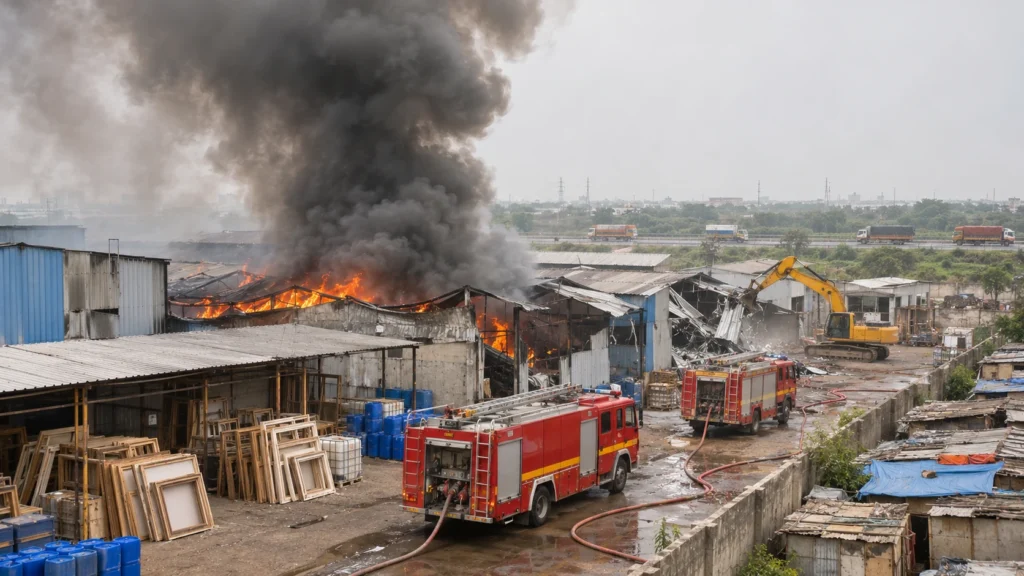
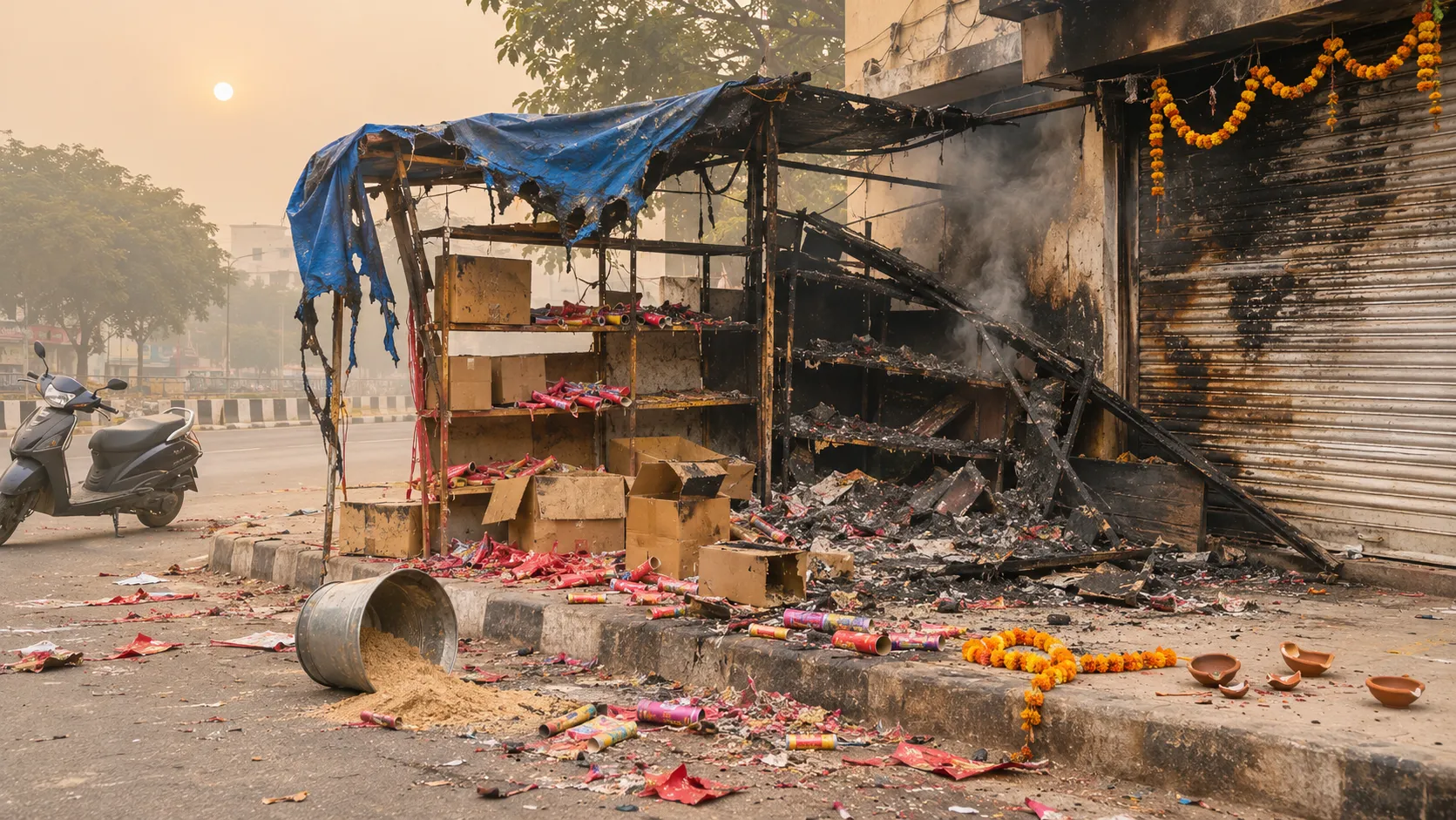
On the evening of Diwali, 8 November 2026, a fire broke out in factories at the Sokhada industrial area on the Rajkot-Ahmedabad highway, near Maliyasan chowkdi, on the outskirts of Rajkot. Gujarat First says it began in a box-making unit and spread to a photo-frame factory, Dev Plastic and other units; Divya Bhaskar names two units, J. H. Wooden and Dev Plastic, and quotes the Rajkot fire station officer that the call came at about 5.30 pm; Akila News, quoting the village sarpanch, says it began at about 4 pm and was still raging at 6 pm. More than 50 people living in huts next to the units were moved to safety (Divya Bhaskar) and the nearby factories were cleared (Gujarat First). Gujarat First reports four fire engines, Divya Bhaskar five engines and more than 15 firefighters, and GSTV six. Crews cut open the metal-sheet shed with a JCB and cutters (Gujarat First). No injury is reported. Gujarat First and GSTV say goods worth crores are feared lost; this is not a verified figure. The cause is not known.
Quick answers
What happened at Sokhada, Rajkot, on 8 November 2026?
A fire broke out on Diwali evening in factories at the Sokhada industrial area near Maliyasan chowkdi and spread between neighbouring units. No injury was reported.
Which units burnt?
Reports name a box-making unit, a photo-frame factory, Dev Plastic and J. H. Wooden; the number of units differs by outlet, and one outlet calls it a plastic godown.
Was anyone hurt?
No injury is reported. More than 50 people living in huts next to the units were moved to safety.
What caused the fire?
Not known. No report we opened names a cause.
How much was lost?
Goods worth crores are feared lost. This is an early estimate with no source named and it is not verified.
How many fire engines came?
Four (Gujarat First), five with more than 15 firefighters (Divya Bhaskar) or six (GSTV).
How can a factory estate limit fire spread?
Keep stacks small with gaps, store plastic and chemicals apart, keep extinguishers and alarms working and keep an engine route to every unit. See: https://howtosurvive.in/factory-fire-exits-locked-gates-blocked-stairs-india-november-2026/
Is there a Rajkot safety guide?
Yes: https://howtosurvive.in/city-safety/rajkot/
What happened
On the evening of Diwali, Sunday 8 November 2026, a fire broke out in factories at the Sokhada industrial area on the Rajkot-Ahmedabad highway, near Maliyasan chowkdi, on the outskirts of Rajkot. It ran through neighbouring units that held wood, plastic and packing material, and a column of smoke could be seen from kilometres away. No injury is reported.
More than 50 people who live in huts beside the units were moved to safety first, according to the Rajkot fire station officer quoted by Divya Bhaskar. Crews then worked from several sides, and cut open the metal-sheet shed with a JCB and cutters to get water to the flames, as Gujarat First reports. The cause is not known, and goods worth crores are feared lost, which is an early estimate and not a verified figure.
What the reports say
- Casualties: none reported. Gujarat First says no one was trapped inside; Divya Bhaskar and GSTV mention no injury.
- Where it began: Gujarat First says in a box-making unit, from where it spread to a photo-frame factory, Dev Plastic and other units. Divya Bhaskar names two factories, J. H. Wooden and Dev Plastic, and says the units make pictures of gods, with thousands of pictures, their wooden frames and chemicals inside. Akila News says a photo-frame unit and a plastic-container unit next to it. GSTV calls it a plastic godown.
- When: Akila News, quoting the village sarpanch, says the fire began at about 4 pm and was still raging at 6 pm. The fire station officer told Divya Bhaskar the call came at about 5.30 pm.
- People: more than 50 people from huts beside the units were moved to safety (Divya Bhaskar); workers of nearby factories ran out and the surroundings were cleared (Gujarat First).
- Crews: four engines (Gujarat First), five engines and more than 15 firefighters (Divya Bhaskar), six engines (GSTV); 108 ambulance and local police also reached the spot (Divya Bhaskar).
The response
by about 9.29 pm Divya Bhaskar reported that the fire on the hut side was under control and people were allowed to move about, while the tall middle shed, covered with metal sheets, was taking longer. Water was being poured from three sides after sheets were broken from the neighbouring factory.
Where reports differ and what we do not know
- Start time: about 4 pm (sarpanch, Akila News) against about 5.30 pm for the fire call (station officer, Divya Bhaskar). Both may be right if the fire began earlier and the call came later; no report says so.
- Units: two, or about four, or “plastic godown”, and different unit names depending on the outlet.
- Engines: four, five or six; the number probably rose as more crews arrived.
- Fire clearance: the station officer told Divya Bhaskar that fire NOC is not issued to industrial units under current rules and the state plans to begin it from about early 2027; that is his statement and we have not checked it against the rules.
- Not known: the cause, the time the fire was put out, the final number of units burnt and the loss.
What this case teaches
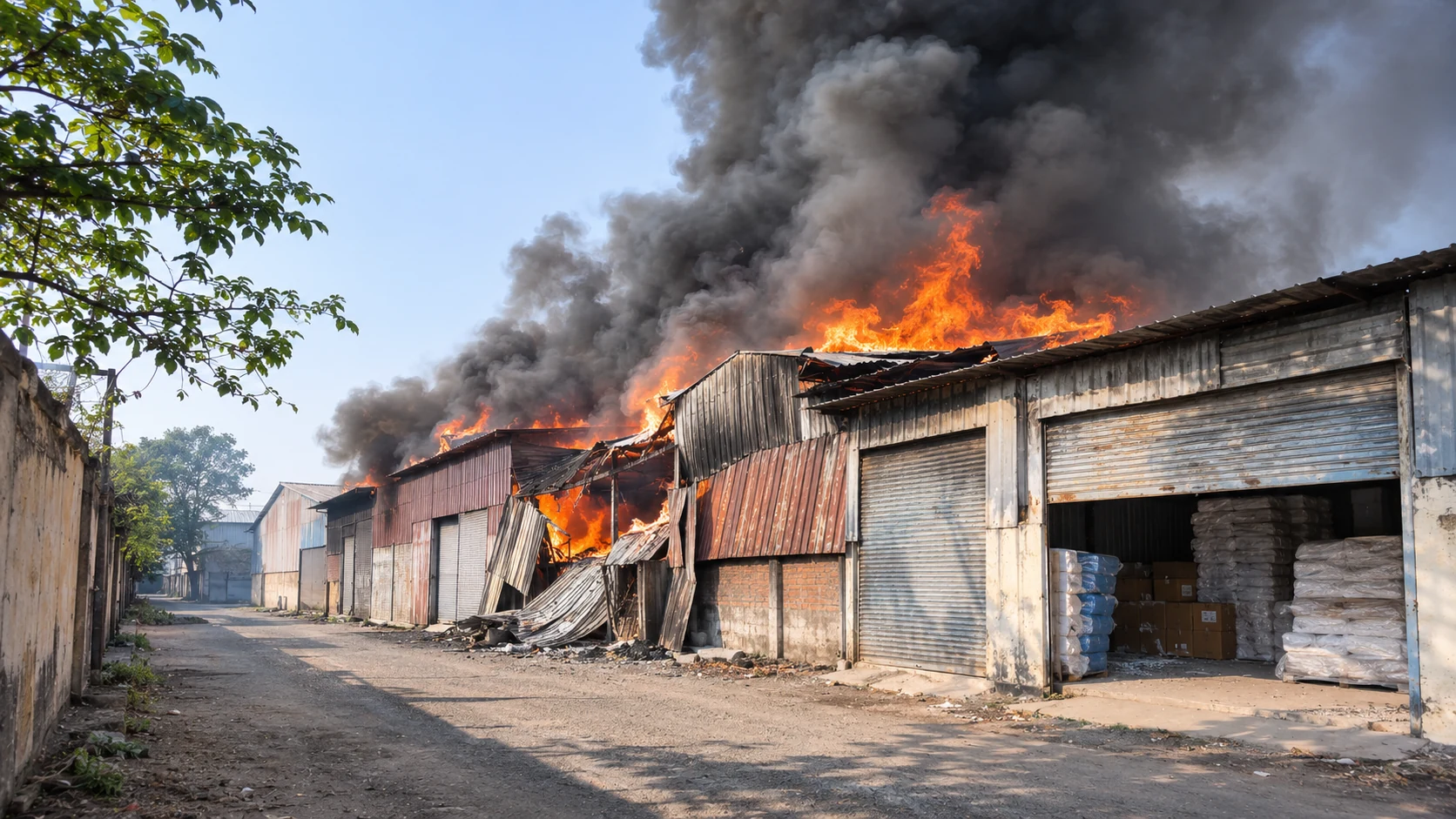
Sheds that share a tin roof and hold wood, plastic and chemicals can pass a fire from one unit to the next within minutes. The decision to clear the huts first is why this ended without a casualty report. See our related cases, the Ghaziabad Vijay Nagar plastic factory fire and the Najafgarh garment factory fire from the same Diwali evening, our note on Gujarat’s new fire rules for industrial units and our Rajkot guide at Rajkot emergency numbers and safety guide.
- Fire begins, according to the village sarpanch quoted by Akila News (the 4 pm start is not confirmed by the fire service)
- Fire call received at the Rajkot fire station, per the station officer (Divya Bhaskar); crews first move the 50-plus people from huts next to the units
- Akila News reports the fire still raging and "uncontrollable" at 6 pm, with fire service and police at the spot
- GSTV reports a plastic godown at Sokhada burnt with six engines at work
- Gujarat First reports four engines, a JCB and cutters cutting open the shed, and nearby factories cleared
- Divya Bhaskar update: five engines pouring water from three sides, the hut side under control, the high middle shed still taking time
- No follow-up on the cause, the loss or the time the fire was put out was found
Why consequences escalated
- A fire at the Sokhada industrial area near Rajkot on Diwali evening, 8 November 2026, spread across neighbouring factory units that held wood, plastic and packing material; no injury is reported.
- More than 50 people living in huts next to the units were moved out before the crews started, which is the main reason the day ended without a casualty report.
- The tall metal-sheet shed in the middle slowed the fire service; crews had to cut the sheets open from the neighbouring factory.
- The cause, the loss and the fire-clearance position are not established; the outlets differ on the start time, the number of units and the number of engines.
Failures and risk multipliers
- No official finding exists. What the reports raise as questions:
- What started the fire, and whether Diwali fireworks, a short circuit or work in the unit was involved; no outlet we opened names a cause.
- Why wood, plastic, packing paper, chemicals and thousands of finished pictures were stored together under shared metal roofs, which let the fire run from unit to unit.
- Whether the units had fire-fighting equipment, alarms and an escape plan, when people lived in huts right beside them.
- The station officer says industrial units do not get a fire NOC from the fire department at present. That leaves the question of who checks fire safety inside such units until the new system starts.
- These are open questions, not findings of fault.
Actions that reduce risk
- Owners and occupiers: keep stock, packing paper, wood, plastic and chemicals in separate, limited stacks with walkable gaps; a shed packed wall to wall lets one unit light the next.
- Check that every unit has fire-fighting equipment, a working alarm, clear exits and an evacuation plan, and that the fire-clearance position is settled in writing, whatever the rules say about who issues it.
- Keep a fire-engine route open to the gate and the neighbouring units; shared tin walls and roofs carry fire from unit to unit and also slow the crew who must cut them open.
- Workers: know two exits and the assembly point, leave at the first alarm and never go back for stock, machines or documents; if you live in huts or sheds beside the units, ask the employer for a clear escape route.
- Everyone: do not burst crackers near factory sheds, godowns or stacked stock, and do not stand close to watch; smoke from burning plastic is toxic.
- Authorities: publish the cause, the fire-clearance status of each unit and the response timeline once the investigation is done.


Leave a comment