
Quick answers
What is the rule for an emergency exit in a factory?
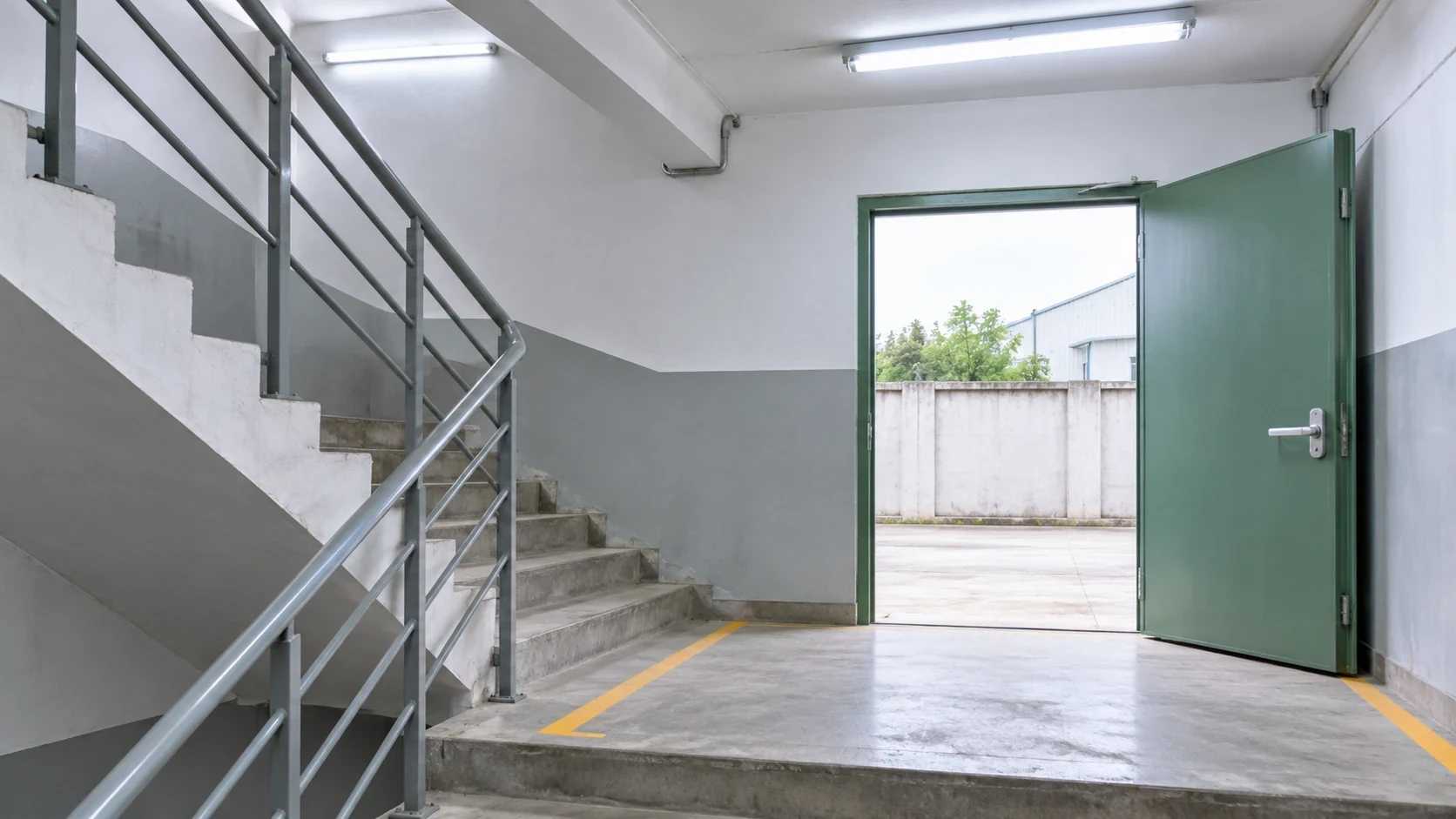
Exits must be kept free of obstruction, exit doors must open in the direction of escape and from inside without a key, and there must be enough exits for the people on the floor. This is the BIS fire standard; the OSH Code makes safe means of egress the employer's duty.
Can a factory gate be locked while workers are inside?
Not if it is the way out. The standard says exit doorways must be operable from inside without a key. If the premises must be secured, the fitting must still open from inside.
How many exits must a factory have?
It depends on the occupant load and hazard. A basement needs at least two independent exits, and high-hazard industrial areas need two exits in different directions from every point. Ask your fire authority to check the approved drawing.
Is the Factories Act, 1948 still in force?
PIB says the OSH Code was made effective from 21 November 2025, and section 143 of the Code lists the Factories Act among the laws repealed from the notification date. Rules made under the old laws continue to the extent they do not conflict with the Code.
Does a factory in Delhi need a fire NOC?
Under Rule 27 of the Delhi Fire Service Rules, 2010, industrial buildings with more than 250 square metres of covered area on all floors need clearance, at plan stage and before occupation. Check your own building with the Delhi Fire Service.
How far can a worker be from a fire exit?
In Part F of the 2026 standard, 45 metres for low and moderate hazard industrial buildings (60 metres if sprinklered) and 22.5 metres for high hazard (45 metres if sprinklered). Confirm which edition your state follows.
Who is responsible if workers die because exits were blocked?
The Code puts the duty on the employer, and on the owner jointly with the occupiers for common fire protection in rented premises. Section 103 provides for imprisonment up to two years or a fine of at least Rs 5 lakh, or both, where a failure results in death. Courts decide each case.
What should I do if the exit is locked and there is smoke?
Go to the next exit. If none opens, get to a room with a window, close the door, call 112 or 101, give the floor and address, and signal from the window. Do not use the lift.
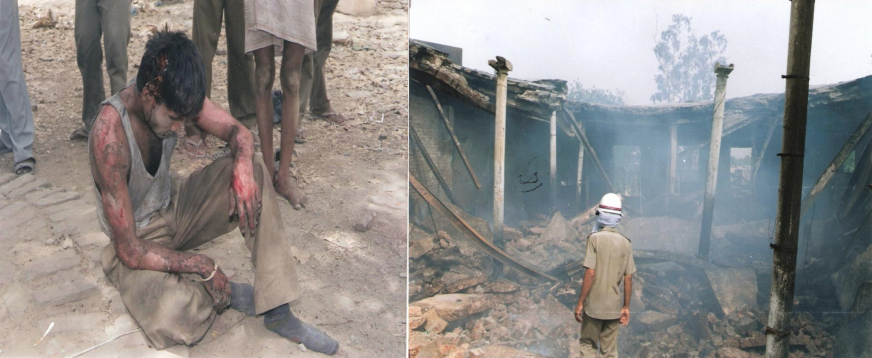
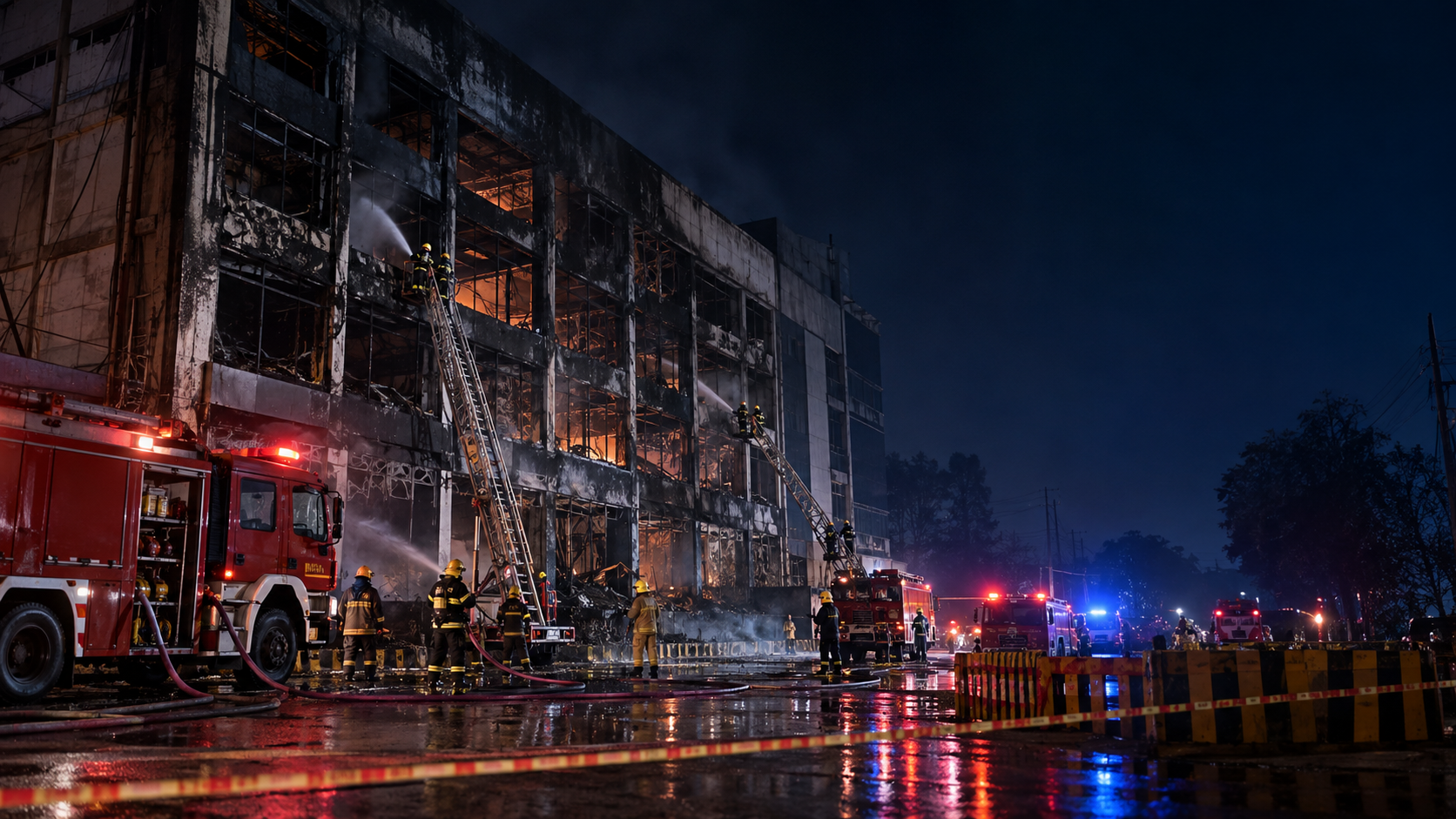
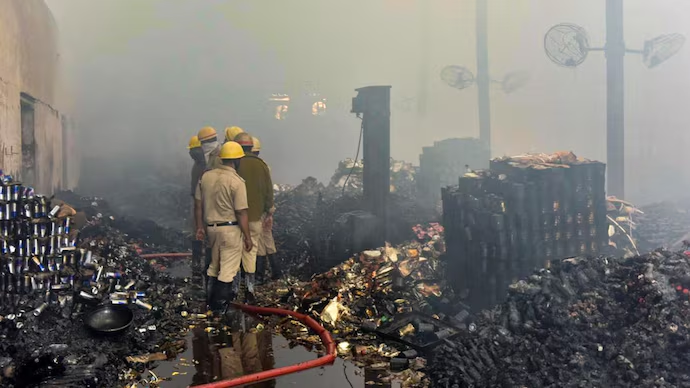
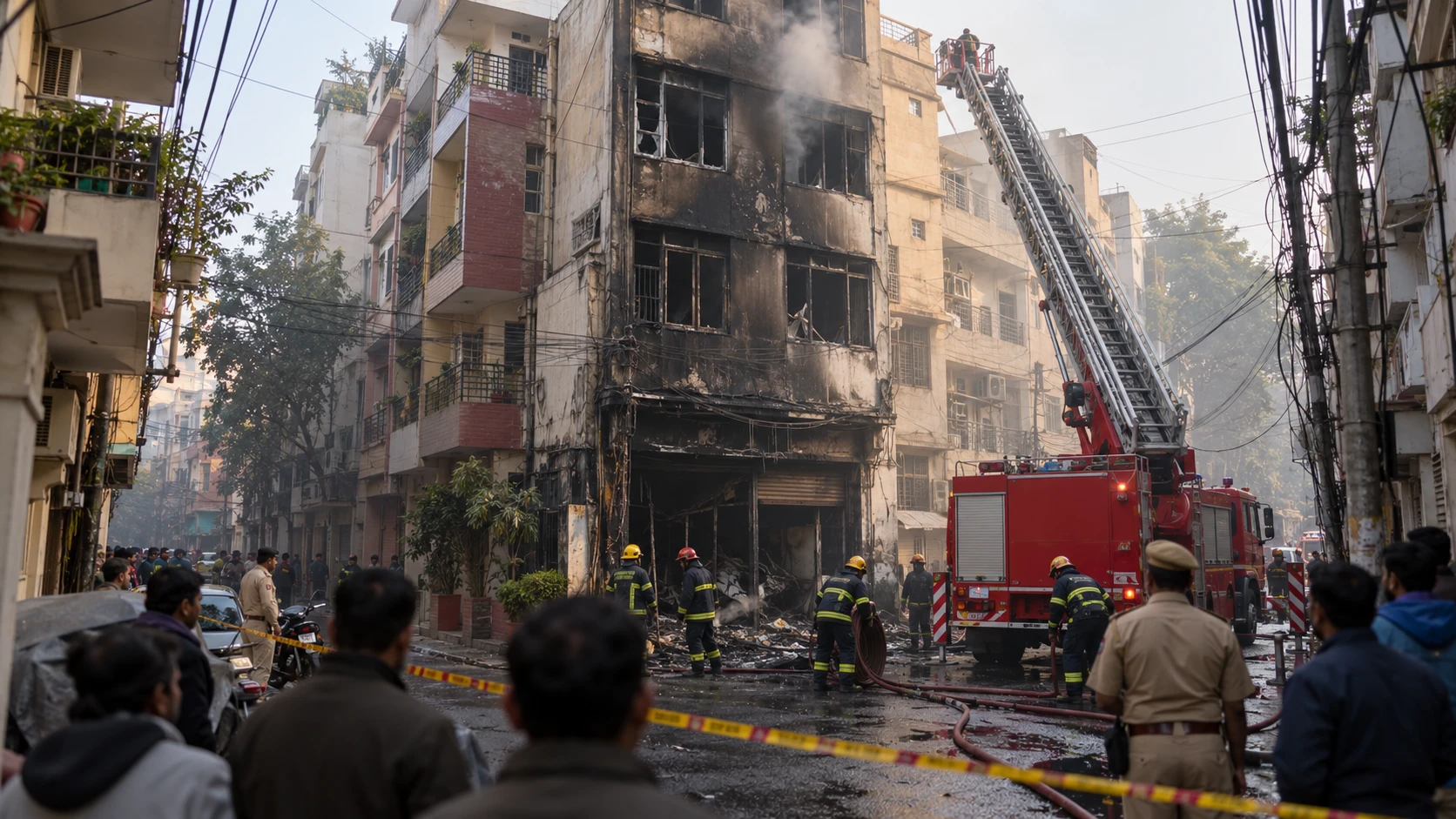
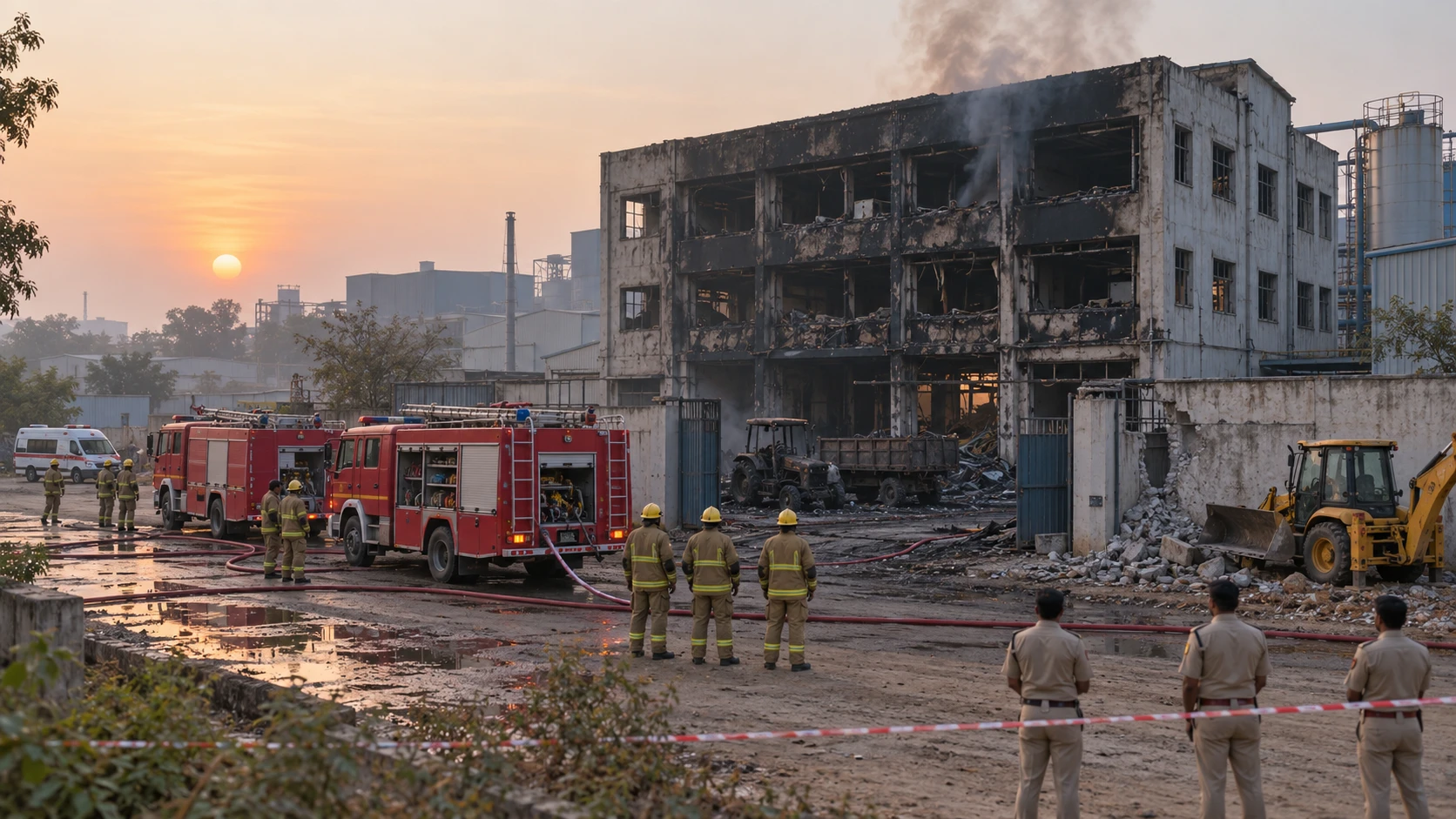
When a factory catches fire, the question asked afterwards is nearly always the same: could the workers get out? After the Mangolpuri shoe factory fire in Delhi on the night of 30 October 2026, officials told reporters that the terrace stair was blocked and vents were sealed, and a surviving worker said the gates were locked. Those are claims from officials and a survivor, not court findings, and our report on the Mangolpuri fire keeps them labelled that way. This guide is not about that one fire. It is about the exits in any factory or workshop, yours, your employer’s or the one next door, and about who has to do what. Checked 2 November 2026.
In short
- An exit that is locked, sheeted over or stacked with stock is not an exit. The national fire standard says every exit must be kept free of obstruction and that exit doors must open from inside without a key.
- Know two ways out of your floor, and know who holds the keys at night. If you cannot name both, ask today.
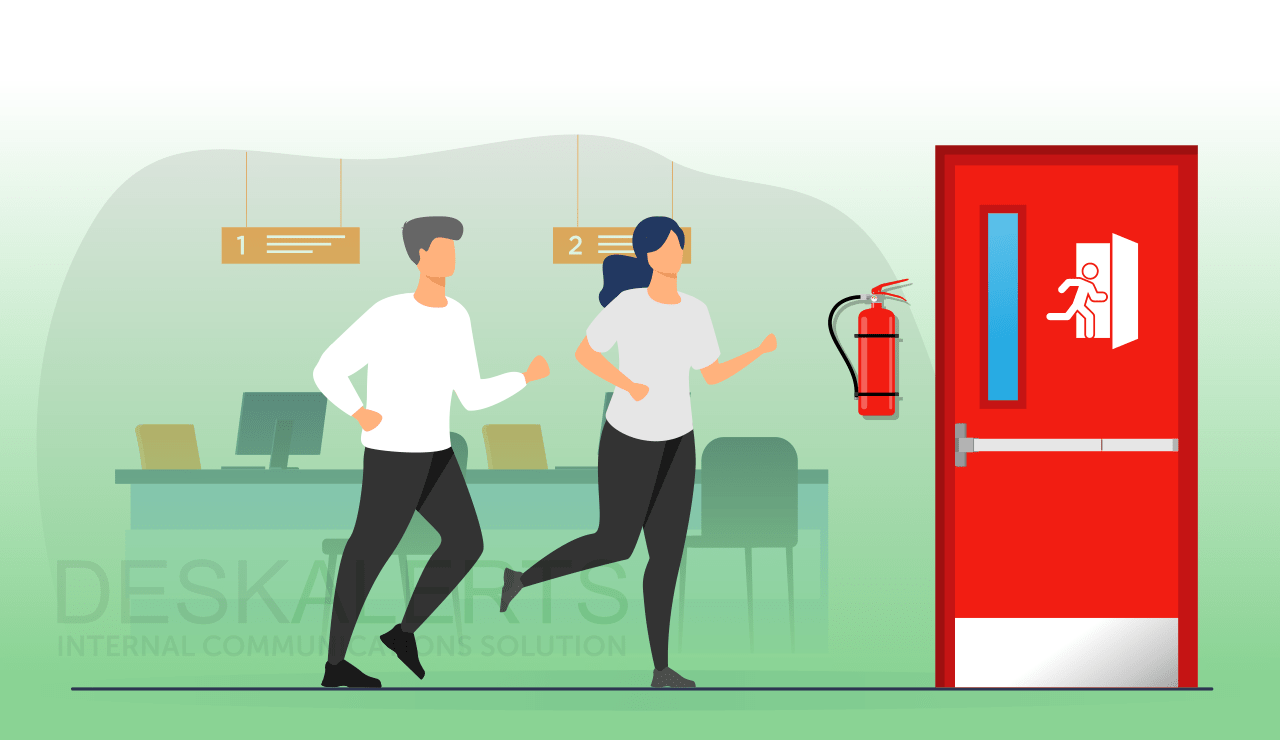
- In a fire, leave first and call 101 or 112 from outside. If one exit is locked, go to the next. Do not wait for a key and do not use the lift.
- Supervisors own the daily walk-through, the head count and the drill. Owners and occupiers carry the legal duty, and under the new labour code a death caused by non-compliance can bring a prison term or a fine of at least Rs 5 lakh.
- In Delhi, an industrial building with more than 250 square metres of covered area on all floors falls under the Delhi Fire Service rules and needs fire clearance.
What the law says today
For many decades the key provision was section 38 of the Factories Act, 1948. It asked for all practicable measures to prevent fire and its spread, to provide and maintain safe means of escape for everyone in the event of a fire, and to ensure that all workers know the means of escape and are trained in the routine to follow. The Chief Inspector could also order extra measures in writing.
That Act has been overtaken. The Occupational Safety, Health and Working Conditions Code, 2020 was made effective from 21 November 2025, according to a PIB release of that date. Section 143 of the Code lists the Factories Act among the laws that stand repealed from the date of the notification. It also says that rules, orders and actions under the old laws are deemed to have been made under the Code and stay in force until they are repealed, to the extent they do not conflict with it. In plain terms, state factory rules on exits are meant to carry on for now, while the main duty now sits in the Code.
The Code does not copy section 38 word for word. What we found in its text is this:
- Section 6(2)(d) makes it the employer’s duty, in a factory, to keep all places of work safe and to provide and maintain means of access to and egress from them that are safe and without risk.
- Section 6(2)(c) makes information, instruction, training and supervision the employer’s duty too. A drill is training.
- Section 80 says that where premises are let to different occupiers as separate factories, the owner and the occupiers are jointly and severally responsible for common facilities, which include safety and fire prevention and protection, access, and emergency preparedness and response. This matters in industrial areas where floors are rented out one by one.
- Section 103 says that if a failure to comply results in a death, the person can be punished with imprisonment up to two years, or a fine of not less than Rs 5 lakh, or both. For serious bodily injury it is up to one year, or a fine of Rs 2 lakh to Rs 4 lakh, or both.
The Code leaves the detail, such as how many exits and how wide, to the building standard and to the state’s fire law. We read the Code as it was passed in 2020. We did not find the 2026 central rules or any state’s current factory rules on exits, so check them with your factory inspectorate. This is general information, not legal advice.
What the building standard asks for
The technical yardstick is a BIS standard. In 2026 the Bureau of Indian Standards replaced Part 4 of the National Building Code 2016 with the National Building Construction Standards 2026, Part F (Fire and Life Safety). Our guide on fire safety laws in India explains the change. Part F says it is only guidance for state governments and local authorities, so it becomes binding where a state adopts it. A Delhi Fire Service notice of June 2026, as reported, already names Part F alongside the Delhi Fire Service Act and Rules, while the service’s FAQ page still cites the 2016 bye-laws. We opened both BIS documents, and on exits they say the same things in substance.
- Every exit, exit passage and exit discharge must be kept free of all obstructions at all times.
- Doors in exits open in the direction of exit, and overhead or sliding doors are not to be installed as exit doors.
- Exit doorways must be operable from the side they serve without the use of a key.
- Electrically locked doors must unlock in the direction of escape when the fire alarm or sprinklers operate and when power fails, with a manual push-to-exit release near the door.
- A building must not be altered so as to reduce the number, width or protection of its exits.
- A basement must have at least two independent exits.
- In high-hazard industrial areas, there must be at least two exits reachable in different directions from every point, and two ways out of every room.
- Part F gives 1.5 metres as the minimum staircase width for buildings it does not list separately, which takes in factories. No store or other fire risk should open directly into a staircase.
How far can a worker be from an exit? In Part F’s table, for low and moderate hazard industrial buildings the limit is 45 metres, or 60 metres if the building is sprinklered. For high-hazard industrial buildings it is 22.5 metres, or 45 metres if sprinklered. The distance is measured along the route a person would actually walk, past machines and stock, not in a straight line on the drawing.
Delhi: when fire clearance is needed
The Delhi Fire Service lists, under Rule 27 of the Delhi Fire Service Rules, 2010, the buildings that need its clearance. Industrial and storage buildings with more than 250 square metres of covered area on all floors are on the list, and so are hazardous buildings above 100 square metres. Clearance is taken at two stages: first when building plans are approved, and again after construction and before occupation, when the fire and life safety measures are checked. A Delhi Fire Service notice of 16 June 2026, as reported, reminded owners of 11 kinds of buildings and said basements with two or more levels now need a fire safety certificate. For the process, read our guide to the fire NOC. A certificate on paper does not open a locked door, though. The exits have to be the ones that were approved, and they have to be usable on the night.
Locked gates and blocked stairs: what to look for
| What you see | Why it matters | What to do |
|---|---|---|
| A gate or door padlocked or chained while people are inside | The standard says exit doorways must open from the side they serve without a key. | Ask who holds the key and why. Take the lock off during working hours. If the premises must be secured at night, use a fitting that opens from inside without a key. |
| An iron sheet, grill or shutter fixed across an exit | Every exit, exit passage and exit discharge is meant to be kept free of obstruction at all times. | Remove it or fit a hinged door that opens outward and latches from inside only. |
| Cartons, rolls or cut material on the stairs | The standard says no store or other fire risk should open directly into a staircase, and that exits must stay clear. | Clear the stair today. Paint a line on the landing and make one person responsible for checking it daily. |
| The terrace door bolted, or the way to it blocked | The standard expects the exit staircase to run continuously from terrace level down to the ground. | Make sure the terrace door opens from inside and that nothing stands between the stair and the door. |
| Only one way out of a floor, room or basement | Basements need at least two independent exits. In high-hazard industrial areas, every point needs two exits in different directions. | Compare the floor with the approved drawing. Ask the fire authority or a licensed fire consultant to check. |
| A rolling shutter as the only way out | The standard says overhead or sliding doors should not be installed as exit doors. | Add a hinged exit door that opens in the direction of escape. |
| Windows grilled and exhaust openings sheeted over | Officials in the Mangolpuri case said sealed vents trapped smoke on the stairs. That is an allegation, not a finding. Smoke still needs a way out. | Keep openings that can be opened from inside, and ask the fire authority what smoke venting your premises need. |
| Workers who sleep on the premises behind a locked gate | A locked gate with people asleep behind it is the same problem at night. The Kolkata warehouse case involved workers sleeping in godowns. | Give the guard written instructions never to lock people in. Hold a drill in the evening. |
The first minute, if there is a fire
These steps are general fire-safety practice, not a single rule.
- Raise the alarm by shouting, by the alarm button, or both. Do not stop to collect bags, phones or stock.
- Go to the nearest clear exit and keep low if there is smoke. Do not use the lift.
- If an exit is locked, go to the next one. Do not wait for a key, and do not go back for one.
- If every way is blocked or full of smoke, get into a room with a window, close the door, call 112 or 101 and say the exact address and floor, and signal from the window.
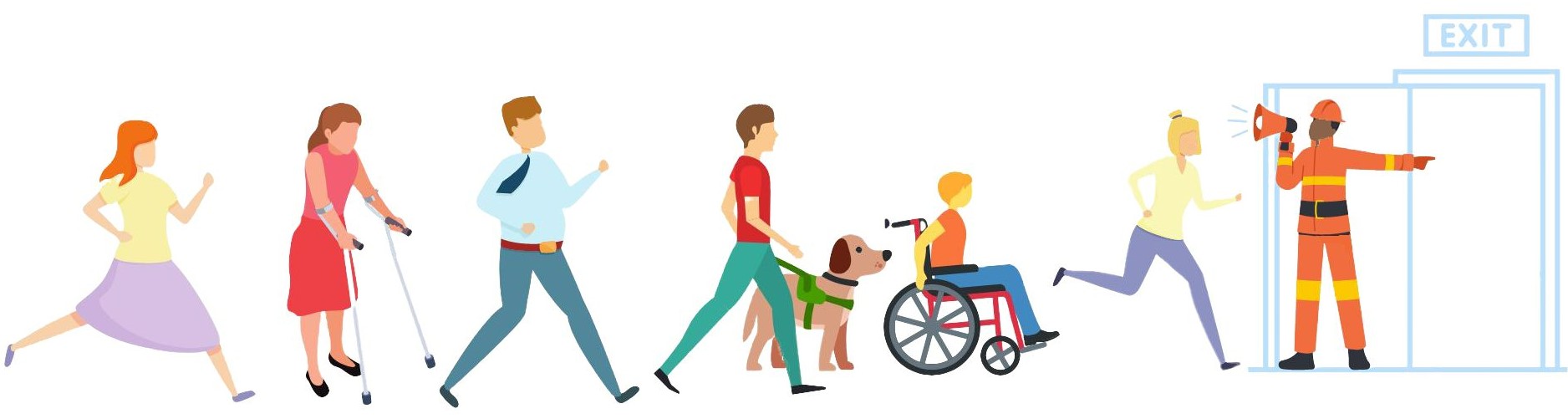
- Once outside, go to the assembly point. The supervisor counts heads and tells the fire crew, on arrival, who may still be inside. Nobody goes back in.
- Call 101 or 112 from outside if no one has. Our guide on the fire brigade number in India says what to tell the operator.
If you are a worker
On your first day, ask where the exits are, and ask which of them stays unlocked through the shift. Walk the route once. If you see a locked gate, a blocked stair or a sealed vent, tell your supervisor the same day, and send a photo if you can. If nothing changes, you can complain to the labour department or the factory inspectorate. A PIB note of 11 December 2025 says the Code lets workers refuse work likely to cause serious injury or death, with a mandatory employer investigation and no penalty for refusing. We read that in the PIB note and did not find the clause itself, so treat it as the government’s own description.
If you are a supervisor or a night guard
- Keep a named key-holder for every shift, and make sure the key never leaves the premises with the guard.
- Keep a list of everyone inside, including contract and night-shift workers, and check it at the assembly point in a drill.
- Walk the exits at the start of every shift and tick them off. Stock on a stair is a reason to stop and fix it, not to report later.
- Run a short drill at least once with every shift. Our guide to running a fire drill and the evacuation plan guide show how to mark and test routes.
If you own or run the unit
- Check that the clearance you hold covers the building as it stands now. Extra floors, a basement used for work or a partition that closes a passage can make the paper wrong.
- Do not alter an exit without the fire authority. If you let out floors, agree in writing who maintains the stairs, gates and alarm.
- Keep the basement for what it is approved for. If people work or stock sits there, it needs two independent exits.
- Put the training on record. Section 6 of the Code puts instruction and training on the employer.
A ten-minute walk-through you can do tomorrow
- Stand at the farthest working point on the floor and walk to the nearest exit the way a person would walk in smoke.
- Try every exit door and gate from the inside. It must open without a key.
- Look at every stair landing. Nothing should be stored there.
- Go up to the terrace door. It should open, and the way to it should be clear.
- Count the exits for the floor, and for the basement if you have one.
- Press the alarm test and ask someone on the far floor if they heard it.
- Switch off the main power at the end of the day, or ask the electrician to simulate it, and see if the stair is lit.
- Write down what you found and who will fix it by when.
What the numbers say, and what they do not
The NCRB recorded 5,971 fire accidents and 5,888 deaths in India in 2024. Most deaths, 3,555 or 60.4 per cent, were in homes. Factories were a smaller share: in its table, the NCRB counts 149 fire accidents in factories across two categories and 188 deaths, about 3.2 per cent of all fire-accident deaths. For Delhi it records 21 factory fire accidents and 20 deaths. These are statistics for 2024 as provided by states and union territories. They do not say how many of the deaths involved locked or blocked exits. No national figure of that kind that we could find exists, so we do not give one. For the wider picture of fire deaths, see our note on NCRB fire data for 2024.
Why this keeps happening
Earlier factory and building fires on this site show the same links in the chain: a gate kept locked, a stair used as a store, a single way out, and a building used without clearance. Read the Agra shoe factory fire of 2002, the Mundka fire and the Kolkata warehouse fire for how those details played out. None of them needed any new rule to prevent. They needed someone to walk the exits and fix what they found.
What we could not confirm
- Whether any of the Mangolpuri claims about locked gates, blocked stairs and sealed vents will be upheld. They were made by officials and a survivor and have not been tested.
- The current Delhi Factories Rules and the 2026 central rules under the Code on exits. We did not open them.
- Whether Delhi has formally adopted NBCS 2026 Part F. The June 2026 notice, as reported, names Part F, but the FAQ page we opened still cites the 2016 bye-laws.
- The exact text of the Code clause behind the PIB description of workers’ right to refuse dangerous work.
- No Instagram, Facebook or LinkedIn video from an official account or a news publisher that we could open and match. The videos below are from YouTube, and we did not watch them in full.
Do this today
Try every exit door in your workplace from the inside. Clear one stair landing. Ask who holds the key at night. Then read our guide to fire NOC and ask whether the premises still match the approved plan. Our note on why fire drills matter can help you make the case to a reluctant owner.
What needs attention
- Both the old Factories Act and the new Code put the duty to provide safe escape and train workers on the employer or occupier, not on the worker.
- The fire standard is specific on the points that fail in real fires: exits free of obstruction, doors that open from inside without a key, a second exit, and no stores opening onto a staircase.
- Under section 80 of the Code, owner and occupiers of rented industrial premises are jointly responsible for common fire protection and emergency preparedness.
- NCRB records 149 factory fire accidents and 188 deaths in 2024, 3.2 per cent of 5,888 fire-accident deaths; most deaths were in homes.
- A clearance certificate and a usable exit are different things. Only one of them can be tested by walking to the door.
Controls that reduce risk
- Try every exit door and gate from the inside and make sure it opens without a key.
- Clear every stair landing and the way to the terrace door.
- Name a key-holder for each shift and keep the list of who is inside.
- Run a drill on every shift and write down what went wrong.
- Compare the floor with the approved drawing and the clearance on file.
- Report a locked or blocked exit to the supervisor the same day, with a photo.
Common unsafe practices
- Locking a gate or door while people are inside, including at night.
- Using a staircase or landing as a store.
- Sheeting over or grilling the only openings that could let smoke out.
- Relying on one way out of a floor or a basement.
- Treating a fire clearance certificate as proof that the exits work today.
- Letting the key leave the premises with the guard.
- Holding no drill for night-shift and contract workers.






Leave a comment