
Quick answers
Is it safe to drive through shallow-looking floodwater on a road I know well?
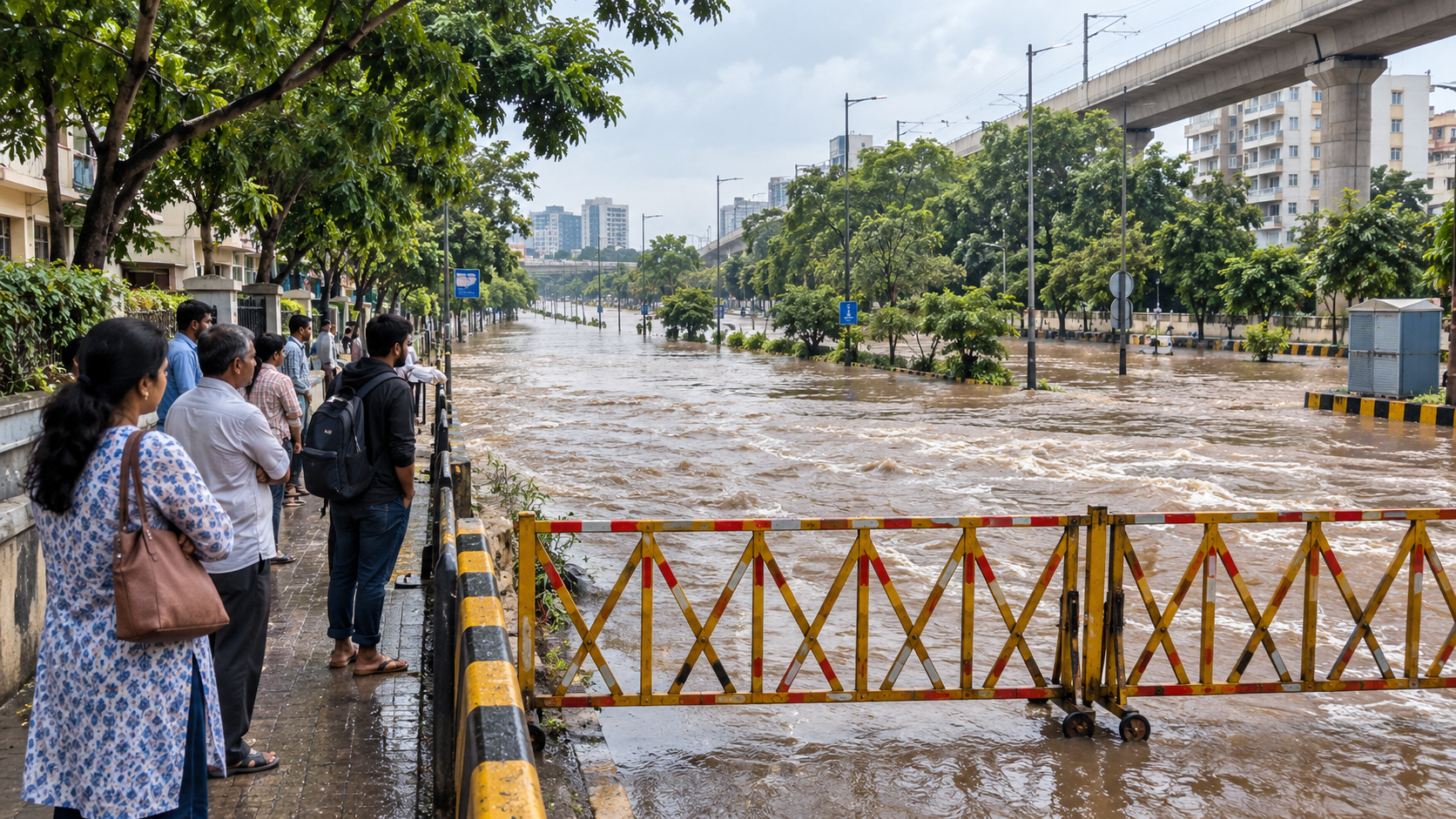
No. Muddy water can hide a strong current, a washed-out road, a missing drain cover or a live wire. Turn back, take a route you know is open, or wait for local instructions.
Can a big vehicle safely cross a flooded road?
Not necessarily. A vehicle's size tells you nothing about the force of the current or the road underneath. Do not drive around a barricade or follow another vehicle into the water.
Should I swim in to rescue someone caught in floodwater?
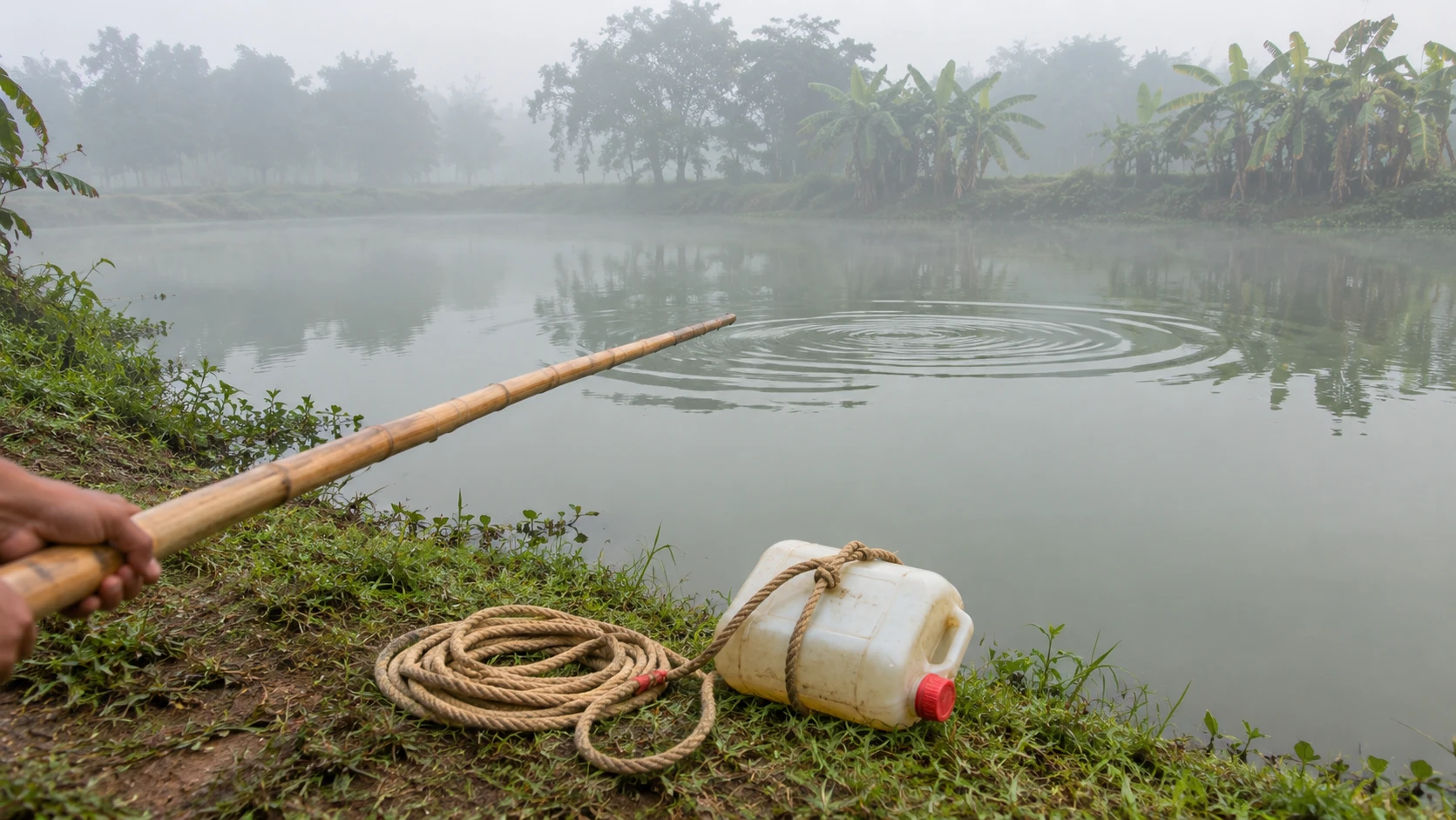
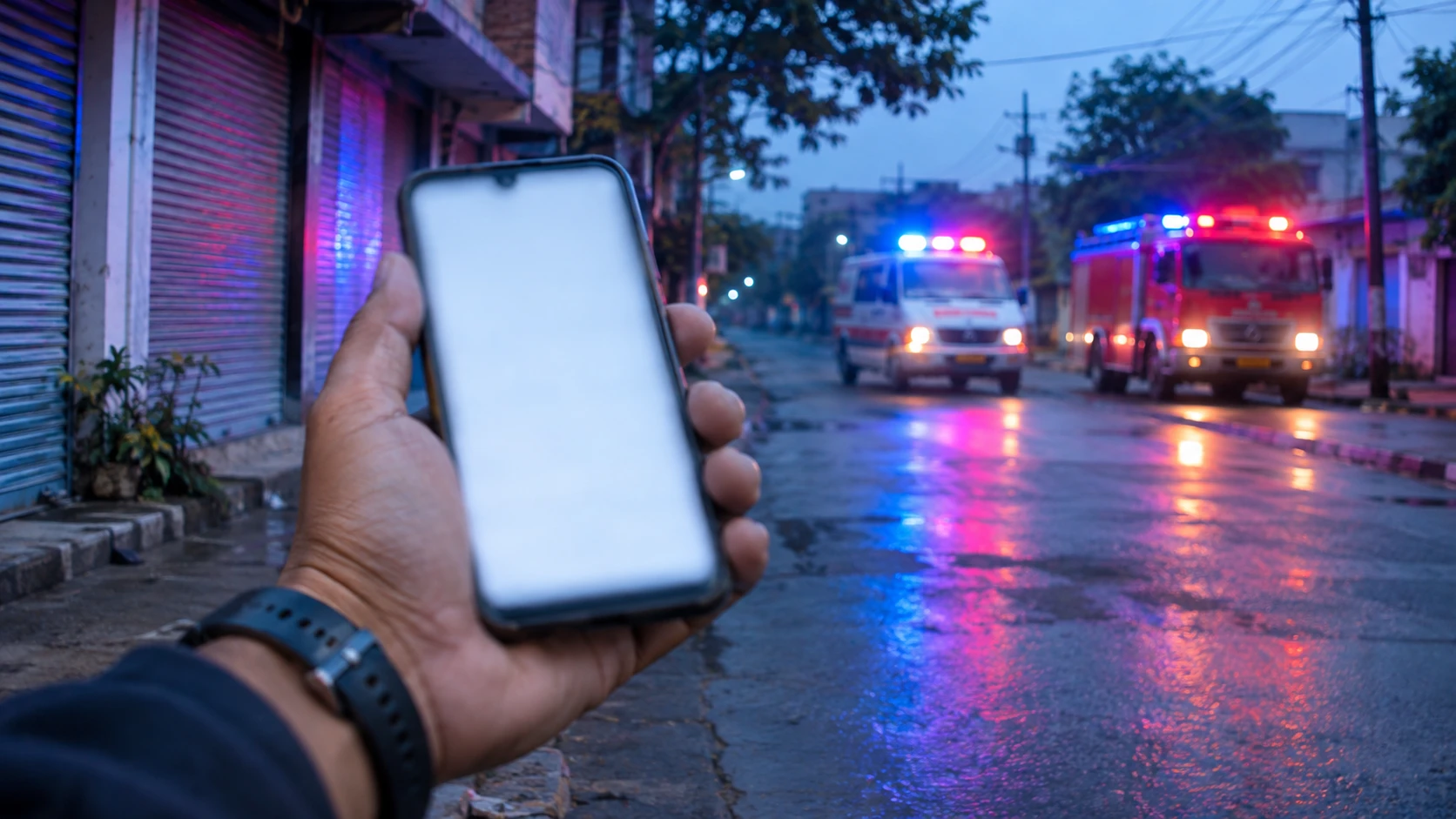
No. Water rescue needs training and equipment. Call 112, give the exact location and help only from a firm, safe spot without going into the water.
Where can I check official flood alerts in India?
Check India's SACHET portal and messages from your local authority during a flood, and follow their current instructions.
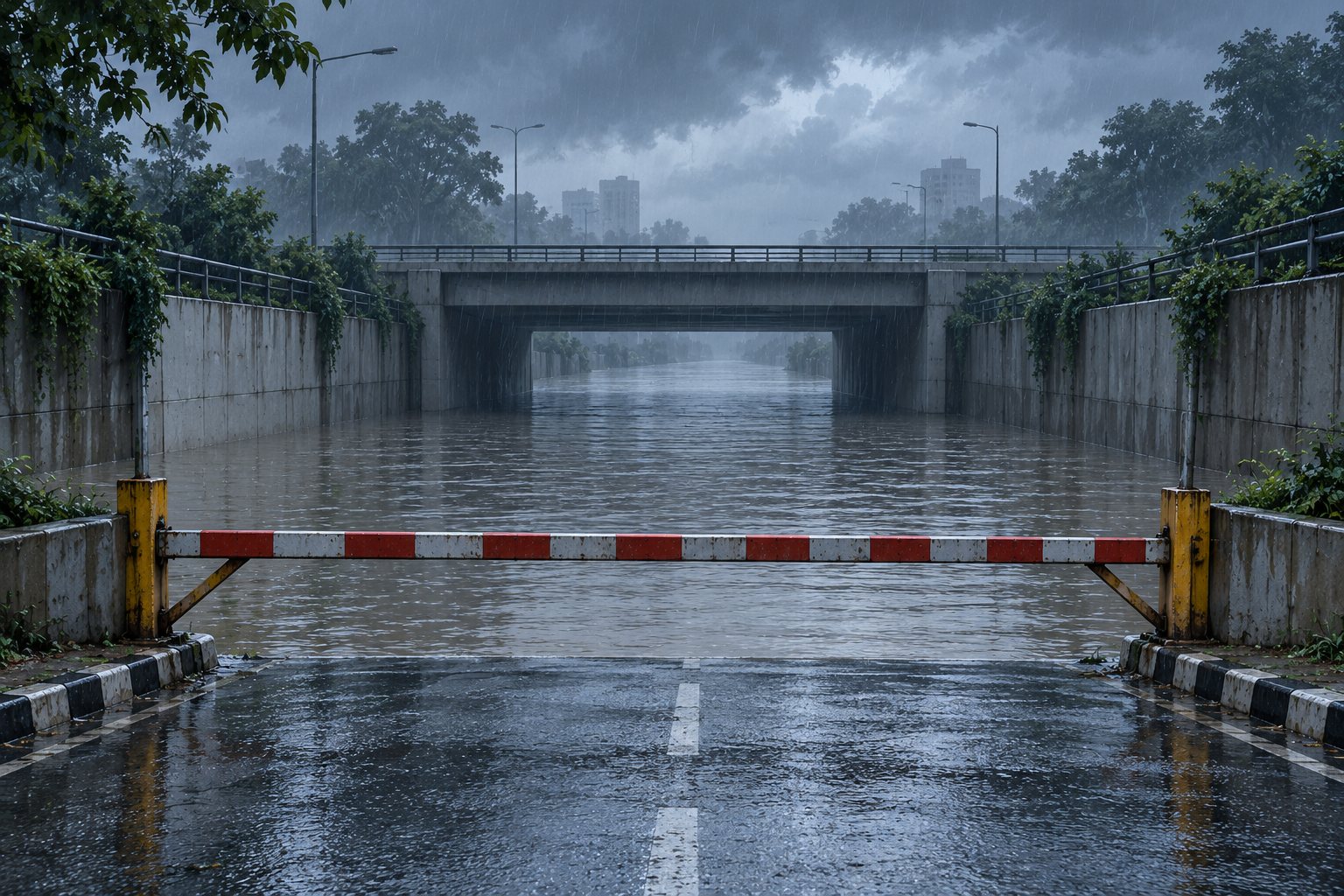
Cover image: AI-generated editorial illustration, not a photograph of a real flood.
Myth: I know this road, and the water is only shallow
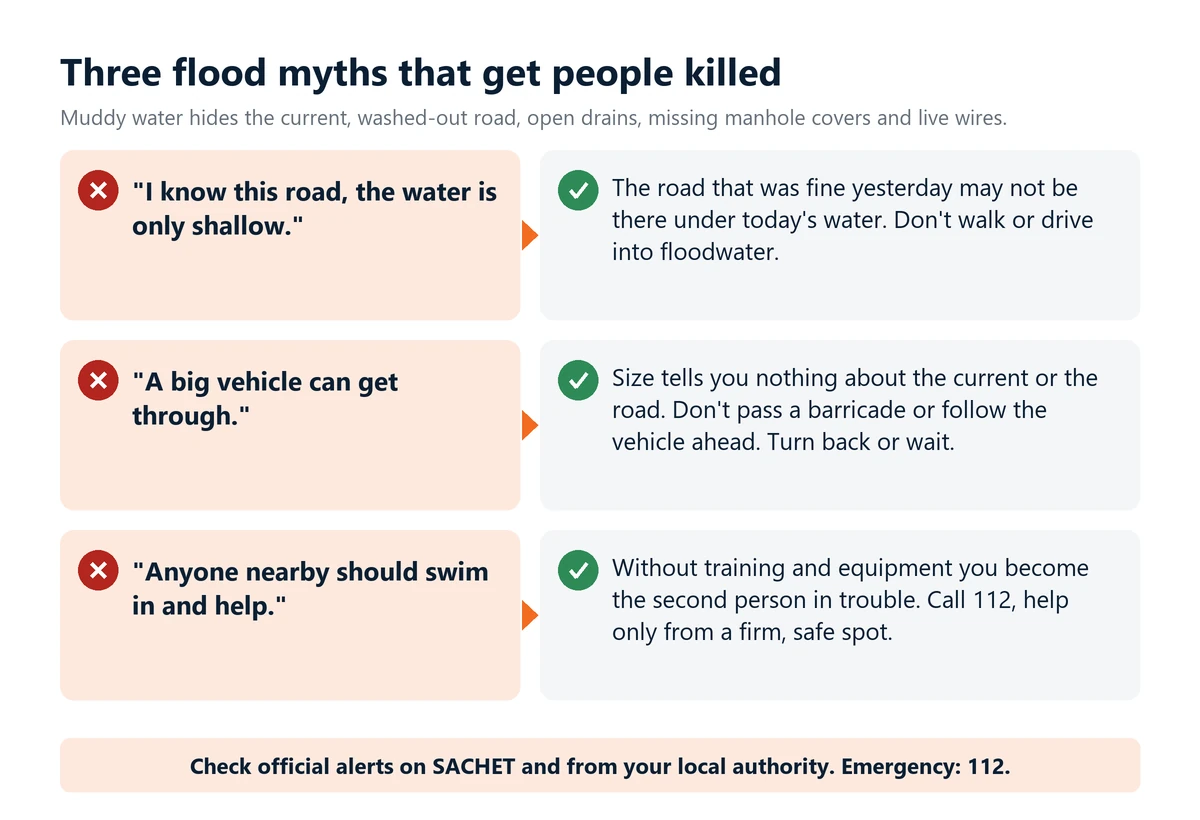
Every monsoon someone says this, drives into a flooded underpass and gets stuck. Muddy water hides everything that matters: how fast it is moving, whether the road under it has washed away, an open drain or missing manhole cover, a live wire. The road that was fine yesterday may simply not be there under today’s water.
The US National Weather Service flood guidance warns people not to walk or drive into floodwater, and that advice holds just as well in India. Its depth figures are American, though. They are not Indian accident counts, and they do not give you a safe depth to cross.
Myth: a big vehicle can get through
A bus, SUV or truck feels heavy, but its size tells you nothing about the force of the current or the state of the road underneath. Do not drive around a barricade, and do not follow the vehicle ahead just because it made it across. Turn back, take a route you know is open, or wait for local instructions. During a flood, check official alerts on India’s SACHET portal and from your local authority.
Myth: anyone nearby should swim in and help
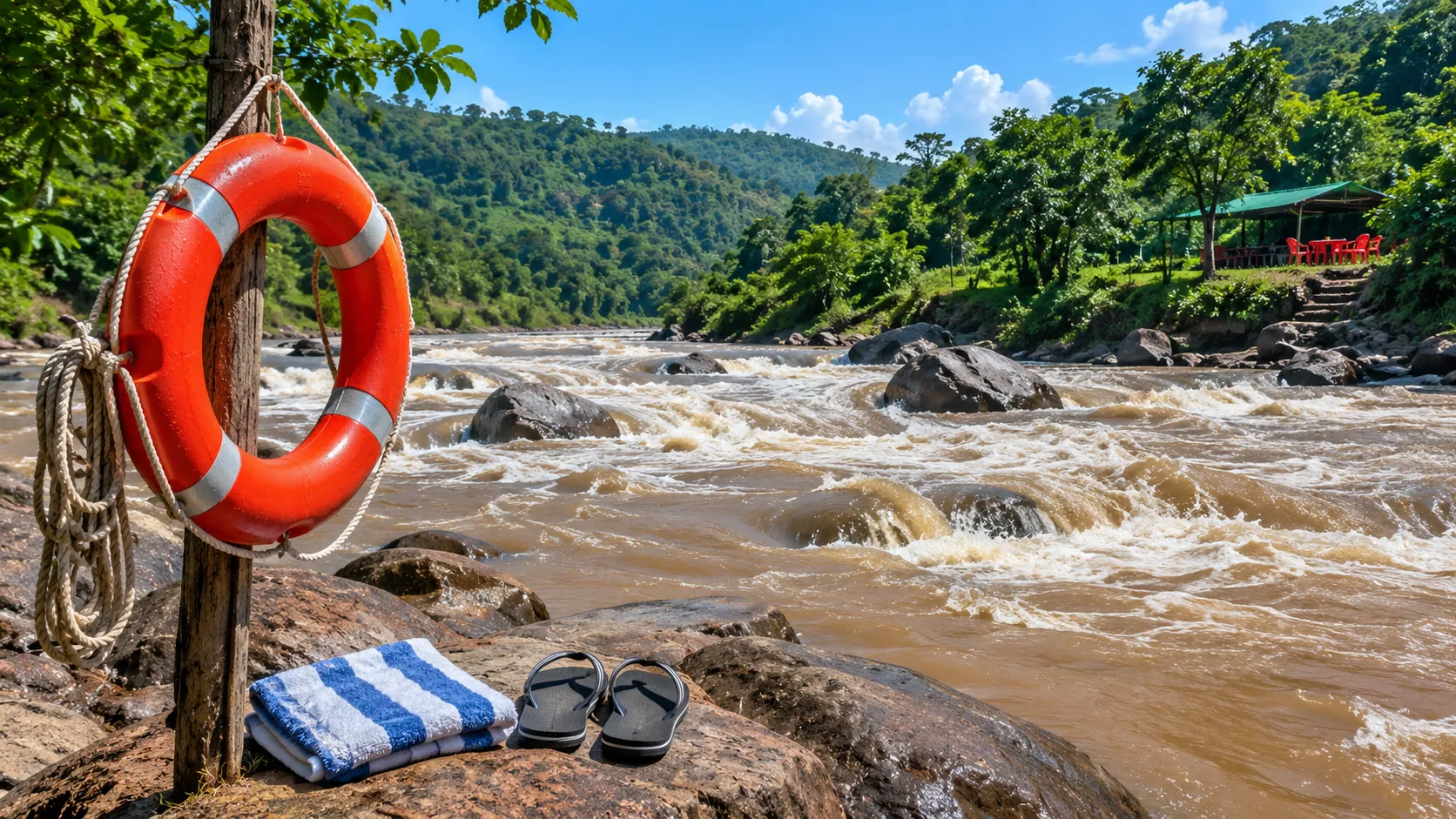
Pulling someone out of floodwater needs training and equipment. Without them, you are likely to become the second person in trouble. Call 112 at once and give the exact location and what you can see. Help only from a firm, safe spot, only as far as you are able, and as the responders tell you. Do not go into the water. This page is about keeping out of floodwater; it does not teach rescue technique. If a car has already gone into water, our guide to getting out of a sinking or flooded car covers the first minute.
How much moving water is enough to knock you down or sweep a car away?
Less than most people expect. The US National Weather Service says just 6 inches of fast-moving water can knock an adult off their feet, and about 12 inches of rushing water can carry away most cars. For SUVs and trucks it gives about 2 feet. In centimetres that is roughly 15 cm, 30 cm and 60 cm. These are American figures from an American agency, and Indian roads, drains and vehicles differ, so treat them as a warning that depth guesses fail, not as a safe depth to cross.
The same page quotes the US CDC that over half of all flood-related drownings occur when a vehicle is driven into hazardous floodwater. That one statistic is why the myth “a big vehicle can get through” matters. Water that looks only knee deep can still be moving fast enough to push a car sideways, and a stalled engine in an underpass leaves very little time to act.
Three things to remember when you cannot judge the water:
- You cannot see the road under muddy water, so you cannot know if it is still there.
- Speed matters as much as depth. A shallow, fast stream can move things that deep, still water would not.
- A road that is open on a map is not open in a flood. Check your local authority and SACHET for current alerts.
Plan before you leave, not at the edge of the water. On a rainy day, pick a route that avoids known underpasses and low bridges, tell someone your route, and keep enough fuel or charge to take a longer way round. If you reach a flooded stretch, turning back costs you time. Driving in can cost far more, and it puts the people who come to rescue you at risk as well.
What stays dangerous after the water goes down?
Floodwater does not become safe when it drops. The CDC flood safety guidance repeats that you should not drive or walk across flooded roads, warns that floodwater may contain trash, and says to discard items that cannot be disinfected, such as drywall and rugs. It advises rubber boots and plastic gloves during cleanup, and says to follow local officials on whether water is safe for drinking, cooking or cleaning.
Electricity is the other hazard. The CDC advises turning off electrical power if there is standing water, downed power lines or a need to evacuate, and unplugging appliances to prevent shock when power comes back. If you run a generator because the mains is down, never run it indoors. Our guide to generator carbon monoxide safety during a power cut explains why.
A short checklist for the first day back:
- Wait for the all-clear from local officials before going back to a flooded area.
- Switch the mains off before you enter, and do not touch switches, sockets or wires if you are standing in water.
- Wear boots and gloves, and keep children away from the water and the mud.
- Photograph the damage for insurance and for the authority, from a safe spot.
- Use boiled or bottled water until local officials say the supply is safe.
What needs attention
- Moving water, a washed-out road, debris and live wires can make even shallow-looking water dangerous. The methods trained rescue teams use are not meant for members of the public.
Controls that reduce risk
- Plan an alternate route in advance, keep an eye on flood warnings, and avoid parking or travelling on roads that usually flood.
Common unsafe practices
- Thinking a familiar flooded road, or a big vehicle, is safe.
- Swimming in to rescue someone without training.
Leave a comment