
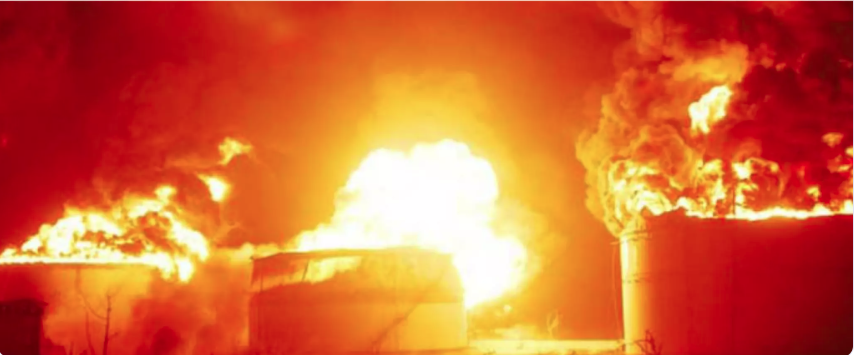
An oil depot looks quiet from the road: a few big white tanks, a loading gantry, tankers waiting at the gate. Inside those tanks are huge volumes of petrol, diesel or other fuel, often a short walk from houses, schools and shops.
Most depot and terminal fires do not start big. They start with a small leak, vapour drifting across a loading bay, a static spark or a tank filled past its limit. If the site’s own systems do not catch it in the first few minutes, the fire can burn for days and leave the soil, water and air around it damaged long after the flames are out.
Where and why these fires start
| Facility | Common cause |
|---|---|
| Tank farms at depots and terminals | Vapour release meeting a static spark |
| Refineries | Hot work during maintenance without proper permits and gas testing |
| Tanker trucks and loading bays | Hose rupture, overfilling and spillage |
| Retail petrol pumps | Smoking, open flames or fuel overflow near the dispensers |
| Port and jetty storage | Lightning and poor earthing |
Failures that turn a leak into a blaze
- Old tanks without working pressure and vacuum relief valves.
- Poor earthing and bonding, so static and lightning protection does not work when needed.
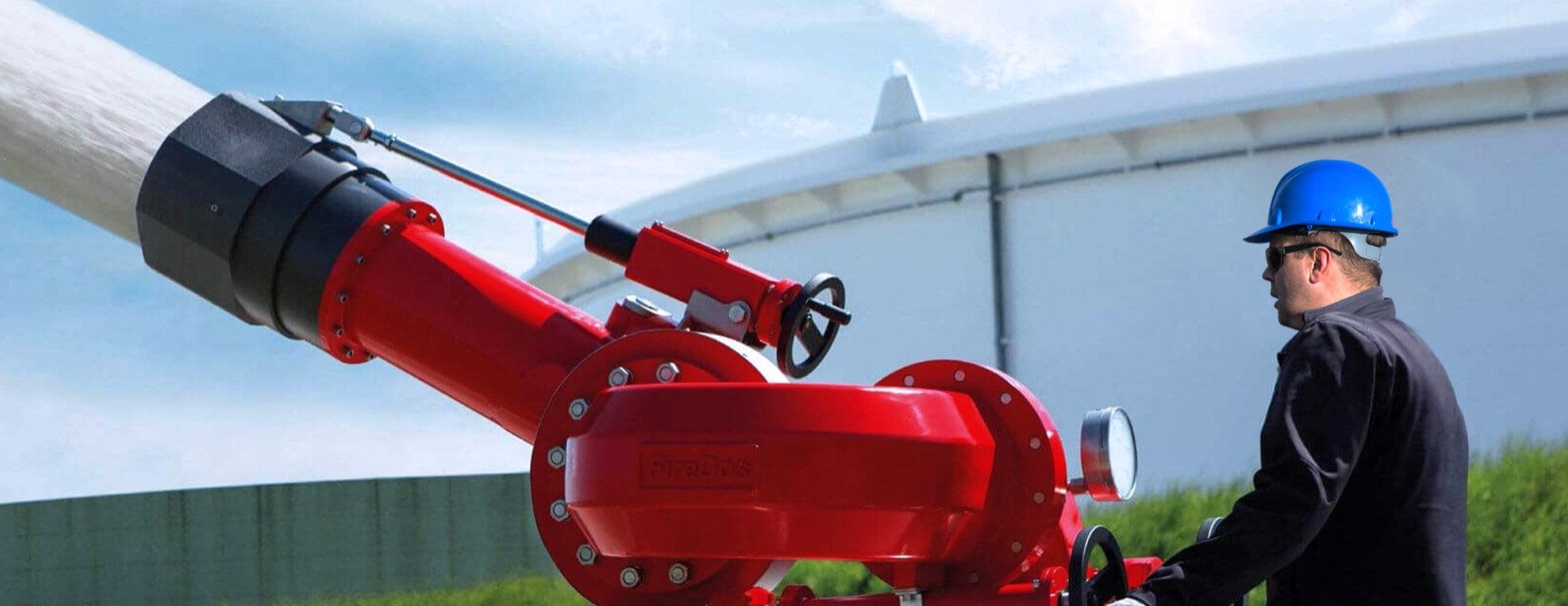
- Foam monitors and hydrants that do not work when the alarm goes.
- Tanks and facilities placed too close together. Layout distances are set by OISD-STD-118.
- No gas detectors in the loading bays.
- Manual valves instead of remote shut-off, so it takes too long to isolate a leak.
The rules that apply
| Standard or rule | Issued by | What it covers |
|---|---|---|
| OISD-STD-117 | Oil Industry Safety Directorate | Fire protection at petroleum depots, terminals and similar sites |
| OISD-STD-118 | Oil Industry Safety Directorate | Layouts and separation distances |
| OISD-STD-105 | Oil Industry Safety Directorate | Work permit systems, including hot work |
| Petroleum Rules, 2002 | PESO | Licensing of petroleum storage |
| Chemical Disasters (Industrial) Guidelines, 2007 | NDMA | Industrial storage, preparedness and on-site and off-site emergency plans |
The rules are only as good as the equipment and drills behind them. A foam system that has never been tested is a line in a file, not protection.
If you work at a depot or fuel site
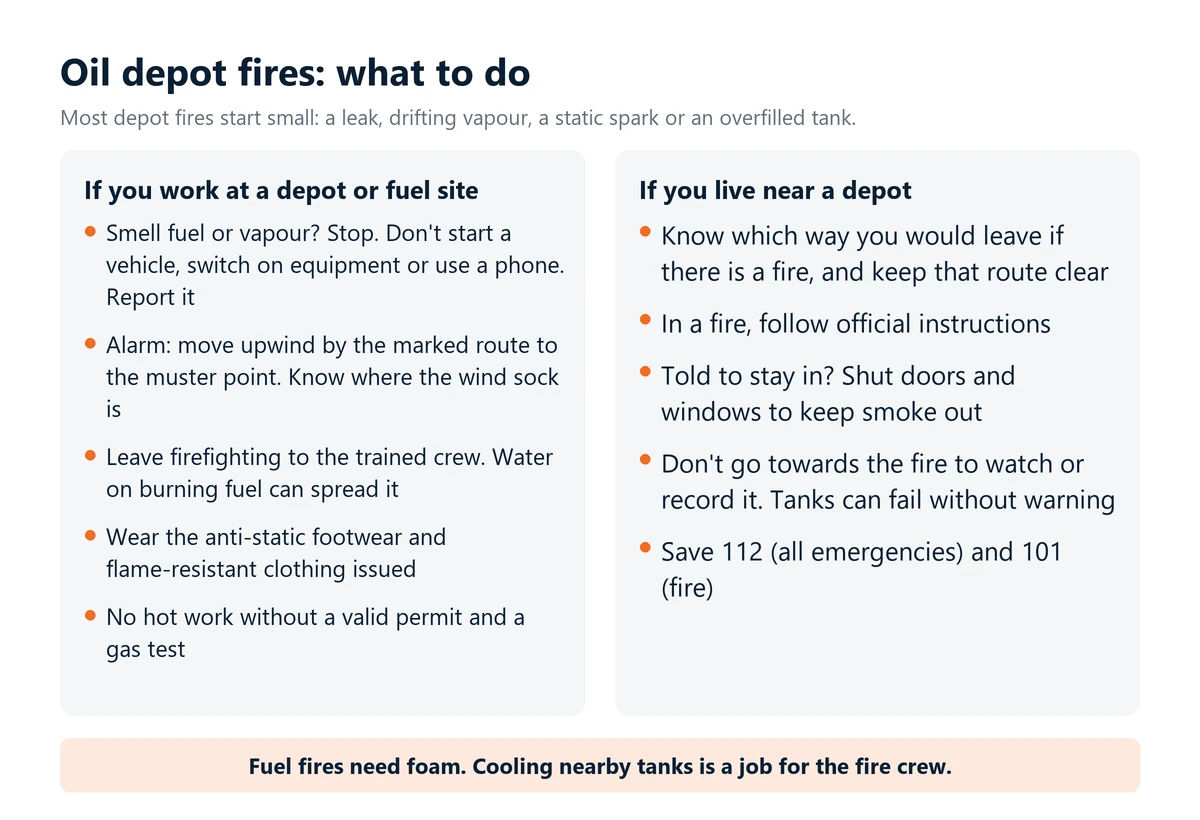
- If you smell fuel or vapour, stop. Do not start a vehicle, switch on equipment or use a phone in the area. Report it at once.
- When the alarm sounds, move upwind by the marked route to the muster point. Know where the wind sock is before you start work.
- Leave firefighting to the trained fire crew. Water sprayed straight onto burning fuel can spread it; fuel fires need foam, and cooling of nearby tanks is a job for the crew.
- Wear the anti-static footwear and flame-resistant clothing your site issues.
- Do not start hot work without a valid permit and a gas test.
If you live near a depot
- Find out which way you would leave if there is a fire, and keep that route clear.
- If there is a fire, follow official instructions. If told to stay in, shut doors and windows to keep smoke out.
- Do not go towards the fire to watch or record it. Tanks can fail without warning.
- Save 112 (all emergencies) and 101 (fire).
What needs to change
- Map every oil depot and tank farm, with gas and temperature sensors that raise an early alert.
- Independent fire and environmental audits of fuel sites at regular intervals.
- Isolation valves on bund drains, so leaked fuel cannot run off the site.
- District hazard maps that show where fuel is stored.
- Foam tenders and thermal-imaging drones for the fire stations that cover these sites.
- A fund, paid for by the industry, to clean up soil and water after a fuel fire.
Do this today
If you work at a fuel site, walk to your muster point and check where the nearest emergency shut-off and wind sock are. If you live near one, ask your society or ward office whether there is an off-site emergency plan and how residents would be warned.
References
What needs attention
- Oil depots, terminals and fuel stations store large volumes of flammable liquid close to workers and communities
- Small leaks, vapour release, static discharge or overfilling can escalate into long-burning fires
- Working foam systems, hydrants, gas detection and remote shut-off valves decide how fast a release is contained
- Earthing, bonding and lightning protection must be tested, not assumed
- Fires at fuel sites also contaminate air, soil and water, so clean-up belongs in the response plan
- OISD standards, PESO licences and site emergency plans set the baseline, but only maintained equipment and drills make them work
Controls that reduce risk
- Test foam monitors, hydrants and pumps on a schedule and record the results
- Test earthing, bonding and lightning protection, not just inspect them
- Fit gas detectors in loading bays and remote shut-off valves on main lines
- Enforce hot-work permits with gas testing under OISD-STD-105
- Keep separation distances as per OISD-STD-118 when adding tanks or buildings
- Share the off-site emergency plan with nearby residents and the local fire station
- Hold evacuation drills that include contractors and tanker drivers
Common unsafe practices
- Starting a vehicle or equipment after smelling fuel or vapour
- Hot work without a permit and gas test
- Overfilling tanks or tankers
- Assuming foam systems, hydrants and earthing work without testing them
- Spraying water straight onto burning fuel
- Neighbours walking towards a depot fire to watch or film it
Leave a comment