
Quick answers
How do road accidents affect India's economy?
Road deaths and injuries cause loss of wages, taxes and productivity, medical and rehabilitation costs, property damage, legal and insurance burdens, and lasting trauma for families.
Why does a road death hurt a family financially?
A crash often takes away a working-age earner, and long-term medical care for survivors can push families into debt or poverty.
What can employers do to reduce road accident losses?
Train and insure the drivers they employ, care for their wellbeing, and adopt zero-accident workplace and transport policies.
How can individuals help reduce the cost of road accidents?
Follow speed limits, wear helmets and seatbelts, and support road safety awareness drives, since preventing crashes protects families and the wider economy.
Every three minutes, someone dies on an Indian road. Each death breaks a family, and together these deaths and injuries cost the country a great deal of money.
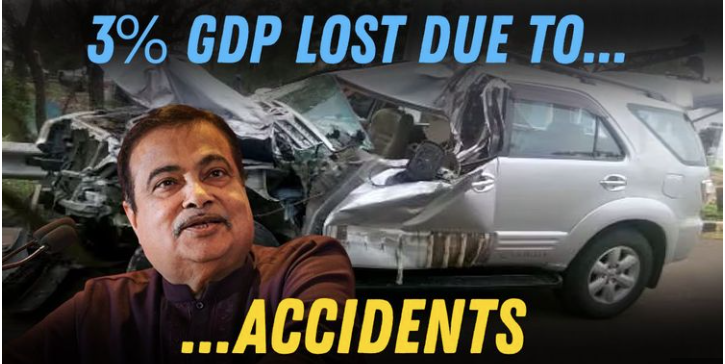
A World Bank study released in February 2021 estimated that road crashes cost India about 3.14% of its GDP every year. Road Transport Minister Nitin Gadkari has also said road crashes cost India about 3% of GDP. That is money lost to treatment, lost earnings and damaged property, year after year.
Every crash has two victims
- The person who is killed or injured.
- The family that loses an income, a carer and a future.
In 2023, 66.4% of people killed on India’s roads were aged 18 to 45 (MoRTH). These are the people who earn, pay taxes and support children and parents. The same World Bank study found that a road death costs a poor family nearly seven months of household income, and that household income fell by 56% among low-income rural families after a crash.
How big is the loss?
Estimates vary a lot, because they count different things:
| Estimate | Cost as share of GDP | What it is based on |
|---|---|---|
| World Bank study with SaveLIFE Foundation (2021) | 3.14% | Adjusts police crash numbers for under-reporting |
| Road Transport Minister’s public estimate | About 3% | Stated in public remarks |
| Study commissioned by MoRTH | 0.77% | Uses police-reported crashes only |
Source: Drishti IAS summary of the World Bank report and MoRTH study, 16 February 2021; minister’s remarks as reported. The gap between 0.77% and 3.14% is mostly about how many crashes never reach police records. Either way, the loss runs into lakhs of crores of rupees every year.
Earlier versions of this page showed a year-by-year table of losses from 2020 to 2024. We could not find any source for those yearly figures, so we have removed it.
What makes up the loss
- Lost lives and earnings. Most people killed are of working age, so their families lose wages and the country loses their work and taxes.
- Medical and rehabilitation costs. Survivors with spinal or brain injuries may need care for years, and hospital bills push many families into debt.
- Damage to property. Vehicles, road fittings and emergency services all cost money.
- Legal and insurance costs. Police cases, compensation claims and insurance payouts.
- The cost nobody can count. Grief, trauma and children growing up without a parent.
The numbers at a glance
- 1,77,175 road deaths in 2024 (MoRTH).
- 4,62,825 people injured in road crashes in 2023 (MoRTH).
- 66.4% of people killed in 2023 were aged 18 to 45.
- About 3.14% of GDP lost every year (World Bank estimate, 2021).
- A road death costs a poor family nearly seven months of income (World Bank, 2021).
Why this is a development issue
Every injured breadwinner can push a family below the poverty line. Countries with the safest roads treat road safety as part of economic and health policy, not only as a transport matter. India’s growth story needs people who reach home safely.
What you can do
- Follow speed limits and wear a helmet or seat belt. You protect your family’s income as well as your life.
- Take health and accident insurance for the earning members of the family, and keep the papers where others can find them.
- If you employ drivers, train them, give them rest, insure them, and never push them to drive tired.
- If you run a business, adopt a road safety policy for staff travel and company vehicles.
- Support road safety campaigns in your area. Preventing one crash saves a family far more than any later help can.
What needs to change
- Steady investment in safer roads: crash barriers, lighting and clear signs.
- Trauma care within reach along every national highway.
- Better data, so the true cost of crashes is known and tracked every year.
- Corporate CSR funding for road safety and trauma care.
- Treating road deaths as a preventable loss, not fate.
A safer road is not a luxury. Check tonight that the earning members of your family have accident insurance, and that everyone who rides or drives wears a helmet or seat belt.
What needs attention
- Estimates of the cost of road crashes range from 0.77% to 3.14% of GDP, depending on under-reporting
- Two-thirds of people killed are of working age
- Poor rural families lose the most income after a road death
- Long-term care for survivors can push families into debt
- Most of this loss could be prevented with known measures
Controls that reduce risk
- Insure the earning members of your family against accidents
- Write down where insurance papers and bank details are kept
- Set a road safety policy for staff and company vehicles
- Train and rest the drivers you employ
- Support local road safety and trauma care efforts
Common unsafe practices
- Treating road deaths as fate rather than preventable loss
- Having no accident or health insurance for earning members
- Pushing hired drivers to work long hours without rest
- Skipping helmets and seat belts on daily commutes
- Businesses ignoring road safety for staff travel

Leave a comment