
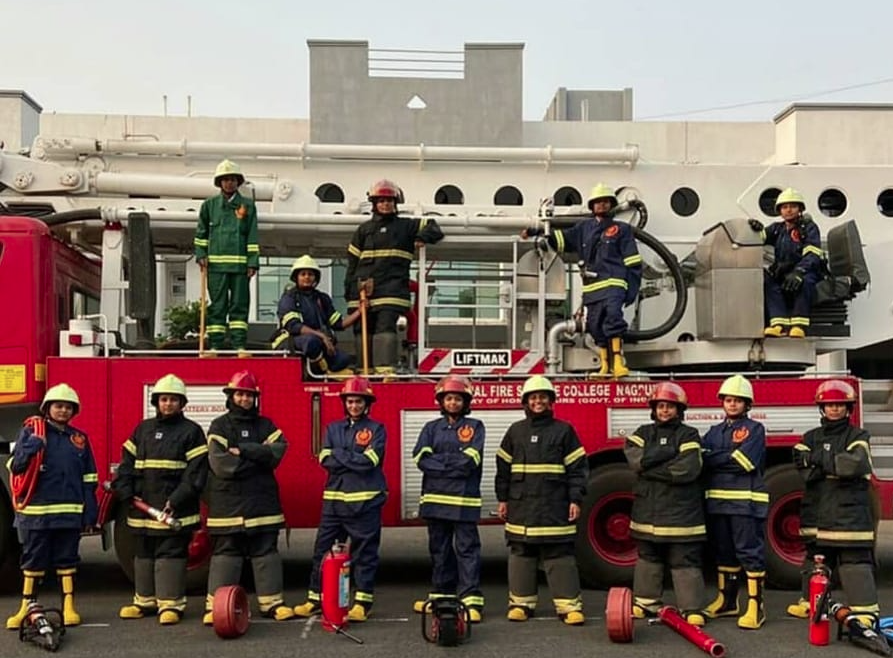
Quick answers
Why does fire service response take long in many parts of India?
Many areas face shortages of fire stations, firefighters, vehicles and breathing apparatus, along with outdated vehicles and communication systems, and rural areas often lack fire coverage.
What can citizens do about poor fire preparedness in their city?
Report faulty hydrants or blocked exits to civic helplines, support volunteer response networks, build awareness in schools, societies and workplaces, and ask the municipality how many fire stations are active.
Why should households and buildings not rely only on the fire brigade?
Fire services in many areas are understaffed and under-equipped, so prevention, awareness and preparedness in schools, homes and workplaces remain essential before help arrives.
In June 2019, the Union Home Ministry told the Rajya Sabha that India had 3,377 fire stations against 8,559 required. That is fewer than 40% of what the country needs (as reported by Down To Earth).
You may have seen a “97% shortage” figure credited to a 2025 NDMA report. We could not trace any such report, so we do not use it.
When you dial 101, you expect a fire engine to come quickly. How quickly depends on how far the nearest fire station is, whether it has a working vehicle and enough trained crew, and whether the engine can get through your lane. In many parts of India, the honest answer is: not quickly enough.
Why this matters
Fire is not a rare event in India. NCRB recorded 5,971 fire accidents and 5,888 deaths in 2024, in hospitals, factories, schools and, most of all, homes. NCRB counts fire accidents reported to the police, not every call that fire services attend, so the real workload is far higher.
Our firefighters do this work with too few stations, too few people and too little equipment. They deserve better, and so do the people they protect.
The fire service gap: what official figures show
| Parameter | Required | Existing | Gap |
|---|---|---|---|
| Fire stations | 8,559 | 3,377 | 5,182 (about 60%) |
(Source: Minister of State for Home, reply in the Rajya Sabha, June 2019, as reported by Down To Earth; DTE’s headline gives the gap as 5,191.)
A 2011 Fire and Risk Hazard Analysis commissioned by the Ministry of Home Affairs also reported shortages of fire stations, fire-fighting vehicles, specialised equipment and fire personnel (MHA reply, Rajya Sabha, 14 March 2018). We have not found a verified, current national count of firefighters, vehicles or breathing apparatus, so none is shown here.
Who is responsible
- Fire services are mainly a state and municipal responsibility (Article 243W and the Twelfth Schedule of the Constitution).
- The Standing Fire Advisory Council’s norms for fire stations, equipment, manpower and response time are advisory. Each state decides how far to adopt them.
- Response times vary widely by city and terrain. No verified national average is available.
What about your state?
The state-wise shortage percentages that earlier appeared here could not be traced to any official dataset and have been withdrawn. To find the real picture for your state, look at the state fire service department’s annual report, or at replies given in your State Assembly. You can also file an RTI asking how many fire stations, vehicles and firefighters your district has against the norm.
Case study: TRP Game Zone fire, Rajkot (2024)
- What happened: a fire broke out at the TRP Game Zone in Rajkot on 25 May 2024. Investigators examined unauthorised construction and petrol stored beyond the permitted limit.
- Result: 27 people died, including children.
- Finding: victims were so badly burned that DNA matching was needed to identify them. The structure gave people very little time to escape.
- Lesson: no fire brigade, however good, can save people from a structure like that once it catches fire. Approvals, fire safety checks and safe exits must be in place before a public venue opens.
Common gaps
- Fire service laws and structures differ from state to state, and there is no single national Fire Services Act.
- Funding comes mainly from the states. The Centre’s ₹5,000 crore Scheme for Expansion and Modernization of Fire Services (2023) supports new stations and equipment.
- Many stations work with old vehicles and communication systems.
- Records of inspections, maintenance and incidents are often not kept in a shared digital system.
- Fire safety education in schools and training institutes is patchy.
Why there is no international table here
We have not used a like-for-like international table of firefighters, fire stations or response times. Countries count full-time, part-time and volunteer crews differently, and earlier figures credited to an “IFRC Global Fire Data Index” could not be traced. In India, the SFAC’s advisory norms set response-time targets rather than a single population ratio.
The way forward
- A national framework law for fire services, so that standards and structures are uniform across states.
- Fire station mapping linked to state and national disaster dashboards, so gaps are visible.
- More firefighter training academies, and trained community volunteers.
- A dedicated, published fire service budget in every state.
- Regular independent fire audits for public and industrial buildings.
What you can do
- Find out where your nearest fire station is and save its number, along with 101 and 112.
- Report faulty hydrants, blocked fire-engine access and locked exits to your municipal helpline.
- Keep the lane and gate of your building clear, so a fire engine can actually reach you.
- Support volunteer response training in your society or ward.
- Ask your corporator or MLA one question: how many fire stations does our area have, and how many does it need?
Because the fire brigade may take time to reach you, the first few minutes are yours. A working smoke alarm, a known way out and a family that has practised it buy the time that a short-staffed fire service cannot.
References
What needs attention
- India had fewer than 40% of the fire stations it needed, according to the 2019 Rajya Sabha reply
- There is no verified current national count of firefighters, vehicles or breathing apparatus
- Fire service norms are advisory, so each state decides how far to meet them
- State-wise shortage percentages circulating online could not be traced to official data
- At Rajkot, unauthorised construction and stored petrol left people little time to escape
Controls that reduce risk
- Find your nearest fire station and save its number
- Report faulty hydrants and blocked access to the municipality
- Keep your building's gate and lane clear for fire engines
- Use RTI or Assembly replies to find your district's fire service strength
- Support trained community fire volunteers
Common unsafe practices
- Assuming the fire brigade will always arrive in minutes
- Blocking lanes and gates that fire engines need
- Ignoring faulty hydrants and locked exits
- Opening public venues before fire safety checks are done
- Quoting untraceable shortage figures instead of official data


Leave a comment