
Quick answers
Why does India have more road deaths than other big economies?
Helmet and seat belt rules are weakly enforced, many vehicles give little protection in a crash, roads lack lighting and barriers, ambulances take too long to arrive, and too many people treat traffic rules as optional.
How does India's road death rate compare with other countries?
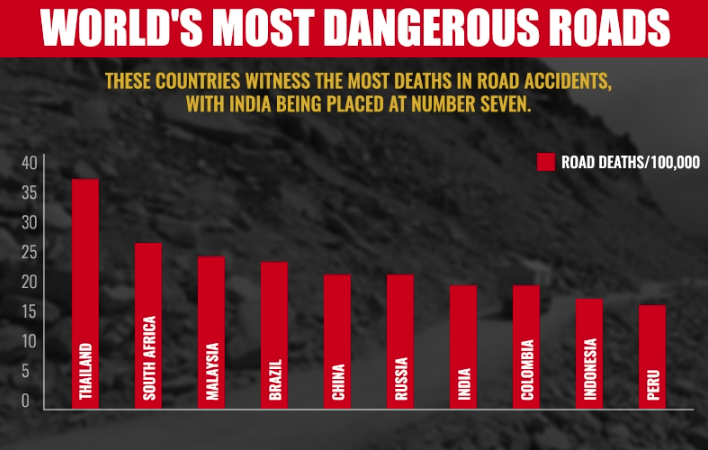
On WHO estimates for 2021, India lost 14.6 people per lakh population on its roads. That is five to six times the rate in Japan, Germany or the UK, though China and Brazil were higher.
How can I lower my risk on Indian highways?
Wear a helmet or seat belt every time, keep within speed limits, avoid driving at night on poorly lit roads, and never drive when sleepy.
What should I carry while travelling by road?
Keep a first-aid kit in the vehicle and emergency contacts on your phone, with 112 and 108 saved. Learning CPR and bleeding control lets you help someone in the golden hour.
India is one of the world’s biggest economies, but on road safety we are far behind most of the countries we like to compare ourselves with. A 2021 World Bank report noted that India has about 1% of the world’s vehicles but about 10% of the world’s road crash victims. In 2024, police records counted 1,77,175 road deaths in India, about one every three minutes.
Why growth has not made our roads safer
Growth brings more vehicles, more highways and more city traffic. In the safest countries, that growth came with four things:
- roads designed so that a mistake does not cost a life;
- firm, steady enforcement of traffic rules;
- safer vehicles, tested in crashes;
- fast ambulances and trauma care.
India has not kept pace on these four, and our roads show it.
How India compares with other large economies
To compare countries fairly, you need one source that counts every country the same way. The World Health Organization’s Global Status Report on Road Safety 2023 does this. It gives estimated deaths for 2021 for each country, adjusted for under-reporting.
| Country | Estimated road deaths, 2021 | Deaths per 1 lakh people, 2021 |
|---|---|---|
| China | 2,48,099 | 17.4 |
| Brazil | 33,586 | 15.7 |
| India | 2,05,894 | 14.6 |
| United States | 47,750 | 14.2 |
| Italy | 2,964 | 5.0 |
| France | 3,035 | 4.7 |
| Canada | 1,805 | 4.7 |
| Germany | 2,778 | 3.3 |
| Japan | 3,304 | 2.7 |
| United Kingdom | 1,606 | 2.4 |
Source: WHO Global Health Observatory, estimated road traffic deaths and death rate, 2021.
A few things stand out.
- India’s death rate is about five to six times that of Japan, Germany or the UK.
- India is not the very worst on this list. On WHO’s estimates, China and Brazil have higher rates, and the US is close to India. A big economy does not automatically mean safe roads.
- WHO’s estimate for India in 2021 (2,05,894) is much higher than the 1,53,972 deaths police recorded that year. WHO adjusts for deaths that never reach police records, so the real toll is probably higher than our official count.
Why India does worse than the safest countries
- Weak enforcement. Helmet and seat belt rules are ignored, especially away from big cities.
- Vehicle safety. Many cars and two-wheelers on our roads offer little protection in a crash.
- Road design. Potholes, unlit highways, missing crash barriers and no safe space for pedestrians.
- Slow emergency response. The golden hour is lost to traffic, distance and bystanders who hesitate.
- The “chalta hai” attitude. Overloading, wrong-side driving and jumping signals are treated as normal.
The global picture
WHO says about 1.16 million people die on the world’s roads every year, and 92% of them are in low- and middle-income countries, which have only about 60% of the world’s vehicles. Road crashes are the leading cause of death for children and young adults aged 5 to 29. The United Nations has set a target to halve road deaths and injuries by 2030, and India has signed up to it.
What you can do
- Wear a helmet or seat belt on every trip, including the back seat and the short ride to the market.
- Stay within speed limits, especially on highways.
- Avoid driving at night on poorly lit roads when you can, and never drive when sleepy.
- Keep a first-aid kit in the vehicle and emergency contacts on your phone.
- Learn CPR and how to stop bleeding. You could save a life in the golden hour.
- Save 112 and 108 on every family phone.
What needs to change
- A clear national plan to halve road deaths by 2030, with yearly targets for each state.
- Zero tolerance for helmet and seat belt violations.
- Better road engineering, with signs, lighting and crash barriers, starting with known black spots.
- Crash-test ratings for all new vehicles.
- Wider 108 ambulance coverage and faster response in cities and on highways.
A richer India means little if people do not come home safely. Start with your own family, and then share this with one person you know who rides without a helmet.
What needs attention
- India's road death rate is five to six times that of Japan, Germany or the UK
- On WHO estimates, China and Brazil have higher rates than India, and the US is close behind
- WHO's 2021 estimate for India is about a third higher than the police count
- The safest countries combine safe road design, firm enforcement, safe vehicles and fast trauma care
- Road crashes are the leading killer of children and young adults aged 5 to 29 worldwide
- Official road deaths in India have risen every year from 2020 to 2024
Controls that reduce risk
- Wear a helmet or seat belt every time, front and back
- Choose vehicles with good crash-test ratings when you buy
- Keep a first-aid kit in every vehicle
- Learn CPR and bleeding control
- Report black spots and broken barriers to the local authority
- Ask your elected representatives about the state's road safety targets
Common unsafe practices
- Assuming economic growth will make roads safe on its own
- Comparing countries using numbers from different sources and years
- Skipping helmets and seat belts on short trips
- Speeding on highways and driving tired at night
- Treating wrong-side driving and signal jumping as normal
- Waiting for someone else to call for help at a crash
Leave a comment