
What happened here
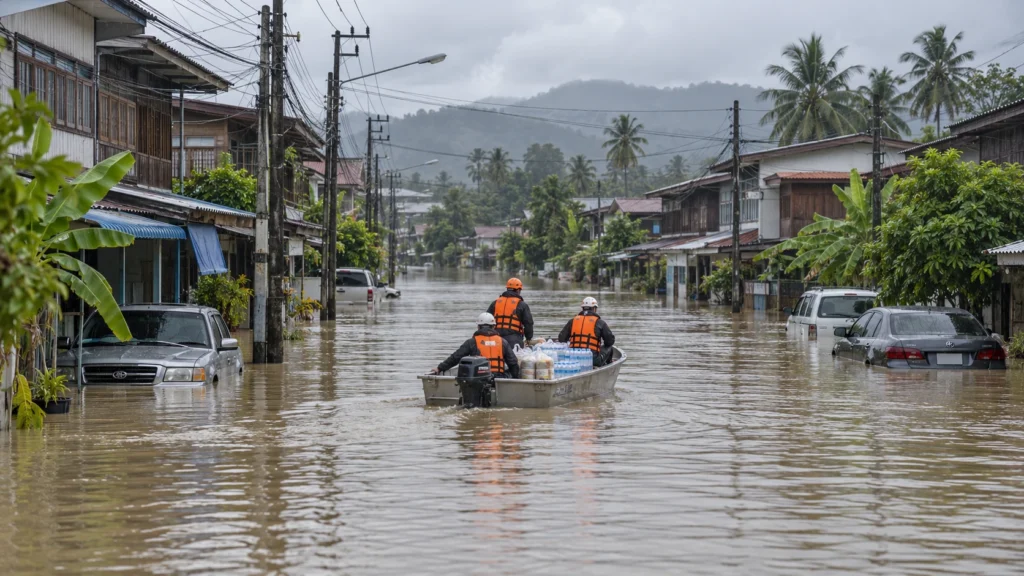
Days of heavy rain from a low-pressure system in late September 2026 flooded Bangkok and much of central Thailand, and set off floods and landslides in southern Myanmar. By 15 October, Thailand’s DDPM had counted 76 deaths, 25 of them in Prachin Buri. In Myanmar’s Dawei District, local rescue groups counted over 40 deaths; no official toll has been announced.
Quick answers
How many people died in the Thailand floods of 2026?
Thailand’s Department of Disaster Prevention and Mitigation counted 76 flood deaths from 16 September to 15 October 2026, including 25 in Prachin Buri province, as reported by the Bangkok Post.
How many people died in Myanmar?
No official toll has been announced. Local rescue groups told The Irrawaddy that over 40 people had died in Dawei District by 2 October, and UCA News reported at least 41, citing the Tavoyan National Federation.
What caused the floods?
Days of heavy rain from a low-pressure system with strong monsoon winds in late September. In Thailand, water flowing south from the North and dam releases kept rivers high for weeks. We found no storm name for the system.
Was Bangkok the worst-hit place?
Bangkok declared a city-wide flood disaster on 26 September and recorded four deaths, but Prachin Buri province east of the capital had the most deaths in Thailand.
What should Indian families learn from this?
Keep watching river and dam warnings for days after heavy rain, and do not sleep below hill slopes during red alerts. In an emergency in India, call 112.
International case study. These floods happened in Thailand and Myanmar, not India. We cover them because the pattern, days of rain over a low-lying city followed by rivers rising for weeks downstream, and night-time landslides on hill villages, is the same one Indian families face every monsoon.
What happened
In the last week of September 2026, a slow-moving low-pressure system sat over the Gulf of Thailand and the land around it for several days. Rain began falling on Bangkok on the afternoon of Thursday, 24 September. By Saturday, 26 September, some parts of the city had received more than 300 mm, according to officials quoted by the Associated Press (AP), and Bangkok declared all 50 of its districts a flood disaster area. The Irrawaddy, quoting Myanmar’s Department of Meteorology, reported that the low-pressure area combined with strong monsoon winds, later deepened into a depression and crossed the coast near Kyaikto in Mon State. We did not find any storm name for this system.
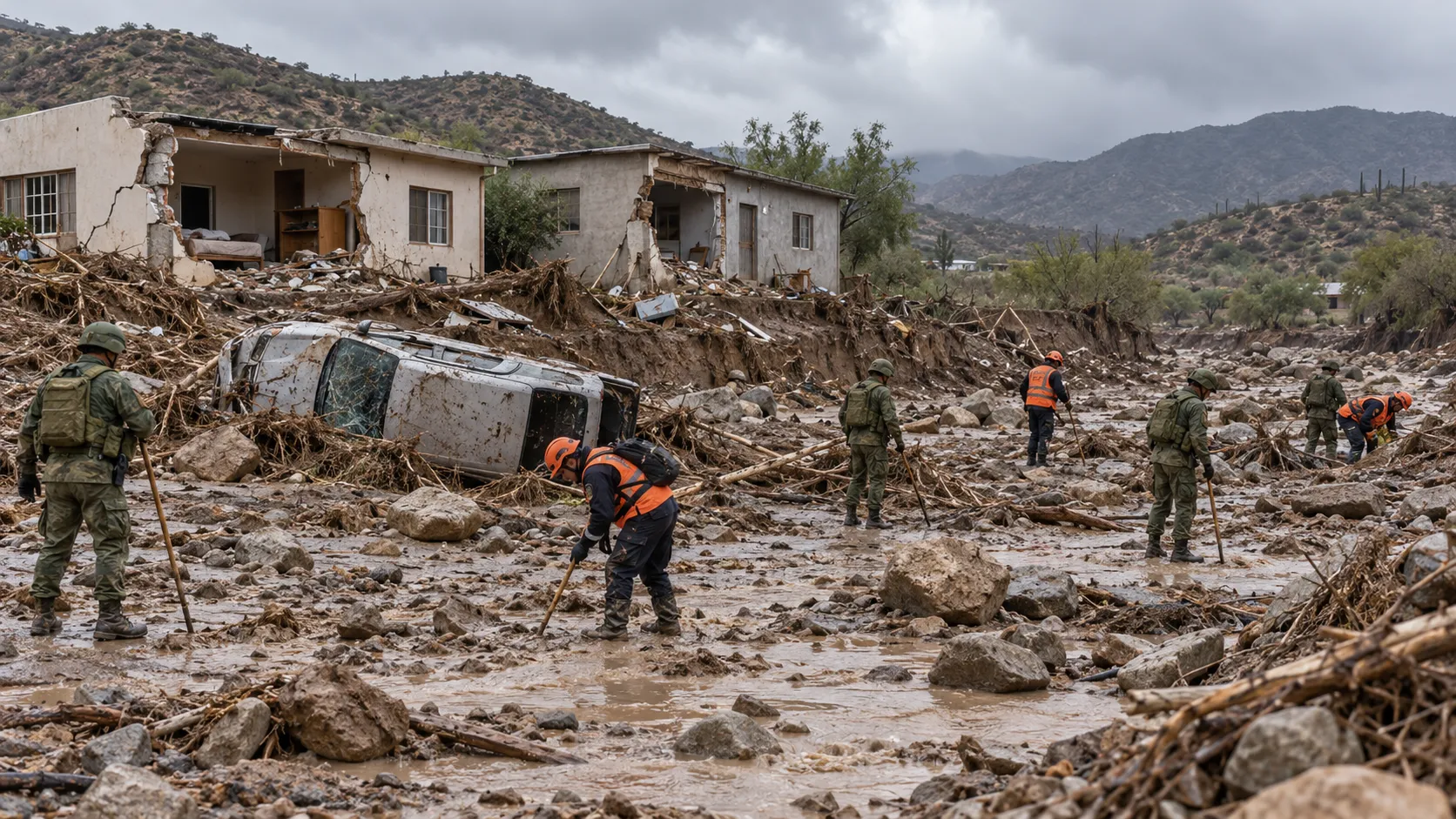
Across the border in southern Myanmar, the same rain hit Dawei District in Tanintharyi Region. Eleven Media, via Asia News Network, reported that Dawei recorded 11.02 inches (about 280 mm) of rain on 27 September, its highest single-day total in 80 years. Landslides came down on villages in Launglon and Thayetchaung townships at night.
In Thailand the water did not go away when the rain eased. Water flowing south from the North, and releases from the Chao Phraya Dam, kept rivers high in the Central Plains for weeks. Prachin Buri, east of Bangkok, became the worst-hit province by deaths.
Thailand: the toll
Thailand’s Department of Disaster Prevention and Mitigation (DDPM) counts flood deaths from 16 September. Its figures rose sharply over three weeks:
- 29 September: 23 deaths, 2,602,309 people affected (DDPM report, via The Nation).
- 7 October: 60 deaths, announced by the government (AFP, via France 24).
- 8 October: 44 deaths and more than 3.13 million people affected, in a DDPM statement by Director-General Nirat Pongsitthaworn (Bernama, via Malay Mail). This is lower than the government figure of the day before; the reports do not explain the gap.
- 15 October: 76 deaths, including 25 in Prachin Buri, in DDPM’s daily update reported by the Bangkok Post. About 2.43 million people were still affected in Bangkok and 20 provinces, but water levels were falling.
After Prachin Buri, the DDPM list of 15 October showed nine deaths each in Samut Prakan and Suphan Buri, seven in Chachoengsao, six in Sa Kaeo, and four each in Bangkok and Nakhon Nayok. Khaosod English separately reported 25 deaths in Prachin Buri on 14 October, also citing DDPM.
Myanmar: the toll
Myanmar’s military authorities have not announced an overall death toll. Control of Tanintharyi is split between the military and resistance groups, and phone and internet lines were cut, so the counts come mostly from local rescue groups.
- On 28 September a Social Welfare Ministry spokesperson reported one death in Launglon and 24,089 people affected in Dawei District (Xinhua, as listed by the Asian Disaster Reduction Center).
- By 30 September, AFP reported that rescuers had pulled nine bodies from a landslide that buried Ka Det Nge Htein village in Launglon township as people slept, with eight still missing.
- On 2 October The Irrawaddy, citing local rescue groups, put the toll at over 40: 29 in Launglon, nine in Thayetchaung and two in Dawei, with 20 missing in Launglon. UCA News, citing the Tavoyan National Federation (TNF) and local sources, reported at least 41 dead the same day.
A later IFRC report, as listed by the Asian Disaster Reduction Center on 12 October, said 49,371 people and 7,629 houses were affected in four townships, and that 9,032 people had been temporarily displaced to 24 evacuation centres. We found no later death count for Myanmar up to 17 October 2026.
Evacuation and relief
In Bangkok, Governor Chadchart Sittipunt said more than 200 shelters had opened and about 4,200 people had moved into them by 26 September (AP). Schools closed, and AFP reported that more than 80,000 people in the capital could not leave their homes at one stage. In Prachin Buri, Thai PBS World reported that a hospital moved several in-patients to a field hospital, and Prime Minister Anutin Charnvirakul visited on 4 October. By 15 October, DDPM said it had paid 4.12 billion baht in aid to 540,277 families in Bangkok and 58 provinces (Bangkok Post).
In Dawei District, volunteer teams such as the Dawei Zabuthiri rescue group did most of the search work, using boats where roads were buried. UCA News and The Irrawaddy reported airstrikes by the military near flood-hit villages in Thayetchaung and Dawei townships on 30 September and 1 October, with no casualties reported; The Irrawaddy said it could not independently verify some related claims.
Why this matters for India
Two lessons travel straight to India. The first is that a flood is not over when the rain stops. In Thailand most deaths were counted in the weeks after the Bangkok downpour, as river water moved downstream into Prachin Buri and other provinces. Indian river floods in Bihar, Assam and Uttar Pradesh follow the same pattern. The second is that night-time landslides kill people in their sleep. Most of the Myanmar deaths were in villages buried while people were asleep, the same way hill villages in Kerala, Uttarakhand and the North-East are hit.
According to the National Crime Records Bureau’s Accidental Deaths and Suicides in India 2024 report, floods killed 361 people in India in 2024, landslides 351 and torrential rain 39. Kerala alone reported 155 landslide deaths.
Lessons for Indian families
- Keep watching after the rain stops. If you live downstream of a dam or a big river, follow the district administration’s release warnings for days after the downpour. Water can rise in your area long after the sky clears.
- Do not sleep below a hill slope during a red alert. If your house is at the foot of a slope or beside a hill stream, move to a relative’s home or a relief camp before dark.
- Watch for landslide warning signs. New cracks in walls or the ground, tilting trees or poles, muddy water suddenly appearing in a stream and rumbling from the slope mean leave now.
- Never walk or drive through moving floodwater. Even knee-deep flowing water can knock an adult down, and open drains and manholes are hidden under it.
- Keep a go-bag ready. Documents in a plastic pouch, medicines for a week, a torch, a charged phone and power bank, drinking water and dry food.
- Switch off the main power before water enters the house, and do not touch switches or wires while standing in water.
- In an emergency in India, call 112. For fire call 101, and for an ambulance call 108.
What is still not known
Myanmar has no official death toll, and the number still missing in Launglon after early October is not known. Thailand’s figures changed from day to day and the government and DDPM gave different totals on 7 and 8 October; the 15 October figure of 76 may rise as more deaths are reviewed. Total damage, crop losses and any official review of the warnings and dam releases have not been published. We will update this page when official figures come out.
- Start date DDPM uses for counting Thailand flood deaths
- Heavy rain begins over Bangkok (AP); rain also falling in southern Myanmar from about this date (TNF via The Irrawaddy)
- Bangkok declares all 50 districts a flood disaster area; about 4,200 people in more than 200 shelters (AP). Landslide buries Ka Det Nge Htein village, Launglon, that night (AFP)
- Dawei records 11.02 inches of rain, a single-day record for 80 years (Eleven Media)
- DDPM reports 23 deaths and 2.6 million people affected in Thailand
- Local rescue groups put the Dawei District toll at over 40 (The Irrawaddy); 41 per TNF (UCA News)
- Prime Minister Anutin Charnvirakul visits flood-hit Prachin Buri (Thai PBS World; NBT World)
- Thai government announces 60 deaths since mid-September (AFP)
- DDPM statement gives 44 deaths and more than 3.13 million affected (Bernama)
- IFRC figures listed by ADRC: 49,371 affected and 9,032 displaced in Tanintharyi
- DDPM daily update: 76 deaths in Thailand, 25 in Prachin Buri; water levels falling (Bangkok Post)
Why consequences escalated
- Thailand counted 76 flood deaths from 16 September to 15 October 2026, according to DDPM.
- Prachin Buri had more deaths than any other Thai province, weeks after the Bangkok downpour.
- Bangkok itself recorded four deaths and declared a city-wide flood disaster on 26 September.
- In Myanmar, local rescue groups counted over 40 deaths in Dawei District; no official total has been announced.
- Many Myanmar deaths came from night-time landslides that buried homes while people slept.
- Thai government and DDPM totals differed on 7 and 8 October, so counts should be read with their dates.
Failures and risk multipliers
- Treating the end of the rain as the end of the danger, while rivers kept rising downstream.
- Families sleeping in houses at the foot of slopes during days of extreme rain.
- Warnings reaching some residents late or not at all, and cut phone lines in remote villages.
- Rescue and relief slowed by conflict, checkpoints and blocked roads in Dawei District.
Actions that reduce risk
- Follow district dam-release and river warnings for several days after heavy rain, not just on the day.
- Move people living below hill slopes or beside streams to safer places before dark during red alerts.
- Keep relief camps, boats and pumps ready in low-lying wards before the monsoon peaks.
- Keep backup communication, such as radio and loudspeakers, for villages where mobile networks fail.
- Publish one clear, dated official death and missing count to avoid confusion.




Leave a comment