
What happened here

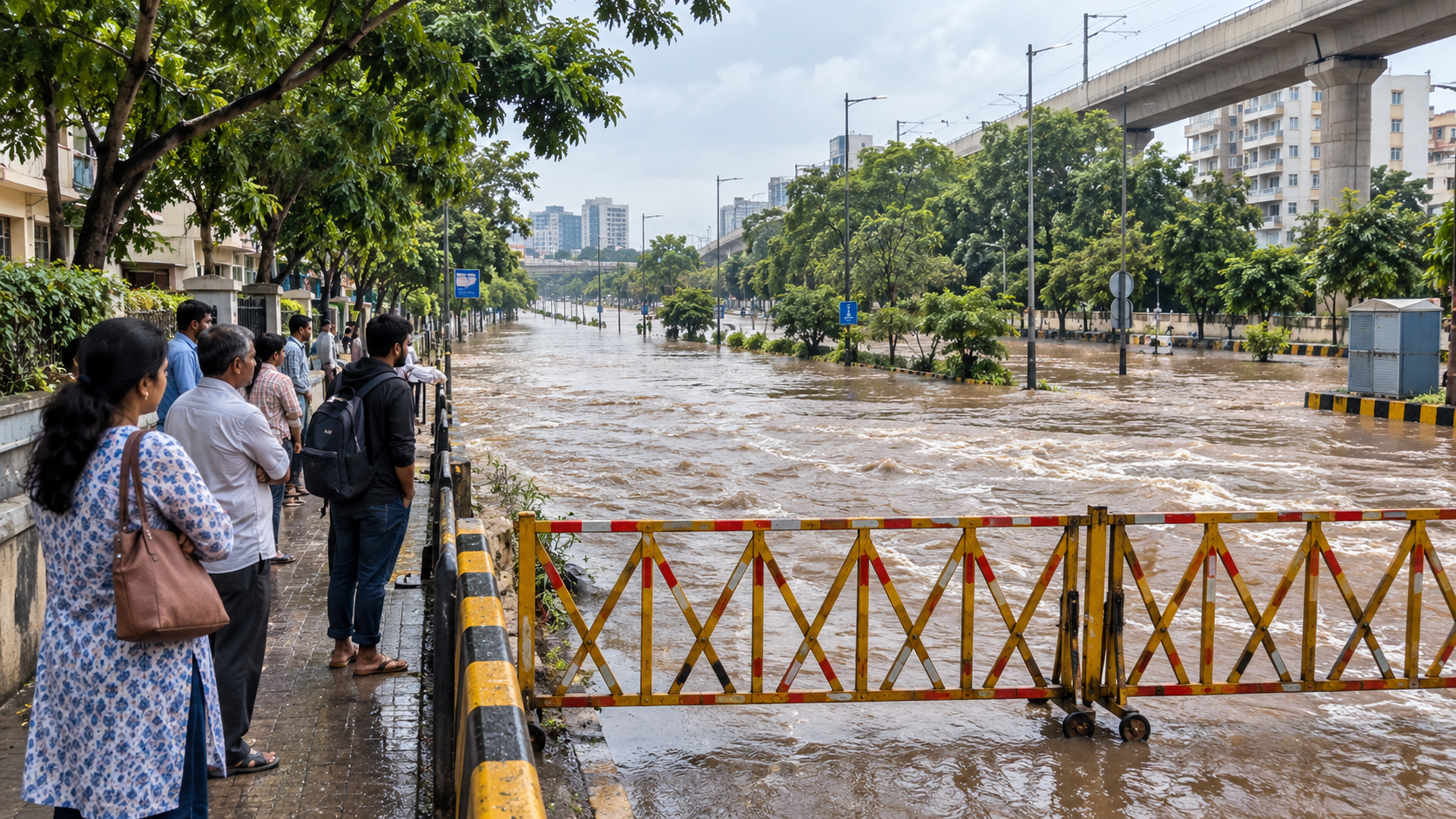
Bihar’s September floods remained an active emergency even as parts of the Ganga receded. This case examines the gap between improving gauge readings and safe access, using dated official-response reporting, local news footage and clearly separated preparedness analysis.
Quick answers
Is a flood over once the river water starts receding?
No. Bihar's September 2026 floods remained an active emergency even as parts of the Ganga receded, because access routes and banks may still be unsafe and erosion was warned about as water levels changed.
How many people were affected by the Bihar floods in September 2026?
Akashvani reported more than 48 lakh people affected in 15 districts on 13 September. That is a reporting estimate of affected people, not fatalities, and no reconciled death total was established.
Is it safe to walk or drive through floodwater?
No. Do not walk, swim or drive through floodwater, as hidden holes, current and electrical hazards may not be visible. If you cannot identify a safe route, contact the response service instead of testing the water.
What should I do if trapped during a flood in Bihar?
Move to the safest accessible higher position and report your location, the people with you and urgent medical needs. Call 112 and follow local responder directions, and do not return home until authorities permit entry.
Bihar’s September floods remained an active emergency even as parts of the Ganga receded. This case examines the gap between improving gauge readings and safe access, using dated official-response reporting, local news footage and clearly separated preparedness analysis.
The detailed investigation, chronology, uncertainty and response analysis are preserved in the three-panel structured fields.
Official response bulletin · 14 September gauge report
Follow-up through 6 October
Bihar’s Disaster Management Department lists later daily flood reports through 24 September and flood press releases through 30 September. The Water Resources Department’s public bulletin directory continued river monitoring into early October. These later publications show that official monitoring continued; they are not treated as a final all-clear or silently merged into the earlier population, boat, team or gauge figures. A final reconciled casualty, damage and loss assessment was not located in this review.
- NDTV documented flooding at Nakta Diyara in Patna. The local account describes disruption to access and business; it is a location-specific observation, not a statewide damage survey. [V8]
- Amar Ujala published a report covering affected homes and access in Bhagalpur/Katihar. Its images provide earlier-phase context. Do not infer that the locations remain at the same depth when viewing the video later. [V1]
- PTI relayed the Disaster Management Department estimate of 47.92 lakh affected people, 575 gram panchayats and 87 blocks in 15 districts. The Water Resources Department warned of erosion, including during rapid river recession. These are dated official statements relayed by a newsroom. [S2]
- Akashvani reported 1,688 boats, 27 SDRF teams and 10 NDRF teams in the response. It listed 1,251 community kitchens and 13 camps sheltering more than 12,000 people. Team counts are not personnel headcounts. [S1]
- The Times of India reported the Ganga below danger level at Buxar, but above it at several other gauges. Kosi and Gandak discharge had risen after catchment rain. The phase was uneven recession rather than a single statewide end to flooding. [S3]
- This is the publication/review date, not a new official measurement. Figures retain their original dates. A later correction should replace the relevant dated field without creating a duplicate incident.
- Mongabay India reported nearly five million people affected across 15 districts, citing the Bihar government’s 14 September release; this broadly corroborates the scale but is not merged with a later phase.
- Bihar Disaster Management Department’s official indexes show continued daily reports and flood press releases. Their existence confirms continuing official monitoring; figures are not imported here without a reconciled document-level extraction.
- Bihar Water Resources Department’s public bulletin directory carried later flood and river-monitoring products. This is evidence of continued monitoring, not a statewide all-clear or final impact total.
- Original dated metrics retained; no final reconciled casualty, damage or loss assessment located.
Why consequences escalated
- The response had several functions. Reported boats supported movement, while camps and kitchens supplied shelter and meals. Their existence is evidence of mobilisation, but not proof that every isolated household received assistance promptly. A proper performance review would need delivery logs, unmet requests, travel times and independent community feedback. [S1; editorial assessment]
- River readings describe particular places and times. On 14 September, the reported Ganga margins above danger level were 32 cm at Digha, 96 cm at Gandhi Ghat and 104 cm at Hathidah. The chart below compares these three station readings only. Their difference is not the depth of water inside homes. [S3]
- A falling river can leave a second operational problem: access routes and banks may still be unsafe. PTI reported an official warning about erosion as water levels change. The practical implication is to check the route and destination before movement, rather than relying on a reassuring statewide headline. [S2; editorial interpretation]
- Water safety needs its own decision. NCDC’s flood advisory recommends checking local tap-water safety and protecting treated water during storage. It provides general health guidance; it does not establish that a particular Bihar village’s supply is contaminated or safe. A local test or advisory is needed for that conclusion. [S4]
- The public record reviewed here supports a continuing multi-river emergency, but does not establish one technical root cause for every affected district. Rainfall and river response do not by themselves prove that a named structure failed, that a particular release caused damage, or that an individual official was negligent.
- What appears useful in the response is the combination of transport, food and shelter rather than one isolated intervention. This is an editorial interpretation of reported resources. Whether that combination reached people with disabilities, households outside camps and residents needing regular medical treatment remains an evidence question.
Failures and risk multipliers
- No specific operational failure is proved by this heading. The reviewed material does not include a complete independent after-action inquiry. The following are risk multipliers to investigate, not verdicts about named responders.
- Confusing people affected with people evacuated or staying in camps creates misleading coverage claims. These categories have different definitions. A person may receive meals repeatedly and never enter a camp; cumulative kitchen service cannot be divided by population to produce a reliable percentage helped.
- Treating a circulated video as a current warning loses its original time and place. The news library includes earlier September coverage and programmes spanning multiple states. Only dated, locally applicable official instructions should determine whether to move or return.
- Treating return as a single permission can overlook separate route, building, electricity and water questions. A household may need different responsible agencies to clear each. This is a prevention lesson, not a finding that a particular household ignored advice.
- For future review, distinguish shortages from access barriers. A stock total alone cannot show whether a boat could reach a cut-off settlement, whether a family knew where to ask, or whether the destination could accommodate its needs.
Actions that reduce risk
- Before travel, obtain the current local route and shelter instructions. Record who issued them and when. If you cannot identify a safe route, contact the response service rather than testing floodwater on foot or in a vehicle. [S5]
- Agree on a household contact and an alternate contact. Write down who may need mobility assistance, essential medication or help communicating. Share only information needed by responders; do not publish a vulnerable person’s location in an open comment thread. [Editorial planning checklist]
- If evacuation is ordered, prioritise people and essential medication over possessions. Use authorised transport and follow the crew’s loading and lifejacket instructions. Avoid crowding banks to watch rescues. [S5; practical application]
- At the shelter, ask separately about drinking water, sanitation, medical care and onward travel. A kitchen location is not automatically a shelter registration point. Keep the next information-check time visible so a stale instruction is not repeated. [Editorial coordination checklist]
- For schools, shops and community premises, document who can authorise reopening and which checks are still outstanding. Keep utility and access restrictions in writing. Do not interpret receding water or restored power in a nearby street as clearance for your own building.
- After conditions stabilise, preserve dated observations and repair records for review. Record what was known at the time, actions taken, gaps and responsible follow-up. Separate evidence from hindsight so the review improves the next response.



Leave a comment