
What happened here
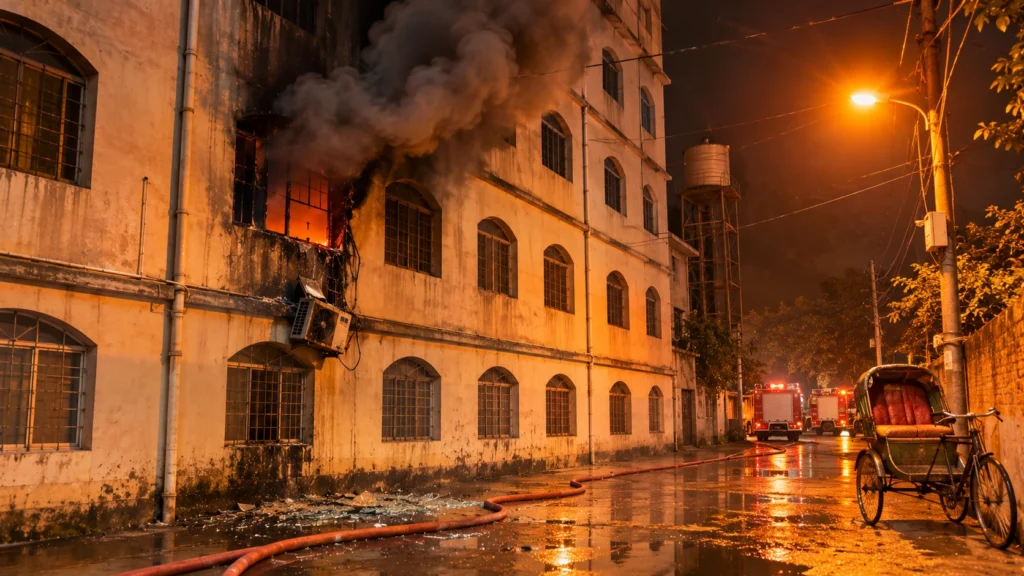
Cause not yet confirmed; fire officials suspect an electrical short circuit, and the Fire Service says the air-conditioned library had wooden and board interiors and that no fire safety measures, not even an extinguisher, were found in the madrasa. A fire in a room that burns easily, in a building where students sleep, can fill the stairs with smoke before anyone is awake. At about 1.30 am on Tuesday 10 November 2026, a fire in the library and an office room of a five-storey residential madrasa in Fatullah, Narayanganj, Bangladesh, sent 88 students to the National Institute of Burn and Plastic Surgery with smoke and heat illness. No deaths are reported; by evening 53 were discharged and 35 admitted, four in intensive care. Hospital counts reported on the day ranged from 48 to 88. A four-member committee is to report within three working days.
Quick answers
What happened at the Fatullah madrasa?
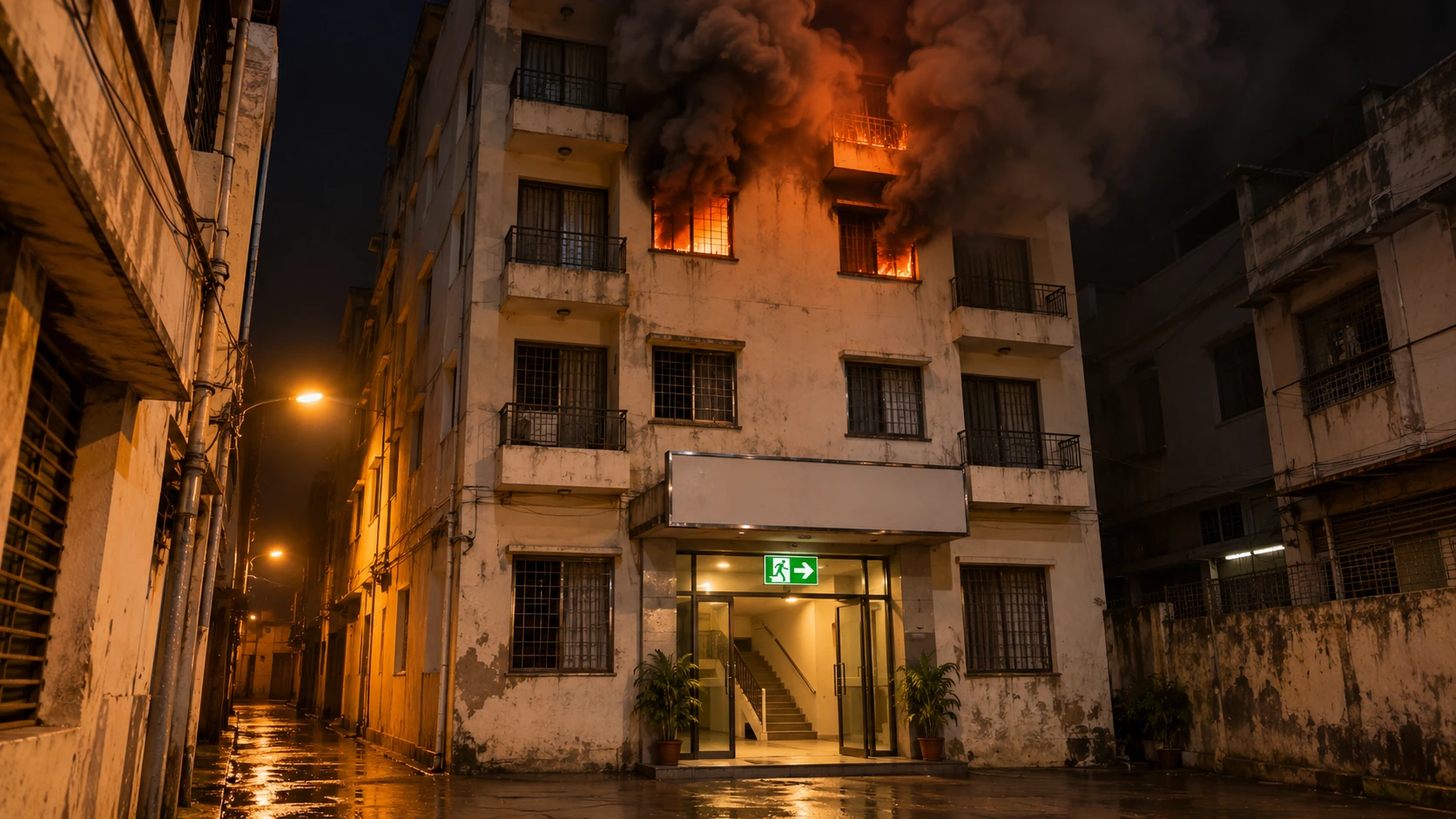
At about 1.30 am on Tuesday 10 November 2026, a fire started in the library and an office room on the second floor of a five-storey residential madrasa in the Signboard area of Fatullah, Narayanganj, and filled the building with smoke.
Did anyone die?
No death is reported in any of the reports we opened. No student had burns; 88 were taken to the Burn Institute in Dhaka with smoke and heat illness, and four were in intensive care at 6.15 pm on 10 November.
How many students were taken to hospital?
Reports on 10 November gave 48, 63, 77 and 79, and the evening count in The Daily Star, bdnews24 and Prothom Alo is 88.
What caused the fire?
Not final. Fire officials suspect an electrical short circuit, and the Fire Service says the air-conditioned library had wooden and board interiors. A four-member committee is to report within three working days.
Did the madrasa have fire safety equipment?
The Fire Service says no fire safety measures, not even an extinguisher, were seen anywhere in the madrasa. The vice-principal said it will now strengthen them.
What should students do if they wake to smoke?
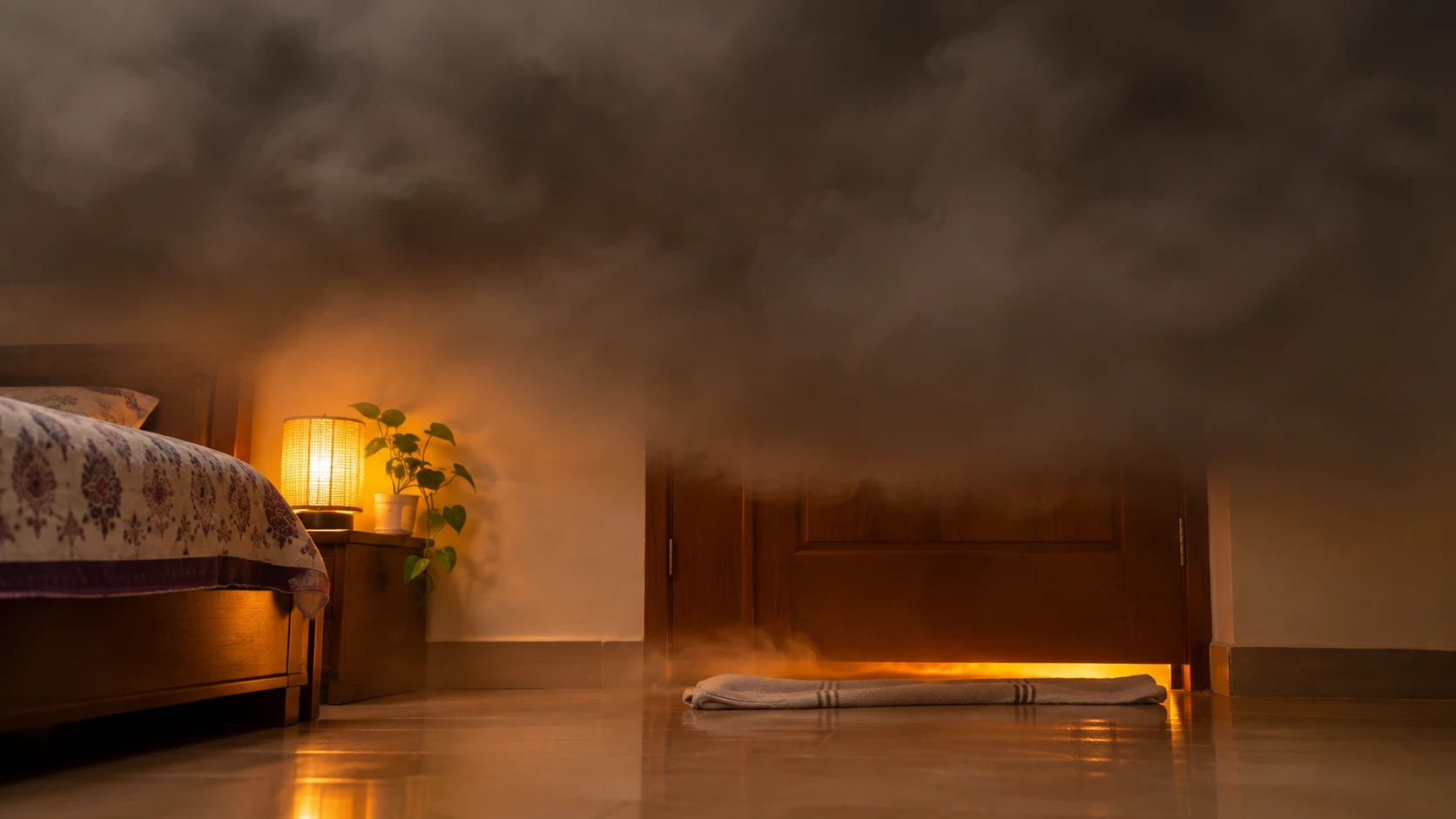
Shout, feel the door with the back of your hand, keep low, use the stairs and not the lift, close doors behind you and do not go back inside. Our hostel fire guide and school fire safety plan explain the steps.
Is there a safety guide for this place?
No. This happened outside India, so there is no city safety guide for it.
What happened
In the early hours of Tuesday 10 November 2026, a fire broke out in the library and an office room on the second floor of a five-storey residential madrasa in the Signboard area of Fatullah, Narayanganj, Bangladesh. The Daily Star puts the start at about 1.30 am and says the Fire Service was called at 1.55 am, got the fire under control within half an hour and had it out by about 3.40 am. Nobody had a burn injury, but many students fell ill from smoke and heat, and 88 were taken to the National Institute of Burn and Plastic Surgery in Dhaka. No death is reported in any of the reports we opened.
By 6.15 pm on 10 November, 53 of the 88 had been discharged and 35 were still under treatment, four of them in the intensive care unit and one on a ventilator, per bdnews24 and The Daily Star. The Fire Service said there was no fire safety equipment anywhere in the madrasa, not even an extinguisher. Officials suspect an electrical short circuit. The Narayanganj Deputy Commissioner formed a four-member committee to report within three working days.
What the reports say
- The fire: It began in a library and an office room, about 4,000 sq ft, on the second floor of a five-storey building (Prothom Alo in Bangla and bdnews24; Prothom Alo English says the first floor). The Fire Service says the air-conditioned library had wooden and board interiors that burn easily (The Daily Star). The room held 12 students and a teacher of the Islamic Law department at the time, per The Daily Star.
- The response: The Fire Service was called at 1.55 am and began work within ten minutes (The Daily Star). Three units from Kanchpur and two from Shibu Market worked on it (Prothom Alo). A nearby water storage helped bring it under control, and it was out by about 3.40 am (The Daily Star). Power to the building was cut at once (Prothom Alo).
- The students: The madrasa has about 1,300 students, most of whom live there (bdnews24, The Daily Star). Prothom Alo in Bangla says about 250 were staying in the building overnight. Many were asleep. No burns were found; the doctors say the students had smoke-related airway problems (Prothom Alo).
- Hospital: 88 students were taken to the National Institute of Burn and Plastic Surgery in Dhaka. By 6.15 pm on 10 November, 53 had gone home and 35 remained, four in intensive care, one on a ventilator (bdnews24, The Daily Star). Two medical boards, with 13 to 14 doctors in all, were formed and the State Minister for Health said treatment is free; about 30 more were expected to be discharged on 10 November (Daily Asian Age).
- Fire safety: The Kanchpur station officer said no fire safety measures, not even an extinguisher, were seen anywhere in the madrasa (The Daily Star, bdnews24). The vice-principal said the madrasa had never faced such a fire and had not thought much about fire safety, and said it will now strengthen its measures (The Daily Star).
- Cause and inquiry: Fire officials suspect an electrical short circuit (The Daily Star; Prothom Alo English calls it a preliminary assessment). The CID Crime Scene Unit collected evidence from the burnt room, and the Deputy Commissioner formed a four-member committee to report within three working days (The Daily Star). No final cause is announced.
Where reports differ and what we do not know
- How many students were taken to hospital: Counts reported on 10 November were 48 in the earliest headlines, 63 (Prothom Alo English, Financial Express, Jagonews24), 77 (The New Nation) and 79 (bdnews24 early report, Daily Observer), and 88 in the evening (The Daily Star, bdnews24 and Prothom Alo in Bangla). We use 88 as the latest count and do not know the order in which 77 and 79 appeared.
- Time of the fire: About 1.30 am (The Daily Star), about 1 am (Prothom Alo in Bangla), about 2 am (bdnews24, Prothom Alo English). The Fire Service was called at 1.55 am (The Daily Star).
- Which floor: Second floor (Prothom Alo in Bangla, bdnews24, Daily Asian Age) or first floor (Prothom Alo English).
- Students in the building: Twelve students and a teacher were in the library room (The Daily Star); about 250 students were staying in the building overnight (Prothom Alo in Bangla); the madrasa has about 1,300 students in all (bdnews24, The Daily Star).
- Loss: A madrasa teacher told bdnews24, in a video report, that the loss is Tk 80 lakh. This is a single claim and no official estimate is reported.
- Not known: The cause as confirmed by the inquiry, whether any alarm or sprinkler existed, how the students got out, the condition of the four intensive care patients after 10 November, whether any student has been discharged since, and what the committee finds.
What this case teaches
A library or study room with wooden boards, an air conditioner and electrical wiring, in a building where students sleep, can turn a short circuit into a smoke-filled stairwell within minutes. Here the doctors say the harm was from smoke and heat, not burns, which is typical of a fire that spreads through a room that burns easily and fills the stairs with smoke. It also fits what the State Minister said: students on the upper floors panicked and the smoke made it worse.
If you run or study in a residential school or hostel, these are the checks that matter: an extinguisher and a working smoke alarm on every floor, a clear second way out, doors and stairs that are never locked at night, a named adult who counts the students at an assembly point, and electrical wiring checked before air conditioners are added. If you wake to smoke, shout to wake others, feel the door with the back of your hand, keep low, use the stairs and never the lift, close doors behind you and do not go back inside. Our guides cover a school fire safety plan, fire in a hotel, hostel, PG or guest house, what to do in a smoke-filled room and how a short circuit causes a fire.
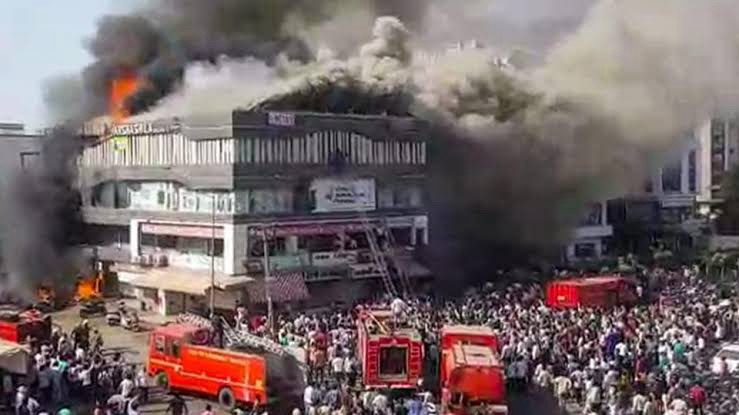
Similar cases are the Takshashila fire in Surat where students were trapped, the Lucknow Aliganj coaching centre fire and the Krishna School building fire. This is a place outside India, so there is no city safety guide for it. We checked again on 11 November 2026 and found no death and no finding from the committee.
- A fire starts in the library and office room on the second floor; students are asleep (The Daily Star)
- The Fire Service is called and firefighting begins within about ten minutes (The Daily Star)
- The fire is brought under control within about half an hour of firefighting starting, with water from a nearby storage; power is cut (The Daily Star, Prothom Alo)
- The fire is fully out (The Daily Star)
- Students are taken to the National Institute of Burn and Plastic Surgery in Dhaka; early counts are 48 and 63
- The State Minister for Health visits the students; treatment is free; two medical boards are formed (Daily Asian Age)
- The count is 88 taken to hospital, 53 discharged, 35 admitted, four in intensive care (bdnews24)
- The Deputy Commissioner forms a four-member committee to report in three working days; the CID collects evidence (The Daily Star)
- We find no death and no finding from the committee
Why consequences escalated
- A fire in the library and an office room of a residential madrasa in Fatullah, Narayanganj, on Tuesday 10 November 2026 sent 88 students to the Burn Institute in Dhaka with smoke and heat illness.
- No deaths are reported and no student had burns; by 6.15 pm 53 were discharged and 35 admitted, four in intensive care.
- The air-conditioned library had wooden and board interiors; the Fire Service found no fire safety measures, not even an extinguisher.
- Officials suspect an electrical short circuit; the cause is not final.
- A four-member committee is to report in three working days.
Failures and risk multipliers
- No official finding exists. What the reports raise as questions:
- Why a residential madrasa where students sleep had no extinguisher or other fire safety measures anywhere in the building, per the Fire Service.
- Whether a library with wooden and board interiors and an air conditioner was wired and protected for that load.
- Whether there were alarms and a second way out, and how the students on the upper floors were warned; the State Minister said they panicked.
- How the building with about 1,300 students is checked, given that the Deputy Commissioner said qawmi madrasas run under their own management.
- These are open questions, not findings of fault.
Actions that reduce risk
- Residential schools and hostels: an extinguisher and a working smoke alarm on every floor, a clear second way out, doors and stairs never locked at night, a named adult for the head count at an assembly point.
- Check electrical wiring and the load before adding air conditioners; do not line rooms with wood or board where students sleep.
- Students: if you wake to smoke, shout, feel the door with the back of your hand, keep low, use the stairs and not the lift, close doors behind you and do not go back inside.
- Call 999 in Bangladesh early and say residential madrasa with students inside.
- Authorities: publish the cause, the committee's findings and how fire safety is checked in madrasas and hostels.

Leave a comment