
Quick answers
What should I do if I hear a fire alarm in a hotel at night?
Treat it as real; Fire Scotland says never to assume an alarm is false. Feel the door, take your key and phone, close the door behind you and go down the stairs, not the lift. If the corridor is full of smoke, go back, seal the door gaps with wet towels and call 101 or 112.
Should I open the door if I smell smoke in my hotel room?
Feel the door and the handle first. If either is hot, or smoke is coming through the gaps, keep it closed and use another way out or stay put. If the door is cool, open it slowly and be ready to shut it quickly. This is standard American fire-service advice (ready.gov), not an Indian rule.
Can I use the lift in a hotel fire?
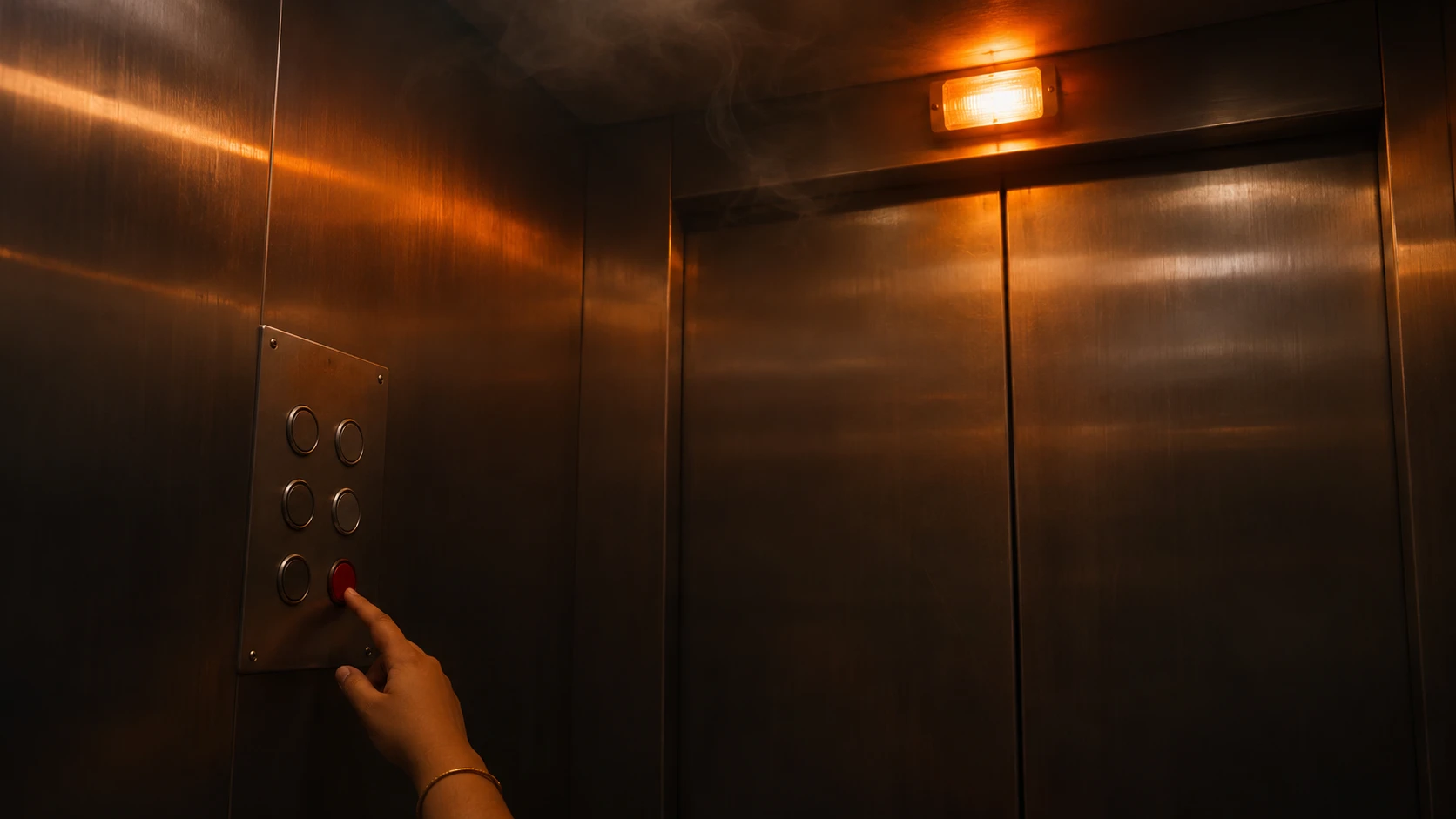
No. The Delhi Fire Service says not to use the lift as a means of escape. Use the stairs. If the stairs are full of smoke or heat, go back to your room and wait for rescue.
What if the corridor is full of smoke and I cannot reach the stairs?
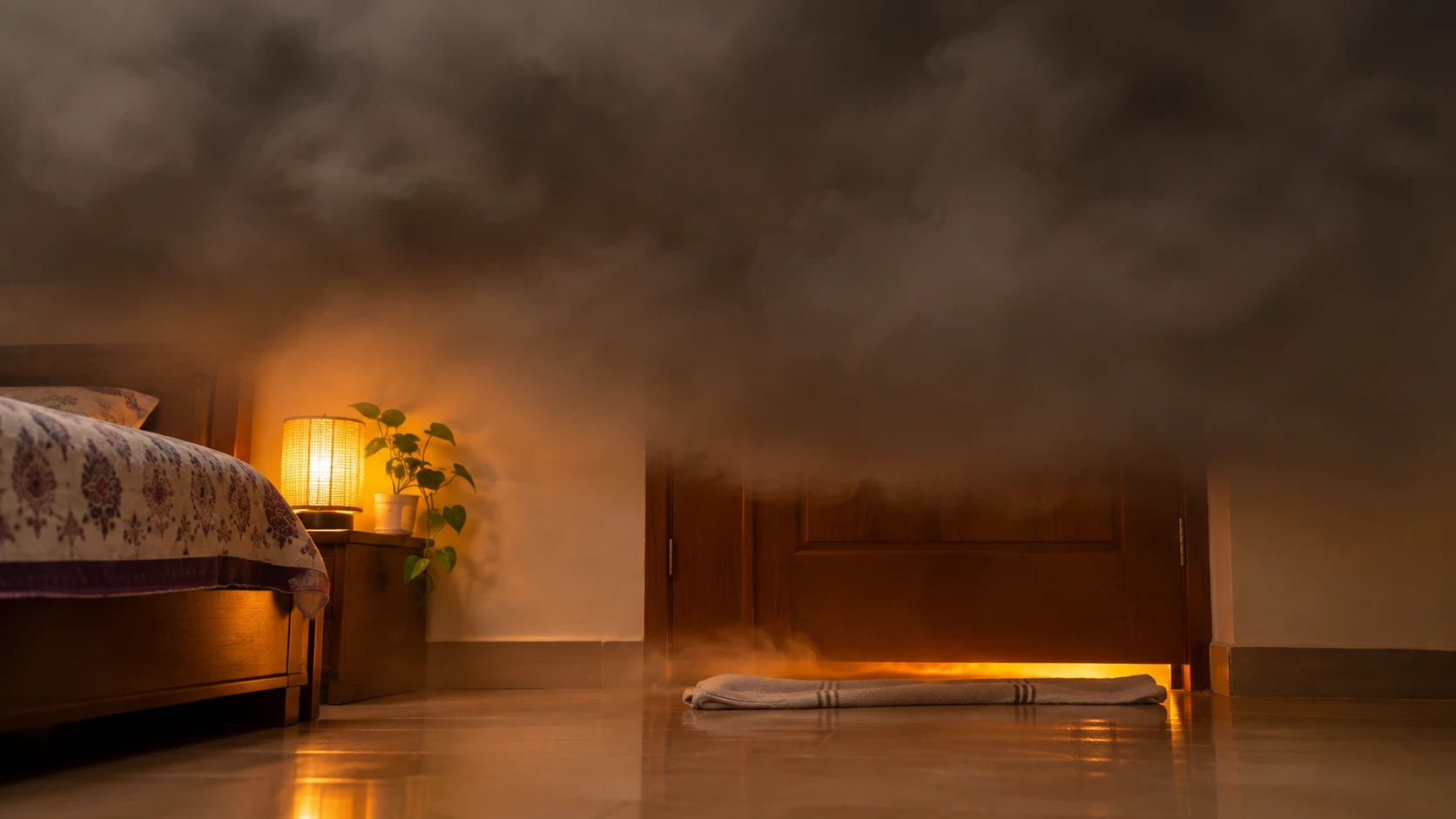
Stay in the room, close the door, put wet towels or bedsheets in the gaps, switch off the air conditioner and fans, call 101 or 112 and the front desk, stay low and signal from the window with a torch or a light-coloured cloth. NFPA and the Hong Kong department give the same steps.
How do I count exits when I check in at a hotel?
Walk from your room to each of the two stairs and count the doors you pass. NFPA advises counting the doors between your room and the exit, and checking that exit doors are not locked; if they are, tell the management. In smoke, the count tells you when you have reached the stairs.
Which number should I call for a hotel fire in India?
Call 101 for the fire brigade, which the Delhi Fire Service says is free whatever the size of the fire, or 112, the single emergency number, which covers police, fire and ambulance. Give the hotel's name, area, floor and room number.
Is a wet cloth over the face enough protection in a fire?
No. It may cut some particles but it does nothing for carbon monoxide, which you cannot see or smell. Treat it as a last resort and put your effort into getting out or sealing the room. Our page on breathing in smoke explains the limits.
What should I do in a PG or hostel if there is a fire?
We found no official Indian text, so this is our judgement: leave by the nearest staircase, not the lift, shut doors behind you, never go back for belongings and call 101 or 112. Know in advance where the grille keys and the terrace door key are kept, and keep the stairs free of bags and bicycles.
Should I jump from the window of a hotel room in a fire?
Only as the very last resort, when the room is on fire and nothing else is left. Most guests who stay in a sealed room with wet towels at the door and signal from the window are brought out by firefighters. Do not jump while a stair or a sealed room is still an option.
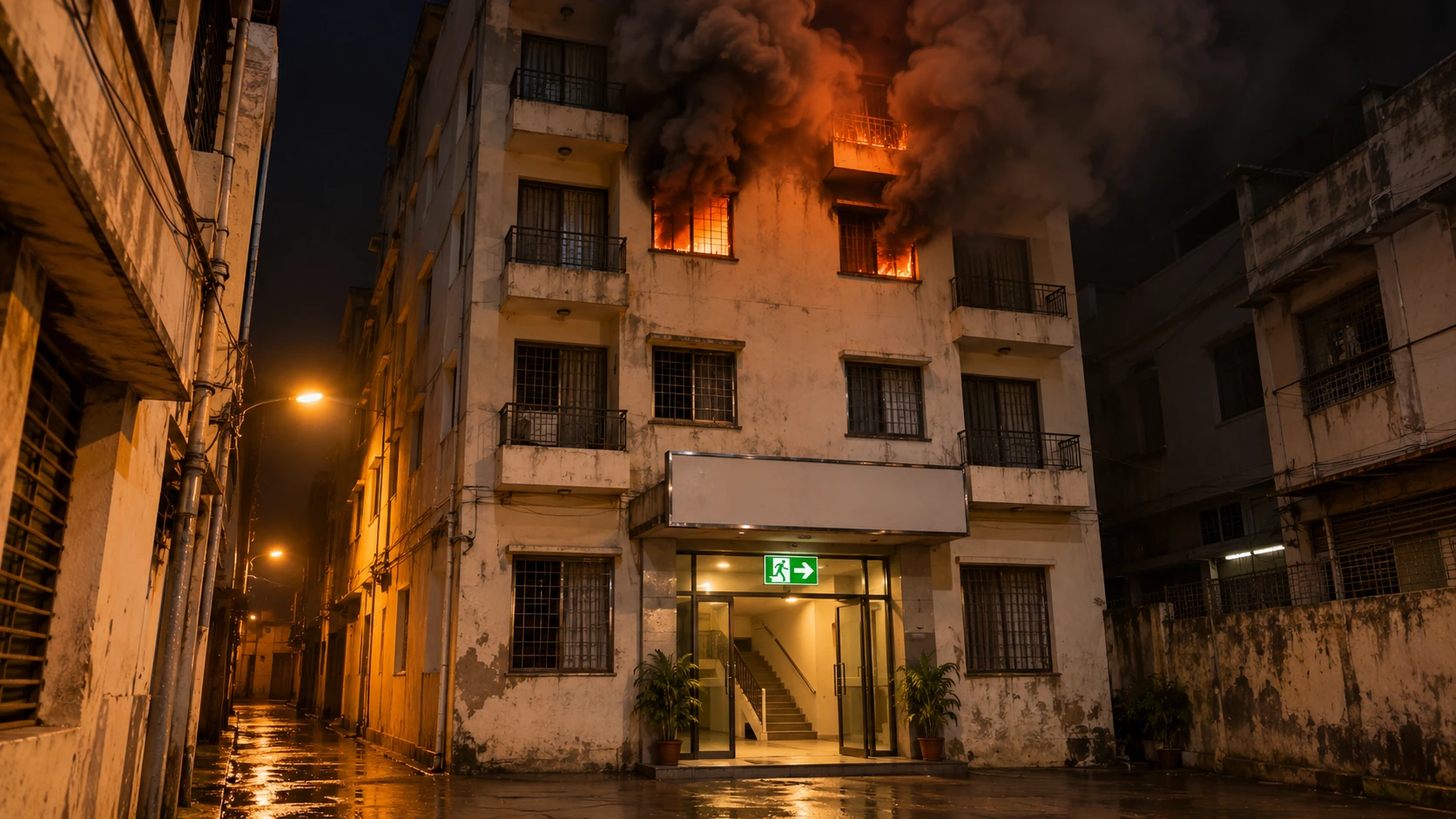
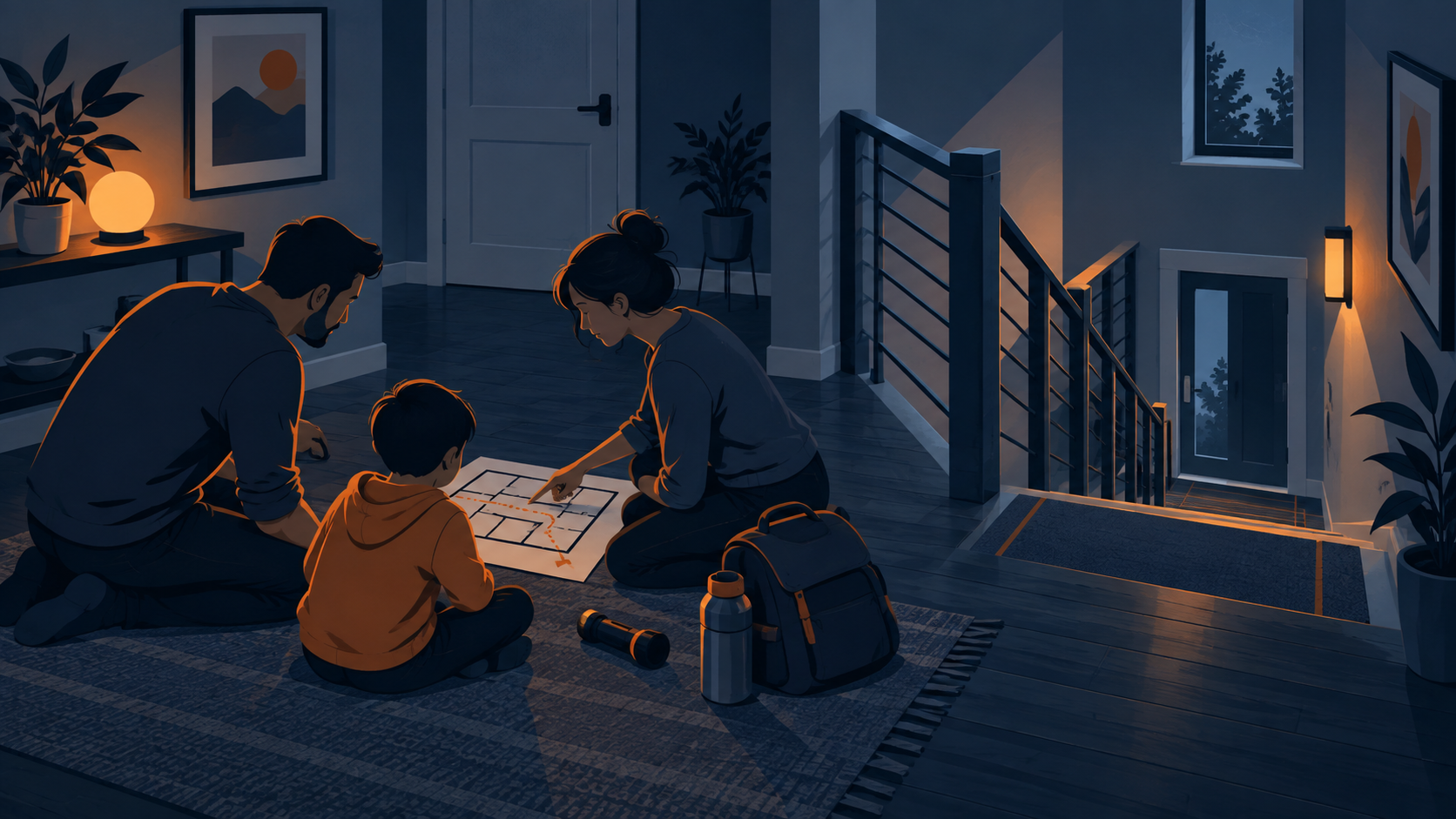
Most people in a hotel room, a hostel dorm or a PG are in a building they do not know, and a fire at 2 am gives them very little time to learn it. This page is a plan you can make in two minutes after you check in, and the steps to follow if you smell smoke or hear an alarm. We have also drawn on the hotel and guest-house fires already recorded on this site. India has no public guidance written for hotel guests that we could open, so the Delhi Fire Service sheets are the Indian base and the room-level steps come from British, American and Hong Kong fire services, labelled as such. Checked 5 November 2026.
In short
- On arrival, walk to both stairs, count the doors between your room and each, and check that the exit doors are not locked.
- Smell of smoke or an alarm: treat it as real. Feel the door before you open it. Take your key and phone, close the door behind you and go down the stairs. Never the lift.
- If the corridor is full of smoke or the door is hot, do not go out. Stay in the room, close the door, seal the gaps with wet towels, call 101 or 112, and signal from the window.
- When you call, say the hotel’s name, the area, your floor and your room number.
- Once you are out, stay out. Do not go back for bags, and tell the fire crew who is still inside.
The first two minutes after you check in
- Count the doors. The US National Fire Protection Association (NFPA) advises finding the exits and counting the doors between your room and the exit, and checking that exit doors are not locked. If they are, tell the management at once. In smoke and darkness, your count is how you find the stairs.
- Use the nearest exit, not the one you came in by. Fire Scotland says the way you entered is not necessarily the closest. Read the plan on the room door.
- Know the alarm. NFPA suggests asking the front desk what the fire alarm sounds like. Fire Scotland says never to assume an alarm is false.
- Keep four things by the bed: the room key, your phone, a torch (the phone torch will do) and your footwear. The Hong Kong Fire Services Department says to carry the key and torch, and to pack a torch when you travel. Footwear is our own suggestion.
- Save the numbers. 101 is the fire brigade and is free whatever the size of the fire, says the Delhi Fire Service. 112 is the single emergency number that covers police, fire and ambulance (PIB), and 108 is also widely used for ambulances.
If you smell smoke or the alarm goes off
- Step 1. Get up and get low. Smoke rises, and cleaner air is near the floor. Do not stop to dress or pack. The Hong Kong department says to take no luggage.
- Step 2. Feel the door. The US ready.gov page says to feel the door and the knob before opening, and to keep it closed and use another way out if either is hot or smoke is coming around it. Our case pages use the back of the hand so that you do not burn the palm. If the door is cool, open it slowly and be ready to shut it fast.
- Step 3. If the corridor is clear, go. Take the key, close the door behind you and walk, do not run. The Delhi Fire Service says not to shout or run because it causes panic, and to use the nearest exit and shut doors behind you. On the way, bang on doors and call out once so that sleeping guests wake up.
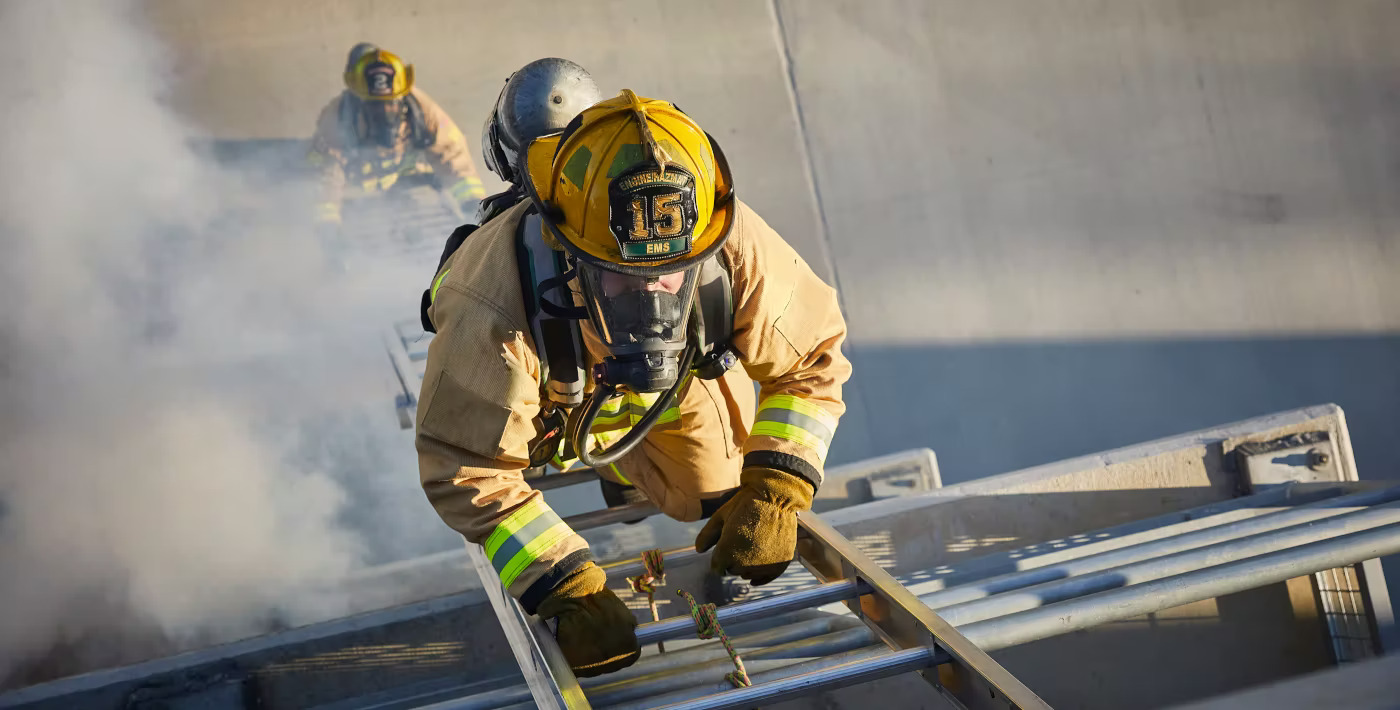
- Step 4. Stairs, never the lift. The Delhi Fire Service says in plain words not to use the lift as a means of escape. If you meet smoke, drop low and keep going. The Hong Kong department says that if you are in doubt at a stair door, do not enter, close it, and if all stairs are blocked by smoke and heat go back to your room and stay put.
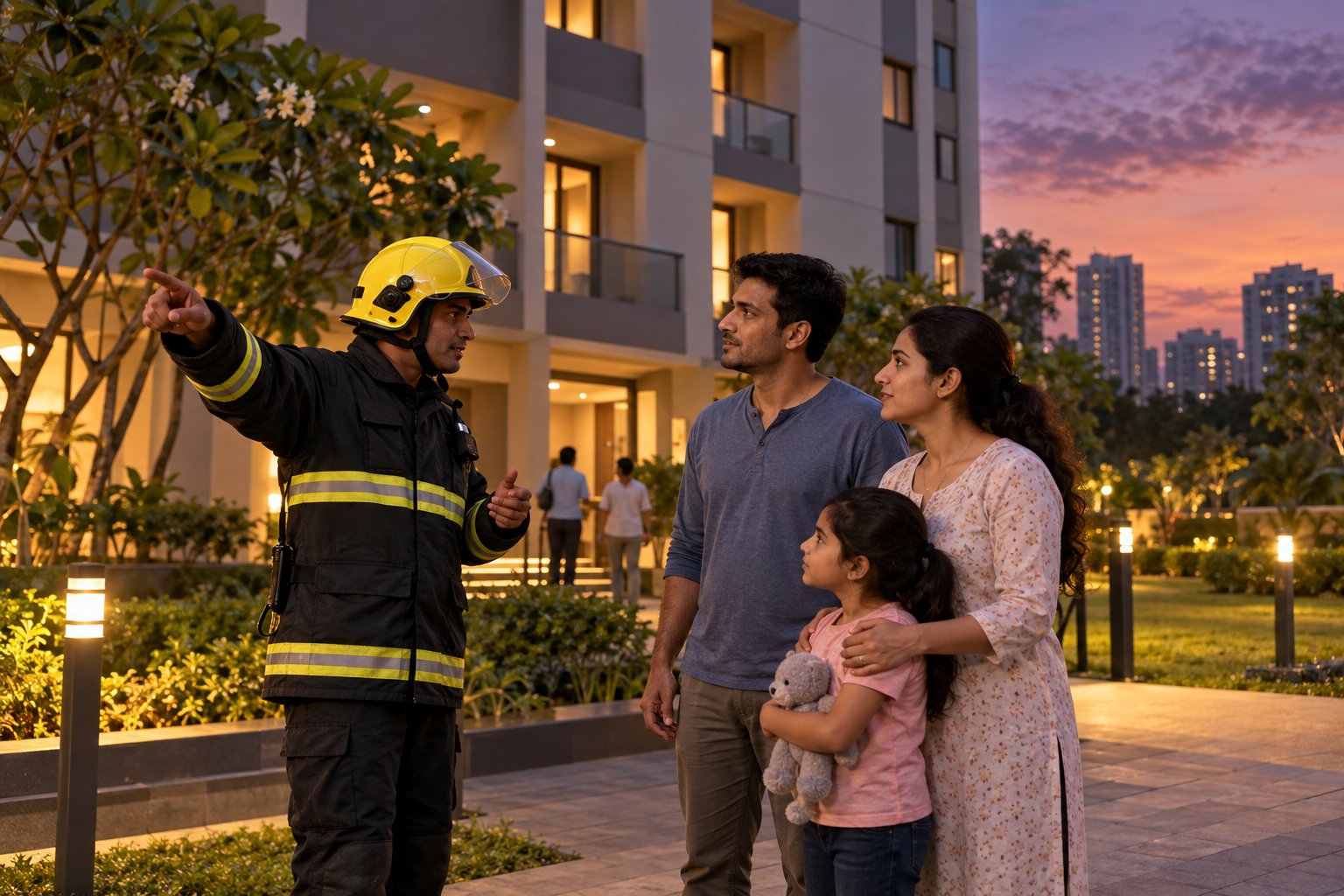
- Step 5. Outside, go to the assembly point or the open space, as the Delhi Fire Service says, tell a staff member or the crew that you are safe, and tell them if anyone is still inside. Call 101 or 112 if no one else has.
If you cannot get out
NFPA and the Hong Kong department give the same steps for a guest who is stuck behind a smoky corridor or a blocked stair.
- Close the door and put wet towels or wet bedsheets into the gaps at the bottom and sides. Switch off the air conditioner and fans so they do not pull smoke in.
- Call 101 or 112, and the front desk. Give the hotel name, area, floor and room number. NFPA says to say where you are.
- Stay low, where the air is cleaner. Our page on breathing in smoke explains why a wet cloth over the face is a last resort and not a shield.
- Go to the window, open it only if you need air and it is safe, and show the firefighters where you are with the torch or a light-coloured cloth. NFPA and the Hong Kong department both say to signal like this. The University of Illinois Chicago asks people not to break the glass unless it is absolutely necessary.
- Jumping is the last resort, when the room itself is on fire and nothing else is left. Most guests who wait, sealed in, are brought out by firefighters.
What the fires already on this site show
These are our own case studies, with the reports they rest on; the causes in several are still unconfirmed.
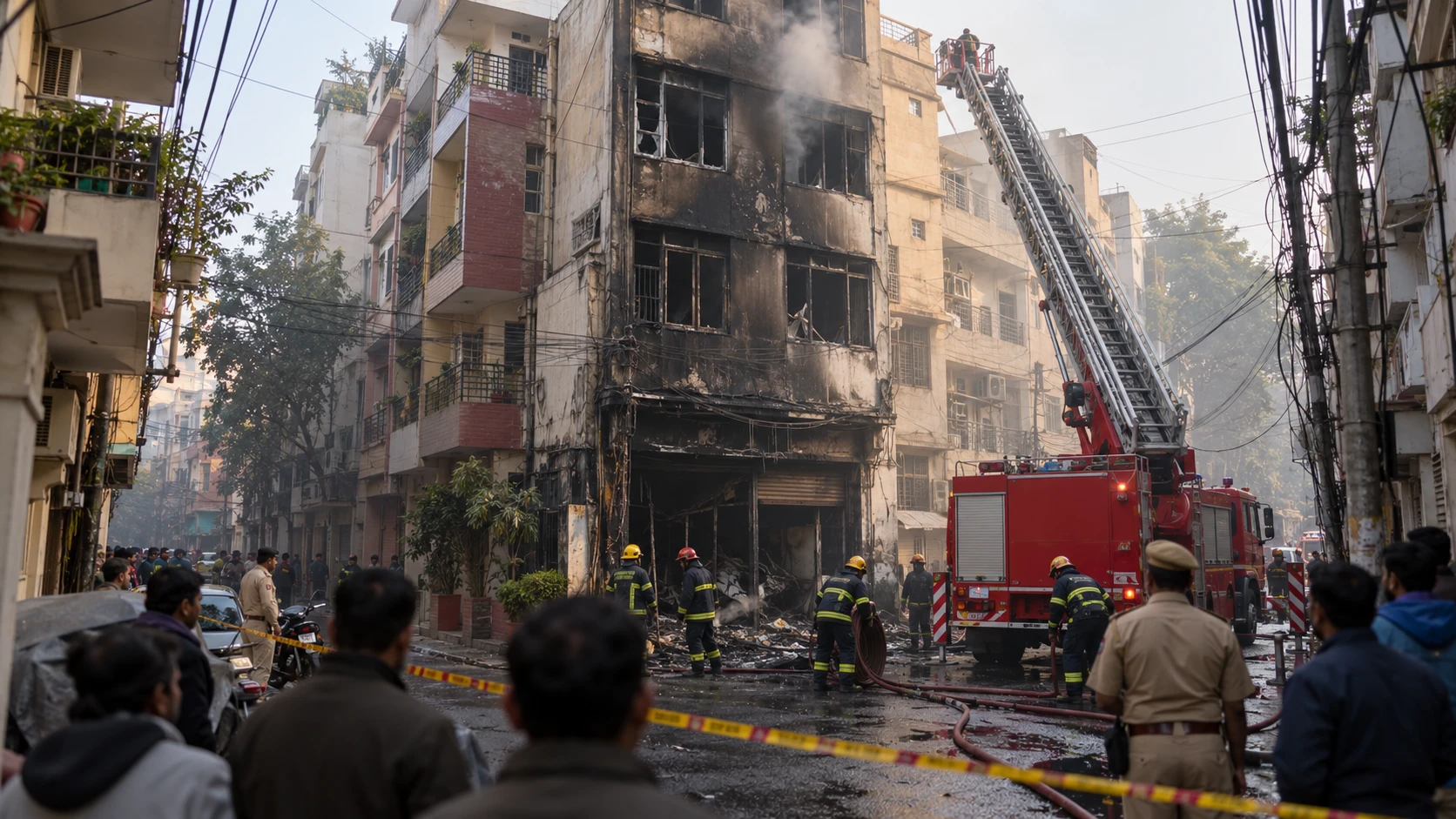
- Malviya Nagar guest house, Delhi, June 2026. Police counted 23 deaths. Our case study records one entry and exit, no fire NOC according to the fire service, and about 25 rooms in use against a licence for six.
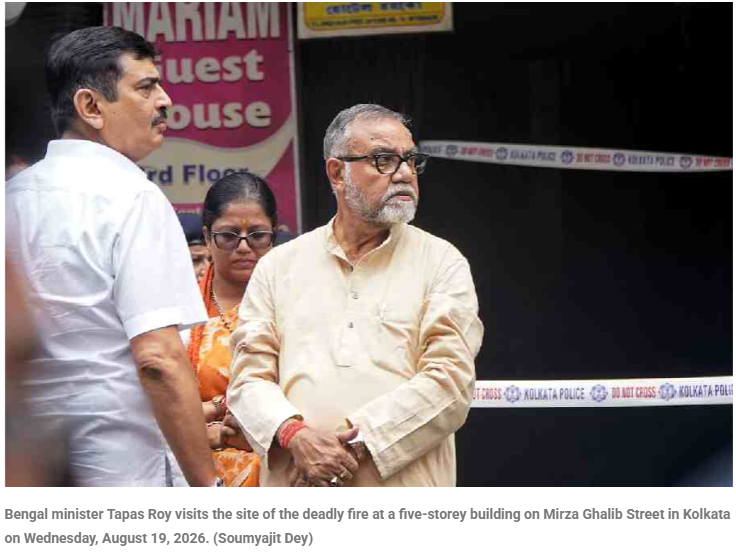
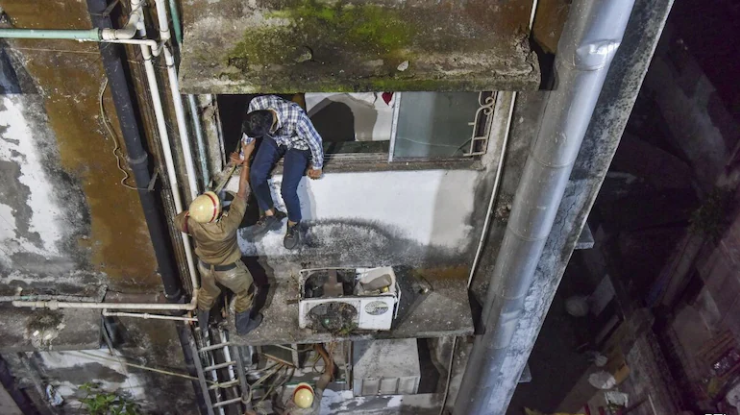
- Mirza Ghalib Street, Kolkata, August 2026. Nine people died in a predawn fire at about 1.45 am, while guests slept. Officials say the building lacked proper fire-safety arrangements and an emergency exit; see the case study.
- Rituraj Hotel, Burrabazar, Kolkata, April 2025. Fourteen died; post-mortems pointed to smoke inhalation as the main cause of death, and smoke-filled stairs pushed guests towards the roof and balconies. Residents alleged combustible material and no way for smoke to leave. See the Rituraj fire page in the related list.
- Tarapith lodge, West Bengal, 27 October 2026. A fire on a bed in one room at about 3.51 am; police and one fire engine arrived in about five minutes and 12 guests were brought out, none reported hurt. The cause is not established. See the case study.
- Banana Tree hotel, Ghaziabad, 27 October 2026. Eighteen people trapped in smoke were rescued by firefighters; renovation work was going on and no casualty was reported. See the case study and our page on renovation in an occupied hotel.
The line that runs through the fatal cases is the same: one way out, smoke in the stairs, people asleep. The two that ended without a death had a quick fire engine, a daytime fire or guests who got out in time. That is a reading of the cases, not a finding in any inquiry.
Hostel, PG and guest house
We found no official Indian text on fire response in a PG or a hostel, so this section is our own reasoning, built on the same principles. Many PGs and hostels are flats or old houses turned into dormitories, with one staircase, grilled windows and a locked terrace door. Walk the staircase and count the doors on your first day. Find out where the keys to the grille and the terrace door are kept, and ask that it is never padlocked at night. Keep the stairs and the landing free of bags, bicycles and shoe racks. Do not charge phones or laptops on the bed, and do not cook or dry clothes near a heater in the room. Tell your roommates the plan once.
If you are the one booking
NFPA advises choosing a property that has both smoke alarms and sprinklers, and the Hong Kong department says the same about alarms, sprinklers, hose reels and emergency lighting. In India, a quick look at the corridor tells you something: is there more than one staircase, is the exit lit, are the doors on the stairs open, is the corridor free of stored material, are the windows sealed shut? If the answer is poor, pick another place. A fire NOC is a paper, not a guarantee, as the Delhi Fire Service itself says, but a property with none, or with building work going on, is a worse bet.
What not to do
- Do not use the lift, even for one floor.
- Do not open a hot door, or open it wide to “have a look”.
- Do not go back for a bag, a laptop or a passport.
- Do not run or push on the stairs.
- Do not jump from the first window you see while a stair or a sealed room is still an option.
- Do not hide in a wardrobe or bathroom. Stay in a place where firefighters can see you at a window.
Do these today
- Save 101 and 112 on your phone. Our page on the fire brigade number says what to tell the operator.
- Next time you check in, count the doors to both stairs before you unpack.
- If you run a PG or a guest house: check the second exit, keep stair doors unlocked, and read our checklist on temporary worker accommodation.
- Read our home fire escape plan and do the same exercise for your own flat.
What we could not confirm
We found no Indian official guidance written for hotel guests or for PGs, so the room-level steps rest on the Hong Kong Fire Services Department, NFPA (2016 tip sheet), ready.gov and Fire Scotland, all foreign. The Delhi Fire Service sheets cover the alarm, the exit, the lift and 101. Wet towels at the door gap, torch signalling and “feel the door” are standard advice, but we did not find an Indian fire service that states them for hotels. We did not verify any hotel’s own fire plan. The facts in the case list are from our case studies and their reports; the cause is unconfirmed in several. We did not watch the video in full. This page is general information.
What needs attention
- Delhi Fire Service sheets say to use the nearest exit, shut doors behind you, not use the lift, not shout or run, and call 101, which is free.
- Foreign fire services give the room-level steps for hotel guests: count exits, feel the door, stairs not lift, wet towels and a window signal if you cannot leave.
- The fatal hotel and guest-house fires on this site share one way out, smoke in the stairs and sleeping guests; the two with no deaths had a fast response, daytime or guests who got out in time.
- We found no Indian official guidance written for hotel guests or for PGs and hostels.
Controls that reduce risk
- Count the doors to both stairs on arrival.
- Keep key, phone, torch and footwear by the bed.
- Save 101 and 112 on your phone.
- If you run a PG or guest house, keep a second exit and stair doors unlocked.
- Know where grille and terrace keys are kept.
Common unsafe practices
- Using the lift.
- Opening a hot door, or opening it wide to look.
- Going back for a bag, laptop or passport.
- Running or pushing on the stairs.
- Jumping while a stair or a sealed room is still an option.
- Never finding the stairs until the night they are needed.


Leave a comment