
Quick answers
What types of fire escape ladders are there?
Portable ladders are kept inside and hooked over a windowsill when needed. Permanent ladders are fixed to the outside wall, usually in steel or aluminium, and need professional fitting.
How do I set up a portable fire escape ladder?
Take it out of its bag, open it to its full length as the maker's instructions say, and hook it firmly over the windowsill or other strong support before anyone climbs on.
Is it safe to use the ladder if the window is hot?
Feel the window and frame before you open it. If they are hot, or smoke is pouring past outside, it may not be safe to use. Shut the door, block the gaps and call 101 or 112.
How should I climb down a fire escape ladder?
Stay calm, go one at a time, face the ladder and hold on with both hands. Help children down first, with an adult beside or below them where possible.
Will an escape ladder work if my windows have grilles?
Not with a fixed grille. The window you plan to use needs a grille with an opening section, and the key must be kept close by where everyone can find it.
If a fire starts on the ground floor at night and the staircase fills with smoke, the people on the floor above may have only one way left to get out: a window. A fire escape ladder can turn that window into a way down. But it helps only if you have the right ladder, keep it close at hand, and have tried it before the night you need it.
Remember that a ladder is a last resort. If the stairs or the main door are still safe, use them.
Choose the right type of ladder
There are two main types.
- Portable escape ladders are kept inside the house, usually in a bag, and hooked over a windowsill or another strong support when needed. They are light and easy to store and carry.
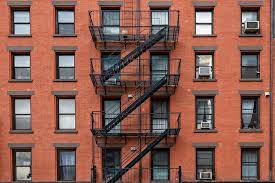
- Permanent escape ladders are fixed to the outside wall and give a fixed way down from the upper floors. They are usually made of steel or aluminium and need professional fitting.
Whichever you choose, measure the height from your window to the ground and make sure the ladder is long enough to reach it.
Get ready before there is a fire
- Know your escape route. Every member of the family should know which window the ladder will be used from, where the ladder is kept and how to reach it quickly in the dark.
- Keep it next to the window. A ladder in the loft or at the back of a cupboard will not help.
- Check the window and the grille. Many Indian homes have fixed window grilles. A ladder is useless behind one. The window you choose needs a grille with an opening section, and its key must be kept close by where everyone can find it.
- Look after permanent ladders. Get them inspected and maintained regularly so they are sound when you need them.
Setting up a portable ladder
- Take the ladder out of its bag or box.
- Open it out to its full length, following the maker’s instructions.
- Hook the hooks or brackets firmly over the windowsill or other support, and check they are secure before anyone climbs on.
Climbing down safely
Before you open the window, feel the window and the frame. If they are hot, or smoke is pouring past outside, it may not be safe to use. Climb down one at a time, facing the ladder and holding on with both hands. Keep these points in mind:

- Stay Calm: In an emergency, staying calm is crucial. Encourage everyone to remain calm and follow the evacuation plan.
- Check for Heat and Smoke: Before opening a window or using the ladder, check for heat and smoke. If the window or ladder is hot to the touch, it may not be safe to use.
- Exit Feet First: When descending the ladder, always go feet first. This allows for better control and reduces the risk of falls.
- Communicate: If multiple people need to use the ladder, communicate and coordinate your actions to avoid congestion and accidents.
- Practice Regularly: Conduct fire drills and practice using the fire escape ladder regularly, especially if you have young children or elderly family members.
Children and elderly family members
Children and elderly parents will need help and practice before they can climb down safely. Decide in advance who goes first and who helps them. Where possible, an adult should be below or beside a child on the way down.
Practise setting up the ladder only with it kept indoors or at ground level, under supervision. Do not practise climbing down from an upper floor.
If you cannot use the ladder
Shut the door of the room, block the gaps under it with wet cloth, open the window if there is no smoke outside and signal for help. Call 101 for the fire brigade or 112, and tell them your floor and which window you are at.
Tonight, stand at the window your family would use if the stairs were blocked. Does it open fully? Where is the grille key? How far is the drop? Those three answers tell you what you need to do next.

What needs attention
- An escape ladder is a second way out only if it is the right length, stored close to the window and everyone has practised with it
- Portable ladders hook over a windowsill; permanent ladders are fixed to the outside wall and need professional fitting
- Locked window grilles can make a ladder useless unless they have an opening section that people can unlock in the dark
- Children and elderly people need help and practice before they can climb down safely
- A ladder is a last resort when the stairs and main door are cut off by smoke or fire
Controls that reduce risk
- Measure the height from the window to the ground and buy a ladder long enough
- Store it in a known spot next to the window it will be used from
- Check that the window opens fully and any grille has a key or quick-release section
- Read the maker's instructions and practise hooking it on with the ladder kept indoors
- Plan who goes first and who helps children and elderly people down
- Have permanent ladders inspected and maintained regularly
Common unsafe practices
- Buying a ladder that is too short for your floor
- Keeping it in a loft or cupboard far from the window it is meant for
- Using it from a window with a fixed grille
- Never unpacking it until the night of a fire
- Letting several people climb at once
- Opening a window and climbing out when the stairs are still a safe way out

Leave a comment