
What happened here


 1 / 3
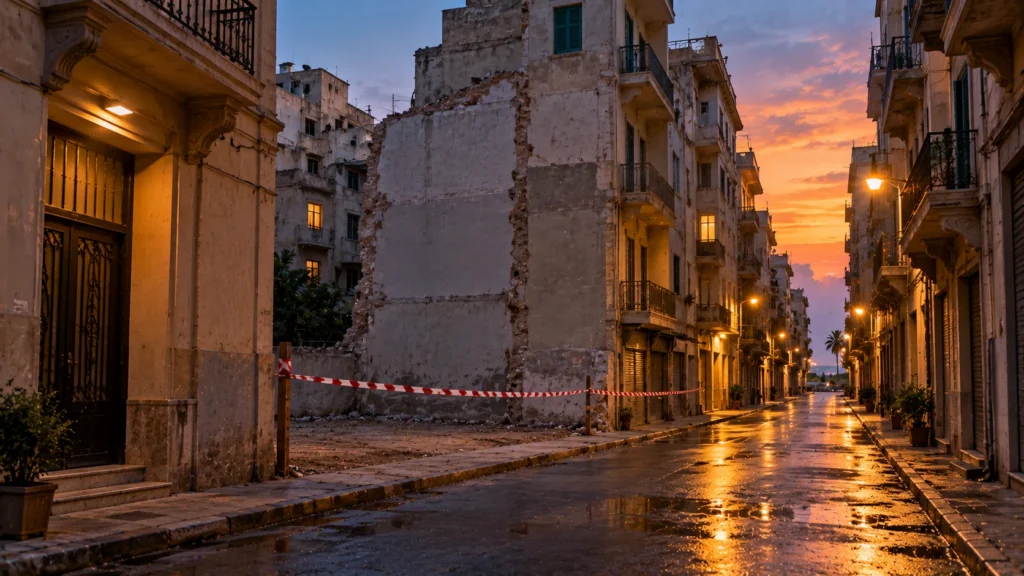
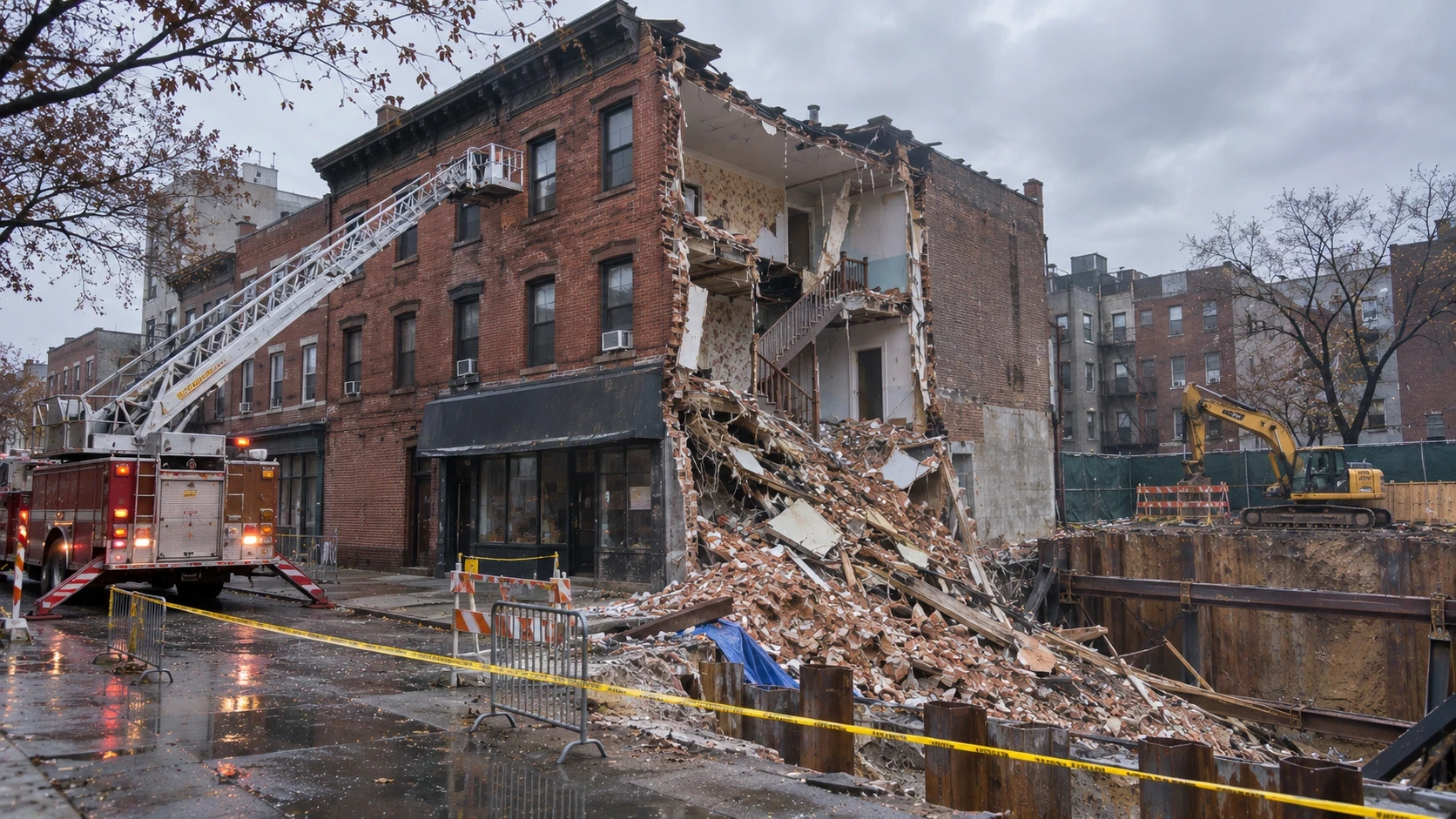
A residential building with a ground floor and four upper floors collapsed completely in Abu Suleiman, Alexandria, on the evening of 20 October 2026. By the evening of 21 October five people were dead, three of them children according to Twasl, and two women were rescued. Two neighbouring buildings with 8 families were ordered evacuated and removed. No cause has been stated; prosecutors seized the building file.
Quick answers
What happened in Abu Suleiman, Alexandria, on 20 October 2026?
A residential building at No. 34 Saad Zaghloul Street, with a ground floor and four upper floors, collapsed completely on the evening of 20 October. Rescue teams worked through the night.
How many people died in the Alexandria building collapse?
Five dead and two injured by the evening of 21 October, according to Youm7, Cairo24 and Twasl. Earlier reports had said two dead and three children trapped.
What caused the Alexandria building collapse?
No cause has been stated in the reports we read. The public prosecution has seized the building file, the Administrative Prosecution has ordered an urgent technical report, and an engineering committee has been asked to report.
Was the building licensed or under a demolition order?
The reports we read do not say. One resident told Okaz he knew of no demolition order, but that is his statement, not a record.
What happened to the neighbouring buildings?
An engineering committee ordered two adjoining buildings with 8 families to be evacuated and removed after finding large cracks in them.
How do I report a dangerous building in India?
Call 112 if there is immediate danger. Otherwise write to your municipal corporation or building department with photographs, the address and dates, and ask for an inspection. Use the number on your own corporation's or district's website.
What kind of building was it?
A ground floor plus four upper floors. The structural-condition record seen by the Administrative Prosecution says it relied on load-bearing walls (Al-Masry Al-Youm). That describes the design and does not explain the collapse.
What happened
On the evening of Tuesday, 20 October 2026, a residential building collapsed completely in the Abu Suleiman area of the Sharq district of Alexandria, Egypt. It stood at No. 34 Saad Zaghloul Street, a lane off Al-Tur’a Al-Mardouma Street (Youm7 and Cairo24 both give No. 34; one list in a Youm7 follow-up uses No. 32, so the number is not fully settled). A resident quoted by Okaz put the time at about 8 p.m. The building had a ground floor and four upper floors. The first reports said the ground and first floors were empty and the upper floors were occupied.
The toll rose through the night and the next day. At about 1.40 a.m. on 21 October, Cairo24 reported one body recovered. By mid-morning Okaz and Youm7 were reporting two dead, two women rescued and taken to the Alexandria university hospital, and three people, described by Okaz as children, believed to be still under the rubble. By the evening of 21 October, Youm7, Cairo24 and Twasl were reporting five dead and two injured, and the public prosecution had allowed all five bodies to be buried (Egykwt). Twasl, quoting Al-Masry Al-Youm, says three of the five were children. We are not repeating any names.
Response
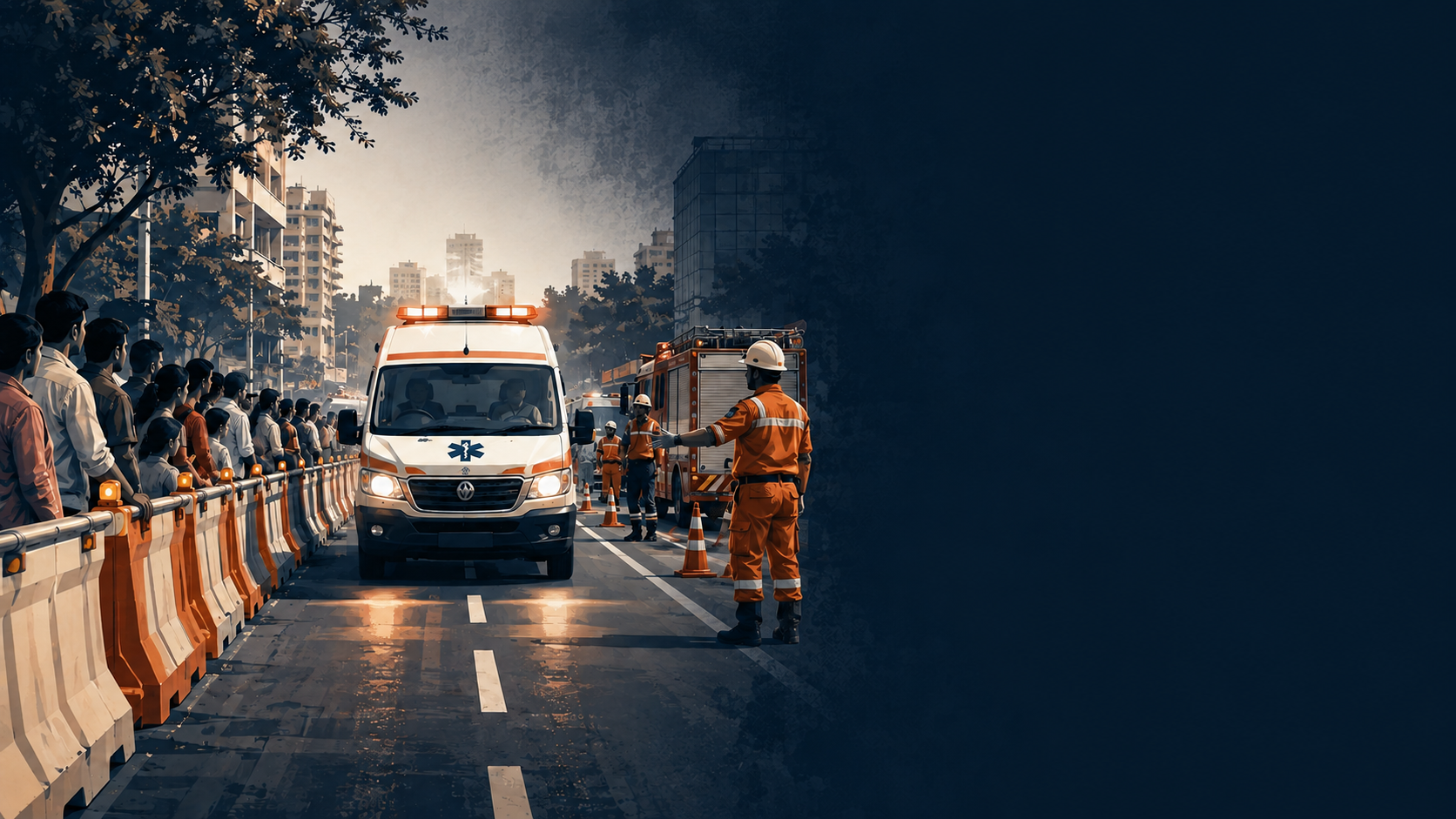
The emergency operations room took the call and the police chief of the Al-Raml Second station alerted the security directorate. Civil Protection arrived with two fire engines and 12 ambulances, and the Egyptian Red Crescent gave medical aid. A cordon and an iron barrier were put up, residents were kept away, and gas and electricity to the building were cut. Youm7 says rubble clearing and the search went on through the night.
Governor Ayman Atiya went to the site and formed an engineering committee under Dr Alaa Morsy to examine the collapsed site and the neighbouring buildings. The committee ordered two adjoining buildings, home to 8 families, to be evacuated and removed. Ahlmasr reports that the committee found large cracks in both, and that residents had started moving out their belongings so that the loads could be reduced before demolition.
The Ministry of Social Solidarity surveyed the affected households. Youm7’s preliminary count is 14 families and 38 people across five buildings (the collapsed building and four neighbours), and it says temporary flats were arranged through NGOs at 4,000 Egyptian pounds a month for two months, along with 100 meals. Cairo24 says the governor told the directorate to speed up compensation for the families of the dead and injured and to arrange psychological support; no amount is given in anything we read.
Investigation
The Al-Raml Second prosecution inspected the site, found the building had collapsed entirely, and asked the district’s engineering officials to explain the decisions taken on the building. Youm7 says it asked for the original building file from Sharq district, for police and CID inquiries, and for an engineering committee to report. Egykwt reports that the prosecution heard eyewitnesses, seized the building file at the district office, asked for medical and post-mortem reports, and is looking at the cause of the collapse and at permits and any demolition or repair orders.
Updated 22 October 2026, about 4.15 pm IST. A second body has also opened an inquiry. Al-Masry Al-Youm reports that the Administrative Prosecution for local administration in Alexandria sent a team to the site at midday on 21 October, with engineers from the technical office of the governorate’s housing directorate and officials of Sharq district. The team found the building collapsed completely and two neighbouring buildings damaged and fully evacuated. It was shown the building’s structural-condition record, which says the structure relied on load-bearing walls, and it heard the district’s secretary-general, its planning director and one resident of the collapsed building. It then ordered the housing directorate’s engineers to prepare a technical report quickly on the causes and on the structural safety of the neighbouring buildings, and to send the building file from the official records. The investigation is continuing.
What the reports do not say. None of the articles we read gives a cause; the load-bearing-wall design is a description of the structure, not a finding on why it failed. None gives the age of the building, says whether it was licensed, or says whether any removal or repair order had been issued. The Okaz resident said that, to his knowledge, no demolition order had been issued. That is one person’s statement, not a record. A rumour about a power cut before the collapse appears only as a related headline on one site and is not confirmed.
Not the only collapse this month
Gulf News reported on 14 October 2026 that a five-storey building built in the 1950s collapsed in Hadayek El Qobba, Cairo, killing at least six, three of them children, with seven injured. Prosecutors opened an investigation and ordered an engineering committee to find the cause, and neighbouring buildings were evacuated and propped up. We have not yet built a separate page on that case. Two collapses within a week do not prove a common cause, and we are not claiming one.
Why old, crowded buildings can fall with little warning
This section is general safety knowledge, not a finding about Abu Suleiman, where the cause is unknown. Older masonry and early reinforced-concrete buildings are often changed over the decades: a floor added, a wall removed on the ground level for a shop, a water tank or heavy storage placed on the roof, a leaking pipe that keeps the foundation soil wet. Each change looks small. Together they can take a structure past what it was built to carry. A building like this may give only a short warning, and sometimes none that a resident can recognise. Digging or construction next door can also remove support from the ground or from the wall between two buildings.
In India we have covered the same kind of event this autumn: Satya Niketan in Delhi, Dhulkot in Ambala and Seemapuri in Delhi. In each of them the hard questions came after the collapse: who inspected the building, what had been added, and who was warned.
Lessons
- Treat new cracks as information. A crack that is widening, runs diagonally across a wall or from the corners of doors and windows, or shows up in a beam or column, needs an engineer. Mark its ends with a pencil and a date. A hairline plaster crack that has not changed in years is a different matter.
- Doors and windows that start to jam, floors that slope, plaster that falls in sheets. These can mean the frame is moving. So can creaking or cracking sounds, or fine dust falling from a wall or ceiling.
- Watch for loads that were never planned. A new floor, a heavy tank, a wall knocked down, or a shop opened on the ground floor without a structural opinion are the usual culprits. Do not carry out such changes without a licensed structural engineer.
- Look at the neighbourhood. Deep digging, a basement or piling next door, or a burst water main can weaken the support of your building.
- If you see a clear warning, leave first and ask later. Take the family, go down by the stairs, and stay clear of the building and its neighbours. Do not go back for belongings. Call 112, and warn the neighbours on your way out.
- If a building has collapsed near you, stay out of the area so rescuers and ambulances can get in, do not pull at rubble where people may be trapped unless the rescuers ask you to, and keep behind the cordon. Our guide on helping someone trapped under a heavy object explains what bystanders can safely do.
- Renting or buying? Ask for the structural audit and for any notice the municipality has issued. We have a checklist on asking about structural review and alterations.
How to report a dangerous building in India
If there is danger right now, such as a falling slab, a leaning wall or the sound of cracking, call 112. For a building you think is unsafe but not about to fall, write to your municipal corporation or municipality, to the building department or the ward office, and ask for an inspection. Send it in writing, with photographs, the address and dates, and keep the acknowledgement. Many corporations run a dangerous-building or disaster cell, and the district or city disaster control room can also take such a report. The numbers differ from city to city, so take them from your own corporation’s or district’s website. See our emergency numbers guide and the state-wise helpline list. If you are a tenant and your landlord will not act, a written complaint to the corporation also protects you.
What is still not known
We do not know why the building failed, how old it was, whether it was licensed, or whether the district had warned or served notice on it. The prosecution, the Administrative Prosecution’s technical report and the engineering committee have not yet published findings, and the number on the street is reported as 34 and, in one list, 32. The numbers of families displaced are provisional. We will update this page when the committee or the prosecution publishes anything.
- The building at No. 34 Saad Zaghloul Street collapses completely; Civil Protection, two fire engines and 12 ambulances are sent
- Gas and electricity cut, cordon set up, rubble clearing and search continue; one body is reported recovered by 1.40 a.m.
- Two dead, two women rescued and taken to the university hospital, and three people believed trapped (Okaz, Youm7)
- Governor visits and forms an engineering committee; prosecution inspects the site, seizes the building file and summons district engineering officials
- Committee orders two adjoining buildings with 8 families evacuated and removed; large cracks found in both
- Five dead and two injured reported (Youm7, Cairo24, Twasl); prosecution permits burial of all five (Egykwt)
- Administrative Prosecution inspects the site with housing directorate engineers, sees the building's structural record (load-bearing walls), hears district officials and a resident, and orders an urgent technical report on the cause and on the neighbouring buildings (Al-Masry Al-Youm)
- Masrawy reports that the public prosecution has allowed the victims to be buried; funerals follow (Masrawy, Al-Osboa)
Why consequences escalated
- The building collapsed completely and the reported toll rose from one to five over about 20 hours as rescuers reached people under the rubble.
- No report we read gives a cause, the age of the building, its licence status or any earlier removal order.
- The engineering committee found large cracks in the two adjoining buildings and ordered them evacuated and removed.
- The prosecution seized the building file and asked district engineers to explain the decisions taken on the building.
- Early reports of 2 dead and 3 trapped children were overtaken by later reports of 5 dead.
- The Administrative Prosecution has opened its own inquiry and ordered housing directorate engineers to report urgently on the cause and on the neighbouring buildings; the structural record says the building relied on load-bearing walls (Al-Masry Al-Youm, 21 October).
Failures and risk multipliers
- Nothing can be said yet about mistakes in the building's use or upkeep; the cause is unconfirmed.
- Early counts of the dead and missing varied between outlets, which is normal in a night-long rescue but should be read with care.
- A resident said he knew of no demolition order; whether a notice or repair order existed is not established.
Actions that reduce risk
- Report new or widening cracks, sagging floors or jamming doors to a licensed structural engineer and your municipality in writing.
- Do not add floors, tanks or heavy loads or remove walls without a structural opinion.
- Leave at once if you see a clear sign of failure, and call 112.
- Before renting or buying an old building, ask for its structural audit and any municipal notice.

Leave a comment