

Quick answers
Does a school without a fire NOC mean it is unsafe?
Not necessarily, but without an NOC no fire officer may have inspected the building. National school safety guidelines still apply. Fire does not depend on building height; people density, electrical load and exit design matter, so parents should ask about safety directly.
What fire safety questions should parents ask a school?
Ask whether the school has fire extinguishers, alarms and fire blankets, check every staircase and emergency exit, and insist the institution invites a fire safety audit even if it is exempt by law.
Are small school buildings safer in a fire?
Not automatically. Smoke in small, congested spaces with blocked exits is a major danger, so height alone is not a reliable measure of fire risk.
How should schools plan fire evacuation for children?
Use an all-hazard, site-specific safety plan, run drills that include children, staff, visitors and assisted evacuation, keep assembly points away from hazards and reconcile class and visitor registers.
On 10 September 2025, in a cheating case from Andhra Pradesh, the Supreme Court accepted that the National Building Code 2016 does not require a Fire NOC for educational buildings below 15 metres. The college in that case stood 14.20 metres tall.
(Source: Supreme Court of India, Jupally Lakshmikantha Reddy v. State of Andhra Pradesh, 2025 SCC OnLine SC 1950, decided 10 September 2025)
The Court was deciding a criminal case, not making a new fire rule. It applied the NBC threshold to one building. Rules can differ between states, so check what your state fire service requires.
Why this matters
A large number of schools, tuition centres and colleges in India run from crowded two- or three-storey buildings. Under the NBC threshold, many of these may not need a Fire NOC because they are under 15 metres. In practice, that can mean no fire officer ever comes to inspect them.
But fire does not measure building height.
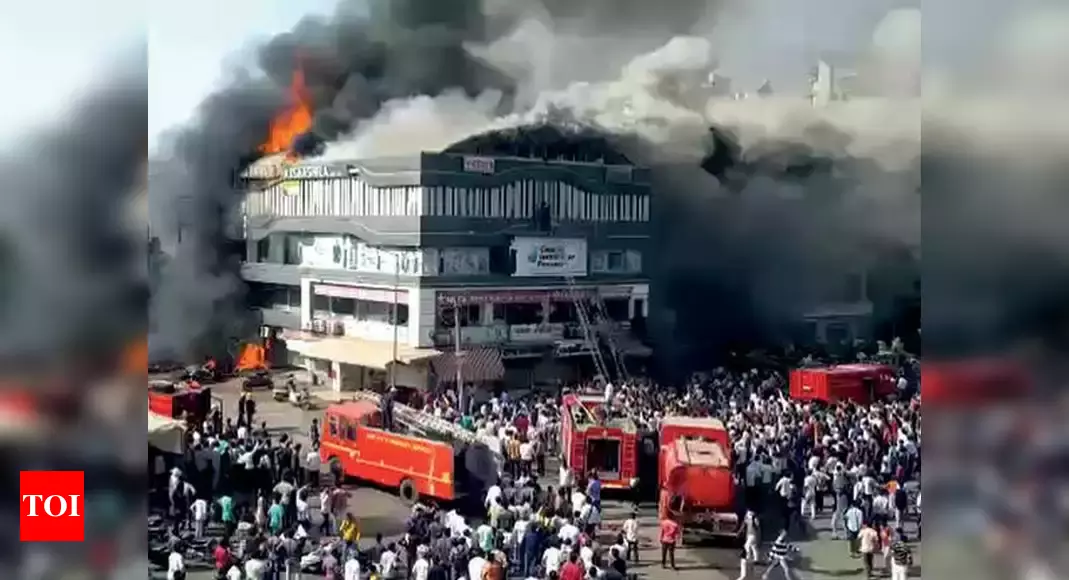
On 16 July 2004, a fire at Lord Krishna school in Kumbakonam, Tamil Nadu, killed 94 children. It started in the kitchen where the mid-day meal was being cooked, under a thatched roof, in a crowded building with a narrow stairway. (The Supreme Court’s 2009 judgment refers to 93 children; most reports give 94.) It was not a tall building. It was a crowded one.
What “no NOC needed” really means
It usually means no fire officer has to inspect the building before it opens. It does not mean the school can ignore fire safety.
- After the Kumbakonam fire, the Supreme Court in Avinash Mehrotra v. Union of India (2009) ordered all government and private schools to install fire extinguishers, train their staff to use them, and follow the National Building Code.
- The NDMA’s School Safety Policy guidelines (2016) apply to every school, government, aided or private. They call for clear exits, working alarms, refilled extinguishers, safe wiring and regular safety audits.
So the rules are there. What is missing in an exempt building is the outside check that makes sure they are followed.
Two myths
“Small buildings are safe because it is easy to get out.” Not always. In a building fire, smoke usually kills before flames do. A small, crowded building with one narrow staircase, barred windows or a locked gate can fill with smoke in minutes.
“A Fire NOC is just paperwork.” Where it is required, it is the one time an outside expert checks the exits, alarms and extinguishers. Without it, the school is still expected to follow the national school safety guidelines, but nobody from the fire service may ever have looked.
What you can do as a parent, student or citizen
- Ask about fire equipment. Does the school have extinguishers that are serviced, an alarm or bell that works, and fire blankets in the kitchen and labs?
- Check the escape routes. How many staircases are there? Are exit doors and gates unlocked during school hours? Walk the route once yourself.
- Ask for a fire safety audit. Even if the building is exempt from an NOC, the school can invite the local fire service or a qualified fire safety professional to audit it. Ask to see the report.
- Ask about drills. When was the last evacuation drill, and did every class take part?
- Ask about the kitchen. Where are the mid-day meal cooking and the LPG cylinders kept? They should be away from classrooms and exits.
The gap in the system
The 15-metre rule may be legally correct, but height alone is a poor measure of risk.
- Height is not the only risk. The number of children, the electrical load, the kitchen and the design of the exits matter at least as much.
- No inspection on record. If no NOC is needed, there may be no fire-service inspection on file, so problems go unnoticed until a fire.
- False comfort. Parents assume that recognition or affiliation means the building is safe. An exempt school may never have had a fire officer’s visit.
This is why we started HowToSurvive.in: to tell you the things nobody else will.
Tomorrow, when you drop your child at school or tuition, look for two things: the nearest staircase and the nearest extinguisher. If you cannot find either, ask the principal.
What needs attention
- The 2025 judgment applied the NBC 15-metre threshold to one college building; it did not create a new nationwide exemption
- Many schools and tuition centres run from crowded low-rise buildings that may never get a fire officer's inspection
- The Kumbakonam fire showed that a low, crowded building with a kitchen and one narrow stairway can kill many children
- A Supreme Court judgment from 2009 and the NDMA guidelines still require basic fire safety in every school
- In building fires, smoke usually kills before flames, and small crowded spaces fill quickly
- Without an NOC inspection, parents and staff are often the only ones checking
Controls that reduce risk
- Check your state's rules on Fire NOCs for schools and coaching centres
- Invite the local fire service or a qualified professional for a fire safety audit, even if exempt
- Install serviced extinguishers, a working alarm or bell and fire blankets in kitchens and labs
- Keep at least two unlocked, clear routes out of every floor during school hours
- Move kitchens and LPG cylinders away from classrooms and exits
- Hold evacuation drills every term with every class
- Share the audit report and drill record with parents
Common unsafe practices
- Assuming a school is safe because it is recognised or affiliated
- Assuming small buildings are easy to escape from
- Treating an NOC exemption as an exemption from fire safety
- Locking gates or exit doors during school hours
- Cooking mid-day meals or storing LPG cylinders near classrooms or exits
- Never holding an evacuation drill
Leave a comment