
Quick answers
What is an ESFR sprinkler system?
Early Suppression Fast Response is a storage-protection sprinkler concept that combines a fast thermal response with a high-momentum discharge intended to suppress a growing fire in an approved warehouse arrangement.
Does ESFR always remove the need for in-rack sprinklers?
No. Ceiling-only ESFR often reduces in-rack piping, but some configurations still require in-rack sprinklers. Assuming ceiling-only protection always eliminates them is a mistake.
What warehouse changes can make ESFR sprinklers ineffective?
Solid shelves, blocked flue spaces, excessive storage height, changed plastics or packaging, ceiling construction, nearby ducts and a weak water supply can invalidate the original design. A layout change can be a fire-system design change.
Can I close sprinkler valves to limit water damage in a warehouse fire?
No. Do not close sprinkler valves or stop the fire pump to limit water damage. Stop work, evacuate by the marked route, keep away from rack collapse zones and call 112.
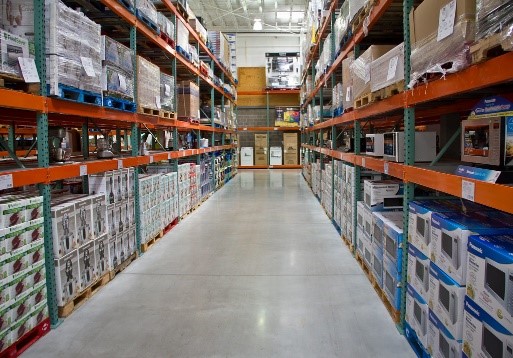
Look up in a modern logistics park near Bhiwandi, Chakan or Gurugram and you will often see large, heavy-looking sprinkler heads on pipes high under the roof. These are often ESFR sprinklers: Early Suppression Fast Response. They are built for one hard job, stopping a fire in tall storage racks before it gets big. They are not a magic upgrade, and they work only as long as the warehouse is run the way they were designed for.

How ESFR is different
An ordinary sprinkler is usually designed to control a fire: keep it from spreading until the fire brigade arrives. An ESFR sprinkler is designed to suppress it: sharply cut the heat the fire gives off while it is still growing.
It does this in two ways. It reacts to heat faster than a standard head. And it throws out a lot of water in large, heavy drops that can punch down through the strong rising plume of a rack fire and reach the burning goods.
How much water depends on the size of the sprinkler’s opening, called the K-factor, and the water pressure. There is no single figure. For example, a K-25.2 ESFR head at 50 psi (3.4 bar) discharges about 178 US gallons, roughly 675 litres, a minute. In one FM test, a K320 ESFR sprinkler at 5.2 bar discharged about 738 litres a minute. These are examples from particular designs and tests, not numbers to copy into another design.
Where ESFR is used
ESFR is used for high-piled storage: palletised goods, solid piles, shelves, bin boxes and racks. In many layouts it lets the warehouse rely on sprinklers at the ceiling alone, with fewer or no sprinkler pipes inside the racks. Fewer in-rack pipes mean fewer pipes for forklifts to hit and break.
But “many” is not “all”. Some storage arrangements still need in-rack sprinklers even with ESFR at the ceiling. And the maximum ceiling and storage heights depend on the exact sprinkler listing and design table. One current K-25.2 ESFR sprinkler, for example, is listed for ceilings up to 48 feet (14.6 m) with storage up to 40 feet (12.2 m), in specific arrangements only.
What can make ESFR fail
ESFR was proven in fire tests with open racks, a set height and set types of goods. Change those, and the water may no longer reach the fire in time. The Fire Protection Research Foundation warns that anything obstructing the spray pattern could greatly affect whether an ESFR sprinkler can suppress the fire.
- Solid shelves in the racks, which stop water falling through.
- Blocked flue spaces, the gaps between pallets and between rack rows, when loads lean, overhang or are shrink-wrapped together.
- Storage stacked too high, into the clear space needed under the sprinkler.
- A change of goods, such as moving from cartons to exposed plastics, foam or aerosols.
- New ducts, lights, conveyors or banners fixed below the sprinklers.
- A weak water supply. ESFR needs a large, reliable flow at high pressure. A fire pump is needed where the tested supply cannot meet that flow and pressure.
Running a warehouse with ESFR
With ESFR, the warehouse team owns part of the fire design every day.
- Post the approved goods, storage height and ceiling limits where supervisors can see them, and mark the maximum stacking height on the racks.
- Check flue spaces and look for solid shelves on every storage walk.
- Get fire-protection approval before bringing in new products, packaging, pallets, racks or automated storage.
- Keep control valves open and supervised and the fire pump on automatic.
- Get the water supply flow-tested at the required interval and after any change to the network or pump.
In India, sprinkler design follows BIS IS 15105:2021 and the National Building Code of India 2016, Part 4. NFPA 13 or FM data sheets come in only where the authority, the insurer or the approved design requires them. When deciding whether ESFR suits your building, talk to a qualified fire protection engineer about what you store, how you store it, and the height and type of the building, and compare the full cost: water supply, pump, tank, structure and the limits on how you can use the space later.
If the sprinklers ever go off, stop work and get out. Do not close the valves or stop the pump to save stock from water. Call 101 or 112 and tell the fire brigade which aisle and rack level, and what is stored there.
On your next walk, stand at the end of an aisle and look along the racks. If you cannot see clear gaps between the loads, the sprinklers may not be able to do their job.
What needs attention
- ESFR does not discharge a universal 100 gallons a minute; the flow depends on the K-factor and the required pressure
- A 45-foot ceiling is not a universal ESFR limit; the allowed height depends on a specific listed design table
- Large drops and force help water push through a strong fire plume, but obstructions can deflect the spray
- Ceiling-only ESFR often cuts down in-rack piping, but some layouts still need in-rack sprinklers
- Solid shelves and blocked flue spaces can defeat the assumptions of open-rack fire tests
- A fire pump is not automatically needed if the tested water supply meets demand; it is needed when pressure or flow falls short
- Fewer in-rack pipes may mean less damage from forklifts, but the full cost must include water supply, pump, tank, structure and future storage limits
Controls that reduce risk
- Post the approved goods, storage and ceiling-height limits at the warehouse control point
- Mark the maximum storage height and required clear space below sprinklers where everyone can see it
- Check rack flue spaces and solid shelves on every storage walk
- Require fire-protection approval for new products, packaging, pallets, racks or automated storage
- Compare the installed sprinkler model and temperature rating with the as-built drawings and listing
- Repeat water-supply flow tests at the required interval and after changes to the network or pump
- Protect sprinkler pipes and valves from forklift damage and supervise all control valves
- Teach warehouse staff that a layout change can be a change to the fire system design
Common unsafe practices
- Approving ESFR only because the warehouse is tall
- Using a general 25-versus-100-gallons comparison without the sprinkler's K-factor and design pressure
- Switching from cartons to exposed plastics or aerosols without a fire-protection review
- Adding solid shelf decks, close mesh, banners, ducts or lights under the sprinklers
- Stacking goods into the clear space required below the sprinkler
- Letting flue spaces close as loads lean, overhang or are shrink-wrapped
- Assuming ceiling-only protection always does away with in-rack sprinklers
- Checking the pump's no-flow pressure but never proving the full water demand at flow
Leave a comment