
Quick answers
Can I use the lift during a fire in a high-rise building?
Do not use an ordinary lift after a fire alarm. Use a designated evacuation lift only when the approved plan and authorised personnel direct it; otherwise leave by the protected stair.
Why should fire doors in a high-rise never be wedged open?
Closing a door can slow smoke and fire spread and protect the corridor or stair used by others. A fire door cannot perform if it is wedged open, damaged, poorly latched or penetrated by unsealed services.
What to do if smoke blocks both exit routes in a tall building?
Stay behind a closed door, seal gaps where smoke is entering, call 112 with your exact location and signal responders without breaking the window. Stay low below smoke and avoid opening a hot door.
Should I break a window to escape a high-rise fire?
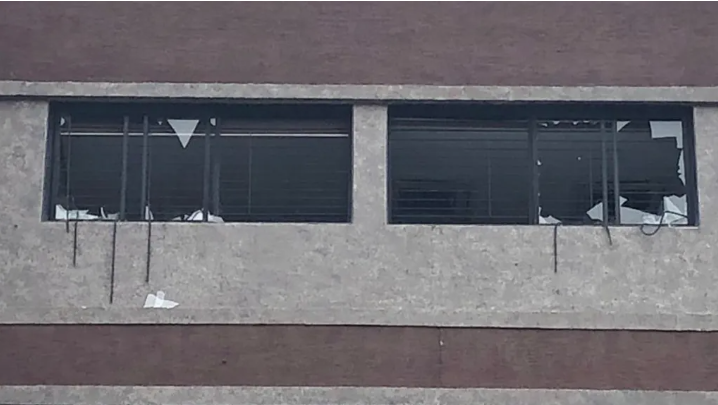
Opening or breaking a window is not a universal escape action. Wind can intensify the fire and spread smoke, and falling glass endangers people below.
More and more Indians live and work high up, in towers of 15, 20 and 40 floors. A fire on the 18th floor is not just a ground-floor fire higher in the air. Smoke climbs through shafts and stairwells. Ordinary lifts cannot be used. Fire brigade ladders may not reach your floor, and it takes firefighters time to climb up with their equipment. So in a tall building, your safety depends on the building’s own protection and on what you do in the first few minutes.

Before a fire: get to know your building
- Find two exit staircases from your flat or office, in case the nearest one is full of smoke. Walk to both once, without using the lift.
- Learn the alarm. Find out what the fire alarm sounds like, whether the building has a voice announcement system, and what the building’s evacuation plan says. Not every building asks everyone to leave at once.
- Find the manual call points (the red “break glass” or press boxes) on your floor.
- Check the stairs and fire doors. Exit and staircase doors should be clearly marked, kept shut and never wedged open. Stairs and landings should be free of shoe racks, cycles, cartons and old furniture.
- Know about the refuge area, if your building has one. It is a protected space for waiting during a fire, not a store, party area or smoking zone. In Delhi, for example, the fire service says refuge-area provisions apply above 24 metres; rules differ by state and building type.
- Plan for anyone who needs help, such as elderly parents, small children or a neighbour who uses a wheelchair. Decide now who will help them and how.
- Report problems in writing: a broken fire door, a dead alarm, a leaking hydrant, a fire pump left on manual. Keep the complaint number.
If you are choosing a flat or an office, ask whether the building is fully sprinklered and has a valid fire NOC, and whether the society or management runs drills. A certificate shows the building met the rules on one day. Day-to-day upkeep decides whether the protection still works.
If you discover a fire
- Warn the people near you and press the fire alarm call point.
- Leave by the nearest safe staircase, closing doors behind you. A closed door slows smoke and protects the corridor and stairs that others are using.
- From a safe place, call 101 or 112. Give the society or building name, the tower, the gate to enter from, the floor and flat number, what you can see and whether anyone is trapped.
When the alarm sounds
- Follow the voice announcements, the fire wardens and the fire brigade. Do not guess.
- Before opening any door, feel it with the back of your hand. If it is hot, do not open it. Use your other route.
- If the door is cool, open it slowly and look out. If the corridor and stairs are clear, go down by the stairs.
- Never use an ordinary lift. Use an evacuation lift only if the building has one designed for it and the building staff or firefighters tell you to.
- If there is smoke, stay low, where the air is cleaner.
- Do not go up to the terrace unless the plan or firefighters tell you to. The roof is not a default escape route.
- At the assembly point, tell the fire brigade if anyone is missing and where they were last seen. Never go back in.
If you cannot get out
If smoke or fire blocks both routes, or you cannot manage the stairs:
- Stay in a room with the door shut. Put wet towels or clothes along the gaps where smoke is coming in, and cover vents.
- Call 101 or 112 and give your exact flat or room number and floor.
- Signal from the window or balcony with a bright cloth or a phone torch.
- Do not break the window. Wind can feed the fire and push smoke in, and falling glass can hurt people below. If you open a window a little to signal and smoke comes in, shut it.
Tonight, stand at your front door and ask yourself: which two staircases would I use, and is anything blocking them? If you are not sure, walk them tomorrow morning.
What needs attention
- High-rise protection is a system, not a set of extinguishers: exits, fire-rated compartments, smoke control, detection, announcements, sprinklers, water supply and emergency management must all work together
- Shutting a door can slow smoke and fire and protect the corridor or stairs other people are using
- A fire door cannot do its job if it is wedged open, damaged, not latching or has unsealed pipes and cables through it
- Opening or breaking a window is not a safe escape step everywhere; wind can feed the fire and spread smoke, and falling glass can hurt people below
- A refuge area is not for storage, parties or smoking and does not replace an exit; use it only as the approved plan or firefighters direct
- Help for people with disabilities, older people, children and anyone else who needs it must be assigned and practised before an alarm
- Fire brigade ladders may not reach upper floors, so the building's own systems and protected routes are not optional
- A fire safety certificate shows the building met the rules at one point in time; blocked exits, unauthorised changes and poor maintenance can still undo the protection
Controls that reduce risk
- Ask the society or management for the approved fire emergency plan and the latest fire safety certificate required locally
- Walk from your flat or desk to two exit staircases without using the lift
- Read the evacuation map and find the assembly point and any refuge area
- Report every fire door that is wedged, damaged or not latching
- Keep stairs, corridors, landings, fire lift lobbies and firefighting equipment clear
- Check that alarms can be heard everywhere, and that people who cannot hear them get a light or personal alert
- Make a personal evacuation plan for anyone who cannot use the stairs on their own
- Save the security desk and facility emergency numbers, and remember 101 and 112
- Take part in drills and write down problems, instead of treating them as a formality
- Ask for written isolation and restoration controls whenever alarms, pumps, sprinklers or smoke control are switched off for work
Common unsafe practices
- Assuming the terrace, a balcony or a fire brigade ladder is the normal way out
- Using an ordinary lift after the fire alarm sounds
- Running into a smoky corridor without checking whether the other staircase is safer
- Wedging open staircase, lobby or corridor fire doors for convenience
- Keeping cycles, furniture, garbage or delivery cartons in stairs and exit passages
- Ignoring alarms that are switched off, leaking hydrants, closed valves or a fire pump left on manual
- Breaking windows or opening doors that feed air to the fire
- Going back for documents, pets or belongings after reaching safety
- Telling everyone to "evacuate immediately" without knowing the building's approved plan
- Leaving visitors, children or people who need help out of the head count
Leave a comment