
What happened here
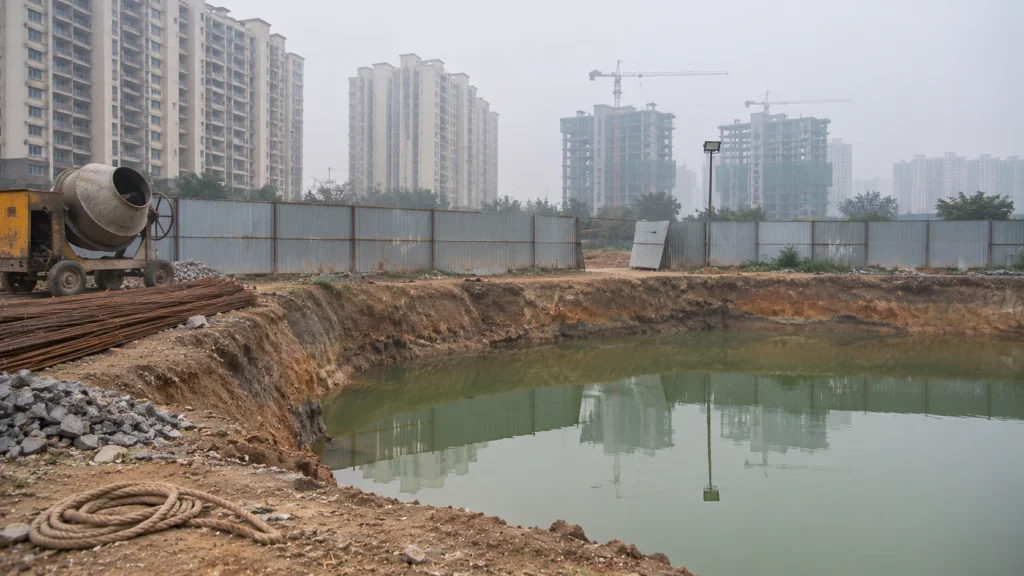
Cause of the deaths: the girls slipped into deep water in an unlined pond while bathing, per Dainik Bhaskar. Whether the pond was properly protected is the subject of a police inquiry on the father's complaint, and the negligence claim is an allegation, not a finding. On the afternoon of Tuesday 10 November 2026, two girls aged about 12 to 13 drowned in a pond on a builder's land in Sector 71, Gurugram, Haryana. Bhaskar says it was dug on the vacant land of an under-construction society; Amar Ujala says it was in a builder company's golf complex and that four girls went in and two got out. Tin sheeting with a gap, or broken through, was the only barrier. The girls were declared dead at the Sector 10 civil hospital, and Badshahpur police registered a case on the father's complaint. ACP Badshahpur says the alleged negligence will be examined.
Quick answers
What happened in Gurugram Sector 71?
On the afternoon of Tuesday 10 November 2026, two girls aged about 12 to 13 drowned in a pond on a builder's land in Sector 71. Dainik Bhaskar and Amar Ujala both report it.
Was the pond fenced?
Only with tin sheeting. The father's complaint says there was no solid wall, only tin sheets with a gap; Amar Ujala says the girls broke a tin shed to get in.
Were other children there?
Amar Ujala says four girls went in and two got out. Dainik Bhaskar mentions only the two who died.
Is anyone to blame?
The father alleges negligence by the builder, the construction agency and the contractor, and police have registered a case. It is an allegation, and the inquiry has not reported.
Has anyone been arrested?
None is reported as of 11 November 2026.
What should I do if a child falls into a pond?
Shout for help, call 112, reach with a stick or rope or throw something that floats, and do not jump in unless you are trained. Our guide on saving a drowning person has the full steps.
Why does this post not name the girls?
They are minors and their families have lost them. We use no names or photographs.
What happened
On the afternoon of Tuesday 10 November 2026, two girls aged about 12 to 13 drowned in a pond on a builder’s land in Sector 71, Gurugram, Haryana. Dainik Bhaskar, which puts the time at about one o’clock, calls it a raw, unlined pond made for construction on the vacant land of an under-construction society. Amar Ujala calls it a mini pond inside a builder company’s golf complex. In both accounts the pond sat behind tin sheeting and the girls went in to bathe.
Bhaskar reports that workers nearby saw the girls go under and raised an alarm, and that the girls were taken to the district civil hospital in Sector 10, where doctors declared them dead. Amar Ujala says four girls went in and two got out. One girl’s father gave Badshahpur police a written complaint that the pond had no proper boundary wall, only tin sheets with a gap, and that the builder, the construction agency and the contractor were negligent. Police have registered a case on his complaint, and the ACP of Badshahpur says the alleged negligence and every fact will be examined, with action against anyone found legally responsible. The complaint is an allegation and the inquiry has not reported. We use no names for the girls or their families.
What the reports say
- Deaths: Two girls, about 12 (Dainik Bhaskar) or 12 to 13 (Amar Ujala). Both outlets say they drowned. The post-mortem was to be done on Wednesday 11 November (Bhaskar). No names are used here.
- Where: A pond on a builder’s land in Sector 71, Badshahpur police area, Gurugram. Bhaskar says it was dug on the vacant land of an under-construction society for construction use; Amar Ujala says it was a mini pond in a builder company’s golf complex. Neither outlet names the builder or the exact plot.
- How they went in: Bhaskar: the girls were playing, went towards the pond to bathe, slipped and went into deep water. Amar Ujala: four girls went in to bathe after breaking the tin shed on the side, could not judge the depth, and two went into deep water and drowned while two escaped.
- The barrier: The father’s complaint, as reported by Bhaskar, says there was no solid boundary wall around the pond, only iron tin sheets with a gap in the middle. Amar Ujala says the girls broke the tin shed to get in. Neither outlet describes a gate, a warning board or a fence height.
- Rescue and hospital: Workers nearby saw the girls drowning and raised an alarm (Bhaskar). A security guard at the site told police both girls were taken out of the water and sent to the Sector 10 hospital (Bhaskar). Doctors there declared them dead. The reports do not say who pulled them out.
- Police: Badshahpur police reached the spot after the girls had been taken to hospital, and called the scene-of-crime team, which collected the girls’ clothes and a sample of the pond water (SHO, via Bhaskar). A case was registered on the father’s written complaint (Bhaskar, Amar Ujala).
- The allegation: The complaint says the deaths were caused by negligence of the builder, the construction agency and the contractor and asks for legal action (Bhaskar). ACP Badshahpur says police are examining the facts, the evidence and the alleged negligence, and will act against whoever is found legally responsible (Bhaskar). No arrest, charge or finding is reported.
Where reports differ and what we do not know
- Group size: Bhaskar speaks only of two girls playing and then going to bathe. Amar Ujala says four girls entered and two were saved or escaped. We carry both and do not claim the number of girls at the pond.
- The site: A vacant plot of an under-construction society (Bhaskar) against a builder company’s golf complex (Amar Ujala). The two may be the same land described differently. Neither names the builder.
- The tin sheeting: Tin sheets with a gap left in the middle (father’s complaint, Bhaskar) against a tin shed on the side that the girls broke to get in (Amar Ujala). Both mean the barrier did not stop them. Who made the gap or the break is not reported.
- Age: About 12 (Bhaskar) against 12 to 13 (Amar Ujala).
- Who got them out: Workers raised an alarm (Bhaskar); two of the four girls got out on their own or were saved (Amar Ujala); the guard told police both girls were taken out and sent to hospital (Bhaskar). How and by whom the two girls were pulled out is not described.
- Time: About 1 pm on Tuesday is given only by Bhaskar. The Amar Ujala text we opened gives no time.
- Not known: The depth of the pond, whether the site had a guard at the gate or a warning board, who owned and ran the site, the sections under which the case is registered, whether anyone was arrested, and what the post-mortem found.
What this case teaches
A pond on a building plot looks harmless to a child on a hot day. The water is still, the clay sides slope away fast and there is nothing to hold. A twelve or thirteen-year-old may swim a little or not at all, and the surface tells you nothing about depth. By both accounts the only barrier here was tin sheeting that either had a gap or was broken through. A solid, locked boundary, a warning board and a gate guard are the least a site owner can put round standing water. Whether this site had any of these is what the inquiry is looking at, and until it reports the father’s claim stays an allegation.
For families the message is plain. Tell children that building plots, quarries, tanks and any ditch full of water are out of bounds, even when a friend says it is safe. If a child is in trouble in water, shout for adults, throw something that floats or reach with a stick, rope or cloth, and do not jump in unless you are trained. Our guides explain how to save a drowning person without risking your own life, water safety around rivers, ponds and wells, teaching children survival skills and keeping children safe at the water’s edge. Other child drowning cases on the site include the Cuttack pond drowning of three small boys, the Kuwari River drowning of three girls near Morena and the school vehicle that overturned into a pond in Cambodia.
Gurugram has seen a case like this before. The Logical Indian reported that on the evening of Thursday 21 May 2026 two boys aged 10 and 11 drowned in a pond inside a golf club area near DLF Phase 3, after allegedly entering the restricted premises with two other children. That is a separate incident and is not part of this inquiry. We read the reports on 11 November 2026 and found no later development in this case.
- Two girls go towards the pond on the builder's land to bathe, slip and go into deep water (Dainik Bhaskar); Amar Ujala says four girls entered and two escaped
- Workers nearby raise an alarm; the girls are taken out of the water and sent to the Sector 10 civil hospital, where they are declared dead
- Badshahpur police reach the site after the girls have gone to hospital and call the scene-of-crime team
- The team inspects the pond and collects the girls' clothes and a sample of the pond water
- A father gives a written complaint alleging no solid boundary, only tin sheets with a gap, and negligence by the builder, the construction agency and the contractor; a case is registered
- Post-mortem to be done; ACP Badshahpur says police are examining the facts, the evidence and the alleged negligence
Why consequences escalated
- Two girls aged about 12 to 13 drowned in a pond on a builder's land in Sector 71, Gurugram, on 10 November 2026.
- The pond was behind tin sheeting that had a gap or was broken through; no solid wall, gate or warning board is described in the reports.
- Amar Ujala says four girls went in and two got out; Dainik Bhaskar mentions only the two who died.
- A father's written complaint alleges negligence by the builder, the construction agency and the contractor; police have registered a case.
- Police collected clothes and a pond water sample, and the ACP says the alleged negligence will be examined.
- No arrest, charge or official finding has been reported.
Failures and risk multipliers
- No official finding exists yet. What the reports raise as questions:
- Whether standing water on a building plot was enclosed by a solid wall, a locked gate and a warning board.
- Why the only barrier was tin sheeting with a gap, and who left or made the gap.
- Whether anyone was on duty at the pond when the girls went in; a security guard on the site spoke to police afterwards, but the reports do not say where he was.
- Whether the depth and slope of the pond were marked or made safe once the work stopped.
- These are open questions, not findings of fault. The negligence claim is the father's allegation.
Actions that reduce risk
- Parents and neighbours: tell children that building plots, quarries, tanks and water-filled ditches are out of bounds, and check where they play, especially near construction.
- Site owners, builders and contractors: put a solid boundary, a locked gate, a warning board and a guard round any pit or pond, and drain or fill it when work stops.
- Anyone who sees a child in trouble: shout for help, call 112, reach with a stick, rope or cloth or throw something that floats; do not jump in unless trained.
- Police and the authorities: publish the ownership of the site, the sections of the case and the post-mortem finding, and say what the site rules required.
- Housing societies near construction: report unfenced water to the local police or the municipal corporation before a child is hurt.




Leave a comment